Tabelog 100 #41
Our verdict
THIRTY FOUR sits in Sapporo’s soup curry lane rather than the city’s ramen narrative, with Tabelog Curry EAST 100 selections in 2023 and 2024 giving it a clear credential in a crowded category. The Hiragishi address, small counter-and-table format, take-out option, and sub-¥1,000 listed price point make it a sharp, practical read on how casual Sapporo curry culture works.

Pearl is the En Primeur Club membership app, where members save venues, book tables and use the concierge.
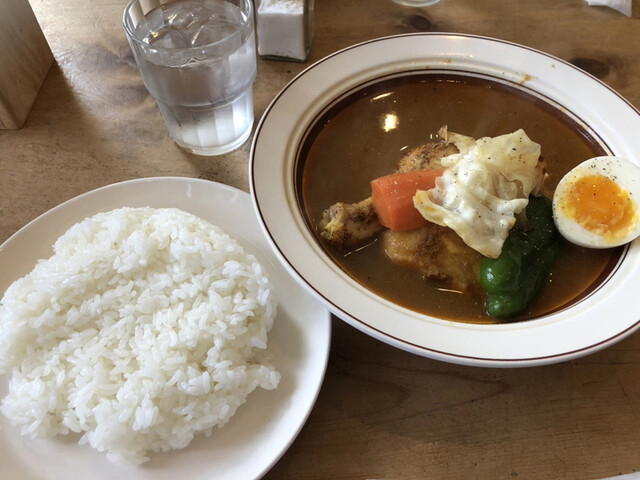
The menu
What to order
- Soup curry (various toppings and spice levels)
- 100% beef handmade hamburger
- Jingisukan-style lamb dish
- Five-spice herb mix toppings
Entering a Sapporo soup curry room differs from entering a ramen shop: less timed noodle churn, more broth, spice, vegetables, rice, and cold-weather heat that lingers. In Sapporo, THIRTY FOUR is best read through its listed category: soup curry rather than broader Japanese curry. In Sapporo, that distinction matters. Soup curry is local grammar, thinner than roux curry, more aromatic than canteen curry, and tied to Hokkaido produce.
Read the restaurant through category logic, not luxury signals. Hokkaido dining often starts with ingredient geography: dairy, corn, potatoes, onions, seafood, lamb, wheat, and cold-climate vegetables shape expectations before technique. Soup curry frames that pantry flexibly, carrying vegetables without burying them, keeping rice separate, and using spice as structure rather than surface. THIRTY FOUR’s 2024 Tabelog Hyakumeiten recognition places it in the serious public conversation around the category, beyond convenient everyday curry shops.
Soup curry as Sapporo's vegetable-first comfort format
Japanese curry is national comfort food, but Sapporo’s version has its own identity: looser broth, a more open spice profile, and plate construction that gives vegetables more visual and textural weight than the brown-rice-and-roux model common elsewhere in Japan. In a city surrounded by agriculture, ingredient sourcing is practical, not decorative; soup curry can make local vegetables central without kaiseki or French price architecture.
THIRTY FOUR is categorized as soup curry and sits in the low-price band, with pricing listed as - JPY 999. That matters. Sapporo curry culture includes casual rooms where a bowl can be lunch, family meal, or take-away dinner, not only destination restaurants. The format reinforces a focused local specialist rather than a long-form dining room.
Within Sapporo’s casual food map, curry carries a different emotional register from ramen. Other Sapporo noodle counters point to sesame, chili, and noodle concentration; soup curry asks for a slower read of broth and produce. Nearby curry references split by style: other specialist curry rooms signal the breadth of local curry culture, while other spice-focused dining in Sapporo points to lineages that helped shape local expectations. THIRTY FOUR’s lane is Sapporo soup curry: casual, local, ingredient-facing.
A Sapporo soup curry room with public recognition
The Tabelog Hyakumeiten selection is the key trust signal. For a soup curry venue in Sapporo, inclusion in the 2024 recognition gives THIRTY FOUR a measurable place in Japan’s curry conversation. Its 3.63 score also matters in the Japanese review context, where mid-three ratings can carry more weight than on international platforms. This is not fine-dining validation; it is category validation for a curry specialist noticed amid regional styles, price points, and loyal local followings.
The format shapes the visit. Timing can matter for a genre spanning lunch and dinner, and the style suits a low-ceremony meal rather than banquet-room planning. The appeal is consistent with the everyday profile of casual curry in Sapporo. In that sense, soup curry reads as both sit-down ritual and neighborhood meal format.
Sapporo shifts expectations away from tourist shorthand. Visitors often compress the city into its best-known central zones, treating the rest as transit. The broader city moves at a more residential rhythm, where the reward is not spectacle but a clearer view of local casual dining. For a wider itinerary, Our full Sapporo restaurants guide gives the dining spread, while Our full Sapporo hotels guide, Our full Sapporo bars guide, Our full Sapporo wineries guide, and Our full Sapporo experiences guide place a curry stop inside a fuller city plan.
How to place it in a Sapporo eating day
THIRTY FOUR works as a low-ceremony meal with more editorial reason than convenience. The price tier stays casual, while the 2024 recognition lifts it above a random curry stop: a Sapporo venue with enough recognition to justify crossing town if soup curry is on the brief. Alongside European Curry Domon, Yamaarashi Honten, Sapporo Tsukemen Sapporo Ramen Furaido, LOOK-Ka PyPy, and E-itou curry Hiragishi honten, it gives travelers a named reference point for mapping casual Sapporo dining.
The planning choice is simple: treat it as a specialist stop, not a tasting-menu anchor. The listed price band keeps the meal accessible, and the 3.63 score gives it a useful review signal for visitors comparing casual dining options. Its Sapporo setting makes it easy to fold into a day moving between other casual meals, markets, parks, and evening drinking.
For readers building a Japan-wide casual dining map, THIRTY FOUR counterpoints other regional specialists across Japan. The common thread is not luxury but format clarity; in Sapporo, soup curry is one of the city’s clearest formats.
Frequently asked questions
Where do I go for THIRTY FOUR?
Sapporo.
What should I budget for a meal at THIRTY FOUR?
Pricing at THIRTY FOUR is listed as - JPY 999.
What's the best way to book THIRTY FOUR?
Use the venue's official channels for the latest booking details. The listed phone number is +81-11-824-6551.
What's the signature at THIRTY FOUR?
The listed category is soup curry, so that is the clearest anchor for the menu. THIRTY FOUR was also recognized in the 2024 Tabelog Hyakumeiten, which gives it added weight in Sapporo.
Do they accommodate allergies at THIRTY FOUR?
Those details are not published. THIRTY FOUR lists contact details at +81-11-824-6551, which makes advance questions easier to handle. Check the venue's official channels for the latest details.
Pricing, Compared
Comparable venues at similar price and category levels.
| Venue | Cuisine | Price | Awards | Notes |
|---|---|---|---|---|
| THIRTY FOURThis venue (the venue you are viewing) | Soup curry restaurant | $10–20 | Tabelog 100 #41 | Not listed |
| Sapporo Ramen Kifu Susukino ten | Japanese Ramen | $1–10 | Tabelog 100 #90 | Chūō, Japanese Ramen |
| Sapporo Menya Mitsuba | Sapporo-style ramen shop | $10–20 | Tabelog 100 #89 | Nishi, Sapporo-style ramen shop |
| Menya Rei | Hokkaido Ramen & Tsukemen Shop | $10–20 | Tabelog 100 #54 | Chitose, Hokkaido Ramen & Tsukemen Shop |
| Isono Kazuo | Late‑night Sapporo Black Ramen | $10–20 | Tabelog 100 #95 | Chūō, Late‑night Sapporo Black Ramen |
| MEN SHOUKI | Modern Japanese Ramen & Tsukemen | $10–20 | Tabelog 100 #73 | Higashi, Modern Japanese Ramen & Tsukemen |
Recognition history
Dated appearances from independent guides and award organizations, with the underlying list record or original source where available.
Tabelog 100 #41 · No. 41
Tabelog · Tabelog 100 - Curry - EAST - 2024