
Tabelog 100 #73
Our verdict
MEN SHOUKI puts Sapporo’s north-side ramen culture into a compact, low-friction format: ramen and tsukemen in a 10-seat room near Kita Nijuyo Jo. Its selection for Tabelog Ramen HOKKAIDO 100 in 2024 and 2025 places it among the city’s serious noodle addresses rather than the tourist-facing ramen circuit.

Pearl is the En Primeur Club membership app, where members save venues, book tables and use the concierge.
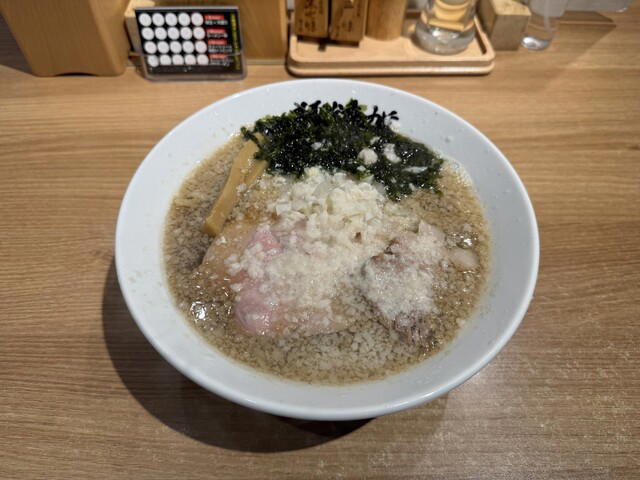
The menu
What to order
- Tsukemen with kombu oil
- Truffle paitan ramen
- Shoyu tanrei ramen
In Sapporo, the ramen mood changes quickly from block to block. Away from the most visitor-facing late-night corridors, the city’s noodle culture can feel less performative: fewer diners hunting neon, more regulars folding a bowl into the rhythm of an ordinary day. MEN SHOUKI belongs to that register. The format is direct: ramen and tsukemen, served without the theatre that often attaches itself to better-known Sapporo noodle stops.
That matters in this city. Sapporo’s ramen identity is often compressed into miso, butter, corn and winter appetite, but the actual scene is wider and more competitive. Serious shops now trade on broth discipline, noodle texture and repeat custom rather than postcard shorthand. MEN SHOUKI’s inclusion in Tabelog’s 2025 recognition gives it a useful signal in a crowded field: this is not a place riding only on convenience, but one that has entered the broader ramen conversation.
Sapporo ramen, away from the obvious script
Sapporo gives the meal a different frame from the most obvious central ramen crawl. A bowl here reads less like a scheduled attraction and more like a local punctuation mark, the kind of stop that suits solo diners, families and anyone who wants the city’s noodle culture without turning dinner into an itinerary. The modest scale sharpens that feeling. The room pushes attention back to the bowl rather than the room around it.
Within Sapporo’s casual dining economy, MEN SHOUKI also sits in a practical middle lane. It is more specialised than general neighbourhood eateries, but not priced or staged like a destination tasting counter. That positioning is part of why ramen remains one of Japan’s great democratic formats: a shop can earn serious recognition while keeping the transaction short, affordable and focused. For travellers comparing Sapporo’s everyday dining grammar, that contrast is useful. Soup curry houses such as Tiger Curry or sapporo soup curry dip occupy a separate comfort-food lane, while ramen counters like Chuka Soba Usagi and Sapporo Junren Kita 31 jou ten show how varied the city’s noodle culture can be at similar everyday price points.
The category line here is ramen and tsukemen. That distinction is worth taking seriously. Ramen foregrounds the integration of broth, noodles and toppings in a single bowl; tsukemen separates noodles and dipping broth, making texture and concentration more explicit. Without needing a long menu narrative, the dual format tells experienced diners what kind of choice they are making: comfort and cohesion on one side, chew and intensity on the other.
Recognition in a city that does not lack ramen competition
Tabelog’s ramen selections are useful because they measure shops inside their own category, not against unrelated fine-dining rooms. MEN SHOUKI’s 2025 appearance places it among recognised ramen venues, a meaningful distinction in a place where noodle culture is tied to weather, commuting patterns and neighbourhood loyalty. In Sapporo, where visitors often default to the better-publicised ramen routes, that recognition helps redirect attention toward a wider city map.
The score attached to the listing, 3.67, also needs Japanese context. On Tabelog, scores above the mid-threes often carry more weight than international diners expect, particularly in categories with high volume and strong local opinion. The number should not be read as a Western star rating. It is better understood as a sign that the shop has moved beyond basic approval into a more selective group of ramen addresses.
There is no need to build the story around chef-led mythology here. Sapporo ramen culture has never required every serious bowl to come with a founder narrative. The better question is where a shop sits in the city’s eating map. MEN SHOUKI’s answer is clear: compact, Sapporo-based, recognised, and built for diners who care more about ramen structure than restaurant ceremony.
How to place it in a Sapporo food day
This is a clean fit for a day spent outside the most obvious visitor circuit. Pairing it with Sapporo errands, residential wandering or a subway-led itinerary makes more sense than forcing it between central bar stops. For a broader read on the city’s restaurant range, Our full Sapporo restaurants guide gives the bigger map, while Our full Sapporo bars guide, Our full Sapporo hotels guide, Our full Sapporo wineries guide and Our full Sapporo experiences guide help turn a single bowl into a better-structured trip.
Food travellers using Sapporo as a base should also pay attention to the city’s casual depth beyond ramen. Other dining rooms show another side of the city’s comfort-food economy, while unnamed noodle specialists point toward the broader noodle conversation. Farther out, other food references can be useful for travellers who want more than a single category, but MEN SHOUKI keeps the focus squarely on ramen and tsukemen.
MEN SHOUKI is strongest as a precision stop rather than a long meal. The draw is not luxury language or theatrical plating; it is the way a Sapporo ramen shop can carry enough local credibility to sit inside a recognised ramen tier. For diners who already understand Sapporo through miso stereotypes, that is the value: a smaller address that widens the city’s noodle map without asking for a complicated plan.
For readers building a wider Japan file, EP Club’s restaurant coverage also ranges well beyond Hokkaido, from unnamed dining rooms in other Japanese cities to casual counters and contemporary restaurants elsewhere. Japanese dining influence abroad appears in many forms too, but Sapporo’s ramen counters remain a distinct language: fast, local, technically demanding and resistant to over-explanation.
Frequently asked questions
What price level is MEN SHOUKI?
Pricing at MEN SHOUKI is listed as JPY 1,000 - JPY 1,999 JPY 1,000 - JPY 1,999.
What are the operating hours at MEN SHOUKI?
Current operating hours are not provided here; check directly with MEN SHOUKI before visiting.
Where is MEN SHOUKI in Sapporo?
Sapporo.
What's the signature at MEN SHOUKI?
The clearest draw is the ramen and tsukemen lineup, which placed MEN SHOUKI in Tabelog’s 2025 recognition. In Sapporo, that kind of selection signals a shop worth planning around, especially at JPY 1,000–JPY 1,999.
The Quick Read
Comparable venues to anchor price and recognition.
| Venue | Cuisine | Price | Awards | Notes |
|---|---|---|---|---|
| MEN SHOUKIThis venue (the venue you are viewing) | Modern Japanese Ramen & Tsukemen | $10–20 | Tabelog 100 #73 | Not listed |
| Chuka Soba Usagi | Japanese Ramen | $1–10 | Tabelog 100 #69 | JPY 999 |
| Tiger Curry | Sapporo soup curry | $10–20 | Tabelog 100 #10 | JPY 1,000 - JPY 1,999 JPY 1,000 - JPY 1,999 |
| sapporo soup curry dip | Sapporo Soup Curry | $10–20 | Tabelog 100 #3 | JPY 2,000 - JPY 2,999 JPY 1,000 - JPY 1,999 |
| Sapporo Junren Kita 31 jou ten | Traditional Sapporo ramen | $10–20 | Tabelog 100 #77 | JPY 999 - JPY 999 |
| Indian Restaurant Ram | Indian & Nepalese Curry House | $10–20 | Tabelog 100 #5 | JPY 1,000 - JPY 1,999 JPY 1,000 - JPY 1,999 View spending breakdown |
Recognition history
Dated appearances from independent guides and award organizations, with the underlying list record or original source where available.
Tabelog 100 #73 · No. 73
Tabelog · Tabelog 100 - Ramen - HOKKAIDO - 2025
Continue exploring
More in Sapporo
Restaurants in Sapporo
All restaurants in Sapporo →
Bars in Sapporo
All bars in Sapporo →
Details
- Cozy
- Lively
- Solo
- Casual Hangout
- After Work
- Late Night
- Standalone
- A La Carte
- Counter Dining
Current opening hours
- Monday
- 11 AM–3:30 PM, 5–8 PM
- Tuesday
- Closed
- Wednesday
- 11 AM–3:30 PM, 5–8 PM
- Thursday
- 11 AM–3:30 PM, 5–8 PM
- Friday
- 11 AM–3:30 PM, 5–8 PM
- Saturday
- 11 AM–3:30 PM, 5–8 PM
- Sunday
- 11 AM–3:30 PM, 5–8 PM
Hours can change for holidays and private events. Hours as of .
An intimate 10-seat ramen counter with simple, functional decor; the focus is on steaming bowls of ramen and tsukemen, a lively noodle-slurping atmosphere, and quick turnover rather than design or lingering.