
Tabelog 100 #89
Our verdict
Sapporo Menya Mitsuba sits in Hokkaido’s ramen conversation as a compact Hassamu-Chuo counter with Tabelog Ramen HOKKAIDO 100 selections in 2024 and 2025. The appeal is less ceremony than ritual: queue, order, eat with focus, and move on, in the disciplined rhythm that defines serious ramen shops across Sapporo.

Pearl is the En Primeur Club membership app, where members save venues, book tables and use the concierge.
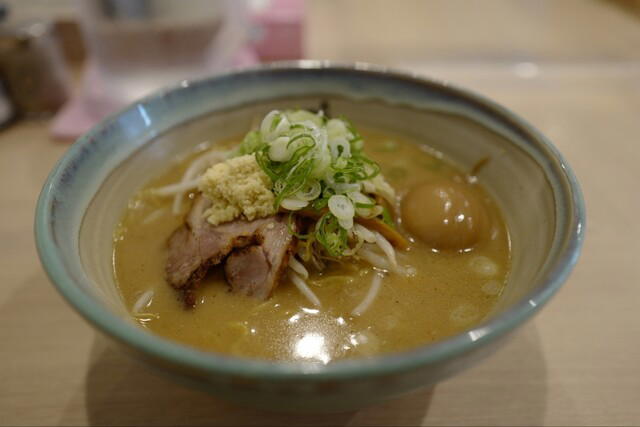
Approaching a ramen shop in Sapporo is rarely theatrical: steam on glass, a short line moving in bursts, bowls clattering behind the counter, diners leaving without lingering. That rhythm matters. Hokkaido ramen is not built around long meals or tableside explanation; it is a compressed exchange between kitchen tempo and diner attention. Sapporo Menya Mitsuba belongs to that culture, where the room’s purpose is immediate and the meal is judged in minutes, not courses.
Sapporo’s ramen reputation is often flattened into miso, butter, corn, and winter appetite, but the city is more varied. Serious shops compete through broth weight, noodle texture, tare balance, and service discipline while staying accessible to office workers, solo diners, families, and travelers who understand the etiquette. A Tabelog Ramen HOKKAIDO 100 selection in 2025 places this shop inside Hokkaido’s competitive ramen tier rather than the casual tourist circuit. Its Tabelog score of 3.68 also matters in Japan, where scoring is conservative and ramen specialists can draw committed followings without luxury pricing or elaborate dining rooms.
A compact ramen ritual in Sapporo
The defining experience is scale. A compact ramen setting creates a room where the kitchen’s pacing controls the visit. In ramen culture, that is a strength. The counter-style rhythm is not a social stage but a working line: diners arrive, order, eat while the noodles hold texture, and return the seat to the next guest. This is why Hokkaido ramen shops can feel more exacting than their modest format suggests. The meal asks for attention, not ceremony.
That structure makes the venue legible for different diners. The format suits solo meals, quick lunches, and practical stops in the middle of a Sapporo day. Many serious ramen rooms in the city function as neighborhood institutions rather than hushed specialist counters, and the appeal lies in that everyday clarity. The absence of ceremony reinforces the point: this is a public, fast-turning ramen format, not a restaurant for lingering.
Compared with Sapporo’s other casual comfort-food addresses, the distinction is pace. Soup curry rooms such as Sapporo Soup Curry Senmon Ten Esper Ito Hachiken souhonten and Rakkyo invite a slower plate-and-rice cadence; ramen counters like Asahikawa Ramen Nanashi and Hachinoki run on heat, timing, and turnover. Sapporo Menya Mitsuba fits the second pattern. The reward comes from accepting the format, not stretching it into a leisurely lunch.
Where Hokkaido ramen culture rewards precision over display
Hokkaido ramen is often treated as cold-weather comfort, but stronger shops are technical in ways easy to miss. Broth concentration, fat management, noodle firmness, and topping-to-soup ratio all have to land quickly because the diner experiences the bowl in a short window. A restaurant does not need a long tasting menu to reveal discipline; in ramen, discipline shows through repetition. The same bowl must satisfy during ordinary service as well as when the line thickens.
The Tabelog Ramen HOKKAIDO 100 recognition is useful because it reflects a specialist category, placing the shop among Hokkaido ramen venues judged by ramen standards, not alongside bistros, sushi counters, or hotels. That matters for travelers planning Sapporo around food. The city’s strength lies in category depth: ramen, soup curry, seafood izakaya, bakeries, and French-influenced dining each have their own audiences and expectations. A ramen selection should be read differently from a fine-dining accolade; it signals consistency, local attention, and relevance in a crowded field.
The same logic separates a ramen stop from broader Sapporo eating. For curry specialists, compare the city’s spice-and-rice culture generically, or look to allowed Sapporo peers such as Sapporo Soup Curry Senmon Ten Esper Ito Hachiken souhonten and Rakkyo. For another kind of wheat-and-fermentation craft, other Hokkaido dining shows how the region’s food culture extends beyond bowls. For heat in another register, Sapporo has additional spicy noodle conversations that sit adjacent to, rather than inside, the classic ramen lane.
How to read the shop within a Sapporo itinerary
Location in Sapporo gives the meal a different character from a purely station-adjacent checklist stop. The visit reads as part of the city’s everyday food infrastructure rather than a staged destination meal. For travelers, the point is not to overcomplicate the stop: treat it as a focused ramen detour within Sapporo, not as a long-form restaurant appointment.
Practical intelligence is simple: this is a ramen room with the compact tempo associated with the category and a budget listed at Dinner: - JPY 999; Lunch: - JPY 999. That combination points to an accessible local pattern. Arrive with a flexible schedule, expect the meal to move faster than a full-service restaurant, and do not plan it as a long social pause. As with any small specialist shop, current opening details are best checked close to the visit.
For a wider city plan, use Our full Sapporo restaurants guide to balance ramen with curry, seafood, and French-leaning rooms. Lodging context sits in Our full Sapporo hotels guide, while evening planning belongs in Our full Sapporo bars guide. Travelers mapping broader food and drink routes can also cross-reference Our full Sapporo wineries guide and Our full Sapporo experiences guide. For contrast outside Hokkaido, EP Club’s Japan and overseas pages range from other dining rooms in Kamakura, Tokyo, Osaka, Kumamoto, Kawasaki, Kyoto, Los Angeles, and Pasadena, but Sapporo Menya Mitsuba belongs squarely to Sapporo’s ramen conversation.
The editorial case for Sapporo Menya Mitsuba is not that it turns ramen into fine dining. It does the opposite, which is more valuable for understanding Sapporo: it keeps the meal compact, disciplined, and tied to local routine. In a city where winter appetite and noodle culture can become clichés, the smarter reading is practical. Category-specific recognition, accessible pricing, and repeatable service rhythm explain why this kind of shop carries weight in Hokkaido’s ramen conversation.
Frequently asked questions
Where is Sapporo Menya Mitsuba in Sapporo?
Sapporo.
What's the price range at Sapporo Menya Mitsuba?
Pricing at Sapporo Menya Mitsuba is listed as - JPY 999 - JPY 999.
What days is Sapporo Menya Mitsuba closed?
Current opening details for Sapporo Menya Mitsuba should be checked close to the visit.
What is Sapporo Menya Mitsuba known for?
Sapporo Menya Mitsuba is known as a ramen venue in Sapporo, with Tabelog Ramen HOKKAIDO 100 recognition in 2025 and a Tabelog score of 3.68.
Cuisine Lens
Nearby venues at a similar price tier for orientation.
| Venue | Cuisine | Price | Awards | Notes |
|---|---|---|---|---|
| Sapporo Menya MitsubaThis venue (the venue you are viewing) | Sapporo-style ramen shop | $10–20 | Tabelog 100 #89 | Not listed |
| Teuchi Soba no Taguto | Japanese Soba Noodle Shop | Not listed | Tabelog 100 #35 | Nishi |
| Araton Honten | Ramen & Tsukemen Shop | $10–20 | Tabelog 100 #23 | Chūō |
| Hokuzan Ryu | Ramen shop | Not listed | Tabelog 100 #42 | Kita |
| ZORA | Sapporo soup curry & Japanese curry house | $10–20 | Tabelog 100 #6 | Chūō |
| Ramen Shingetsu | Traditional Sapporo Ramen Shop | $10–20 | Tabelog 100 #87 | Chūō |
Recognition history
Dated appearances from independent guides and award organizations, with the underlying list record or original source where available.
Tabelog 100 #89 · No. 89
Tabelog · Tabelog 100 - Ramen - HOKKAIDO - 2025
Continue exploring
More in Sapporo
Restaurants in Sapporo
All restaurants in Sapporo →
Bars in Sapporo
All bars in Sapporo →
Details
- Lively
- Cozy
- Solo
- Casual Hangout
- After Work
- Family
- Standalone
- A La Carte
- Counter Dining
Current opening hours
- Monday
- Closed
- Tuesday
- 11 AM–3 PM, 5–7:40 PM
- Wednesday
- 11 AM–3 PM, 5–7:40 PM
- Thursday
- 11 AM–3 PM, 5–7:40 PM
- Friday
- 11 AM–3 PM, 5–7:40 PM
- Saturday
- 10:45 AM–3 PM, 5–7:40 PM
- Sunday
- 10:45 AM–3 PM
Hours can change for holidays and private events. Hours as of .
A small, casual neighborhood ramen shop with counter-centric seating and a few compact tables, typically busy and energetic but still relaxed, focused on quick bowls rather than lingering dining.