The Wilson
Located on West 27th Street in Chelsea, The Wilson sits in one of Manhattan's most architecturally restless blocks, where gallery conversions and production studios share walls with newer hospitality ventures. The address places it squarely within the broader Chelsea dining corridor, where kitchens increasingly draw on classical European technique applied to American regional produce, a format that has quietly reshaped the neighborhood's restaurant identity over the past decade.
Pearl is the En Primeur Club membership app — saves, bookings, and concierge access live there. Same editors, same standards.
- Address
- 132 W 27th St, New York, NY 10001
- Phone
- +12125292671
- Website
- eatatthewilson.com
- Directions
- Get directions
 Saves & bookings on Pearl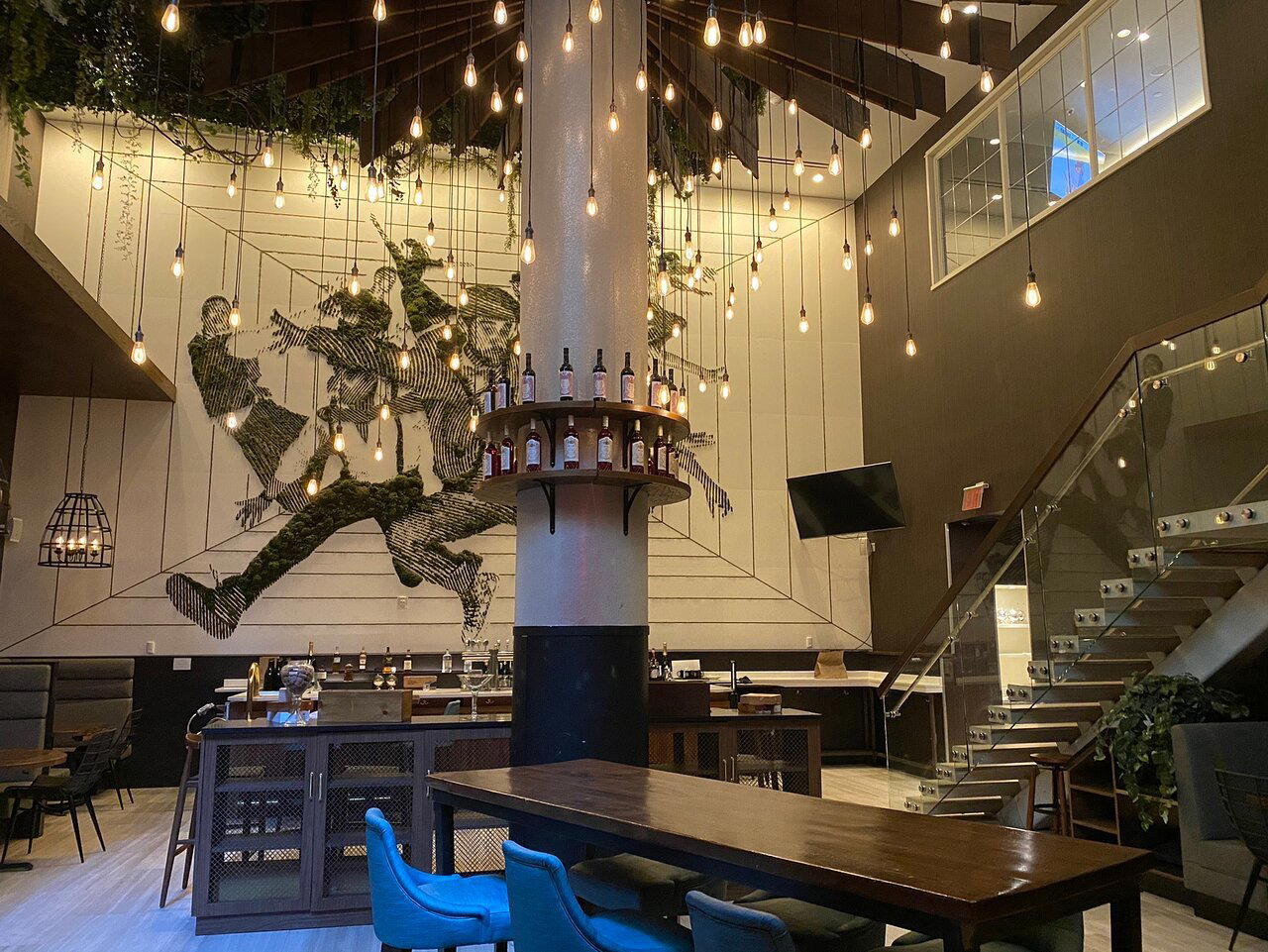
Chelsea's Culinary Crosscurrents
West 27th Street in Chelsea occupies a particular position in Manhattan's dining geography. The block sits at the convergence of the Flower District's wholesale trade, the gallery infrastructure of West Chelsea, and the residential density pushing south from Hudson Yards. Restaurants that land here are rarely destination-driven in the way that a Midtown address demands; instead, they tend to develop a neighborhood loyalty that is harder to manufacture and more durable once established. The Wilson, at 132 W 27th St, is a New York restaurant in Chelsea serving New American with a seafood focus, priced around $50 per person.
Chelsea's restaurant identity has shifted noticeably over the past decade. The neighborhood moved from a corridor of utilitarian lunch spots serving gallery workers toward a more considered dining scene, one where European classical training applied to American seasonal produce has become a recurring pattern. That pattern mirrors what has happened at a wider scale across American fine dining, where kitchens from Blue Hill at Stone Barns in Tarrytown to Single Thread Farm in Healdsburg have used imported technique as the scaffolding for ingredient-led storytelling rooted in a specific American place.
The Local-Global Framework at Work
The intersection of imported culinary methods and indigenous products is the dominant structural tension in American fine dining right now, and it plays out differently depending on geography, price tier, and the chef's training lineage. In New York specifically, particularly analytically interesting cases tend to cluster at two extremes: the hyper-technical French-influenced programs at places like Le Bernardin and Per Se, where classical architecture governs the entire experience, and the newer generation of progressive kitchens that have absorbed those same lessons but redirected them toward American regional sourcing with less reverence for European hierarchy.
The Korean-American axis adds a third line of tension. Kitchens such as Atomix and Jungsik New York have demonstrated that progressive Korean technique can be applied to New York's ingredient supply with results that sit comfortably in the city's top tier. That cross-pollination is no longer a novelty; it has become a structural feature of how New York's serious dining scene operates. The city now expects its more ambitious kitchens to be fluent in multiple culinary languages simultaneously.
At the other end of the price spectrum, the same logic applies in compressed form. Neighborhood restaurants across Chelsea are increasingly operated by cooks with fine-dining lineage who have chosen to build something more accessible, applying brigade-level discipline to produce sourced from Hudson Valley farms, the Greenmarket at Union Square, or regional fisheries. The result is a mid-tier that punches considerably above its price bracket in technical execution.
What Chelsea Demands From Its Restaurants
A Chelsea address requires a specific kind of versatility. The neighborhood's lunch trade is driven by gallery openings, showroom appointments, and the residual freelance culture that has defined the area since the 1990s. Evening dining skews toward a different demographic: design professionals, the Hudson Yards corporate overflow, and the kind of informed local who tracks openings carefully but is not necessarily chasing Michelin validation. That audience rewards consistency and punishes self-importance more reliably than a destination-dining crowd would.
The American cities that have built particularly coherent fine-dining scenes, from the farm-anchored model at Emeril's in New Orleans to the tasting menu precision of Alinea in Chicago or the ingredient obsession at Providence in Los Angeles, tend to be those where the neighborhood's character has shaped the restaurant's format rather than the other way around. Chelsea has the right conditions for that dynamic: a resident audience with high culinary literacy, proximity to serious ingredient supply, and enough foot traffic to sustain a mid-week program that might struggle in a purely destination model.
The New York City Context
New York remains the reference market for American fine dining in terms of critical density and competitive pressure. A restaurant operating at the higher end of Chelsea's market is not just competing with its immediate neighbors; it is implicitly measured against the city's full range of ambitious kitchens, from the austere counter discipline of Masa to the estate-scale ambition of properties like The French Laundry in Napa or The Inn at Little Washington, both of which shape the national benchmark even when the direct comparison is geographically imprecise.
Within New York itself, the restaurants that have most successfully built a sustained identity tend to be those with a clear editorial point of view on produce and technique, a format that matches the physical space rather than fighting it, and a booking dynamic that rewards regulars without alienating first-time visitors. Those are the structural conditions that separate durable neighborhood institutions from the restaurants that generate strong opening-month press and then fade. For context on how the city's broader dining scene is organized by neighborhood and price tier, our full New York City restaurants guide maps the competitive terrain in detail.
The global reference points are also worth noting. Kitchens in Hong Kong such as 8 1/2 Otto e Mezzo Bombana or Monaco's Alain Ducasse at Louis XV demonstrate that European classical technique, when applied with genuine rigor, travels well. What distinguishes New York's better kitchens from pure European transplants is the degree to which local ingredient culture has been absorbed into the program at a structural level rather than used as a garnish.
Planning Your Visit
The Wilson is located at 132 West 27th Street in Chelsea, Manhattan, accessible from multiple subway lines serving the 28th Street and 23rd Street stations. Chelsea's dining peak runs Tuesday through Saturday, with Friday and Saturday evenings filling fastest for walk-in-friendly rooms. Comparable Chelsea and Flatiron neighborhood restaurants in a similar format range from dinner-only tasting programs to all-day bistro formats, so confirming the service structure in advance avoids surprises.
For readers building a broader New York itinerary around serious dining, the Chelsea corridor pairs well with the Flatiron and NoMad neighborhoods immediately to the east. The neighborhood also sits close enough to the Union Square Greenmarket to make ingredient sourcing legible in a way that reinforces the local-technique argument at the city's better kitchens.
Comparable programs elsewhere in the US, including Lazy Bear in San Francisco, Addison in San Diego, and Bacchanalia in Atlanta, offer a useful calibration for what the local-ingredients, global-technique format looks like when executed at a high level across different American regional contexts.
Quick reference: 132 W 27th St, Chelsea, Manhattan.
Standing Among Peers
Comparable venues nearby, for context on price, style, and recognition.
| Venue | Cuisine | Price | Notes |
|---|---|---|---|
| The WilsonThis venue — the venue you are viewing | New American with Seafood Focus | $$$ | Not listed |
| Jams | Seasonal New American | $$$ | Midtown-Times Square |
| Forgione | Modern New American | $$$ | Tribeca-Civic Center |
| The Dawson | Modern Irish-American Pub Fare | $$$ | Midtown-Times Square |
| Chantelle NYC | Contemporary American with French influences | $$$ | Lower East Side |
| American Brass | New American | $$$ | Long Island City-Hunters Point |
Continue exploring
More in New York City
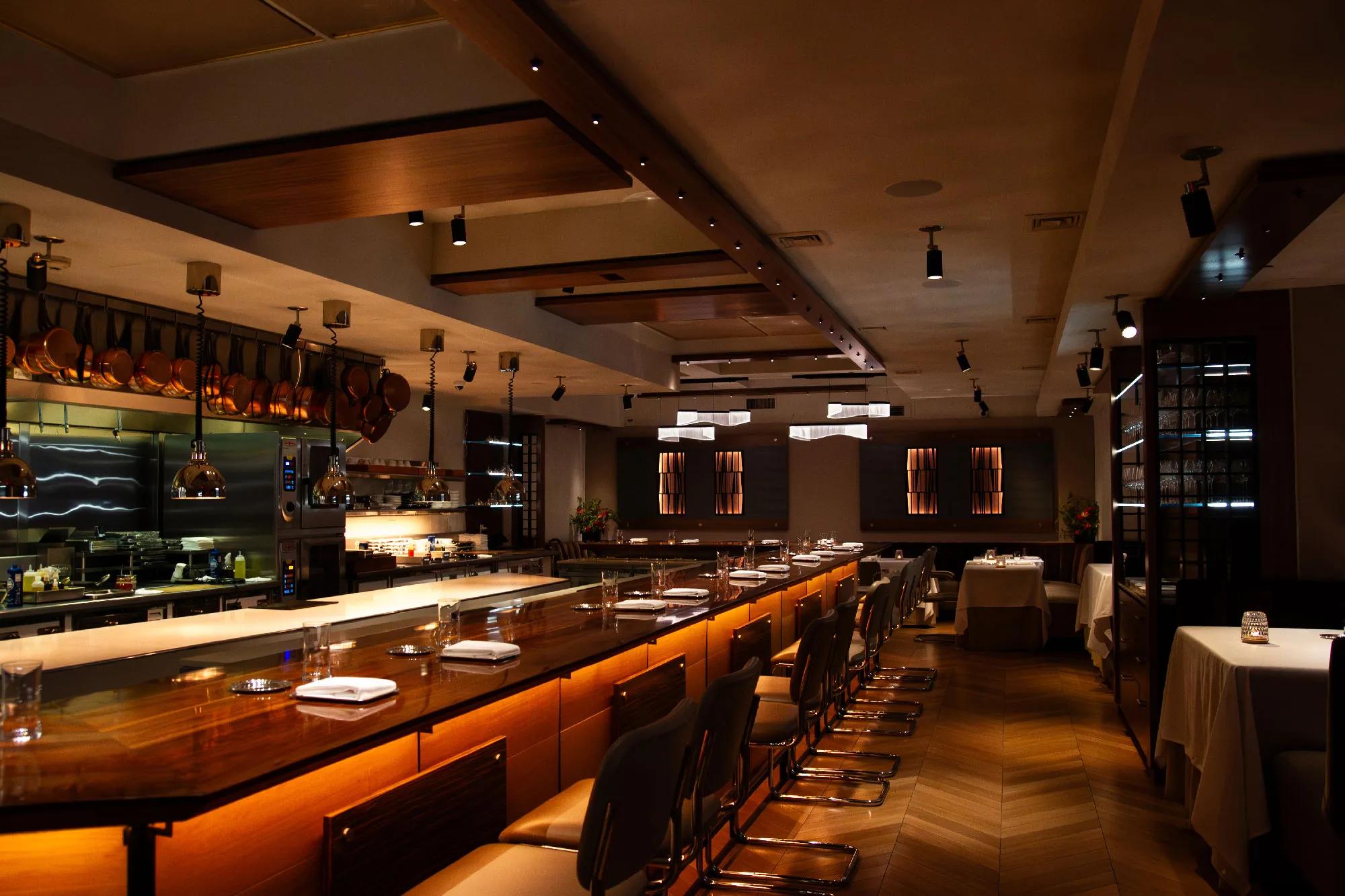
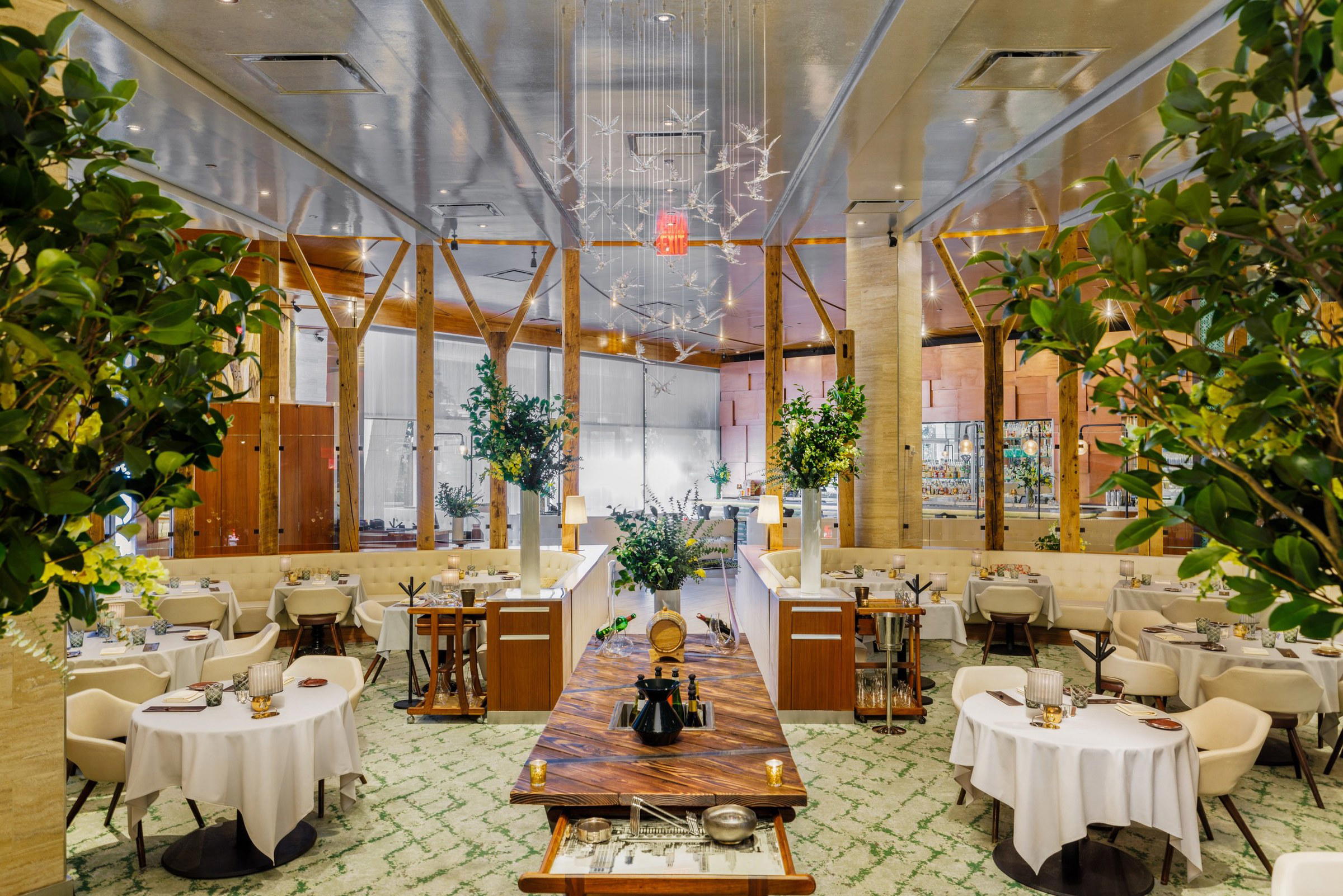
Restaurants in New York City
Browse all →
Bars in New York City
Browse all →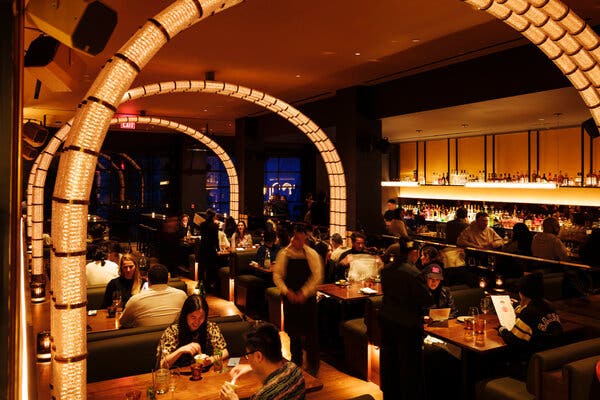
Hotels in New York City
Browse all →
Wineries in New York City
Browse all →


At a Glance
- Casual
- Modern
- Cozy
- Brunch
- Casual Hangout
- Terrace
- Hotel Restaurant
- Private Dining
- Craft Cocktails
Current opening hours
- Monday
- 7 AM–11 PM
- Tuesday
- 7 AM–11 PM
- Wednesday
- 7 AM–11 PM
- Thursday
- 7 AM–11 PM
- Friday
- 7 AM–11 PM
- Saturday
- 7 AM–12 AM
- Sunday
- 7 AM–11 PM
Hours can change for holidays and private events. Last verified .
Casual subway-tiled eatery with warm, hospitable service and comfortable, relaxing atmosphere featuring atrium seating.