On Rosenstraße in Hamburg's city centre, The Ramen occupies a specific position in the city's casual dining scene: a bowl-focused counter where the format does the talking. Hamburg's ramen options sit in a narrower field than Berlin or Munich, making addresses like this one more consequential for anyone tracking the city's broader shift toward Japanese comfort food formats. Worth knowing before you go.
Pearl is the En Primeur Club membership app — saves, bookings, and concierge access live there. Same editors, same standards.
- Address
- Rosenstraße 5, 20095 Hamburg, Germany
- Phone
- +494030922442
- Website
- theramenhamburg.com
- Directions
- Get directions
 Saves & bookings on Pearl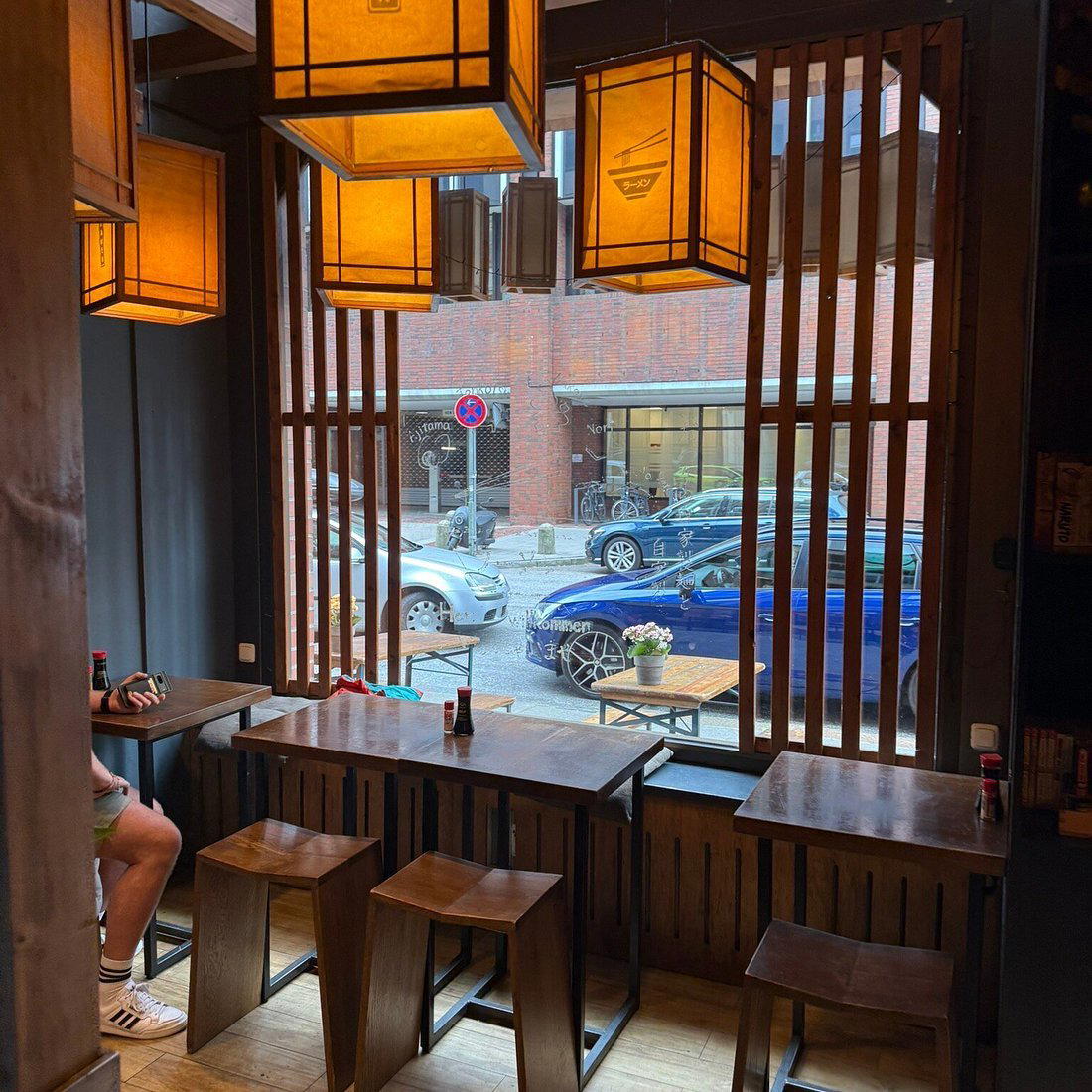
The Space Before the Bowl
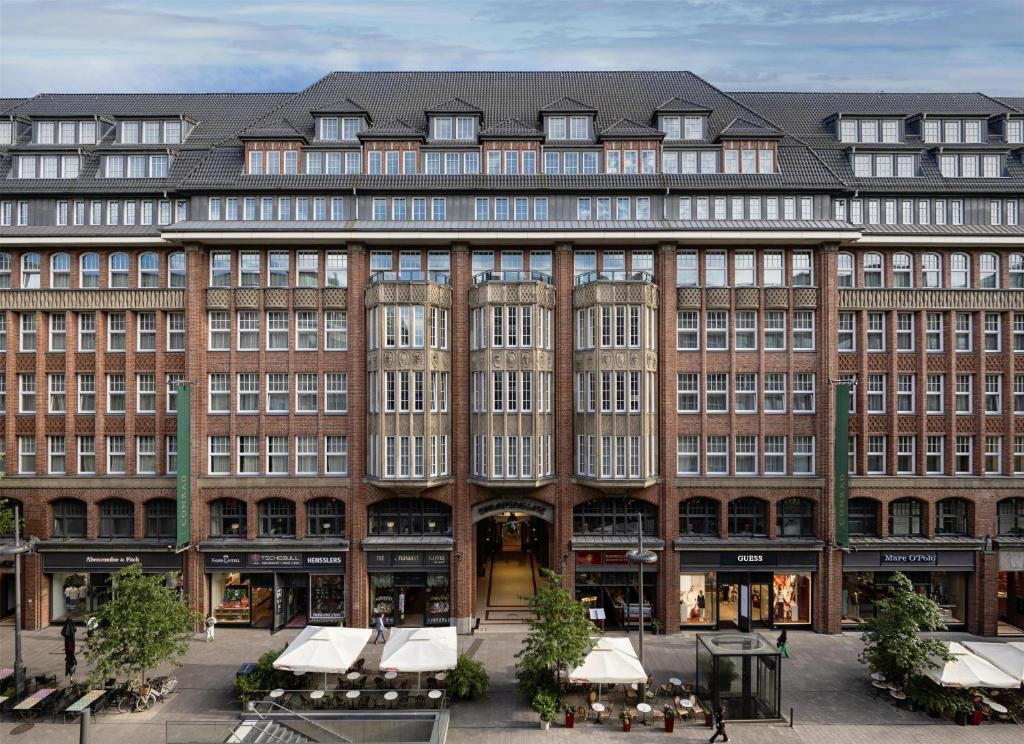
Rosenstraße 5 sits in the commercial heart of Hamburg, a few blocks from the Rathaus and the dense foot traffic of the Mönckebergstraße retail corridor. That location tells you something before you step inside: this is not a destination neighbourhood where a ramen counter would draw its credibility from surrounding independent food culture. It draws on volume, accessibility, and the particular appetite of a city-centre crowd that wants something specific and wants it efficiently.
Hamburg's casual dining scene has undergone a gradual shift over the past decade, moving away from the city's traditional dominance of northern German fish dishes and French-influenced bistros toward a more format-diverse offering. Ramen, which arrived in German cities largely through Berlin's early adopters in the 2010s, has since filtered outward. In Hamburg, the category remains smaller than in the capital, which means individual addresses carry more representative weight simply by showing up.
The physical container of a ramen counter matters more than it might in other formats. Unlike a full-service restaurant where the dining room signals intention through tablecloths, lighting design, and wine programmes, a ramen space communicates entirely through its layout: the height and material of the counter, the visibility of the kitchen, the acoustics. Counter seating oriented toward an open prep area creates a particular social contract with the guest — transparency over theatre, process over presentation.
Where Ramen Sits in Hamburg's Dining Architecture
Hamburg's fine dining tier is anchored by a cluster of Michelin-recognised addresses. Restaurant Haerlin and The Table Kevin Fehling occupy the best of that hierarchy, with Fehling's counter format — a deliberate, multi-course progression, representing one end of the counter-dining spectrum. 100/200 Kitchen, bianc, and Lakeside fill in the creative and European mid-tier. Ramen, as a category, operates well below that price and formality tier, which is precisely its function. It answers a different question: where do you eat well on a weekday without orchestration?
The comparison is not a demotion. In cities where ramen has matured as a category, Tokyo, New York, London, the better bowl-focused counters are evaluated on entirely different criteria than fine dining rooms. Broth depth and construction time, noodle texture and source, the precision of toppings and their integration with fat content. These are technical disciplines, and the venues that take them seriously operate as genuine specialists. Germany's ramen scene is still developing that specialist tier, with a handful of addresses in Berlin leading the way. Hamburg is a step behind, which means early-mover addresses carry an outsized role in setting local expectations.
For context on how the ramen format has developed outside Germany, Atomix in New York City demonstrates what disciplined Korean fine dining can achieve when it commits fully to a format; the ramen counter operates by a parallel logic at a different price point. At the European fine dining end of the German spectrum, Aqua in Wolfsburg, Schwarzwaldstube in Baiersbronn, and Vendôme in Bergisch Gladbach represent what format commitment looks like at the other extreme of the market.
The Design Logic of a Counter-First Format
The editorial angle that matters most for a space like The Ramen is not what it looks like in a press photograph but what the spatial logic implies about the dining experience. Counter-first formats in the ramen tradition prioritise throughput without sacrificing engagement. The guest sits close to the kitchen, sometimes close enough to observe the construction of each bowl, and the meal unfolds quickly. There is no ambient course structure, no extended wine discussion, no lingering second act. The bowl arrives, it is eaten at the temperature it was intended to be eaten, and the meal concludes.
This creates a different kind of precision pressure than a tasting menu counter. At a kaiseki or degustation counter, the kitchen controls pacing and the guest adapts. At a ramen counter, the heat physics of the bowl control everything. A broth served five degrees too cool loses its fat emulsion. A noodle sitting two minutes past its window softens past its intended texture. The discipline is less visible than in fine dining but no less demanding.
Hamburg's broader restaurant scene, as documented across the EP Club Hamburg guide, skews toward European formats. That makes the city's handful of Japanese-influenced counters more visible by contrast, and more consequential for anyone tracking where the city's casual dining energy is moving. Comparable specialist format development is visible at CODA Dessert Dining in Berlin and JAN in Munich, where format specificity drives the identity of the venue as much as cuisine does.
Placing The Ramen in the Wider German Dining Context
Germany's fine dining geography is notably decentralised. Victor's Fine Dining by Christian Bau in Perl, Waldhotel Sonnora in Dreis, Schanz in Piesport, ES:SENZ in Grassau, and Bagatelle in Trier are distributed across smaller cities and rural settings, a pattern that reflects how Michelin recognition in Germany has historically rewarded destination dining outside major urban centres. Hamburg's restaurant identity, by contrast, is shaped by its port-city commercial culture, practical, international in reference, less precious about formality.
That culture creates a receptive environment for a format like ramen: unpretentious in presentation, international in origin, technically specific in execution. Whether The Ramen realises that potential fully is a question the venue's own data, currently sparse in public documentation, cannot yet answer with confidence. What the address on Rosenstraße 5 does confirm is that the format has found a foothold in the city centre, in a location with the foot traffic to sustain it.
For those moving across Hamburg's dining tiers in a single trip, the logical sequence runs from the city's European fine dining addresses for evening bookings down to counter formats for lunch or early dinner. The ramen counter fills a gap that the city's more formal rooms leave open: fast, specific, low-friction, and honest about what it is.
Further afield for comparison on what a disciplined European fine dining counter can achieve, Le Bernardin in New York City remains the clearest reference point for how format rigour translates to sustained critical recognition over decades, a standard that applies across price tiers, not only at the leading.
Planning Your Visit
Logistics at a Glance
| Venue | Format | Price Tier | Booking |
|---|---|---|---|
| The Ramen | Ramen counter, city centre | Not confirmed | Not confirmed |
| The Table Kevin Fehling | Creative counter, tasting menu | €€€€ | Advance reservation required |
| bianc | Modern Mediterranean, full service | €€€€ | Reservations recommended |
| Lakeside | German lakeside, full service | €€€€ | Reservations recommended |
Continue exploring
More in Hamburg
Restaurants in Hamburg
Browse all →
Bars in Hamburg
Browse all →

Hotels in Hamburg
Browse all →
Wineries in Hamburg
Browse all →
At a Glance
- Cozy
- Casual Hangout
Current opening hours
- Monday
- 11:30 AM–9:30 PM
- Tuesday
- 11:30 AM–9:30 PM
- Wednesday
- 11:30 AM–9:30 PM
- Thursday
- 11:30 AM–9:30 PM
- Friday
- 11:30 AM–10 PM
- Saturday
- 12–10 PM
- Sunday
- 12–9 PM
Hours can change for holidays and private events. Last verified .
Cozy and atmospheric with close seating arrangements that can get hot in summer.
Know Before You Go
- Getting there
- Rosenstraße 5, 20095 Hamburg, Germany