The Cacao Tree
The Cacao Tree sits on Bergensesteenweg in Sint-Pieters-Leeuw, a commune on Brussels' southwestern fringe where the city's dining ambitions meet a quieter residential grain. With a name that signals an immediate relationship with raw ingredients, it occupies a stretch of the Flemish Brabant belt where sourcing and provenance increasingly define how a room is positioned. For those tracking where Belgian dining is extending its reach beyond the capital, this address warrants attention.
Pearl is the En Primeur Club membership app — saves, bookings, and concierge access live there. Same editors, same standards.
- Address
- Bergensesteenweg 440, 1600 Sint-Pieters-Leeuw, Belgium
- Phone
- +3224142057
- Website
- thecacaotree.be
- Directions
- Get directions
 Saves & bookings on Pearl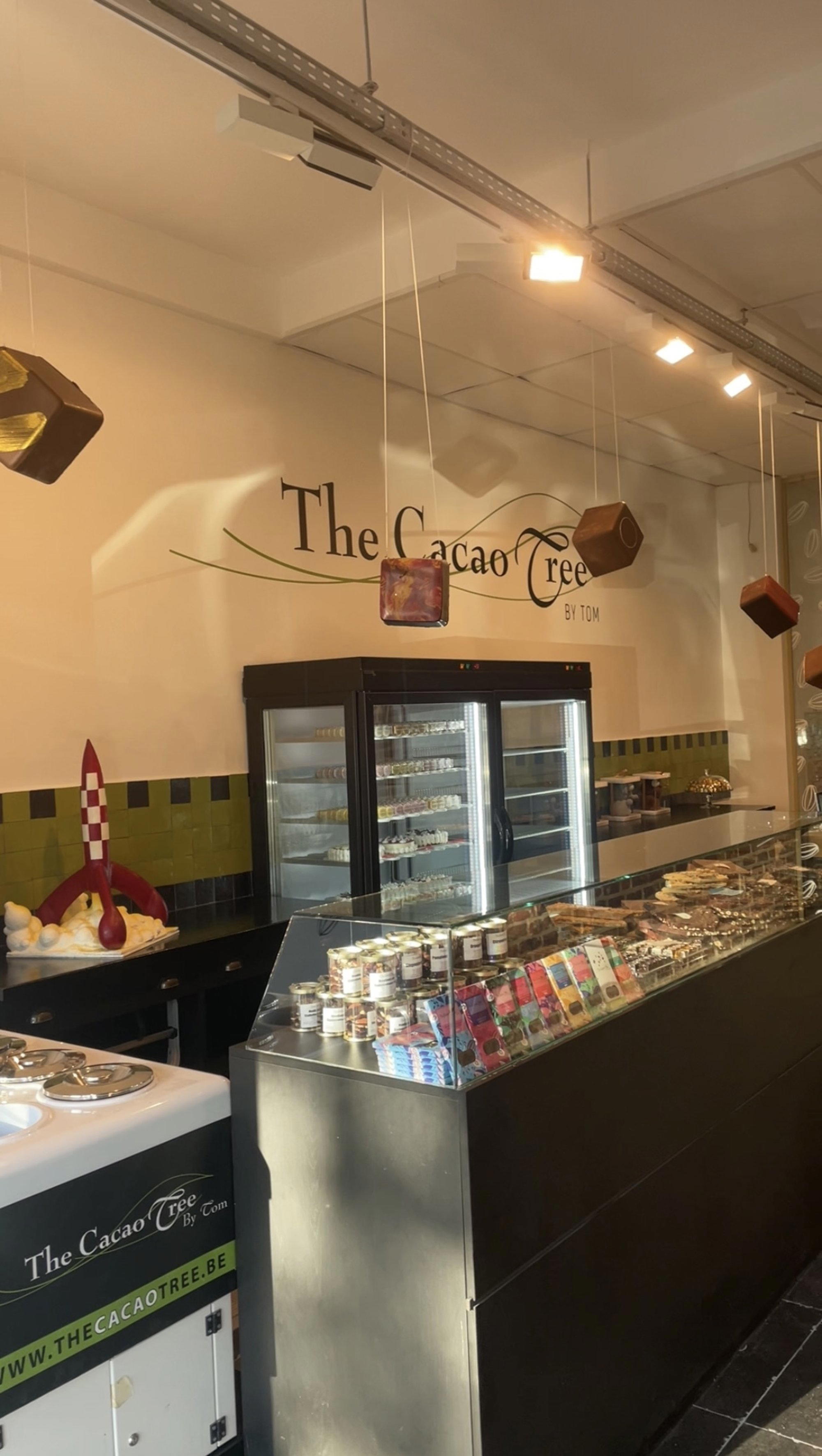
A Commune at the Edge of Brussels' Dining Radius
Sint-Pieters-Leeuw sits roughly twelve kilometres southwest of central Brussels, close enough to draw from the capital's appetite for serious eating but far enough that the venues here operate on their own terms rather than as extensions of the city's established circuits. The Bergensesteenweg corridor, the main artery running through the commune, has become a quiet accumulation point for addresses that serve a local population with expectations shaped by proximity to one of Europe's more competitive dining cities. The Cacao Tree is a Belgian Chocolatier at Bergensesteenweg 440 in Sint-Pieters-Leeuw, Belgium.
The name itself carries editorial weight before a single dish arrives. Cacao, in its raw botanical form, is one of the more demanding ingredients a kitchen can commit to: it has provenance built into its identity, with flavour profiles that shift dramatically by origin, fermentation method, and processing approach. A venue that anchors its identity in that ingredient is making a statement about where food comes from and why the distance between source and plate matters. Whether the kitchen follows through on that signal is the operative question, and one the Flemish Brabant dining circuit is well-placed to ask critically. See our full Sint-Pieters-Leeuw restaurants guide for the broader context of what this commune now offers.
The Ingredient Logic of the Name
Belgian chocolate culture is so thoroughly embedded in the national identity that it risks becoming invisible, a background assumption rather than an active editorial position. The cacao tree itself, Theobroma cacao, is a tropical species whose fruit is transformed through fermentation and roasting before it resembles anything close to what arrives at a European table. The supply chain is long and consequential. Sourcing decisions made at the origin level, whether a producer works with single-estate cacao from West Africa, the Caribbean, or South America, ripple through into the finished product in ways that are perceptible to anyone paying attention.
Belgium's chocolate tradition has historically been about transformation at the processing end: couverture quality, conching technique, tempering precision. The more recent conversation, particularly among smaller chocolatiers and restaurants treating chocolate as a serious ingredient rather than a finishing garnish, has shifted toward the origin end of that chain. This mirrors the trajectory seen across specialty coffee, natural wine, and single-origin spirits. For an address like The Cacao Tree, the name invites placement within that more considered sourcing conversation, even before the menu confirms it.
For comparison, Belgium's most acclaimed kitchens, Hof van Cleve in Kruishoutem, Boury in Roeselare, and Zilte in Antwerp, have built their reputations in part through rigorous sourcing frameworks: named producers, regional specificity, and seasonal discipline. That standard has set the benchmark against which ingredient-forward addresses at all price points are now measured.
Where Sint-Pieters-Leeuw Fits in the Flemish Brabant Picture
The Flemish Brabant belt around Brussels has not historically commanded the same critical attention as Ghent, Antwerp, or the coast, but that is changing. Addresses in this zone benefit from a customer base with metropolitan tastes and suburban frequency, the kind of repeat clientele that allows a kitchen to develop and iterate rather than perform for one-off destination diners. That dynamic tends to produce more honest cooking over time, as the room fills with people who notice when something changes rather than tourists experiencing the version on the website.
The nearest comparable in terms of geographic positioning and editorial ambition is Nesta, the Mediterranean-focused address also operating in Sint-Pieters-Leeuw, which demonstrates that the commune can support kitchens with a defined point of view. Further out in the Belgian network, Castor in Beveren and De Jonkman in Sint-Kruis show how addresses outside the major urban centres have built credible reputations through consistency and sourcing discipline rather than location advantage.
In Brussels proper, the reference points are different: Bozar Restaurant and Le Chalet de la Forêt in Uccle operate with the weight of institutional recognition and a longer critical history. An address on the Bergensesteenweg is working in a different register, and that is not a disadvantage, it is a different kind of opportunity, one that rewards regulars over reviewers.
The Belgian Dining Circuit Beyond the Capital
Belgium's serious dining geography extends well beyond Brussels and the three-star anchors. L'air du temps in Liernu, Willem Hiele in Oudenburg, and Bartholomeus in Heist have each built strong cases for looking outside the obvious city centres. The pattern across these addresses is consistent: a focused identity, a clear sourcing narrative, and a room that functions as a local anchor rather than a destination exercise. La Durée in Izegem, Maison Colette in Tongerlo, and d'Eugénie à Emilie in Baudour add further texture to the argument that Belgium's most interesting dining conversations are no longer confined to the postcode that gets particularly column inches.
Internationally, the sourcing-led approach that an address like The Cacao Tree implies has strong analogues in rooms that have made ingredient provenance the editorial spine of their offer. Le Bernardin in New York built its reputation on sourcing discipline long before the language of farm-to-table became ubiquitous. Atomix, also in New York, demonstrates how a clearly articulated ingredient philosophy can carry a room's identity across multiple tiers of recognition. The point is not comparison by scale but by discipline: sourcing seriousness is legible regardless of context, and readers who have experienced it at that level know what to look for closer to home.
For those based in or visiting the Brussels area, La Table de Maxime in Our provides another data point in the wider Walloon and Flemish Brabant arc worth tracking alongside Sint-Pieters-Leeuw's emerging addresses.
Planning a Visit
The restaurant is located at Bergensesteenweg 440, 1600 Sint-Pieters-Leeuw, accessible by car from central Brussels in under twenty minutes via the N6 and reachable by local train to Sint-Pieters-Leeuw station followed by a short connection. The restaurant is open Monday to Saturday from 10 AM to 6:30 PM and Sunday from 2 PM to 6:30 PM, with a casual dress code and walk-in-friendly service.
In Context: Similar Options
Comparable venues nearby, for context on price, style, and recognition.
| Venue | Cuisine | Price | Awards | Notes |
|---|---|---|---|---|
| The Cacao TreeThis venue — the venue you are viewing | Belgian Chocolatier | $ | Not listed | Not listed |
| Nesta | Mediterranean Fine Dining | $$$$ | Michelin Plate | Sint-Pieters-Leeuw |
| Maison Antoine | Belgian Frituur | $ | Not listed | Etterbeek |
| Chocolade-Atelier Vyverman | Belgian Chocolatier | $ | Not listed | just outside centrum |
| XOCOLATE | Artisan Bean-to-Bar Chocolatier | $ | Not listed | Schaerbeek |
| The Cacao Tree | Artisanal Belgian Chocolate & Ice Cream | $$ | Not listed | Uccle |
Continue exploring
More in Sint-Pieters-Leeuw
Restaurants in Sint-Pieters-Leeuw
Browse all →
Bars in Sint-Pieters-Leeuw
Browse all →
At a Glance
- Casual Hangout
- Local Sourcing
Current opening hours
- Monday
- 10 AM–6:30 PM
- Tuesday
- 10 AM–6:30 PM
- Wednesday
- 10 AM–6:30 PM
- Thursday
- 10 AM–6:30 PM
- Friday
- 10 AM–6:30 PM
- Saturday
- 10 AM–6:30 PM
- Sunday
- 2–6:30 PM
Hours can change for holidays and private events. Last verified .