Dimsum Garden
Dimsum Garden at 338 Lexington Ave occupies a specific niche in Midtown Manhattan's Chinese dining scene, where the tradition of hand-folded dim sum meets a neighborhood clientele that values craft over spectacle. The address places it squarely in the Murray Hill corridor, a stretch that has quietly hosted some of the city's more serious casual Chinese cooking for decades. It sits at a different register from the grand Cantonese banquet halls of Flushing or the modernist tasting-menu circuit uptown.
Pearl is the En Primeur Club membership app — saves, bookings, and concierge access live there. Same editors, same standards.
- Address
- 338 Lexington Ave, New York, NY 10016
- Phone
- +16465592388
- Website
- daodimsum.com
- Directions
- Get directions
 Saves & bookings on Pearl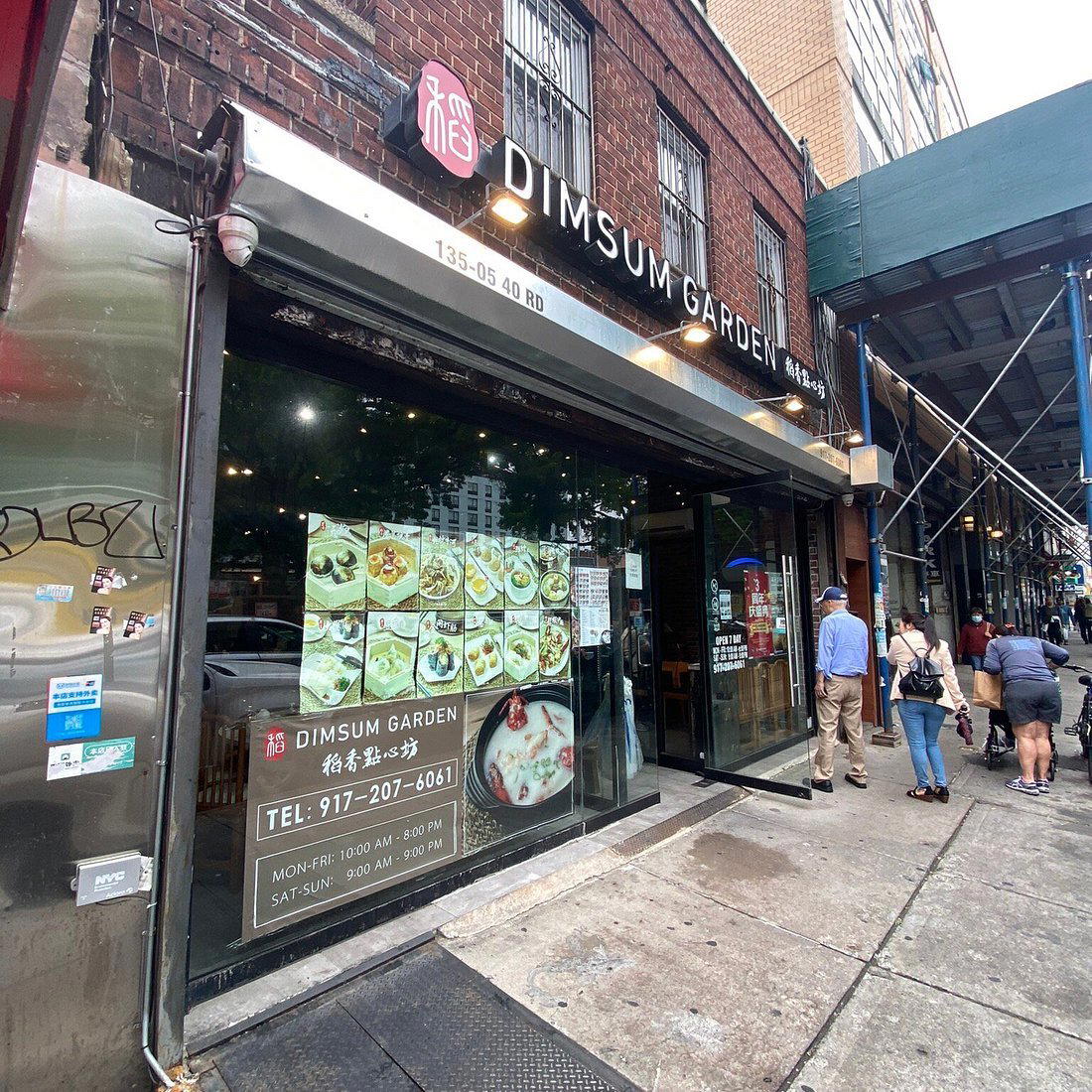
Where Midtown's Dim Sum Tradition Holds Its Ground
The neighborhood's culinary identity runs more toward lunch-counter efficiency and office-adjacent practicality than toward the kind of craft-focused dim sum that defines the Flushing banquet halls or the steamer-stacked parlors of Manhattan's Chinatown. That's precisely why a place like Dimsum Garden, at 338 Lexington Ave, registers as a data point worth examining: it exists at the intersection of a fading Midtown convenience culture and a broader American reappraisal of what dim sum can be outside of traditional Cantonese community dining rooms.
New York's dim sum scene has undergone a quiet structural shift over the past fifteen years. The great Hong Kong-style banquet format, once dominant in Flushing's Golden Mile and the Canal Street corridor, has given way to a more fragmented picture: smaller formats, more accessible price points, and a wider geographic spread of kitchens serving steamed and fried dim sum outside the historically Chinese neighborhoods. Dimsum Garden operates within that dispersal, positioned for a Midtown audience that may not travel to Flushing on a Tuesday but still wants har gow and shumai without sacrificing much in the way of execution.
The Evolution of the Address
The Murray Hill stretch of Lexington has functioned for years as a secondary Chinese dining corridor, less celebrated than Flushing's Main Street but more embedded in daily Midtown life than most visitors realize. Restaurants in this pocket have tended to serve a local residential and office population rather than destination diners, which shapes both the menu logic and the pricing architecture. What distinguishes the current moment is that this population has grown more knowledgeable about dim sum as a form, partly through social media documentation of technique and partly through the rising profile of Cantonese cooking in American food media.
Dimsum Garden's evolution, as a concept in this neighborhood context, reflects that broader shift. Where older Murray Hill Chinese spots leaned heavily on Americanized formats or lunch specials calibrated to the office lunch clock, the contemporary dim sum positioning is a deliberate move toward craft legibility: dishes that reference the Guangdong tradition clearly enough that a returning customer can assess whether the skin on a cheung fun is properly silken or whether the turnip cake has been pan-fried with enough surface crispness. That specificity is the point. It positions the kitchen against a different comparable set than the general-purpose Chinese-American restaurants that dominated this block a decade ago.
Dim Sum as a Category in New York's Broader Dining Architecture
To understand where the restaurant sits, it helps to map the full price and format spectrum of serious Chinese cooking in New York. At one end, tasting-menu restaurants operating at the $$$$ tier, like Atomix in the Korean modernist register or Eleven Madison Park in the French-Vegan haute space, demand full-evening commitments and booking windows measured in months. At the other end, the counter-service dim sum format runs on speed and volume. The middle tier, where a kitchen can demonstrate genuine technique at accessible prices without requiring the full tasting-menu apparatus, is where the restaurant competes.
That middle tier is also where New York's most interesting dining evolution has been happening across multiple cuisines. The model is not specific to Chinese cooking: you see the same structural dynamic at work in the Japanese context at Masa versus neighborhood sushi, or in the French seafood context at Le Bernardin versus a competent bistro. Craft at accessible scale is the argument the restaurant is making, consciously or not, by operating in Murray Hill rather than migrating to a higher-rent, higher-margin address.
Planning Your Visit: A Logistics Comparison
| Venue | Price Tier | Booking Method | Lead Time | Format |
|---|---|---|---|---|
| The restaurant (338 Lexington Ave) | $ | Recommended | Daily, 11 AM–10 PM | Hong Kong-Style Dim Sum |
| Le Bernardin | $$$$ | Online / phone | Weeks ahead | French tasting / à la carte |
| Per Se | $$$$ | Online | Months ahead | Fixed tasting menu |
| Masa | $$$$ | Phone / referral | Months ahead | Omakase |
| Atomix | $$$$ | Online | Months ahead | Tasting menu |
The practical gap between the restaurant and the formal tasting-menu tier is not just price: it is format, pacing, and the degree to which a visit requires advance planning.
Dim Sum's American Reinvention: The National Context
Reappraisal of Chinese regional cooking is a national story, not just a New York one. Across the country, kitchens are making arguments for the legitimacy of Chinese technique at various price points and in various neighborhood contexts. Lazy Bear in San Francisco operates in a city where the Cantonese dining tradition runs deep, and the tension between legacy Chinatown institutions and new-format Chinese cooking is actively contested. Providence in Los Angeles demonstrates how a city's dining identity can accommodate multiple culinary traditions at the highest level simultaneously. Blue Hill at Stone Barns, just north of the city, represents the farm-sourcing logic that some contemporary Chinese kitchens are beginning to apply to their own ingredient sourcing.
In cities like Boulder, where Frasca Food and Wine has demonstrated that serious European technique can anchor a restaurant far from its source culture, the question of what makes a cuisine legible in a new geographic context is always live. The restaurant asks the same question from the opposite direction: can a traditionally community-rooted format like Cantonese dim sum find purchase in a neighborhood not historically associated with it?
Internationally, the trajectory of tradition-rooted cooking at the highest level is illustrated by venues like Dal Pescatore in Runate or Atelier Moessmer Norbert Niederkofler in Brunico, where deeply regional cooking is treated as a serious intellectual project. That seriousness about regional specificity is the frame through which a venue like Dimsum Garden is increasingly being read by New York diners who understand that good dim sum is as technically demanding as any other high-craft cuisine.
Reputation First
Comparable venues nearby, for context on price, style, and recognition.
| Venue | Cuisine | Price | Notes |
|---|---|---|---|
| Dimsum GardenThis venue — the venue you are viewing | Hong Kong-Style Dim Sum | $$ | Not listed |
| Cha Dimsum & Chinese Cuisine | Dim Sum & Chinese Cuisine | $$ | Upper East Side-Lenox Hill-Roosevelt Island |
| Changle Xin Fan Zhuang | Authentic Fuzhou Chinese | $$ | Chinatown-Two Bridges |
| Vybes 109 ï¼æ°æ´¾é æ¥¼ï¼ | Southern Style Chinese | $$ | SoHo-Little Italy-Hudson Square |
| Junzi Kitchen | Northern Chinese Fast Casual | $$ | Morningside Heights |
| Floral Restaurant- 繁花 | Modern Chinese Hotpot | Not listed | East Village |
Continue exploring
More in New York City
Restaurants in New York City
Browse all →
Bars in New York City
Browse all →
Hotels in New York City
Browse all →





At a Glance
- Cozy
- Lively
- Casual Hangout
- Group Dining
- Sake Program
Current opening hours
- Monday
- 11 AM–10 PM
- Tuesday
- 11 AM–10 PM
- Wednesday
- 11 AM–10 PM
- Thursday
- 11 AM–10 PM
- Friday
- 11 AM–10 PM
- Saturday
- 11 AM–10 PM
- Sunday
- 11 AM–10 PM
Hours can change for holidays and private events. Last verified .
Bright, wood-accented dining room with a cozy and lively atmosphere.