Our verdict
Thali on Rathmines Road Upper brings the communal, platter-centred tradition of Indian regional cooking to one of Dublin's most food-literate neighbourhoods. The name references one of the subcontinent's oldest dining formats, where variety and balance matter more than any single dish. For Rathmines locals and visitors alike, it occupies a specific niche: unpretentious, ingredient-led, and rooted in a culinary tradition that Dublin's Indian dining scene has historically underserved.

Pearl is the En Primeur Club membership app — saves, bookings, and concierge access live there. Same editors, same standards.
- Address
- 1 Rathmines Rd Upper, Rathmines, Dublin 6, D06 Y5P5, Ireland
- Phone
- +35315591120
- Hours
- Mon 4–10 PMTue ClosedWed–Thu 4–10 PMFri 12–11 PMSat 9 AM–11 PMSun 9 AM–10 PM
- Website
- thali.ie
- Directions
- Get directions
- Booking
- Book on OpenTable
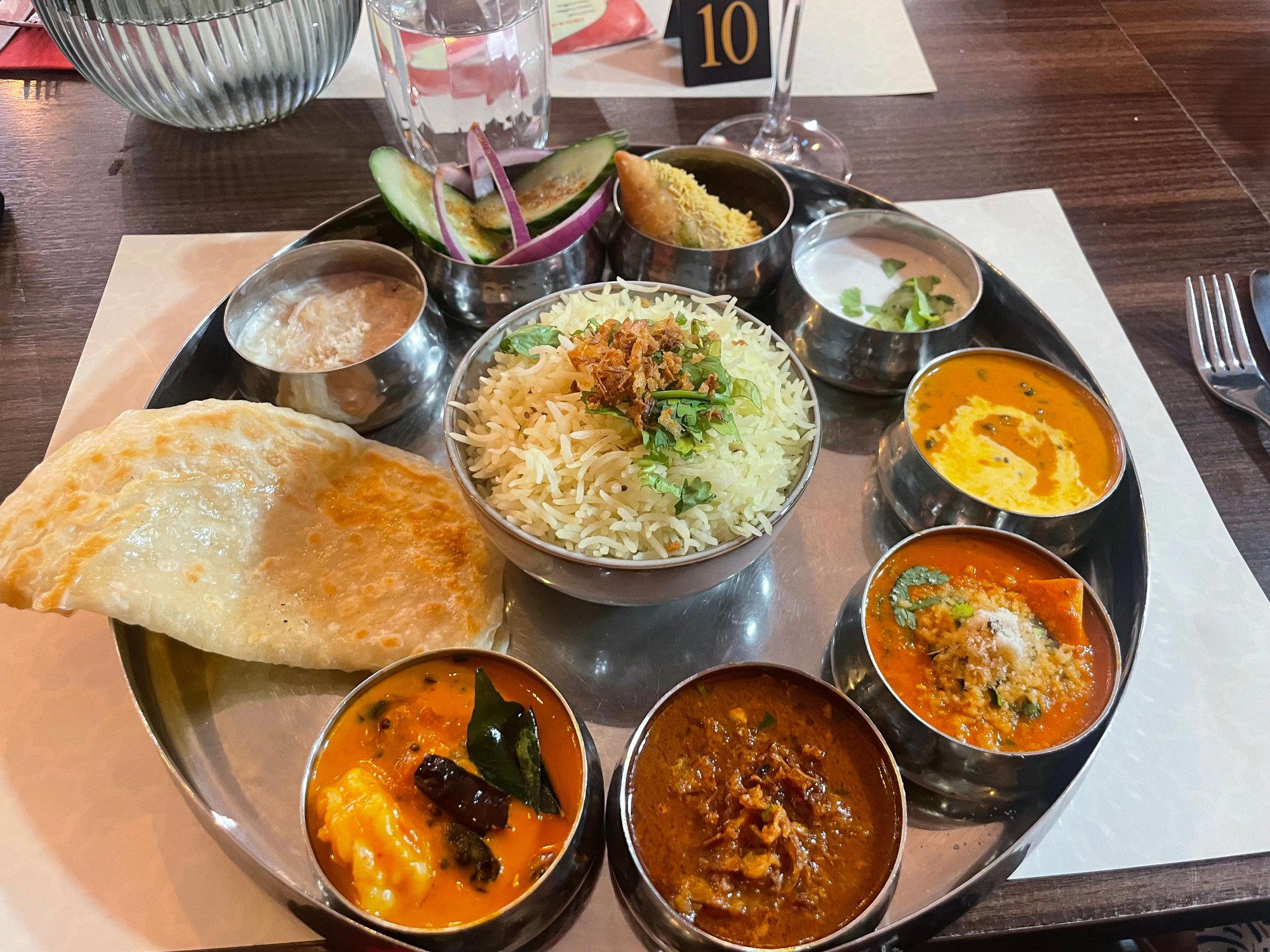
The menu
What to order
- Butter Chicken
- Chicken Tikka Masala
- Masala Dosa
Rathmines and the Question of Depth in Dublin's Indian Dining
Rathmines Road Upper has a particular character among Dublin's dining corridors. It is neither the city-centre showcase strip nor a destination neighbourhood in the international press sense, but it sustains a food culture built on regulars rather than tourists, on neighbourhood loyalty rather than awards cycles. That context matters when placing Thali, because the thali format itself is a neighbourhood concept: designed for everyday eating, for communal ordering, for the kind of meal where the table shares rather than performs.
Indian restaurant culture in Dublin has, for most of its history, concentrated on northern subcontinental cooking, with butter-based curries and tandoor-led menus defining the public-facing identity of the cuisine. The thali tradition cuts across that narrow frame. A thali plate assembles a range of preparations, typically dal, vegetables, a protein element, rice, bread, and condiments, in small portions designed to demonstrate range and balance rather than a single showcase dish. In regions from Gujarat to Tamil Nadu to Rajasthan, the thali is as much a philosophical statement about eating as it is a format: the idea that no single flavour should dominate, that a meal should contain heat, sweetness, sourness, and bitterness in calibrated proportion. That ambition, when executed with discipline, is harder to pull off than a single-dish menu, and it is rarer in an Irish context than the prevalence of Indian restaurants might suggest.
Where Thali Sits in Dublin's Indian Dining Picture
Dublin's fine-dining infrastructure has deepened considerably in recent years. Chapter One by Mickael Viljanen and Patrick Guilbaud anchor the Michelin end of the market, while places like Bastible, Glovers Alley, and D'Olier Street represent a confident modern Irish and European mid-fine tier. What that picture does not fully address is depth in non-European traditions. The city's Korean, Japanese, and South Asian dining sectors have grown but remain thinner than their equivalents in London or New York, where venues like Atomix demonstrate what serious investment in non-European culinary traditions can look like at the top of the market.
Thali operates at a different register from Atomix, and that comparison is not the point. The point is that any city's food culture is measured partly by whether its non-European traditions are represented with care and specificity, not just in the luxury tier but across price points and neighbourhoods. Rathmines, with its historically diverse population and long-established South Asian community, is a more contextually appropriate location for a thali-focused restaurant than the city centre would be. The format fits the neighbourhood.
The Thali Format as Editorial Subject
The word thali derives from the Sanskrit for plate, and the format's origins predate any modern restaurant concept by centuries. What distinguishes a serious thali from an assembly of small portions is the internal logic: the interplay between wet and dry preparations, the role of chutneys and pickles as palate resets, the positioning of rice and bread as structural elements rather than afterthoughts. Regional variations are significant enough that a Gujarati thali, with its characteristic sweetness, reads as an entirely different meal from a Rajasthani one, with its heavier ghee applications and game-adjacent proteins, or a South Indian equivalent built around tamarind, coconut, and fermented rice preparations.
That regional specificity is where most thali concepts outside India lose resolution. The temptation is to offer a composite, a pan-Indian greatest-hits plate that appeals to the broadest possible audience but represents no particular tradition with depth. The more disciplined approach anchors the menu to a specific regional identity and lets that identity determine the flavour logic of the plate. Whether Thali on Rathmines Road makes that choice, and which regional tradition it prioritises, is the question any serious visit should resolve first.
Rathmines as a Dining Neighbourhood
For visitors unfamiliar with Dublin's geography, Rathmines sits approximately two kilometres south of the city centre, connected by a direct bus corridor along the canal. It is a residential suburb with a high student and young professional population, which historically sustains casual dining, cafes, and value-oriented restaurants rather than occasion dining. That demographic profile shapes what survives in the neighbourhood: places that earn repeat visits rather than single-occasion bookings, that price for frequency rather than celebration.
The Irish restaurant scene beyond Dublin has developed its own nodes of seriousness. Aniar in Galway and Campagne in Kilkenny hold Michelin recognition outside the capital, while coastal producers and smaller formats like Bastion in Kinsale, Chestnut in Ballydehob, and Homestead Cottage in Doolin signal that Irish dining ambition is distributed rather than concentrated. Liath in Blackrock, dede in Baltimore, Terre in Castlemartyr, House in Ardmore, and Lady Helen in Thomastown extend that picture further. None of these are direct peer comparisons for Thali, but they illustrate what a maturing national food culture looks like: diverse in format, geographically spread, increasingly confident about non-metropolitan identity.
Thali's Rathmines address places it in a different conversation from those destination dining rooms. For our full overview of where Dublin's dining sits right now, see our full Dublin restaurants guide.
Planning a Visit
Visitors should verify current details directly with the venue at the Rathmines Road Upper address before travelling. The restaurant's location on a busy commuter route makes it accessible from the city centre without a car.
| Venue | Format | Price Tier | Booking |
|---|---|---|---|
| Thali (Rathmines) | Indian / Thali | Not confirmed | Verify directly |
| Patrick Guilbaud | Modern French | €€€€ | Essential, weeks ahead |
| Bastible | Modern Irish | €€€€ | Recommended |
Frequently asked questions
What's the address for Thali?
Thali is located at 1 Rathmines Rd Upper, Rathmines, Dublin 6, D06 Y5P5, Ireland, Dublin.
Does Thali in Dublin focus on a specific regional Indian cooking tradition?
The thali format spans a wide range of regional traditions across the Indian subcontinent, from the ghee-heavy plates of Rajasthan to the coconut and tamarind-driven compositions of Kerala and Tamil Nadu.
What do regulars order at Thali?
The thali format is built around the plate as a system rather than individual dishes: a curated assembly of preparations designed to be eaten together. At a venue named for that format on Rathmines Road Upper, the plate itself is the order — the selection of components changes the experience rather than any single item standing apart from it. Asking what to order is, in this context, asking the wrong question; the structure of the meal is the answer.
How hard is it to get a table at Thali?
Thali is located at 1 Rathmines Rd Upper, Dublin 6, a stretch that draws a consistent local residential crowd rather than city-centre tourist footfall. Demand at neighbourhood venues of this type in Dublin tends to peak on Thursday through Sunday evenings. Contacting the venue directly before visiting is the practical approach, particularly on weekends.
Price and Positioning
Comparable venues nearby, for context on price, style, and recognition.
| Venue | Cuisine | Price | Notes |
|---|---|---|---|
| ThaliThis venue — the venue you are viewing | Authentic Indian Thali | $20–30 | Not listed |
| Diwali Restaurant Camden Street | Authentic Indian and Nepalese | $20–30 | Royal Exchange B, Authentic Indian and Nepalese |
| Aleena Indian Restaurant | Traditional Indian Curry House | $20–30 | Royal Exchange A, Traditional Indian Curry House |
| Kathmandu Kitchen | Nepalese and Indian | $20–30 | Royal Exchange A, Nepalese and Indian |
| Indian Tiffins-Rathgar | Authentic Regional Indian Tiffins | $20–30 | Terenure A, Authentic Regional Indian Tiffins |
| Mehek Indian Restaurant | Authentic Indian with Irish Produce | $20–30 | Rathmines West E, Authentic Indian with Irish Produce |
Continue exploring
More in Dublin
Restaurants in Dublin
Browse all →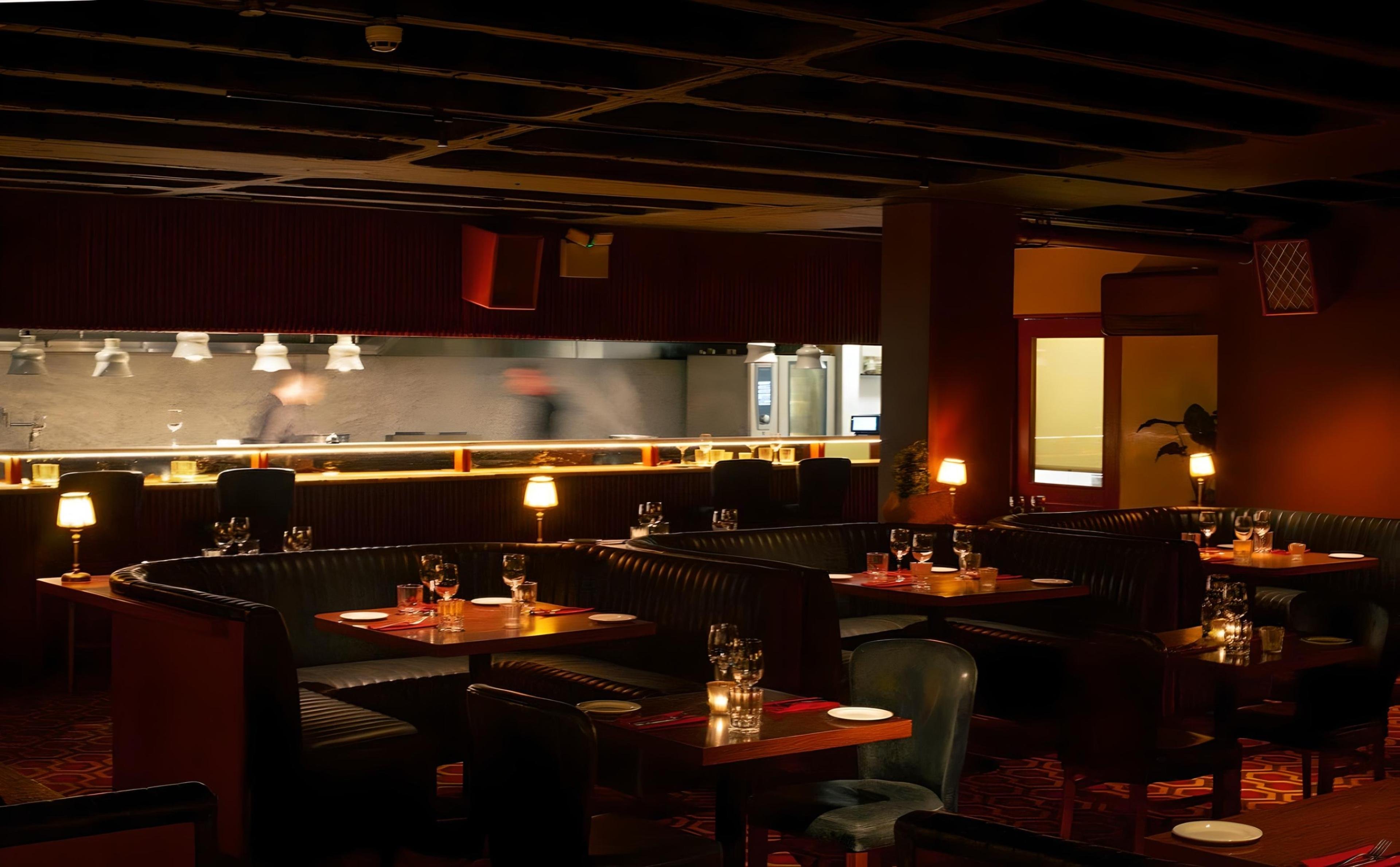
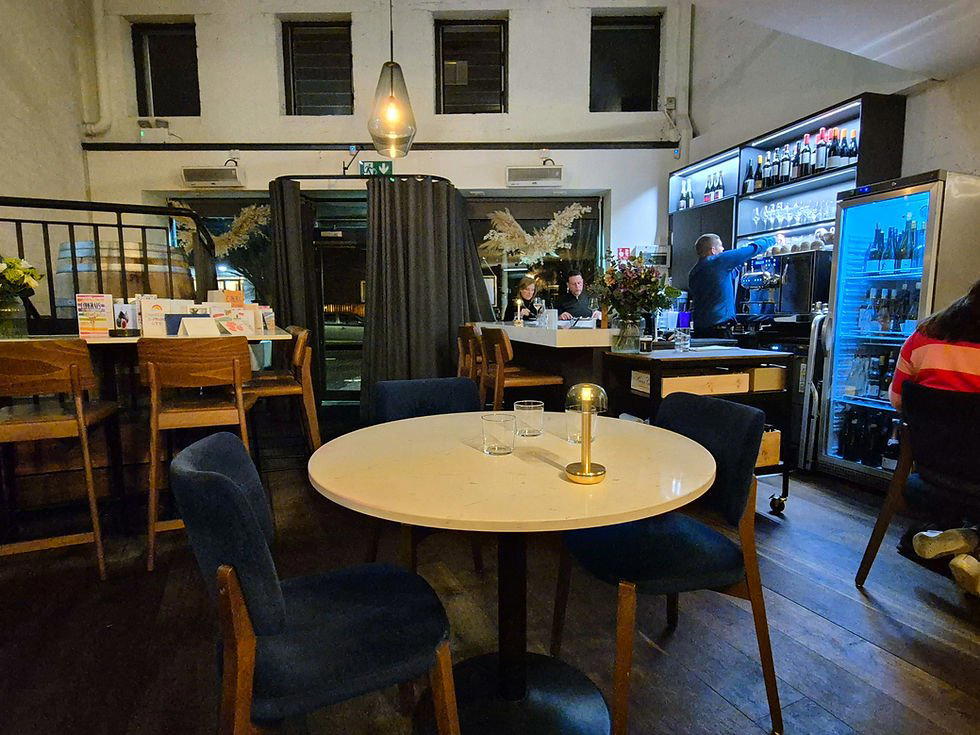
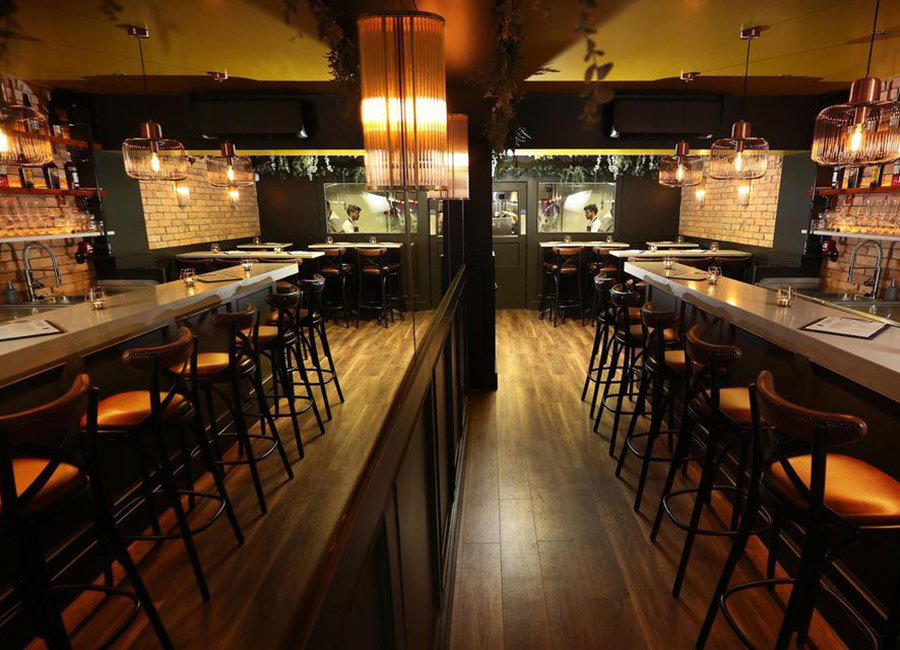
Bars in Dublin
Browse all →
Hotels in Dublin
Browse all →
Wineries in Dublin
Browse all →
Details
- Lively
- Cozy
- Casual Hangout
- Special Occasion
- Standalone
- A La Carte
- Small Plates
- Vegetarian Friendly
Current opening hours
- Monday
- 4–10 PM
- Tuesday
- Closed
- Wednesday
- 4–10 PM
- Thursday
- 4–10 PM
- Friday
- 12–11 PM
- Saturday
- 9 AM–11 PM
- Sunday
- 9 AM–10 PM
Hours can change for holidays and private events. Last verified .
Inviting with moderate noise levels and a lively atmosphere praised for warm service.