Our verdict
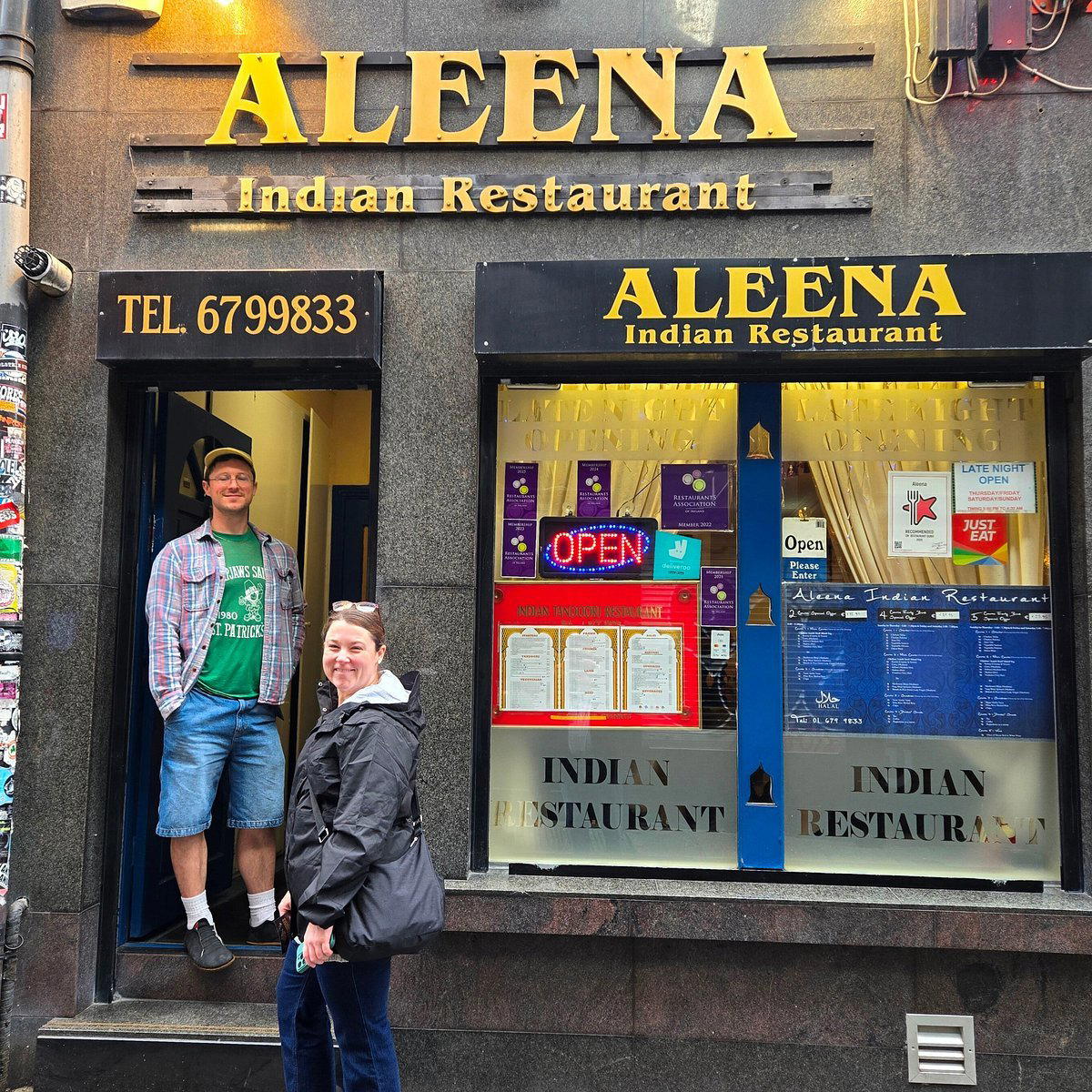
Aleena Indian Restaurant occupies a corner of Temple Bar's busiest stretch, bringing subcontinental cooking into one of Dublin's most trafficked dining corridors. The address places it squarely in a neighbourhood better known for late-night crowds than considered dining, which makes its focus on Indian cuisine an outlier worth tracking. For visitors already moving through the area, it represents a practical and specific alternative to the gastropub default.

Pearl is the En Primeur Club membership app — saves, bookings, and concierge access live there. Same editors, same standards.
- Address
- 3 Temple Ln S, Temple Bar, Dublin 2, D02 TY36, Ireland
- Phone
- +35316799833
- Hours
- Mon–Thu 5 PM–12 AMFri 5 PM–4:30 AMSat 5 PM–12 AMSun 5 PM–4:30 AM
- Website
- aleenarestaurant.ie
- Directions
- Get directions
- Booking
- Book on OpenTable
The menu
What to order
- Chicken Tikka Masala
- Lamb Madras
- Chicken Biryani
- Butter Chicken
Where Temple Bar's Foot Traffic Meets Indian Cooking
Temple Bar is not, by reputation, a neighbourhood that rewards slow eating. The cobblestoned quarter between Dame Street and the Liffey is built for movement: tourists in transit, stag parties, weekend drinkers, and anyone who missed their reservation somewhere quieter. Restaurants that take root here tend to orient around volume and speed. Against that backdrop, an Indian restaurant at 3 Temple Lane South occupies an interesting position — one that trading on the area's footfall while attempting something more considered than the surrounding offer.
Indian cooking, as a dining ritual, resists the pace that Temple Bar usually demands. The cuisine's structure — the sequencing of bread, rice, dal, and main, the expectation of shared dishes and layered condiments, the way a good curry needs a few minutes at the table before it reveals itself, pulls against a quick-turnaround model. That structural tension is worth bearing in mind when considering what Aleena Indian Restaurant is doing on this street and what kind of meal it is realistically equipped to deliver.
The Ritual of an Indian Meal in a European Context
Across Europe, Indian restaurants have operated in two broad registers for decades. The first is the post-pub, takeaway-adjacent model: fast service, wide menus, dishes calibrated to a lowest-common-denominator palate. The second, smaller register includes places with tighter menus and a clearer regional identity, Keralan, Punjabi, Goan, or Hyderabadi cooking presented with some fidelity to its source. Dublin's Indian restaurant scene, compared to London's or Leicester's, is thinner in both categories, which means any entry into the market is filling a gap rather than competing in a crowded field.
The question for Temple Bar specifically is which register a diner can expect. The address on Temple Lane South puts Aleena within walking distance of some of Dublin's more ambitious cooking, Chapter One by Mickael Viljanen operates a few minutes north, and Glovers Alley is accessible on foot to the south, but those are different categories entirely, operating at price points and with award credentials that place them in a different conversation. Patrick Guilbaud and Bastible similarly represent the Irish fine-dining register, where the sourcing and tasting menu format are the story. Indian cooking in this city operates outside that framework, which is not a criticism, it is simply a different kind of hospitality with different metrics for success.
Pacing and Format: What the Meal Expects of You
The dining ritual at a well-run Indian restaurant asks for a particular kind of attention from the table. Ordering decisions matter in a way that a prix-fixe or tasting menu format removes: you are assembling a meal, not receiving one. The balance between protein-forward dishes and carbohydrates, the ratio of wet to dry preparations, the decision about whether to anchor on bread or rice, these choices shape how the meal eats. A good room for this kind of eating is one that gives the table enough time to work through those decisions without pressure.
Temple Bar's rhythm works against that in principle. The neighbourhood's busiest periods run from early evening into the late hours, and the street-level noise and footfall that defines the area can make the slower pace of a considered Indian meal harder to sustain. That said, the side-street location on Temple Lane South rather than the main thoroughfares offers some separation from the densest crowds.
For context on what Indian dining can look like at its most considered in an international frame, the community dinner format at Lazy Bear in San Francisco or the rigorous sourcing philosophy at Le Bernardin in New York City illustrate how format discipline shapes the meal experience, even if those examples sit in entirely different cuisine categories. The point is that format matters as much as ingredient quality in determining what a dining experience actually delivers.
Dublin's Wider Dining Context
Dublin has developed a more interesting restaurant scene over the past decade than its reputation sometimes suggests. The Michelin-starred tier has grown, and there is a wider range of cuisine types represented than was the case fifteen years ago. D'Olier Street and Liath in Blackrock represent the kind of ambitious cooking that has given the city more credibility in food conversations. Further afield, Aniar in Galway, Campagne in Kilkenny, dede in Baltimore, and Bastion in Kinsale show that Irish dining ambition is not concentrated only in the capital.
The broader Irish picture also includes Terre in Castlemartyr, The Oak Room in Adare, Chestnut in Ballydehob, Homestead Cottage in Doolin, and The Morrison Room in Maynooth, each representing a different approach to the Irish dining room. Our full Dublin restaurants guide maps the city's dining geography in more detail.
Within this context, Indian cooking in Dublin occupies a specific utility, it serves a cuisine tradition that the Irish fine-dining scene does not address, filling a gap that is more about breadth of offer than about competing on the same axes as Michelin-tracked restaurants.
Planning a Visit
Aleena Indian Restaurant sits at 3 Temple Lane South, in the heart of Temple Bar. The area is on foot or a short taxi ride from most Dublin city centre hotels, and the LUAS and Dublin Bus routes along Dame Street and College Green put it within easy reach of the wider city. Temple Bar's peak hours run from early Friday evening through Sunday night; visiting on a weekday reduces the surrounding noise and typically makes for a more settled meal. As with most Indian restaurants in the city, walking in is often viable outside peak service windows, though calling ahead during busy weekend periods is sensible. No website or phone number is currently listed in public directories for this location, so ground-level verification of hours before visiting is advisable.
Frequently asked questions
Is Aleena Indian Restaurant a family-friendly restaurant?
Temple Lane South is a central, walkable address in Dublin 2, and the format of a sit-down Indian restaurant — shared dishes, varied spice levels, long menus — tends to work well for mixed groups including families. The Temple Bar location sees heavy foot traffic at all hours, so earlier sittings are likely calmer for those dining with children. Nothing in the venue's record indicates age restrictions or a strictly adult-only atmosphere.
What kind of setting is Aleena Indian Restaurant?
Aleena sits at 3 Temple Lane South, inside the cobblestoned grid of Temple Bar — a neighbourhood better known for its bar scene than its dining. That context shapes what to expect: a restaurant that operates against a backdrop of ambient city noise rather than quiet-street calm. The setting is urban Dublin 2, practical in location, close to the Liffey and Dame Street.
Is Aleena Indian Restaurant a good option for dinner before a night out in Temple Bar, Dublin?
3 Temple Lane South places Aleena directly within the Temple Bar grid, making it a logical pre-evening stop before the surrounding bars and venues. Indian menus built around shared plates allow a table to eat at its own pace — quicker if the night ahead calls for it, slower if not. Dublin 2's Temple Bar corridor fills up from early evening on weekends, so arriving before 7pm gives the most flexibility.
What should I order at Aleena Indian Restaurant?
Standard practice at a well-run Indian restaurant is to anchor a table order around one or two protein-led mains, a dal or vegetable preparation, and bread over rice where available — a structure that suits sharing. For current dishes and specials, visiting the restaurant directly or checking their door menu is the most reliable approach.
Where exactly is Aleena Indian Restaurant?
Aleena Indian Restaurant is located at 3 Temple Ln S, Temple Bar, Dublin 2, D02 TY36, Ireland, Dublin.
Should I book Aleena Indian Restaurant in advance?
Temple Bar is one of Dublin's highest-footfall areas, particularly on Thursday through Saturday evenings when the surrounding streets draw both tourists and locals. For weekend dinners, reserving a table ahead of arrival is advisable rather than relying on walk-in availability. Weekday lunches and early dinners at the 3 Temple Lane South address are likely to be more accessible without a booking.
What has Aleena Indian Restaurant built its reputation on?
Aleena's positioning in Temple Bar — a Dublin 2 neighbourhood that skews heavily toward bars and tourist-facing trade — means that sustaining a sit-down Indian restaurant there requires consistent kitchen output rather than location advantage alone. Dublin's Indian restaurant scene has grown more considered over the past decade, and venues on the city-centre fringe have had to match that shift.
Price and Recognition
| Venue | Cuisine | Price | Awards | Notes |
|---|---|---|---|---|
| Aleena Indian RestaurantThis venue — the venue you are viewing | Traditional Indian Curry House | $20–30 | Not listed | Not listed |
| Patrick Guilbaud | Modern French Fine Dining | $150–200 | 2 Michelin Stars · La Liste Top Restaurants | Irish - French, Modern French |
| Bastible | Modern Irish | $100–150 | 1 Michelin Star · The Sunday Times Ireland’s 100 Best Restaurants | Modern Cuisine |
| Host | Modern Italian | $50–100 | Michelin Plate | Nordic, Modern Cuisine |
| mae | Modern Irish Fine Dining | $50–100 | Michelin Plate · The Sunday Times Ireland’s 100 Best Restaurants | Southern, Modern Cuisine |
| Matsukawa | Authentic Edomae Omakase | $100–150 | Michelin Plate · La Liste Top Restaurants | Kaiseki, Japanese |