Our verdict
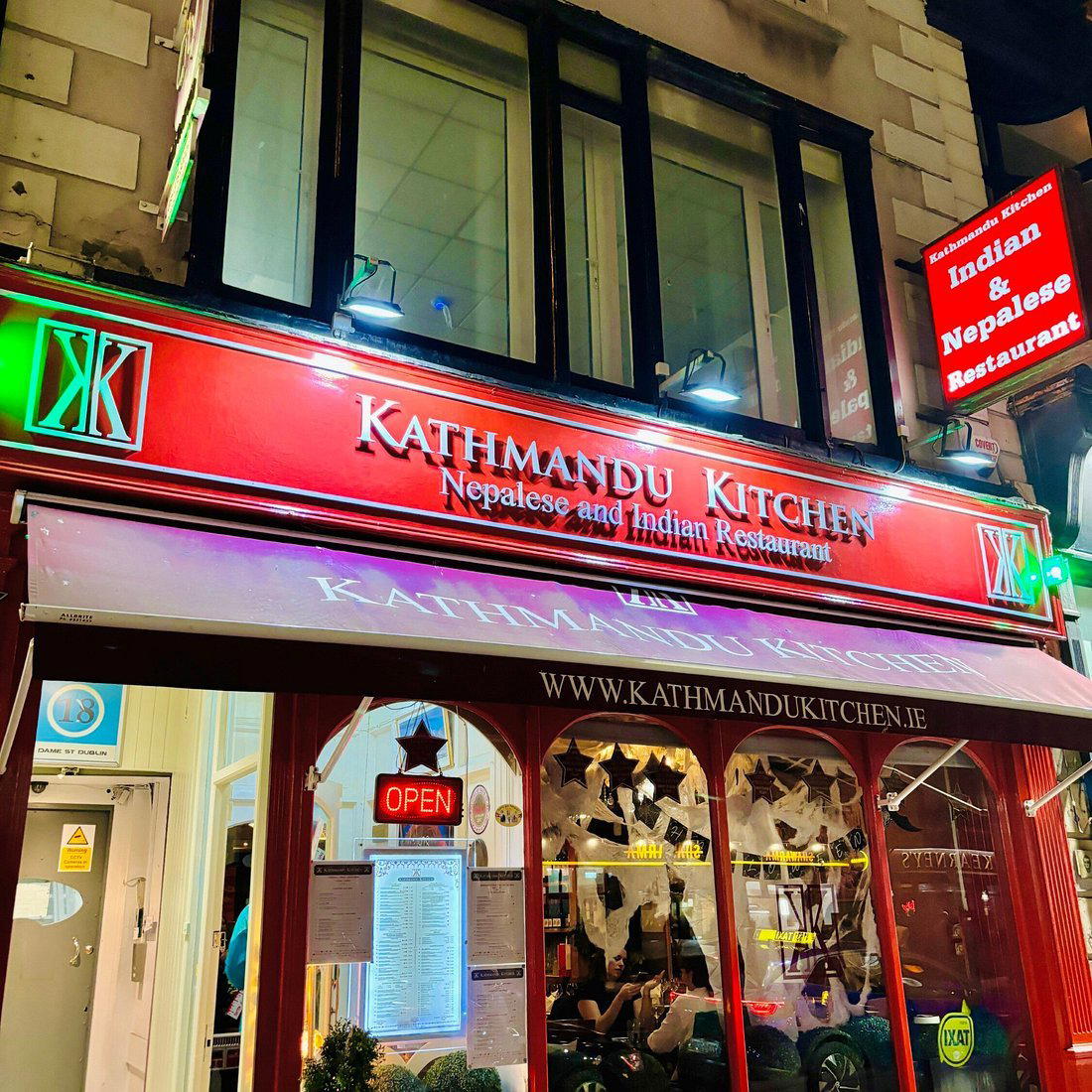
On Dame Street in Dublin 2, Kathmandu Kitchen brings the spiced register of the Himalayan kitchen into the centre of a city more accustomed to modern Irish tasting menus and French-leaning fine dining. The cooking draws on Nepali and South Asian traditions that remain a minority voice in Dublin's restaurant conversation, offering a point of difference in a neighbourhood dense with European-facing options.

Pearl is the En Primeur Club membership app — saves, bookings, and concierge access live there. Same editors, same standards.
- Address
- 18 Dame St, Dublin 2, D02 XF59, Ireland
- Phone
- +35316111706
- Hours
- Mon–Thu 12:30–10:30 PMFri–Sat 12:30–11 PMSun 12:30–10:30 PM
- Website
- kathmandukitchen.ie
- Directions
- Get directions
- Booking
- Book on the venue's website
The menu
What to order
- Bhedako Karang
- Khasi Ko Kebab
- Chicken Tikka Masala
Dame Street and the Himalayan Counter
Dublin 2's central corridor runs from Trinity College westward through Temple Bar and into the civic heart of the city, and Dame Street sits at its spine. The stretch has long attracted restaurants pitching to office workers at lunch and theatre-goers in the evening, meaning the competition is dense and the formats are varied. What is less common along this corridor is a kitchen working in the Nepali and Himalayan register, a cuisine that remains underrepresented in Ireland's capital relative to its presence in London or certain American cities. The address at 18 Dame Street places Kathmandu Kitchen in the middle of this traffic, where a cuisine from the foothills of the world's highest mountain range arrives in one of Europe's most actively evolving dining cities.
That contrast matters editorially. Dublin's fine dining tier has consolidated significantly in recent years around modern Irish and French-influenced formats. Chapter One by Mickael Viljanen and Patrick Guilbaud anchor the Michelin-starred end, while Bastible and Glovers Alley hold the mid-upper tier with produce-led modern cooking. Into this relatively homogeneous landscape, a Himalayan kitchen offers a different aromatic grammar entirely: dried Szechuan pepper, fenugreek, timur, and slow-cooked meat preparations that bear little relation to the butter sauce reductions and fermented dairy notes of modern Irish cuisine.
The Sensory Register of Himalayan Cooking
Nepali and Tibetan-influenced cooking works through layered spice rather than heat alone. Where South Indian cooking often builds on chilli intensity, and North Indian restaurant formats in Europe have long traded on cream-rich curries, the Himalayan kitchen is more restrained in its heat profile and more interested in the fragrant, slightly smoky, citrus-edged quality of ingredients like timur pepper, which shares a genus with Szechuan peppercorn. The result, in a well-executed kitchen, is food that reads warm and aromatic rather than aggressively hot, with a texture range that runs from the crisp exterior of a well-fried snack to the yielding softness of a slow-braised preparation.
Dumplings in this tradition, known as momos, occupy a different position from their Chinese or Japanese counterparts. The dough tends to be thicker, the filling often includes a mix of meat and aromatics, and they arrive with a dipping sauce that is tomato-based and spiced in ways that differentiate it clearly from soy-based accompaniments. These are not subtle dishes, but they are not blunt either. The sensory experience sits somewhere between street food directness and the considered spicing of a home kitchen with deep regional knowledge.
For Dublin diners accustomed to the clean, often minimalist plating of kitchens like D'Olier Street, the Himalayan format represents a shift in the reading order of a meal. Spice announces itself early, texture is as important as presentation, and the meal's rhythm tends toward abundance rather than precision rationing.
Where This Sits in Dublin's Wider Scene
Ireland has developed strong regional restaurant culture outside the capital. Aniar in Galway works the Connacht pantry with academic rigour. Bastion in Kinsale and Campagne in Kilkenny have built loyal followings outside the Dublin circuit. Further afield, Liath in Blackrock, Terre in Castlemartyr, and Chestnut in Ballydehob demonstrate how far Ireland's serious cooking has spread geographically. Homestead Cottage in Doolin, House in Ardmore, and Lady Helen in Thomastown complete a picture of serious hospitality distributed well beyond the M50. What the regional circuit has in common is an orientation toward Irish produce and European technique. Kathmandu Kitchen operates on an entirely different axis.
Internationally, the Himalayan and Nepali restaurant format has found its most sophisticated expressions in cities with large South Asian diaspora populations. In North America, venues like dede in Baltimore demonstrate how diaspora kitchens evolve when their chefs engage seriously with sourcing and technique. The level of critical engagement with Nepali cuisine specifically has been slower to develop than with, say, Korean fine dining as practiced at venues like Atomix in New York City, but the trajectory is toward greater visibility. Dublin's Nepali restaurant offer sits at an earlier point on that curve.
For context on where Dublin's dining conversation is currently concentrated, our full Dublin restaurants guide maps the scene across price tiers and cuisine types.
Know Before You Go
- Address: 18 Dame St, Dublin 2, D02 XF59, Ireland
- Area: Dame Street, Dublin 2, central city
- Nearest landmarks: Dublin Castle and City Hall are within a short walk; Trinity College is approximately ten minutes on foot
- Booking: Contact details not currently listed; walk-in availability likely given the format, but confirmation is advisable for groups
- Phone / Website:
- Price range: Not confirmed; Himalayan restaurants in this category typically operate in the accessible to mid-range bracket
- Cuisine: Nepali and Himalayan
Frequently asked questions
Where is Kathmandu Kitchen located?
Kathmandu Kitchen is located at 18 Dame St, Dublin 2, D02 XF59, Ireland, Dublin.
Is Kathmandu Kitchen a good option for an authentic Himalayan meal in central Dublin?
Restaurants serving specifically Nepali and Tibetan-influenced cooking are thin on the ground in Dublin, which gives Kathmandu Kitchen a distinct position on Dame Street in Dublin 2. The address alone puts it within easy reach of Trinity College and Temple Bar, making it one of the more accessible options for Himalayan food in the city centre. For travellers or locals looking beyond the well-trodden South Asian restaurant circuit in Ireland, this is a reasonable place to investigate.
What's the best thing to order at Kathmandu Kitchen?
Kathmandu Kitchen's strength is in dishes that demonstrate the Himalayan approach to spice layering — fermented, aromatic, and built for depth rather than heat. Nepali and Tibetan-influenced menus at this level typically anchor around dumplings and slow-cooked preparations, so those are the logical starting points. Ask staff what is freshest or made in-house that day, as these tend to reflect the kitchen's real focus.
How far ahead should I plan for Kathmandu Kitchen?
Kathmandu Kitchen sits on Dame Street in Dublin 2, one of the city's most trafficked central corridors, which means foot traffic is high and walk-in availability can tighten quickly on weekends and evenings. For a Friday or Saturday dinner, contacting the venue a few days ahead is advisable. Midweek visits typically offer more flexibility.
What do critics highlight about Kathmandu Kitchen?
Dublin's food press has increasingly noted the city's Himalayan and South Asian restaurant offer as it has matured beyond the obvious Indian-restaurant shorthand. Kathmandu Kitchen on Dame Street sits within that developing conversation, occupying a relatively underrepresented niche in the Irish capital's restaurant scene.
Can Kathmandu Kitchen handle vegetarian requests?
Nepali and Tibetan culinary traditions include a substantial vegetarian repertoire — lentil-based dals, vegetable momos, and rice-centred preparations are standard across this cuisine type. Kathmandu Kitchen's menu, given its Himalayan focus, is likely to accommodate vegetarians without significant compromise. Confirming specific dietary requirements directly with the restaurant at 18 Dame Street, Dublin 2 before visiting is always advisable.
Budget Reality Check
Comparable venues nearby, for context on price, style, and recognition.
| Venue | Cuisine | Price | Notes |
|---|---|---|---|
| Kathmandu KitchenThis venue — the venue you are viewing | Nepalese and Indian | $20–30 | Not listed |
| Andhra Bhavan | Authentic South Indian | $20–30 | North City, Authentic South Indian |
| Spice India Stoneybatter | Authentic Indian with South Indian Specialties | $20–30 | Arran Quay B, Authentic Indian with South Indian Specialties |
| Indian Tiffins-Rathgar | Authentic Regional Indian Tiffins | $20–30 | Terenure A, Authentic Regional Indian Tiffins |
| Pinocchio Restaurant | Authentic Italian | $20–30 | North City, Authentic Italian |
| Camden Kitchen | Modern Irish Bistro | $30–50 | Saint Kevin'S, Modern Irish Bistro |