
Tabelog 100 #8
Our verdict
A 14-seat soba and izakaya address in Gakugei Daigaku, Teuchi Soba Yakko sits in Tokyo’s quieter noodle culture rather than the city’s luxury tasting-menu circuit. Its Tabelog Soba EAST 100 selection in 2025, counter seating, sake-shochu-wine range, and JPY 3,000–3,999 dinner band make it a sharp choice for travelers who read Tokyo through neighborhood dining rooms.

Pearl is the En Primeur Club membership app, where members save venues, book tables and use the concierge.
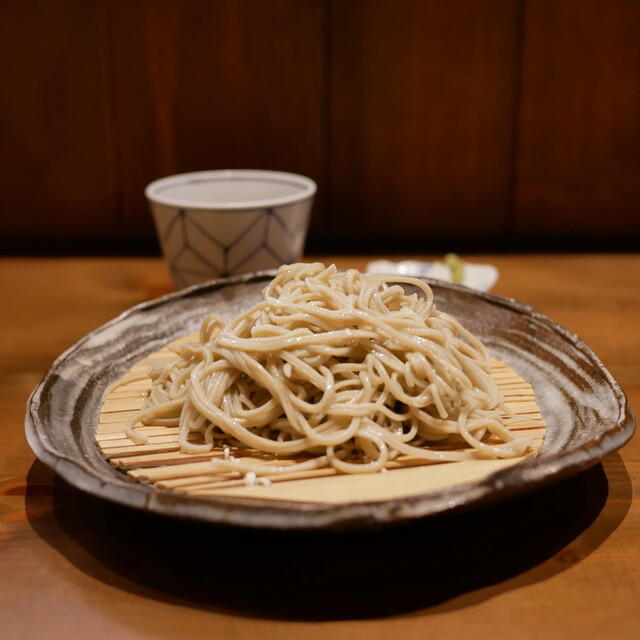
The menu
What to order
- Teuchi soba (handmade buckwheat noodles)
- Seasonal soba dishes
- Soba-friendly izakaya small plates
Tokyo does not always announce its best meals with department-store polish or hotel-dining choreography. The approach can be residential, station-led, and local: small shopfronts, evening errands, and compact restaurants that work because regulars know the rhythm. Here, Tokyo soba reads less as ceremony than calibration: buckwheat noodles, an izakaya frame, and a meal shaped by restraint rather than spectacle.
Teuchi Soba Yakko belongs to the Tokyo category where soba can function as dinner, not only a quick lunch stop. The signal is both noodles and izakaya framing: buckwheat noodles appear within a Japanese tavern context, placing the meal closer to a measured evening progression than a single-bowl errand. Its 2025 Tabelog Hyakumeiten recognition gives it third-party weight in a field where local regularity often matters more than international trophy culture.
Soba with an izakaya drinking frame
Tokyo’s soba tradition has two lives. One is functional: quick bowls, lunch sets, and working-day efficiency without drama. The other is slower and more adult, built around buckwheat as the anchor for a fuller meal. Teuchi Soba Yakko sits in the latter lane. The izakaya category is therefore more than support: it places the noodles inside a broader Japanese dining format, where the evening can be paced rather than reduced to throughput.
The price band reinforces this. At JPY 3,000–3,999, it is not a luxury counter, but it is not disposable station food. In Tokyo, comparison helps: MATTERHORN, Meguro Hiiragi Himonya kouen doori ten, and TRASPARENTE Gakugei daigaku ten sit in lower everyday spend territory, while RUE DE PASSY occupies a modest café-patisserie band. Spice Kurashi shares the JPY 3,000–3,999 bracket, showing where Yakko lands in the local economy: a compact evening meal with soba and izakaya structure, not a destination priced for spectacle.
The category impression matters because soba is sensitive to pacing. Restaurants in this style work best when the meal is not flattened into anonymous turnover, and when the experience remains focused rather than overproduced. The appeal is direct: a diner can come for soba without the social weight that attaches to more formal Tokyo restaurants, and the final course can be as concise as appetite requires.
Why Tokyo changes the read
Tokyo’s dining character is not built only on grand statements. It rewards travelers who know serious eating spreads across the city, not just famous districts. Placing Teuchi Soba Yakko within Tokyo changes the decision: this is a dinner to fold into an evening of local eating, not a cross-city pilgrimage padded with ceremony.
The city context clarifies the editorial value. In Tokyo, soba can become another trophy-itinerary item between higher-commitment meals and specialist counters. In a more everyday Tokyo setting, it returns to scale. The format is direct, and the essential experience remains focused dining, where the table does not need a long narrative to justify itself.
There is a practical cultural note for diners. Tokyo’s strongest drinking rooms often separate by genre, while soba in an izakaya category invites a more flexible evening. Think category-first, not checklist-first: decide whether the meal should lean toward a simple noodle stop or a fuller Japanese tavern rhythm, then let the soba close the frame. That is how this restaurant makes sense.
How to place it in a Tokyo itinerary
For travelers building a Tokyo food schedule, Teuchi Soba Yakko works as a counterweight to high-commitment dining. The awards signal is credible, and the listed Tabelog score of 3.71 gives it additional local context, but spend stays grounded. Read it as a precision Tokyo dinner, not a substitute for omakase or kappo. The price range is clear, so planning should focus less on grandeur and more on whether soba and an izakaya frame fit the evening.
Cash and booking details can shift across Tokyo’s smaller restaurants, so confirm current conditions before going. The provided listing places Teuchi Soba Yakko in the JPY 3,000–3,999 range and identifies it as Soba and Izakaya, which is enough to set expectations without overbuilding the occasion. Its 2025 Tabelog Hyakumeiten recognition places it inside a competitive soba field rather than a passing neighborhood trend.
Readers mapping the wider city can pair this dinner with Our full Tokyo restaurants guide, then separate food planning from stays through Our full Tokyo hotels guide, drinks through Our full Tokyo bars guide, wine context through Our full Tokyo wineries guide, and cultural scheduling through Our full Tokyo experiences guide. Within the restaurant map, contrasting genres sharpen the choice: other Tokyo dining rooms point to different registers of the city, from casual everyday meals to more specialized counters.
For Japan-wide context, the contrast extends beyond the capital: other dining rooms across Japan show how category, city, and price reshape the meal. International examples underline the same point differently: Japanese dining travels well, but soba at this scale remains deeply tied to Tokyo’s local dining grammar.
Where the Accolades Land
Comparable options at the same price tier.
| Venue | Cuisine | Price | Awards | Notes |
|---|---|---|---|---|
| Teuchi Soba YakkoThis venue (the venue you are viewing) | Handmade soba & izakaya | $30–50 | Tabelog 100 #8 | Not listed |
| 白寧 | Modern French-Japanese Fusion | $200–300 | 1 Michelin Star | Minato |
| Wakadori Yaki Mobara | Traditional Japanese chicken izakaya & yakitori | $30–50 | Tabelog 100 #41 | Shinagawa |
| USHIO | Okonomiyaki & Japanese comfort food | $20–30 | Tabelog 100 #24 | Minato |
| Unagi Marutomi | Traditional Unagi (eel) counter | $30–50 | Tabelog 100 #44 | Shinagawa |
| Tokyo Dominica | Sapporo-style Japanese soup curry | $20–30 | Tabelog 100 #4 | Shinjuku |
Recognition history
Dated appearances from independent guides and award organizations, with the underlying list record or original source where available.
Tabelog 100 #8 · No. 8
Tabelog · Tabelog 100 - Soba - EAST - 2025
Continue exploring
More in Tokyo
Restaurants in Tokyo
All restaurants in Tokyo →

Bars in Tokyo
All bars in Tokyo →



Details
- Cozy
- Classic
- Intimate
- Solo
- After Work
- Casual Hangout
- Date Night
- Standalone
- Sake Program
- A La Carte
- Counter Dining
- Small Plates
- Sake
- Shochu
- Wine
A small, counter-focused soba-izakaya with about 14 seats, non-smoking, and a stylish yet relaxing atmosphere that feels like a cozy neighborhood hideaway suited to solo diners and quiet conversation in the evening.