
Teuchi Soba Tagata places Shizuoka’s soba culture in a serious, ingredient-led register: buckwheat sourcing, milling, and hand-cut noodles are the point, not ornament. Its repeated Tabelog 100 Soba selections, including EAST 2025, put it in the region’s recognized soba tier while keeping the experience grounded enough for a relaxed meal rather than a ceremonial tasting counter.
Pearl is the En Primeur Club membership app — saves, bookings, and concierge access live there. Same editors, same standards.
- Address
- 2 Chome-6-7 Tokiwacho, Aoi Ward, Shizuoka, 420-0034, Japan
- Phone
- +81 54-250-8555
- Website
- sobatagata.official.ec
 Saves & bookings on Pearl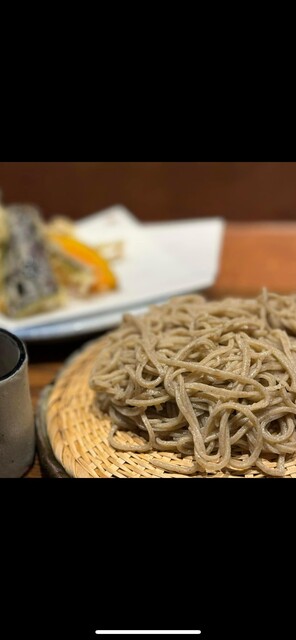
Tokiwacho’s restaurant streets do not announce themselves with Ginza polish. They work in a quieter register: compact frontages, local regulars, and rooms where the meal is measured by craft rather than theatre. In that setting, soba carries unusual weight. It is one of Japan’s least forgiving formats, because there is little to hide behind once buckwheat, water, milling, cutting, and boiling come into view. Teuchi Soba Tagata belongs to that tradition, and its appeal rests on the disciplined end of the category: handmade buckwheat noodles treated as the centre of the meal rather than a closing carbohydrate.
Shizuoka is often discussed through tea, seafood, wasabi, and views toward Fuji, but its dining culture also rewards smaller specialist rooms with narrow focus. Soba fits the prefecture’s broader appetite for ingredient clarity. The dish depends on grain character and freshness, not luxury signalling. A strong soba-ya can therefore feel more exacting than a longer, costlier dinner elsewhere: the craft is exposed in the texture of the noodle, the aroma of buckwheat, and the restraint of the accompanying elements. That is the lens through which this address makes sense.
Handmade soba as Shizuoka ingredient discipline
The key editorial point is sourcing and process. Teuchi soba is not just a style label; it implies a chain of decisions before the bowl reaches the table. Buckwheat has to be selected, milled, mixed, rolled, cut, cooked, and served with timing that leaves little margin for correction. Tagata’s public description emphasizes that the owner handles the work from buckwheat sourcing through milling and noodle-making, which places the restaurant in the artisan soba line rather than the casual noodle-shop lane.
That matters because soba’s quality is less about abundance than proportion. Compared with richer Japanese formats, from charcoal-grilled meat to multi-course kaiseki, soba asks the diner to pay attention to grain and finish. In Shizuoka, where meals can easily tilt toward seafood-led menus or regional set pieces, a specialist soba room gives the city a different kind of culinary seriousness: compact, technical, and grain-first. The Tabelog 100 Soba recognition in 2017, 2022, 2024, and EAST 2025 reinforces that the reputation is not a single-year spike.
Within the local price spectrum, this sits below more expensive Shizuoka dinner rooms such as Chabo and above a purely everyday noodle stop. It is closer in practical intent to a focused regional meal than a high-ceremony occasion. Diners comparing Shizuoka options will find different arguments at Blue Label, Aozora, Chinese Muramatsu, or the kaiseki frame of Asaba. Tagata’s case is narrower and, for soba drinkers and grain obsessives, more direct.
The room suits noodles, sake, and a low-key meal
The format is comfortable rather than stiff: counter seating, table seating, tatami and sunken seating are all part of the arrangement, with a larger second-floor private-use option. That mix is useful in a city where dining groups range from solo travellers coming off the train to families and small celebrations. The restaurant is listed as non-smoking, wheelchair accessible, and welcoming to children, including babies, preschoolers, school-age children, and strollers. Those details shift the tone from hushed specialist counter to practical soba house with serious technique.
The drink side also tells a story. Soba and sake have a long companionship in Japan, and the listed drinks include nihonshu, shochu, wine, and a stated attention to sake. BYO drinks are allowed with an additional fee, which is a useful signal for diners who treat soba as part of a drinking meal rather than a quick lunch. This is not a cocktail-led room or a wine-destination restaurant; the better reading is soba-mae, the older habit of drinking and snacking before noodles, adapted to a contemporary Shizuoka setting.
Recognition should be read carefully. Tabelog 100 is a selection list, not a star system, and its display order is not an official rank. Even so, repeated selection in the soba category gives Tagata a credible trust signal in a field where national guide coverage can miss smaller regional specialists. The score listed at 3.76 also places it in the serious Tabelog conversation, where numbers above the mid-threes carry more weight than they might on looser review platforms.
How to place it in a Shizuoka itinerary
The strongest use case is a meal built around soba craft rather than a broad survey of Shizuoka cooking. It works for travellers who want one precise regional dining stop between hotel check-in, station transfers, or a longer food day. The nearest station is Shizuoka Station, and the restaurant is also within walking range of Shin-Shizuoka Station, so it fits neatly into a central itinerary without requiring a countryside detour.
Reservations are available, though lunch is not available for reservation, and the restaurant notes that it may close once sold out. That makes timing more important than glamour. For lunch, arrive with a margin rather than treating it as a flexible afterthought; for dinner, reservation planning is the sensible move. Payment flexibility is broad by Japanese small-restaurant standards, with major credit cards, transport IC cards, several electronic-money options, and QR payments listed. Parking exists, but the central location makes rail access the cleaner choice for most visitors.
For a wider Shizuoka plan, use Our full Shizuoka restaurants guide to place soba against the city’s broader dining range, then build the rest of the trip through Our full Shizuoka hotels guide, Our full Shizuoka bars guide, Our full Shizuoka wineries guide, and Our full Shizuoka experiences guide. Travellers comparing Japanese regional dining beyond the prefecture might also look at -Grilled beef Sukiyaki- KAMAKURA TANUKIAN 鎌倉 たぬき庵 in Kamakura,. 鮪と炭火焼き うお炭 秋葉原店 in Tokyo,.cafe in Osaka,.know in Kumamoto, (Shoku) Vietnam in Kawasaki, [Curry Senmon Ten] Maruyama Kyoju. in Sapporo, Jōdo Saké Bar in Los Angeles, and Onigiri Time in Pasadena.
Snapshot
Comparable venues by cuisine and price in the same metro.
| Venue | Cuisine | Price | Awards | Notes |
|---|---|---|---|---|
| Teuchi Soba TagataThis venue — the venue you are viewing | Traditional handmade soba | $$ | , | |
| Go | Japanese Grill & Izakaya-Style Dining | $$$ | , | Aoi-ku |
| Sabai Deal | Casual Thai Restaurant | $$ | , | .null |
| Suien Dosai Honten | Traditional Tonkatsu (Japanese Pork Cutlet) | $$ | , | Aoi Ward |
| Suehiro Zushi | Traditional Shimizu Sushi with Hagashi Tuna | $$$ | , | Shimizu Ward |
| Seki Beya | Traditional Japanese wagashi & Abekawa mochi | $ | , | Aoi-ku |
Continue exploring
More in Shizuoka
Restaurants in Shizuoka
Browse all →
Hotels in Shizuoka
Browse all →
Wineries in Shizuoka
Browse all →
At a Glance
- Cozy
- Classic
- Hidden Gem
- Solo
- Casual Hangout
- After Work
- Chefs Counter
- Standalone
- Sake Program
- Local Sourcing
- Farm To Table
- Sustainable Seafood
Traditional, intimate soba-ya atmosphere with a small, understated dining room that feels calm and quietly convivial, emphasizing the craftsmanship at the counter and the aroma of freshly made buckwheat noodles.[4][7]