
Tabelog 100 #77
Our verdict
Kyoto’s soba culture rewards restraint: buckwheat, water, knife work, and broth do more than ornament. Teuchi Soba Hanamomo belongs to that spare tradition, with Tabelog 100 Soba WEST selections in 2024 and 2025 and a low-key Marutamachi setting that suits diners who care more about sourcing and handwork than ceremony.

Pearl is the En Primeur Club membership app, where members save venues, book tables and use the concierge.
The menu
What to order
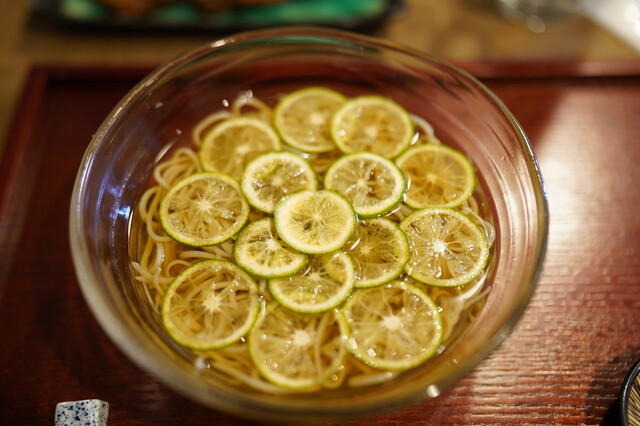
- Sudachi soba
- Kamozaru soba
- Cold zaru soba sets
Kyoto has a quieter register beyond its temple corridors and department-store dining floors. In parts of the city that feel residential before they feel theatrical, low houses, narrow approaches, and modest restaurants can read first as part of the city rather than declarations. That setting matters for soba. The category is built on small differences: the grain of buckwheat, the cut of the noodle, the temperature of the rinse, and the salt and depth in the dipping broth. Teuchi Soba Hanamomo fits the part of Kyoto dining that asks for attention rather than applause.
Soba occupies a different place in Japan’s dining culture from sushi counters or kaiseki rooms. It is less about luxury signaling and more about material control. Buckwheat is unforgiving: aroma fades, dough can lose structure, and noodles lose definition quickly when technique slips. In Kyoto, where refined dining is often associated with seasonal formality, soba offers a leaner argument for seasonality. The ingredient does the talking, and the craft sits in the background.
Soba in Kyoto's quieter buckwheat tier
The restaurant’s recognition in Tabelog Hyakumeiten for 2025 places it in a serious category rather than a tourist-facing noodle stop. That distinction is useful because soba recognition tends to reward consistency across a narrow field: texture, aroma, broth balance, and the ability to serve noodles with speed after preparation. A Tabelog score of 3.53 is not a luxury-dining score in the Michelin sense; it signals local confidence in a category where diners compare shops closely and repeat visits matter.
Ingredient handling is the right lens here because soba has little room to hide. Kyoto’s more formal restaurants can frame seasonality through ceramics, course progression, and rare produce. Soba compresses the argument into buckwheat flour, water, and timing. The value is not in ornament but in whether the noodle keeps its shape, whether the grain character survives cooking, and whether the accompanying broth supports rather than smothers it. That is why serious soba rooms often feel modest beside their reputations. The format is disciplined, not decorative.
Teuchi Soba Hanamomo also sits at a useful price point for Kyoto. The city can push visitors toward tasting-menu logic quickly, especially in hotel dining rooms and highly staged restaurants. Here, the reported lunch and dinner budget sits in the JPY 1,000 to JPY 1,999 range, which makes the meal part of an everyday craft tradition rather than a special-occasion production. That does not make the category casual in technique. It makes the economics different: the diner is paying for grain handling, handwork, and turnover rather than imported luxury ingredients or a staged room.
A focused soba restaurant, not a performance counter
The room format matters as much as the recognition. A soba restaurant of this kind is typically judged by focus rather than spectacle, and the experience is shaped by how closely service can keep pace with the kitchen. Noodles are time-sensitive once boiled and rinsed, so the format is not built around lingering through a long sequence of courses. It is built for a focused meal where the central decision is soba itself, with the rest of the experience supporting that point.
Kyoto’s dining scene often divides between highly codified Japanese formality and quick specialist formats. Teuchi Soba Hanamomo belongs closer to the second group, but with credentials that pull it above ordinary convenience dining. It is a place to understand how Kyoto eats when the point is not a view, a chef’s biography, or a grand room, but a narrow craft category handled with confidence.
Comparisons inside Kyoto help clarify the position. Other Kyoto dining rooms speak to the city’s contemporary casual register, while compact international formats show how the city absorbs outside influences without losing its preference for intimate scale. Dessert and snack traditions sit on a separate axis, and Kansai comfort food reflects another side of regional appetite. Against that range, soba reads as a study in restraint: fewer components, higher dependence on timing.
How to think about the meal
The right expectation is precision over breadth. Soba is often misunderstood by visitors who treat it as a simple noodle lunch. In specialist shops, the craft begins before service: buckwheat selection, milling style, hydration, rolling, cutting, boiling, rinsing, and plating all affect the final result. Kyoto’s long history of water-sensitive cooking makes the city a natural home for this kind of discipline. Tofu, tea, dashi, and noodles all depend on subtle handling of water and texture; soba belongs in that same conversation.
Planning should respect the format without overcomplicating it. This is not a venue to treat as a theatrical dining production; it is a focused soba stop where timing, appetite, and attention matter. The strongest strategy is to build it into a Kyoto day as a deliberate meal rather than as a flexible afterthought. Let the meal sit naturally within the city’s rhythm instead of forcing it into a cross-city sprint.
For a broader Kyoto plan, use Our full Kyoto restaurants guide to balance soba with kaiseki, French-influenced rooms, casual counters, and sweets. The wider city grid matters too: Our full Kyoto hotels guide helps avoid overlong transfers, while Our full Kyoto bars guide, Our full Kyoto wineries guide, and Our full Kyoto experiences guide frame the meal within a day rather than as an isolated address. Readers building a wider Japan and dining map can also compare category choices with other dining in Kyoto and beyond, keeping Teuchi Soba Hanamomo in mind as a concise example of soba’s appeal.
Frequently asked questions
What's the price range at Teuchi Soba Hanamomo?
Pricing at Teuchi Soba Hanamomo is listed as JPY 1,000 - JPY 1,999 JPY 1,000 - JPY 1,999.
Where exactly is Teuchi Soba Hanamomo?
Kyoto.
Do they take walk-ins at Teuchi Soba Hanamomo?
Planning details should be checked directly with Teuchi Soba Hanamomo before visiting. The listed budget is Dinner: JPY 1,000 - JPY 1,999; Lunch: JPY 1,000 - JPY 1,999.
What is Teuchi Soba Hanamomo known for?
Teuchi Soba Hanamomo is known as a soba restaurant in Kyoto, with Tabelog Hyakumeiten recognition listed for 2025 and a Tabelog score of 3.53.
Side-by-Side Snapshot
Comparable venues at the same tier for side-by-side context.
| Venue | Cuisine | Price | Awards | Notes |
|---|---|---|---|---|
| Teuchi Soba HanamomoThis venue (the venue you are viewing) | Traditional Handmade Soba | $10–20 | Tabelog 100 #77 | Not listed |
| Motoi Gyoza | Modern Japanese Gyoza Bar | $20–30 | Tabelog 100 #12 | Nakagyō |
| PRIVATE KITCHEN SUMIYOSHI | Seasonal Chinese by ex-hotel chef | $30–50 | Tabelog 100 #93 | Higashiyama |
| Sobanomi Yoshimura (蕎麦の実よしむら) | Traditional Handmade Kyoto Soba | $20–30 | Not listed | Shimogyo-ku |
| è¸å « - Takohachi | Traditional Kappo | $50–100 | Michelin Plate | Nakagyō |
| Kawabata Doki | Traditional Japanese Sweets | $20–30 | Tabelog 100 #9 | Sakyō |
Recognition history
Dated appearances from independent guides and award organizations, with the underlying list record or original source where available.
Tabelog 100 #77 · No. 77
Tabelog · Tabelog 100 - Soba - WEST - 2025
Continue exploring
More in Kyoto
Restaurants in Kyoto
All restaurants in Kyoto →
Bars in Kyoto
All bars in Kyoto →
Hotels in Kyoto
All hotels in Kyoto →

Wineries in Kyoto
Browse all →
Details
- Cozy
- Classic
- Intimate
- Solo
- Casual Hangout
- Family
- Standalone
- Design Destination
- Historic Building
- Local Sourcing
- A La Carte
- Set Menu
- Counter Dining
- Beer
- Sake
A small, two-floor kyomachiya-style house restaurant with simple wooden counters and tables, non-smoking, and a calm, classic soba-shop atmosphere that feels authentically local rather than tourist-oriented.