Google: 4.6 · 512 reviews

Territoriet, on Markveien in Oslo's Grünerløkka district, holds a 3-Star Accreditation from the World of Fine Wine Awards — a signal of serious wine programming in a city whose natural-wine and low-intervention scene has grown rapidly. The address places it in a neighbourhood that has shifted from bohemian edge to one of Oslo's more considered dining corridors, with a format built around the intersection of indigenous Norwegian produce and globally informed technique.
 Discover on Pearl
Pearl is the En Primeur Club membership app — saves, bookings, and concierge access live there. Same editors, same standards.
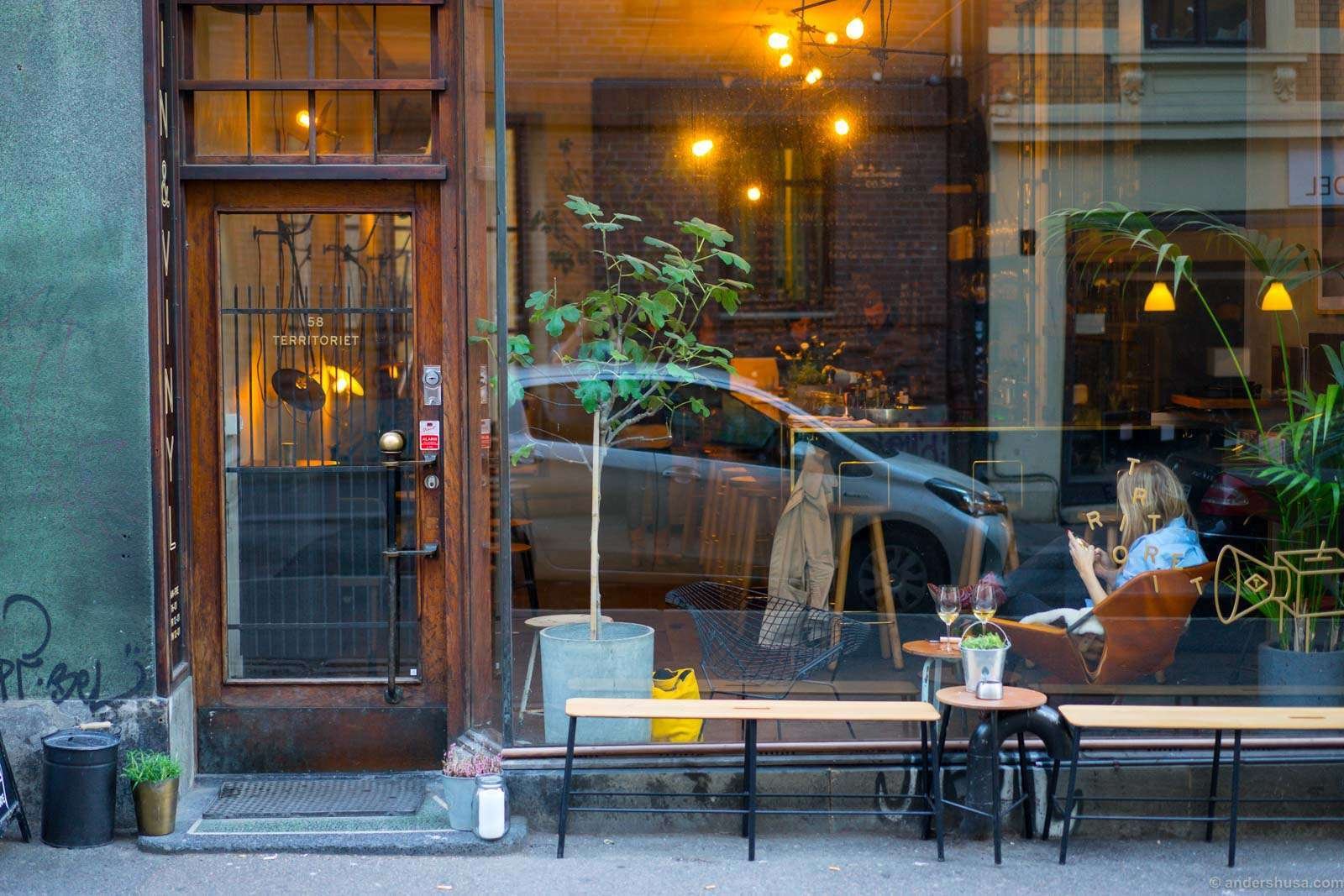
Grünerløkka and the New Oslo Wine Bar
Oslo's dining geography has reorganised itself over the past decade. The high-end tasting-menu circuit clusters around Aker Brygge and the city centre, where Maaemo and Kontrast operate at the formalist end of New Nordic. But the more interesting shift has happened further east, along the axis of Grünerløkka, where a different kind of ambition has taken root: lower ceremony, higher curiosity, and a wine culture that takes the glass as seriously as the plate. Markveien 58 sits in this corridor. The street runs through the heart of Grünerløkka, a neighbourhood that traded its working-class textile history for independent retail and hospitality, and has since attracted a cohort of operators who are interested in specificity rather than scale.
Territoriet is part of that cohort. In a city where the formal tasting-menu format dominates critical attention, a wine-anchored address on Markveien represents a different set of priorities: the cellar as editorial statement, the snack and small plate as delivery mechanism, and the room itself as the kind of place where staying for three hours feels natural rather than. The neighbourhood rewards this format. Grünerløkka draws a crowd that knows what it wants and tends to want it without the theatrical production values of Oslo's formal dining rooms.
A 3-Star Wine Programme in Context
Territoriet holds a 3-Star Accreditation from the World of Fine Wine Awards — one of the more credible independent assessments of wine programming, applied across venues internationally. A 3-Star rating at this level does not recognise a wine list by size or price point alone; it signals depth of curation, appropriate range, and the kind of staff knowledge that can translate a cellar into a conversation. In Oslo's wine bar category, that credential places Territoriet in a small peer group. The city has developed a genuine low-intervention and natural-wine culture over the past several years, with importers and sommeliers pushing producers from Georgia, the Jura, Slovenia, and the less-obvious appellations of France and Italy alongside a growing domestic interest in Norwegian fruit wines and ciders made from arctic and sub-arctic ingredients.
For context, Oslo's formal restaurant tier — the €€€€ addresses like Maaemo and Kontrast , carries wine lists built to accompany set menus, with pairing programmes that follow the kitchen's logic. Territoriet operates from the opposite direction: the wine list is the primary text, and the food responds to it. That inversion is common in the better wine bars of Paris, Copenhagen, and London, but it remains less common in Oslo, which makes the 3-Star Accreditation read as a statement about the seriousness of the programme rather than just a credential among many. Elsewhere in Norway, similar wine-forward ambition appears at addresses like RE-NAA in Stavanger and, in a different register, Under in Lindesnes, but the formats are structurally distinct from what a Grünerløkka wine bar offers.
Local Ingredients, Global Technique: The Intersection That Defines the Format
The tension that runs through contemporary Nordic cooking is not between tradition and modernity , that argument was settled, more or less, in the early 2010s, when New Nordic became its own orthodoxy. The more active tension now is between the specificity of local ingredients and the globalisation of culinary technique. Norwegian producers are working with some of the most interesting raw materials in Europe: coastline fish and shellfish from some of the cleanest cold-water fisheries in the world, foraged herbs and fungi from forests with minimal agricultural interference, lamb and game from upland landscapes that produce meat with a flavour profile distinct from anything raised in more temperate conditions. The question facing Oslo's kitchens is how to handle those materials without either flattening them into a generic fine-dining idiom or performing a folkloric authenticity that aestheticises poverty-era preservation techniques.
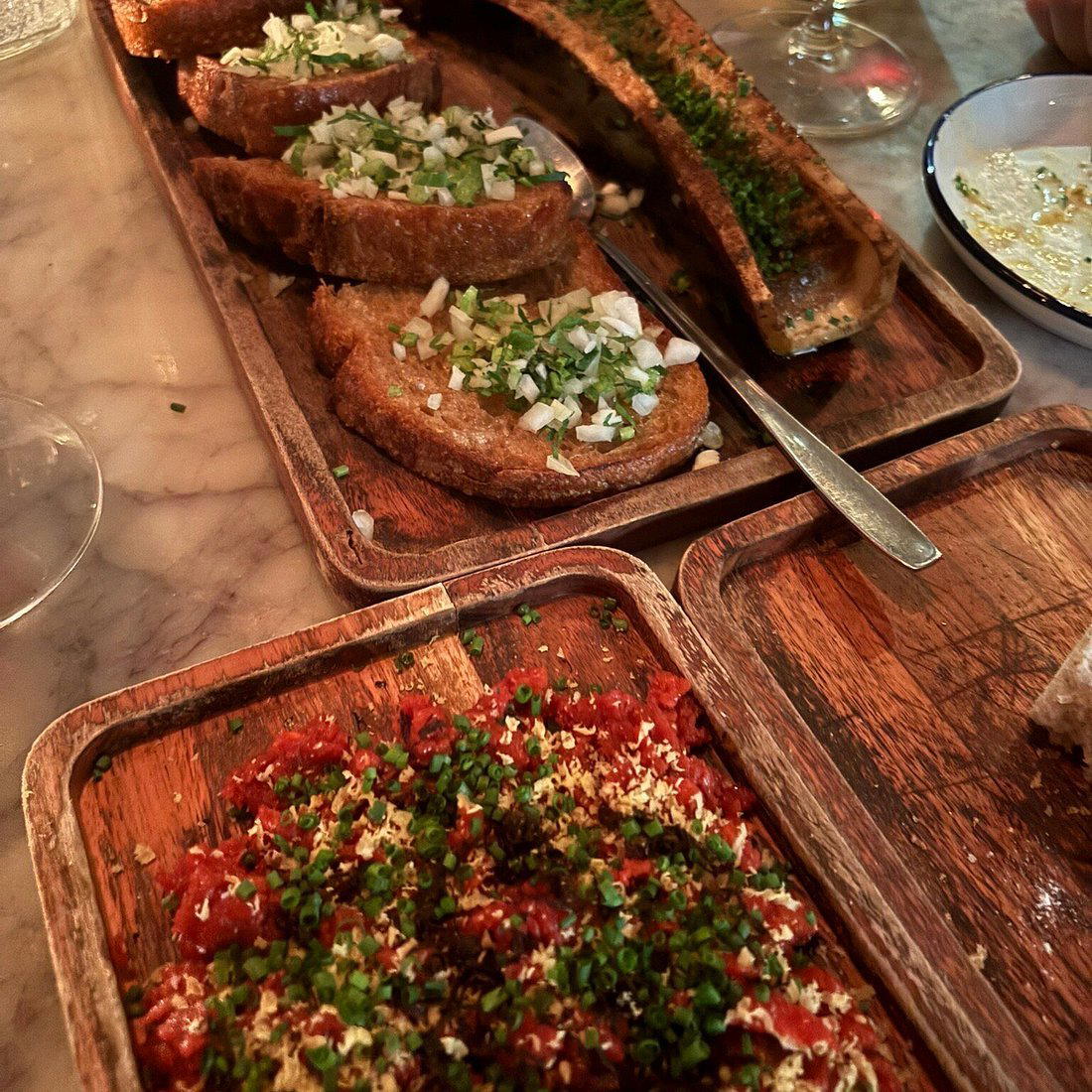
The wine bar format, when it works, offers a third path. Small plates and snacks allow a kitchen to apply precise, technically informed preparation , curing, ageing, fermentation, acidulation , at a scale that keeps the ingredient central. The dish does not need to carry a narrative arc across twelve courses; it needs to be good with the glass next to it. Technique drawn from French charcuterie, Japanese precision cutting, or the Basque pintxos tradition can be applied to Norwegian smoked fish, reindeer fat, or preserved cloudberries without the ingredient losing its identity. This is the register in which the more interesting Oslo wine bars operate, and the category of address for which Territoriet's 3-Star wine credential is most legible as evidence of intent.
For readers who want to understand the wider geography of this approach across Norway, the contrast with destination-format restaurants is instructive. Iris in Rosendal and Gaptrast in Bergen pursue indigenous ingredients within longer tasting formats. FAGN in Trondheim applies similar logic in a city with its own regional identity. Territoriet's Grünerløkka address positions it as the urban, accessible end of the same conversation , the place where the argument between local product and imported technique gets rehearsed informally, over glasses rather than courses.
The Neighbourhood as Context
Grünerløkka's hospitality density has increased substantially, and Markveien is among its more active streets for evening trade. The area sits northeast of the city centre, walkable from Youngstorget and accessible by tram along Thorvald Meyers gate. For visitors staying in the centre, the 15-to-20-minute walk through Olaf Ryes plass is itself an orientation in how the city's eastern districts function: denser, more residential, less given to tourist infrastructure. The neighbourhood draws a crowd that includes Oslo's wine-trade community, which tends to use addresses like Territoriet for post-work bottles rather than occasion dining , a fact that keeps the room calibrated differently from the formal restaurant tier.
Nearby, Bar Amour and Hot Shop operate in adjacent registers, and Mon Oncle brings a French bistro sensibility to the same general corridor. Together they form a loose cluster of addresses that share an interest in producer-led wine and technically precise but informal food , a pattern visible in comparable neighbourhoods in Copenhagen's Nørrebro, Stockholm's Södermalm, or London's Hackney, but with a distinctly Oslo inflection shaped by the city's price level and its relatively small but engaged hospitality community.
Planning a Visit
Markveien 58 is the address. For visitors building a fuller Oslo itinerary, the EP Club Oslo restaurants guide maps the full range from formal tasting rooms to neighbourhood wine bars. The Oslo bars guide covers the city's cocktail and drinks programming, while the Oslo hotels guide handles accommodation across the city's districts. Those planning trips beyond the capital will find that Norway's restaurant tier extends well outside Oslo: Boen Gård in Tveit and Under in Lindesnes are among the addresses that merit travel in their own right, and the Oslo wineries guide and experiences guide round out the picture for those wanting depth across categories. For international comparison, the wine-programme seriousness signalled by Territoriet's 3-Star Accreditation sits in a peer set that includes technically focused wine-led dining rooms like Le Bernardin in New York City, though the formats differ substantially , a reminder that the credential travels across formats even when the category does not.
A Quick Peer Check
Comparable venues for orientation, based on our database fields.
| Venue | Cuisine | Price | Awards | Notes |
|---|---|---|---|---|
| Territoriet | {"wbwl_source": {"slug": "territoriet", "page… | This venue | ||
| Maaemo | New Nordic, Modern Cuisine | €€€€ | Michelin 3 Star | New Nordic, Modern Cuisine, €€€€ |
| Kontrast | New Nordic, Scandinavian | €€€€ | Michelin 2 Star | New Nordic, Scandinavian, €€€€ |
| Hot Shop | New Nordic, Modern Cuisine | €€€ | Michelin 1 Star | New Nordic, Modern Cuisine, €€€ |
| Statholdergaarden | Modern European, Classic Cuisine | €€€€ | Michelin 1 Star | Modern European, Classic Cuisine, €€€€ |
| Arakataka | Nordic , Norwegian | €€ | Nordic , Norwegian, €€ |
Continue exploring
More in Oslo
Restaurants in Oslo
Browse all →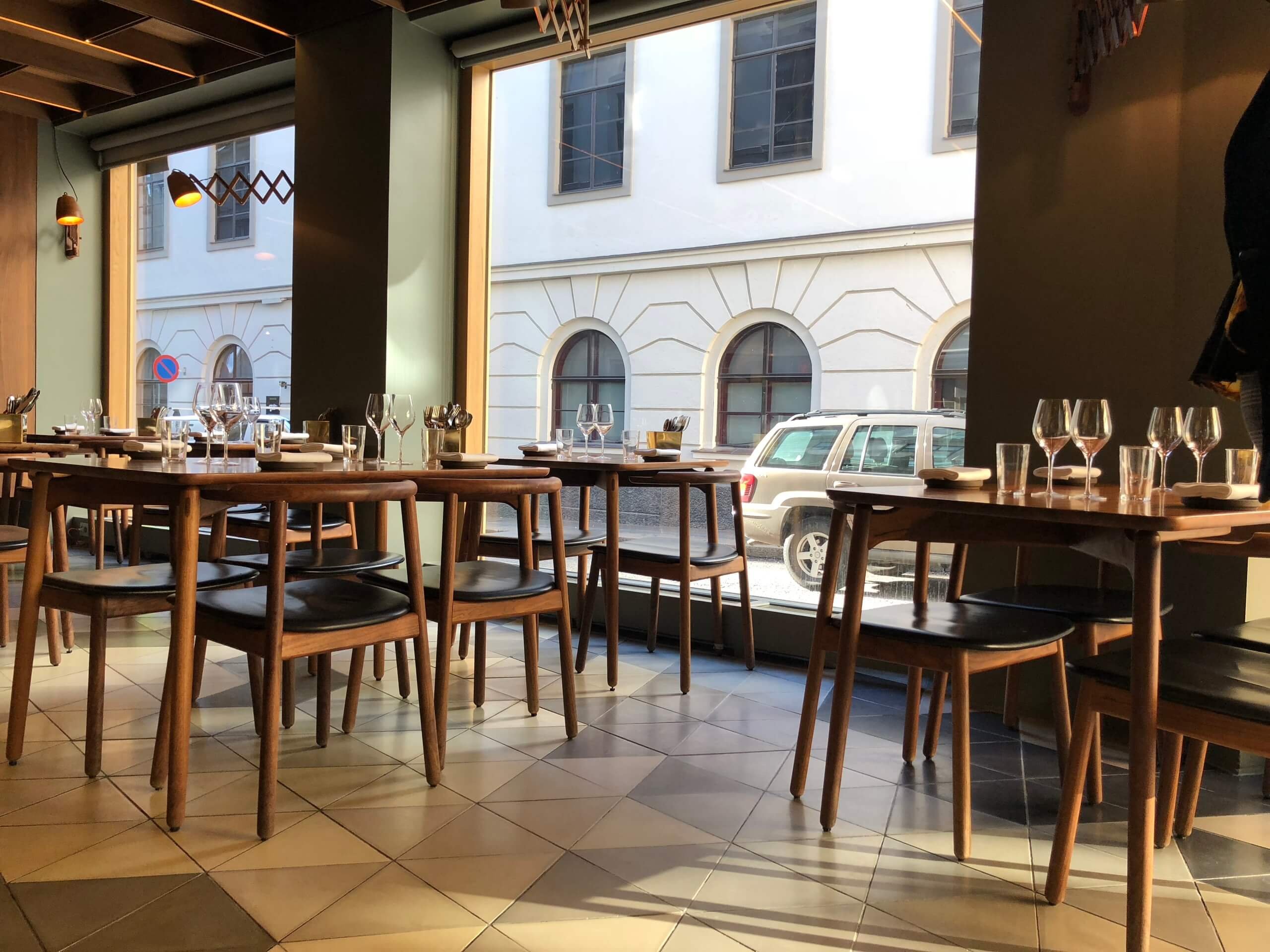
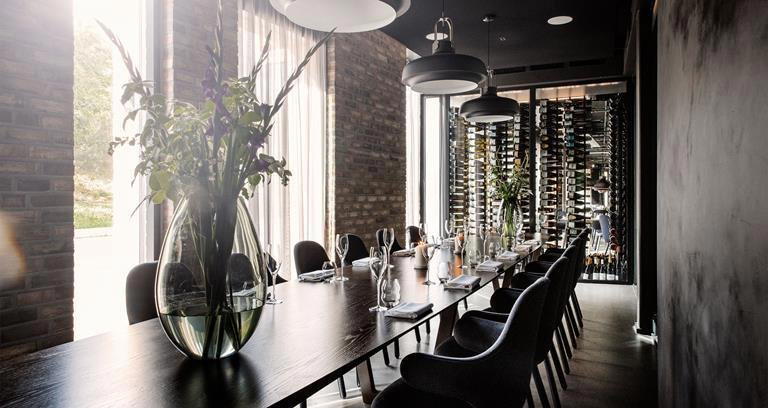
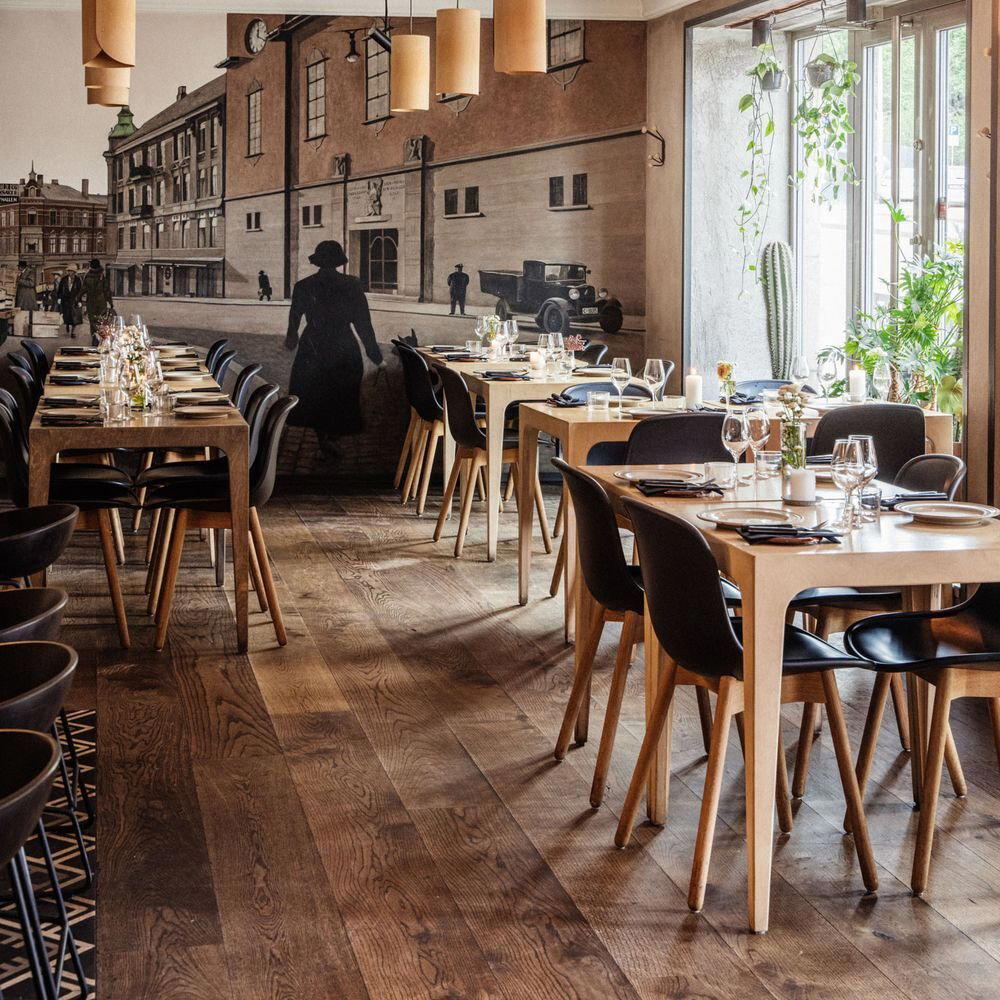
Hotels in Oslo
Browse all →

Wineries in Oslo
Browse all →
At a Glance
- Cozy
- Intimate
- Trendy
- Lively
- Casual Hangout
- Date Night
- After Work
- Solo
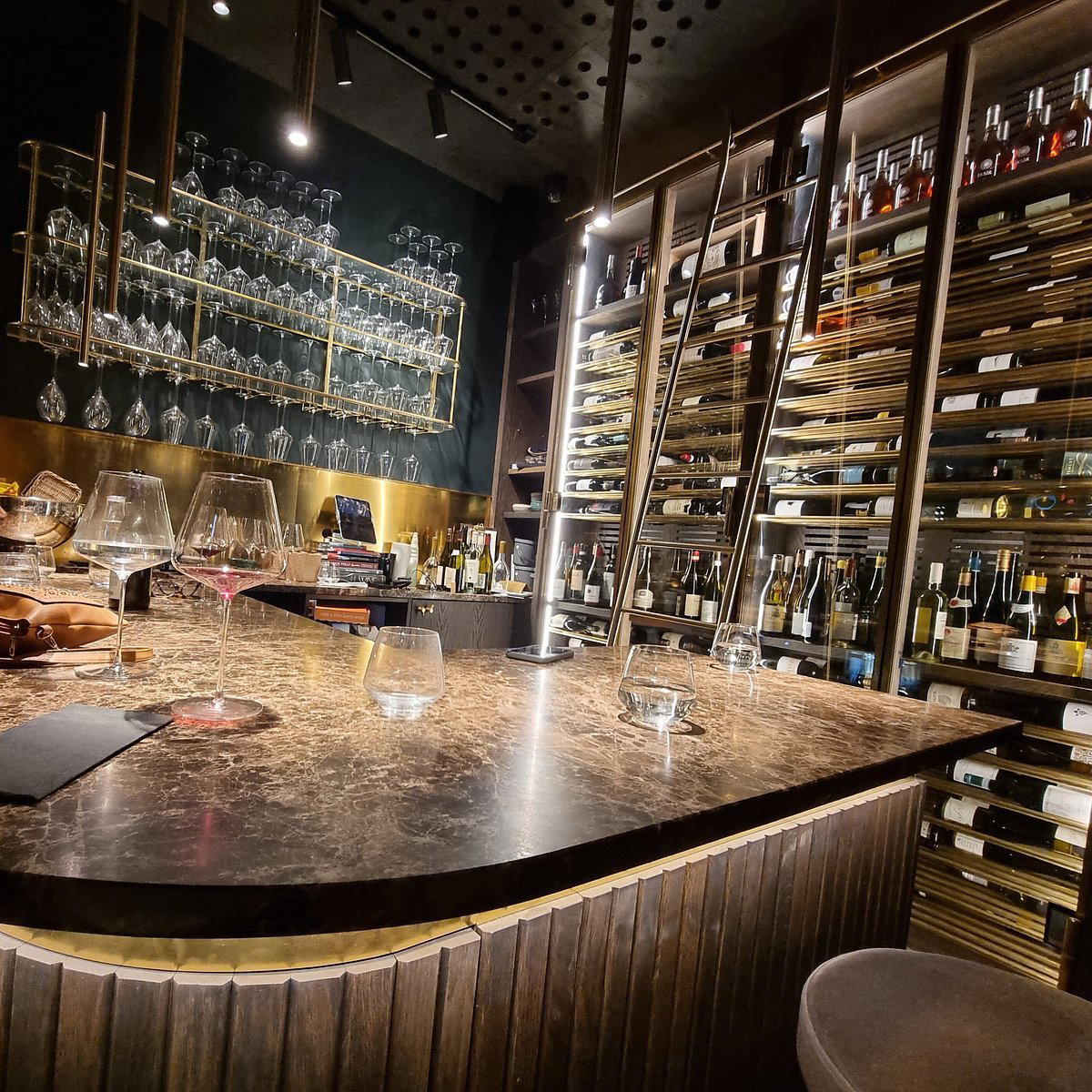
- Wine Cellar
- Standalone
- Design Destination
- Extensive Wine List
- Natural Wine
- Beer Program
- Sommelier Led
- Local Sourcing
- Street Scene
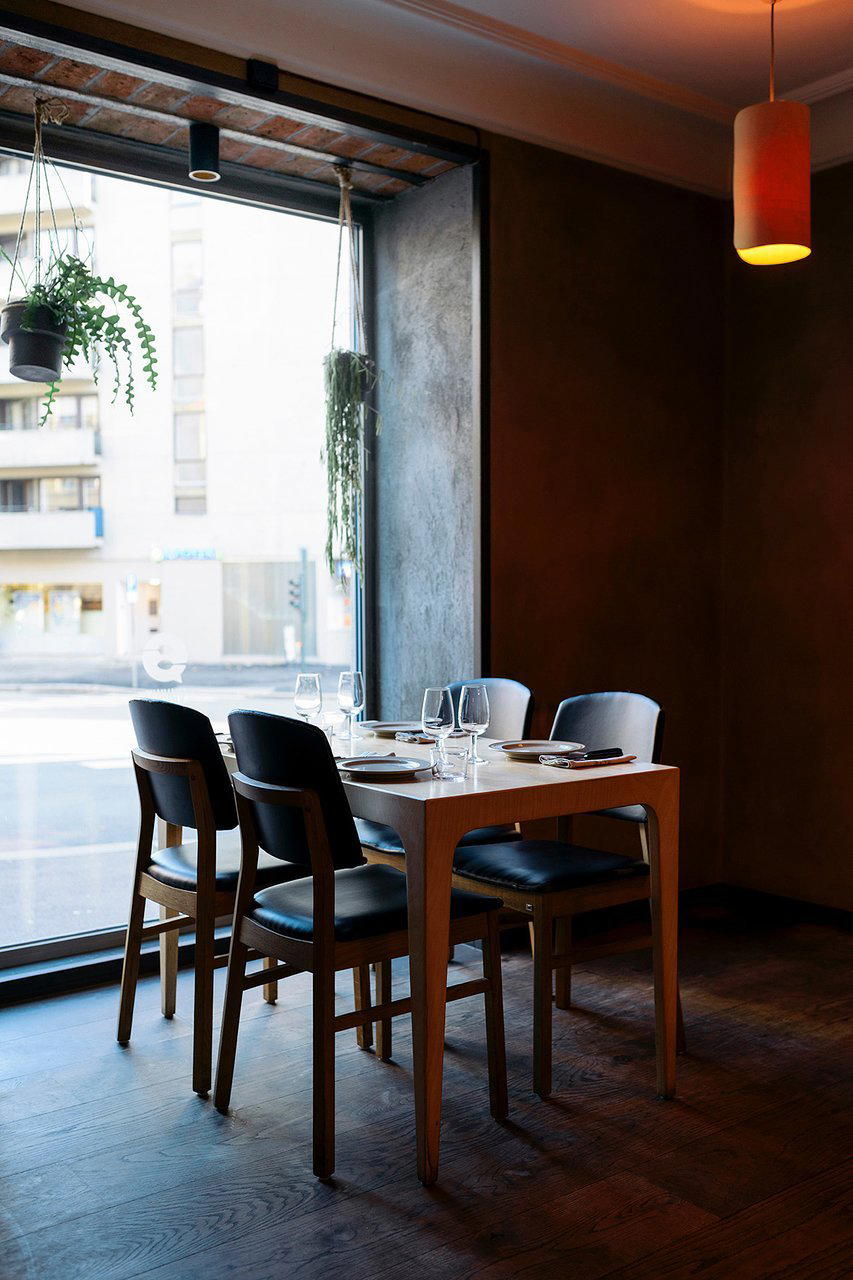
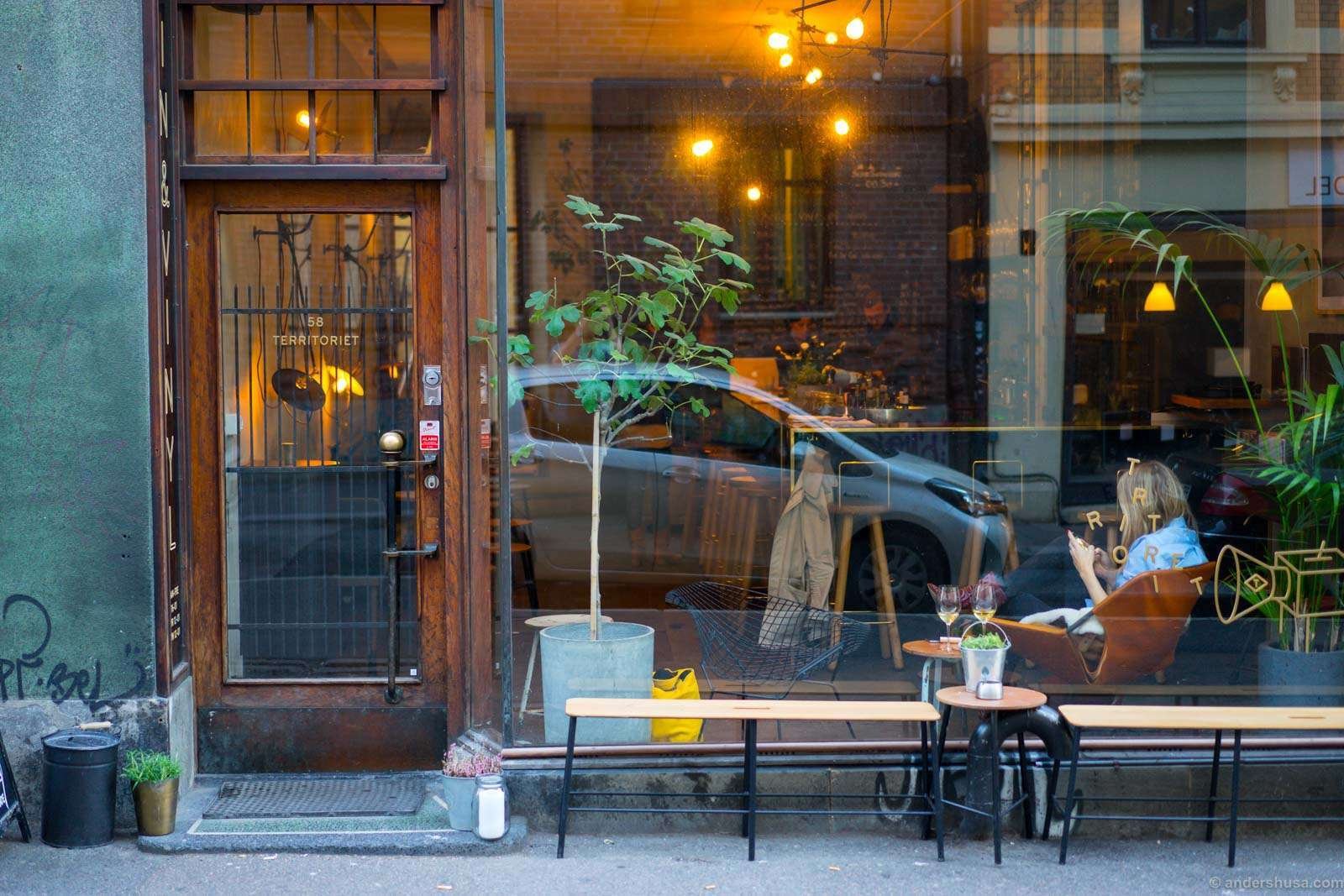
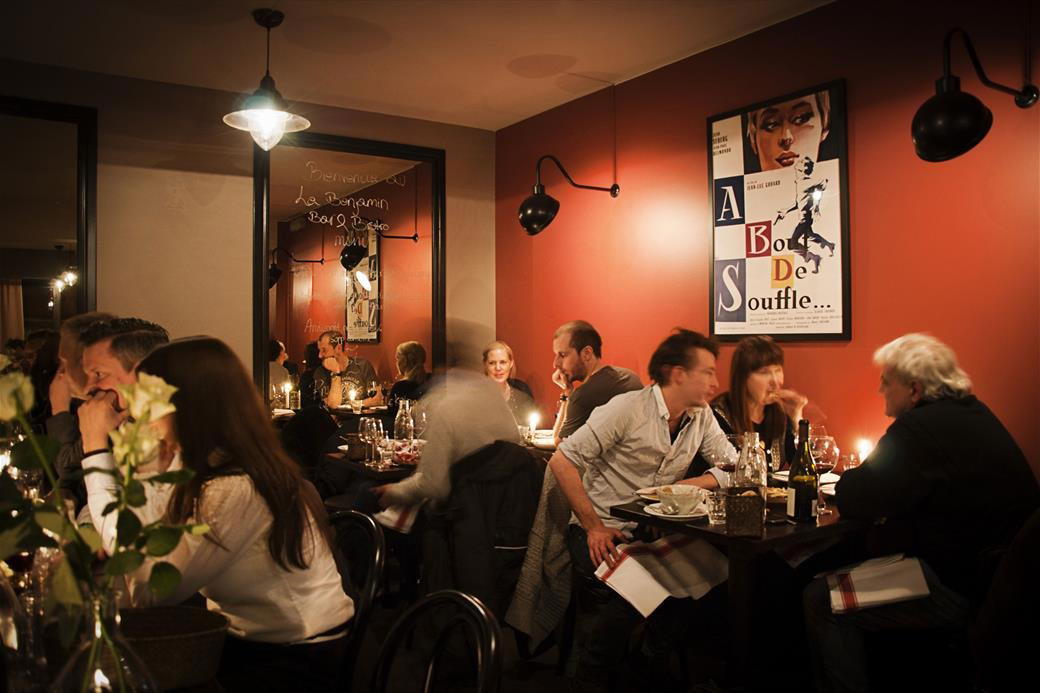
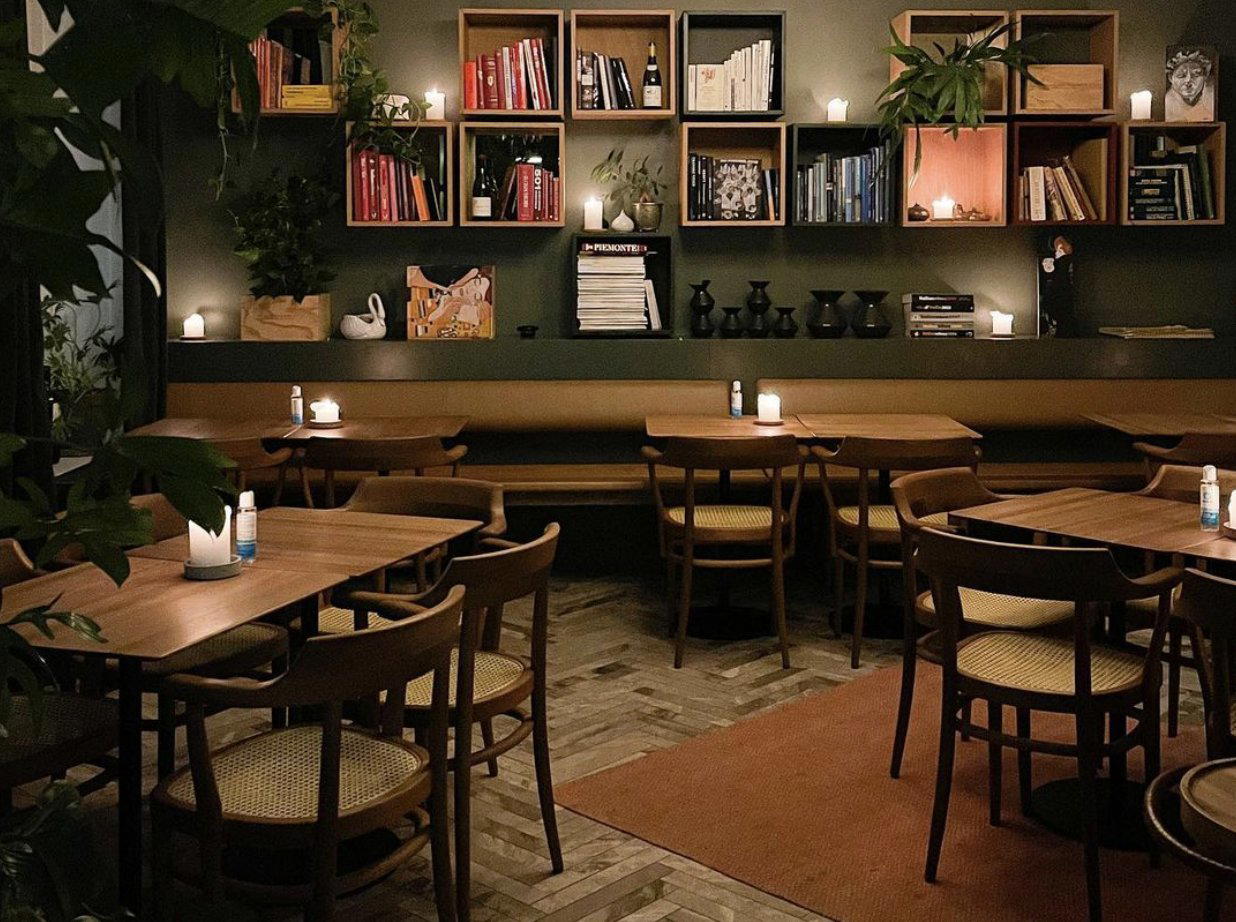
Cozy, plant-filled space with teal walls, vinyl records, warm lighting, and a living-room-like atmosphere that feels both sophisticated and welcoming; street-side seating offers people-watching opportunities.