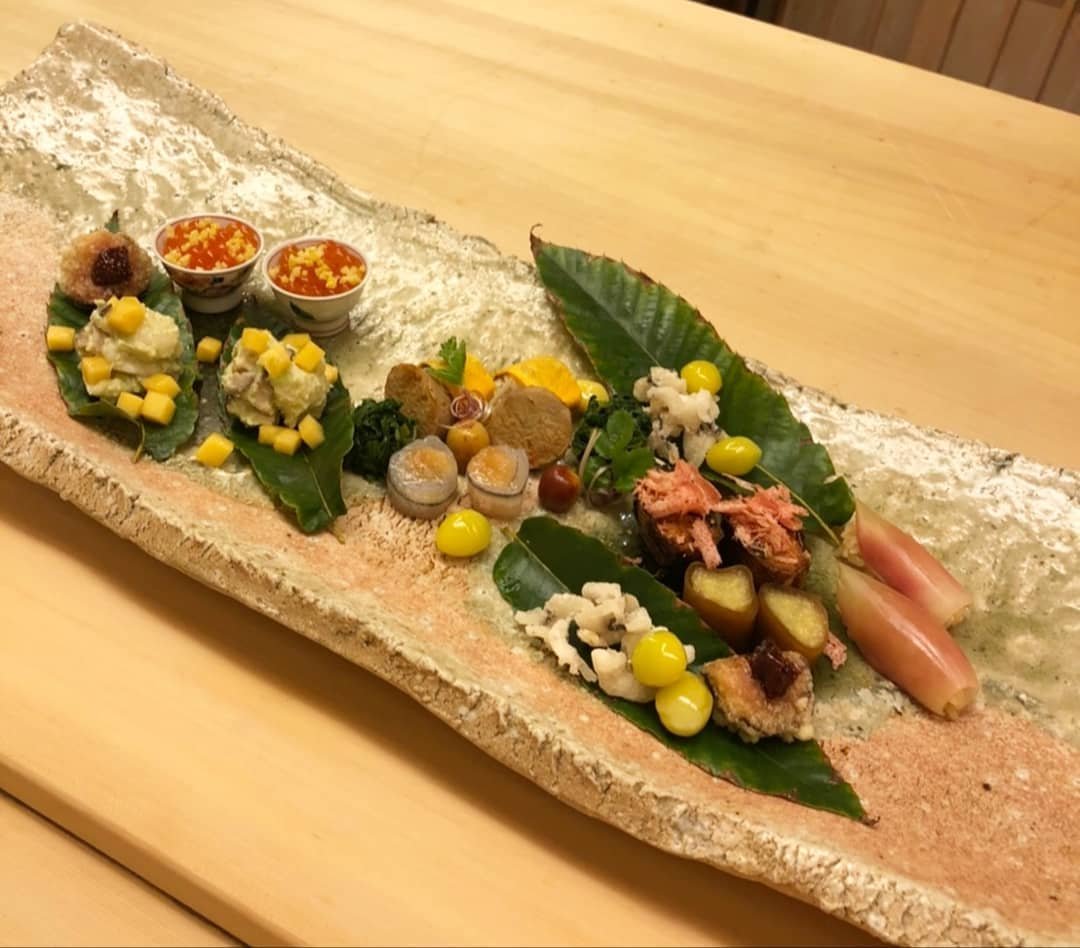
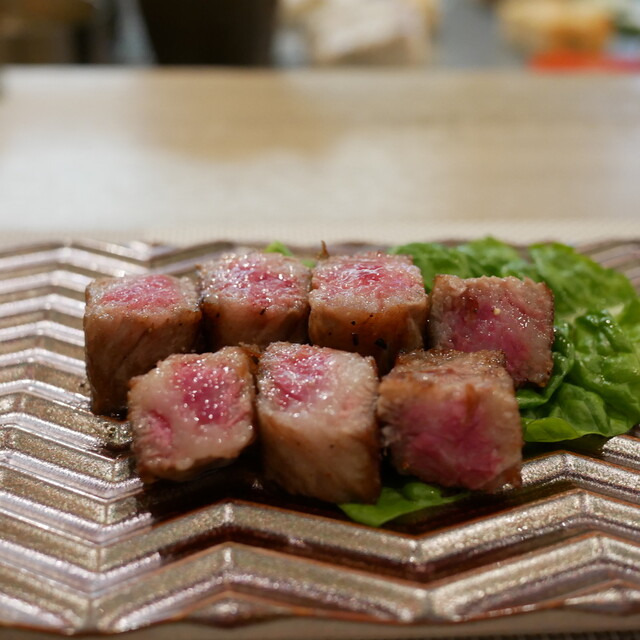
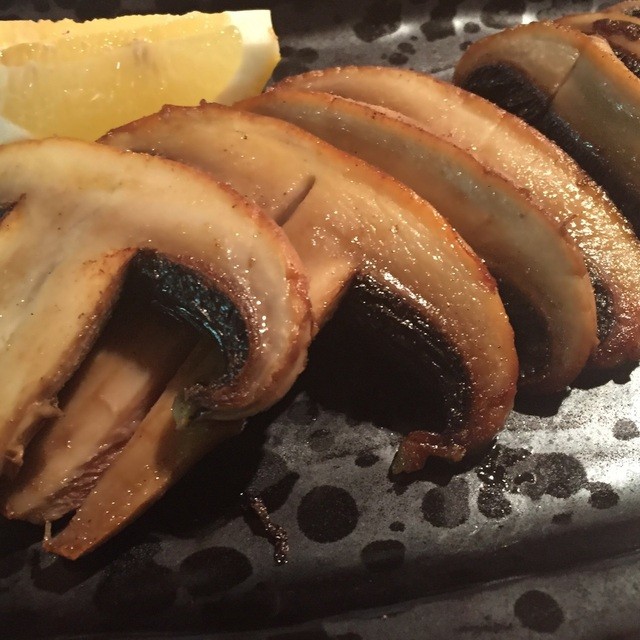
Tempura Sen no Tane gives Okayama a tightly focused tempura counter in a city better known to many travellers for fruit, gardens, and train connections than specialist frying. Its Tabelog 100 Tempura 2025 selection, seven-seat counter format, and fish-led cooking place it in the serious end of the local dining conversation without turning the meal into a Tokyo-style trophy hunt.
Pearl is the En Primeur Club membership app — saves, bookings, and concierge access live there. Same editors, same standards.
- Address
- Japan, 〒700-0826 Okayama, Kita Ward, Togiyacho, 8−26 パン・ドールビル 1F
- Phone
- +81 86-230-0896
- Website
- instagram.com
 Saves & bookings on Pearl
The room is built around proximity: counter seats, frying done in front of the diner, and a meal whose rhythm depends on timing rather than theatre. In Okayama, where many visitors eat between garden walks, castle visits, and rail transfers, this kind of tempura counter asks for a slower register. The appeal is not variety for its own sake, but sequence: batter, oil, ingredient, pause, repeat.
Tempura Sen no Tane belongs to a small category of regional Japanese restaurants where craft is easier to read than luxury. The format is compact, with seven counter seats and no private rooms, so the meal is less about ceremony than concentration. That matters for tempura. Unlike sushi, where sourcing and knife work often dominate the conversation, tempura depends on a series of short decisions made in real time: moisture, temperature, coating, and how quickly the piece reaches the diner.
A seven-seat counter puts the frying ritual in plain view
Counter tempura has its own etiquette. The diner watches without needing to perform admiration, eats promptly, and lets pacing do the work. The kitchen’s task is to keep the sequence moving without making the meal feel rushed. A small counter also changes the social contract: large-party energy has little place here, and attention naturally moves toward the fryer, the serving rhythm, and the changing balance between seafood, vegetables, rice, and drink.
The Tabelog 100 Tempura 2025 selection gives the restaurant a useful credential in a category that can be difficult for travellers to assess from the outside. Tempura in Japan ranges from quick tendon bowls to formal counter courses, and the difference is not only price or polish. The more serious end of the field treats frying as a precision craft, not a batter-heavy comfort food. In Okayama, that distinction is especially helpful because the city’s dining scene rewards local knowledge more than international name recognition.
The restaurant’s listed categories, tempura and ten-don, point to two ways of reading the place. Lunch in this genre often serves the city’s practical appetite: rice bowls, set meals, a direct relationship between cost and satisfaction. Dinner shifts the same craft toward a course format, where the counter becomes the main stage. That split is common in Japan, but it is not incidental; it allows a specialist kitchen to serve both regular local demand and diners who want the longer ritual.
Okayama's specialist dining sits between local rhythm and destination eating
Okayama does not behave like Tokyo, Kyoto, or Osaka at the table. Its stronger restaurants often sit in a quieter register, serving residents first and travellers second. That changes how a meal should be judged. A seven-seat tempura counter here is not competing on spectacle. It is competing on whether the format, pacing, and ingredient focus justify making dinner the point of the evening.
Within the local comparison set, the restaurant occupies a different lane from broader Japanese cooking at Kisetsu Ryori Katayama or the Italian register at VIA PACE. Sakaiya Honten sits in a similar dinner spend band, while Hasunomi gives Okayama another reference point for travellers mapping the city beyond casual eating. The useful distinction is format: tempura counter dining is narrower, more repetitive by design, and more dependent on execution across small variations. Diners who want range may be happier elsewhere; diners who enjoy watching one technique tested repeatedly will understand the appeal.
The drinking signals also matter. Sake, shochu, and wine are listed, with particular attention to sake, and BYO drinks are noted. For tempura, drink pairing is less about heavy contrast than keeping the palate alert across fried courses. Sake and shochu make sense here because they can sit beside oil and salt without pushing the meal into a Western fine-dining frame.
There is also a useful temporal marker for travellers planning around 2026. The restaurant moved to its current Pan Doru Building location from October 2025 after closing its previous site in September 2025. That kind of relocation can reset habits around access, neighbourhood flow, and regular clientele, but the Tabelog 100 Tempura 2025 selection anchors its reputation before the move. The practical reading is simple: treat it as a small specialist counter with an established following, not as a casual fallback.
How to place it in an Okayama itinerary
This is a strong fit for travellers who want one focused Japanese meal in Okayama rather than a broad survey of local cooking. It pairs naturally with a day built around the city centre, Korakuen, Okayama Castle, or an overnight stop between Kansai, Hiroshima, and the Setouchi region. The no-parking note also nudges the decision toward rail, tram, taxi, or walking within the central grid rather than treating dinner as a suburban drive.
Payment details require attention in Japan’s smaller specialist restaurants: credit cards and electronic money are not accepted, while PayPay is listed. The dining room is non-smoking, children are welcomed, and strollers are noted, which gives the counter a broader practical profile than many intimate Japanese restaurants. That said, the seven-seat layout means manners matter. Keep parties compact, arrive prepared, and let the pacing of the fryer set the tempo.
For a broader read on the city, start with Our full Okayama restaurants guide, then compare nearby editorial lanes through 400℃ Mori No Machi, 400℃ Pizza, Cozzýs, Duomo, and Hasunomi. Planning beyond dinner can extend through Our full Okayama hotels guide, Our full Okayama bars guide, Our full Okayama wineries guide, and Our full Okayama experiences guide.
Readers tracing Japanese dining formats across cities can also compare the narrower ritual here with -Grilled beef Sukiyaki- KAMAKURA TANUKIAN 鎌倉 たぬき庵 in Kamakura,. 鮪と炭火焼き うお炭 秋葉原店 in Tokyo,.cafe in Osaka,.know in Kumamoto, (Shoku) Vietnam in Kawasaki, [Curry Senmon Ten] Maruyama Kyoju. in Sapporo, Jōdo Saké Bar in Los Angeles, and Onigiri Time in Pasadena.
Where It Fits
Nearby venues at a similar price tier for orientation.
| Venue | Cuisine | Price | Awards | Notes |
|---|---|---|---|---|
| Tempura Sen no TaneThis venue — the venue you are viewing | Japanese tempura restaurant | $$$ | , | |
| Ichome | Yakitori (Grilled Chicken Skewers) | $$ | , | |
| 穂浪 | Traditional Japanese Kaiseki | , | Okayama | |
| Teppan Cuisine Nagao | Modern Teppanyaki & Wine in Okayama | $$$ | , | Marunouchi |
| Ujo Tei | Traditional Unagi (eel) restaurant | $$$ | , | Kita Ward |
| Okonomiyaki Mori | Okayama-style okonomiyaki & izakaya | $$ | , | Hokancho, Kita-ku |
Continue exploring