
Ichome puts Okayama yakitori into the small-room, course-led category rather than the casual skewer-shop lane. Its Tabelog 100 Yakitori WEST 2025 selection gives it a clear trust signal, while the format points toward sourced chicken, charcoal discipline, sake, shochu and wine rather than izakaya sprawl.
Pearl is the En Primeur Club membership app — saves, bookings, and concierge access live there. Same editors, same standards.
- Address
- Japan, 〒700-0822 Okayama, Kita Ward, Omotecho, 1 Chome−6−56 1階
- Phone
- +81 50-8881-4928
- Website
- tablecheck.com
 Saves & bookings on Pearl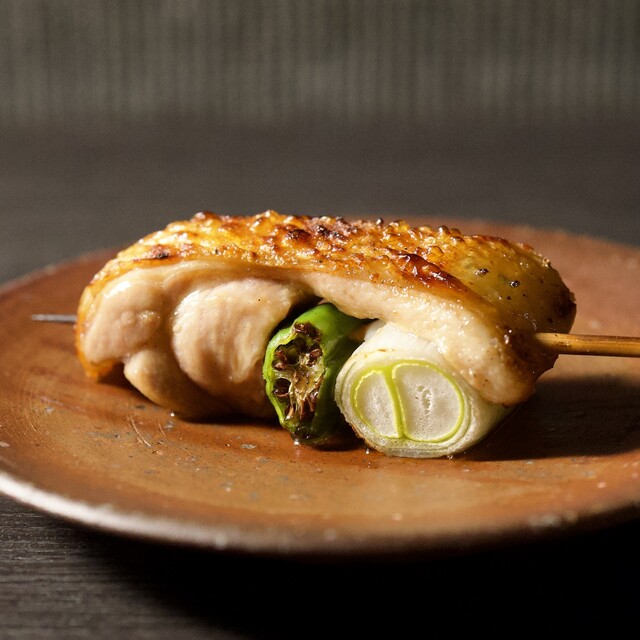
Omotecho changes quickly after dusk: the shopping-street rhythm thins, smaller dining rooms take over, and the meal becomes less about volume than sequence. Here, yakitori works when the room narrows attention. The counter matters because cooking is measured skewer by skewer; the table count matters because timing is part of the craft. Ichome belongs to Okayama dining’s more controlled side, where grilled chicken is treated as a course format rather than a casual add-on to drinks.
Serious yakitori is built on sourcing and repetition. A chef cannot hide poor chicken behind elaborate saucing for long; the format exposes texture, fat, seasoning and heat. Better houses make their case through parts, pacing and charcoal management, with the drink list as a second structure rather than a distraction. Ichome’s recognition in Tabelog 100 Yakitori WEST 2025 places it in a western Japan category where the benchmark is consistency across a tightly edited sequence, not breadth.
Okayama yakitori with a source-first logic
Okayama is not a single-cuisine city in the way Kyoto is often read through kaiseki or Fukuoka through ramen and yatai. Its dining identity is quieter: regional produce, Inland Sea access, compact rooms, and restaurants serving local regulars before becoming travel targets. For yakitori, that fits. The style rewards supply chains and daily preparation over spectacle. Chicken quality, organ handling, tare maintenance and salt control determine whether the meal holds across the full run.
Ichome is explicitly yakitori, which matters because Japan’s premium chicken counters now sit apart from general izakaya. At one end are drinking rooms where skewers sit within a broader menu; at the other are course restaurants where sequence is the argument. Ichome reads closer to the latter. Tabelog frames it as a yakitori course restaurant, and the room supports that idea: a small counter component, a few tables, and a capacity that keeps the grill central.
That format changes the value equation. Okayama has higher-ticket specialist dining, including Teppan Cuisine Nagao, while the city’s broader map runs from sushi and French-influenced rooms to casual local counters. In that spread, Ichome sits in a disciplined middle: not an entry-level skewer stop, not a luxury tasting-menu production, but a focused poultry house with recognition beyond its immediate neighbourhood.
The room is built for pacing, not performance
Small yakitori rooms are often misunderstood by travellers expecting theatre. The serious version is restrained. The grill is active, but the point is cadence, not flamboyance. Counter seating brings diners close to the cooking, while tables soften the experience for pairs or small groups. At Ichome, the absence of private rooms is less limitation than clue: this is a shared-room restaurant, and the experience depends on everyone accepting the course rhythm.
The drink direction reinforces that adult, food-led reading. Shochu, sake and wine are listed, placing the meal between traditional yakitori drinking culture and the newer habit of pairing grilled chicken with wine. Across stronger yakitori counters in Japan, smoke, fat and salt work with sake, but also meet acidity and structure in wine without pushing the restaurant into Western fine-dining language. The category feels precise without becoming formal in the old hotel-restaurant sense.
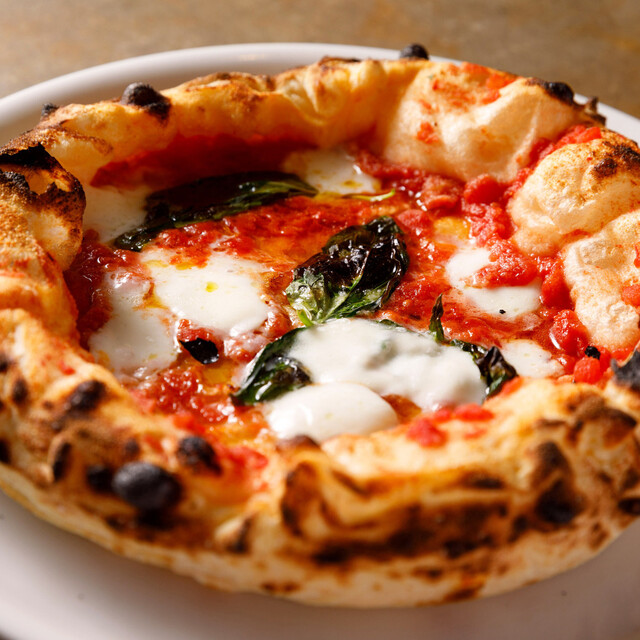
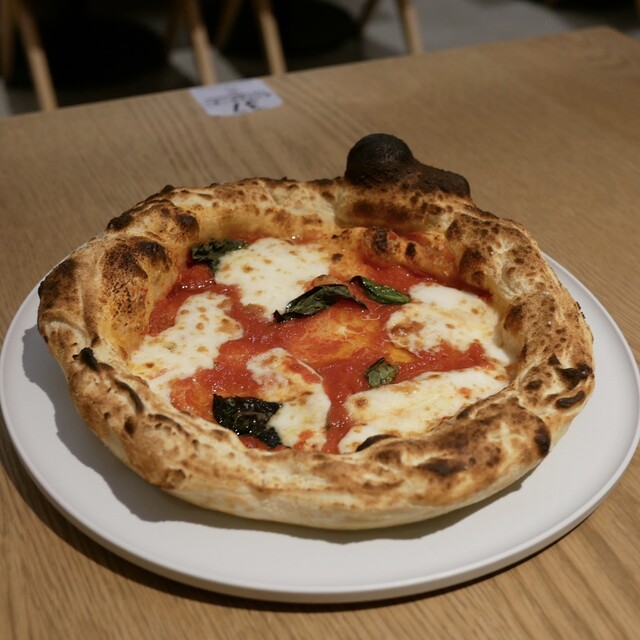
For travellers building an Okayama itinerary, Ichome sits well alongside other focused city tables rather than as a standalone trophy meal. Pizza specialists such as 400℃ Mori No Machi and 400℃ Pizza show another side of the city’s compact specialist dining; Cozzýs, Duomo and Hasunomi broaden the field beyond Japanese formats. For the wider map, use Our full Okayama restaurants guide, then cross-check hotels, bars, wineries and cultural planning through Our full Okayama hotels guide, Our full Okayama bars guide, Our full Okayama wineries guide and Our full Okayama experiences guide.
How it fits the wider Japan dining circuit
Travelers often over-index on Tokyo and Kyoto for serious counter dining, but Japan’s regional cities can be sharper for a different reason: smaller markets force restaurants to define themselves clearly. A yakitori course in Okayama does not need capital-city mythology. It needs sourcing, steady heat and enough local demand to keep the format alive. Ichome’s 2025 Tabelog 100 Yakitori WEST selection is useful because it places the restaurant in a regional award frame rather than a generic national hype cycle.
Comparisons inside Okayama should be made by category, not cuisine alone. Teppan Cuisine Nagao signals a higher-spend, ingredient-showcase model; sushi rooms such as 松寿司 sit in a different craft tradition; Waraku and 穂浪 point to the range of Japanese dining rooms competing for the same serious diner; Souris La Seine occupies a lighter spend category. Against that local field, Ichome’s appeal is specificity. It asks the diner to commit to chicken, charcoal and pacing rather than a broad menu.
The same logic applies across Japan and beyond. A beef specialist such as -Grilled beef Sukiyaki- KAMAKURA TANUKIAN 鎌倉 たぬき庵 in Kamakura is defined by a different ingredient hierarchy;. 鮪と炭火焼き うお炭 秋葉原店 in Tokyo leans toward tuna and charcoal;.cafe in Osaka.know in Kumamoto, (Shoku) Vietnam in Kawasaki and [Curry Senmon Ten] Maruyama Kyoju. in Sapporo show how narrow concepts can anchor a trip without pretending to represent a whole city. Even outside Japan, Jōdo Saké Bar in Los Angeles and Onigiri Time in Pasadena prove that focused Japanese formats travel better when they keep clear boundaries.
The right diner is not looking for a sprawling menu. The draw is a compact, adult yakitori evening in Okayama with credible regional recognition and a room scaled for attention. That is enough. In a city where specialist restaurants often speak softly, Ichome’s case rests on the discipline of the category: chicken, fire, drink and timing, kept within a frame small enough for details to count.
Comparison Snapshot
Comparable venues by cuisine and price in the same metro.
| Venue | Cuisine | Price | Notes |
|---|---|---|---|
| IchomeThis venue — the venue you are viewing | Yakitori (Grilled Chicken Skewers) | $$ | Not listed |
| 松寿司 | Japanese Restaurant | Not listed | Okayama |
| Teppan Cuisine Nagao | Modern Teppanyaki & Wine in Okayama | $$$ | Marunouchi |
| 楽旬菜 佐とう | Seasonal Japanese Kappo | $$$ | Saidaiji cho |
| Teppan Kayano | Japanese Teppanyaki | $$$ | Chuocho, Kita-ku, Okayama |
| 穂浪 | Traditional Japanese Kaiseki | Not listed | Okayama |
Recognition history
Dated appearances from independent guides and award organizations, with the underlying list record or original source where available.
Tabelog 100 #69 · No. 69
Tabelog · Tabelog 100 - Yakitori - WEST - 2025
Continue exploring
More in Okayama
Restaurants in Okayama
Browse all →
At a Glance
- Cozy
- Intimate
- Date Night
- Casual Hangout
- After Work
- Group Dining
- Solo
- Standalone
- Sake Program
- Beer Program
Current opening hours
- Monday
- 5:30–11 PM
- Tuesday
- 5:30–11 PM
- Wednesday
- 5:30–11 PM
- Thursday
- Closed
- Friday
- 5:30–11 PM
- Saturday
- 5–11 PM
- Sunday
- 5–11 PM
Hours can change for holidays and private events. Last verified .