
Nagoya’s burger scene has moved well beyond imported Americana, and tbz Kakuouzan honten sits in the category’s more serious local tier. The Kakuozan room combines hamburger and cafe formats, with Tabelog Hamburger 100 selections in 2024 and 2026 giving it a clear critical marker rather than simple neighbourhood popularity.
Pearl is the En Primeur Club membership app — saves, bookings, and concierge access live there. Same editors, same standards.
- Address
- 愛知県名古屋市千種区覚王山通9-8-2 キリン堂ビル 1F
- Phone
- +81527847090
- Website
- tbz.co.jp
 Saves & bookings on Pearl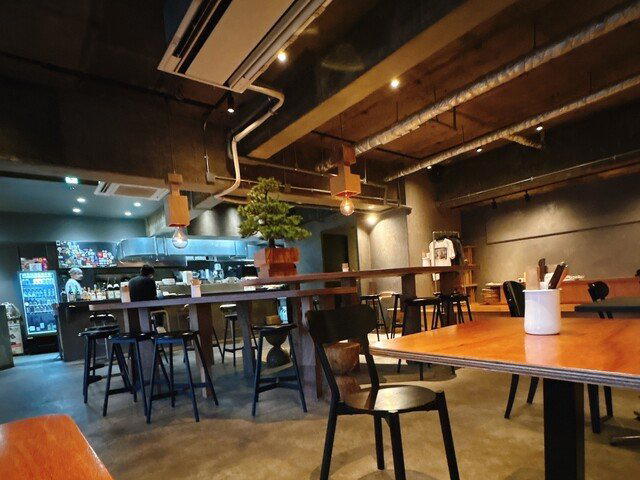
Kakuozan is not the part of Nagoya where dining announces itself with theatre. The neighbourhood is quieter: station exits, residential streets, small retail fronts, and cafe culture suited to lunch or an early evening stop. Here, the modern Japanese burger becomes a test of precision: it must carry fast-food appetite, cafe pacing, and restaurant-plate seriousness without parody.
That frames tbz Kakuouzan honten. The category matters more than mythology. Japan’s hamburger specialists have their own grammar: stacked construction, careful buns and patties, sauces often drawn from yoshoku habits, and service between casual counter dining and destination lunch. A Tabelog Hamburger 100 selection in 2024 and again in 2026 places this address in the national conversation around the format, a stronger signal than broad popularity claims.
A burger meal paced like cafe dining, not fast food
The better Japanese burger shops do not copy American diner culture; they slow the meal down. The burger anchors the table, but the room, sides, drinks, and cafe rhythm change how it is eaten. Nagoya’s version feels different from Tokyo’s queue-heavy specialist counters: more casual meal than single-object chase.
At tbz Kakuouzan honten, the listed categories are hamburger and cafe, a pairing that explains the table better than any grand chef narrative. The meal centres on a burger course, but the cafe designation matters: it suggests daytime-to-evening flexibility and a room for lingering, not turnover alone. In a city where coffee shops, kissaten habits, and Western-style comfort cooking have long shaped casual dining, the hybrid feels native rather than decorative.
The progression is the point. A burger specialist at this level asks diners to judge sequence: how first bites set up the patty’s weight, whether sauce and garnish stay balanced, how the final third holds together, and whether sides feel like padding or part of the meal. Without verified dish names, the sensible reading is categorical, not item-by-item. This is a hamburger restaurant judged on construction and pacing, not a tasting-menu restaurant dressed down.
Against nearby Nagoya dining, the price and formality gap is clear. Taverna Sukima and CORK occupy higher-spend dinner territory, while fika. and Kakuozan Kichi Imo Honten sit closer to cafe and snack rhythms. tbz Kakuouzan honten lands between them: more meal-driven than sweets, less ceremonious than special occasion dining. That middle lane is where Japanese burger culture is often strongest, precise without asking diners to treat lunch like performance.
Kakuozan gives the format room to breathe
Location changes how a burger restaurant reads. In a nightlife district, the same menu can feel like a late meal or drinking support. In Kakuozan, it fits a gentler neighbourhood pattern, useful before or after errands, gallery time, temple-area wandering, or a low-key evening. The 24-seat scale reinforces this: focused, but not so tiny the format becomes reservation theatre.
The room has counter seating and table seating, giving the meal two tempos. Counter seats suit solo diners and those wanting the compact rhythm of a specialist shop. Tables suit families or groups treating the burger as a shared casual meal. The family-friendly positioning is not incidental. A serious hamburger restaurant that welcomes children and strollers plays a different civic role from a chef-led counter with hushed pacing.
Tabelog’s score of 3.72 adds calibration. In Japan’s restaurant culture, where user scoring can be conservative and category-specific, that number alongside two Hamburger 100 selections indicates sustained category recognition rather than a single burst of attention. Burger awards do not carry Michelin’s international weight, but in Japan they matter because they compare like with like: burger shops against burger shops, not casual dining against fine dining.
For travellers building a Nagoya itinerary, the decision is practical. The city’s dining identity is often reduced to miso katsu, hitsumabushi, kishimen, and tebasaki, but its casual Western-influenced food culture is also revealing. A burger stop in Kakuozan will not replace the regional canon; it fills another slot, showing how Nagoya absorbs and localises a global form. For planning, Our full Nagoya restaurants guide gives the restaurant context, while Our full Nagoya hotels guide, Our full Nagoya bars guide, Our full Nagoya wineries guide, and Our full Nagoya experiences guide help position the meal within a fuller stay.
How to read it against Nagoya and Japan's casual dining tier
The comparison is not only with other burger shops. Nagoya’s dining map has a broad middle tier, from compact specialist kitchens to cafe-led rooms and neighbourhood restaurants with focused menus. Within it, the restaurant is a category specialist with enough recognition to justify a detour inside Chikusa-ku, especially for travellers interested in Japan’s non-sushi, non-ramen casual food culture.
Internal comparisons across EP Club’s restaurant coverage sharpen the distinction. Nagoya entries such as 1022, 451, Aaron, Alan., and All Day Dining Montmartre show the city’s range, from everyday formats to more composed dining rooms. Nationally, the same casual-specialist lens applies to -Grilled beef Sukiyaki- KAMAKURA TANUKIAN 鎌倉 たぬき庵 in Kamakura. 鮪と炭火焼き うお炭 秋葉原店 in Tokyo.cafe in Osaka.know in Kumamoto, (Shoku) Vietnam in Kawasaki, and [Curry Senmon Ten] Maruyama Kyoju. in Sapporo. Even outside Japan, compact category focus links it loosely to specialist casual addresses such as Jōdo Saké Bar in Los Angeles and Onigiri Time in Pasadena.
The editorial case is clear: come for a Japanese reading of the hamburger, not luxury signals. The appeal is a modest format taken seriously, a Kakuozan setting suited to the cafe-restaurant overlap, and recognition from a category-specific award list. In Nagoya, that makes the meal a useful counterpoint to the city’s heavier regional classics.
Side-by-Side Snapshot
Comparable venues at a glance for context.
| Venue | Cuisine | Price | Notes |
|---|---|---|---|
| tbz Kakuouzan hontenThis venue — the venue you are viewing | Teriyaki burger specialty shop | $ | Not listed |
| LAYER'S Marunouchi honten | Gourmet American-style burgers | $$ | Naka |
| Mendokoro Suwa | Niboshi ramen shop | $ | Atsuta |
| Niboshi Chuka Soba Gyogyo | Niboshi-focused Ramen & Tsukemen | $ | Kita |
| Tsukemen Maruwa Haruta honten | Tsukemen and ramen shop | $ | Nakagawa |
| Heritage | Traditional Nagoya Eel (Hitsumabushi) | $ | Tenpaku |
Recognition history
Dated appearances from independent guides and award organizations, with the underlying list record or original source where available.
Tabelog 100 #23 · No. 23
Tabelog · Tabelog 100 - Hamburger - 2026
Continue exploring
More in Nagoya
Restaurants in Nagoya
Browse all →
At a Glance
- Solo
- Casual Hangout
- After Work
- Late Night
- Standalone