
Tabelog Bronze #455
Our verdict
A members-only unagi specialist in Seto, Aichi, Tashiro has earned Tabelog Bronze recognition every year from 2017 through 2026 and has appeared on the Tabelog Unagi 100 list four times. With just 14 seats, lunch-only hours, and a reservation policy restricted to members, access requires planning well in advance. The current Tabelog score sits at 4.27, placing it among the most consistently recognised eel restaurants in the Chubu region.

Pearl is the En Primeur Club membership app, where members save venues, book tables and use the concierge.
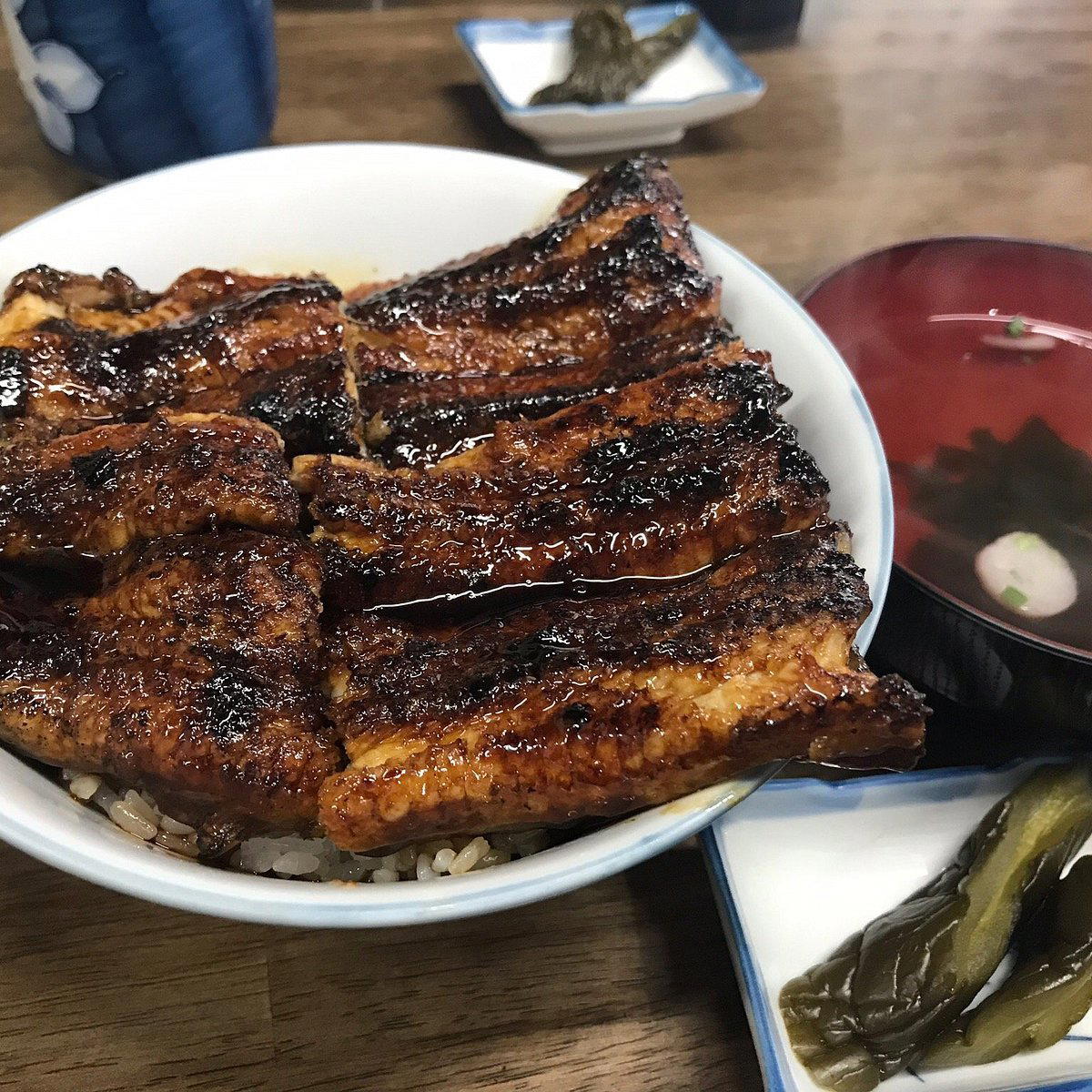
Seto's Eel Tradition and Where Tashiro Sits Within It
The unagi restaurants of Aichi Prefecture occupy a specific and well-documented position in Japan's eel-dining hierarchy. The Nagoya area developed its own preparation style, the hitsumabushi format, in which grilled eel is served over rice and eaten in successive portions with different condiments, that diverges from both the Kanto and Kansai approaches. Seto, a ceramic-manufacturing city roughly 20 kilometres east of central Nagoya, sits within this tradition but draws fewer out-of-prefecture visitors than the well-trafficked unagi counters of Nagoya's Sakae or Atsuta districts. That lower visibility makes Seto's specialist restaurants worth tracking for anyone building a serious itinerary through Aichi.
Tashiro operates inside that quieter tier of the Aichi unagi scene, and its recognition record is long enough to dismiss any notion that the awards are a fluke. The Tabelog Award, Japan's most data-dense restaurant recognition system, driven by verified reviewer scores rather than critic panels, has listed Tashiro at Bronze level continuously since 2017, with a Silver in 2019. It has also been selected for the Tabelog Unagi 100 list in 2018, 2019, 2022, and 2024. The current Tabelog score is 4.27. Among specialist unagi restaurants in Aichi, that sustained performance across nearly a decade positions Tashiro as a benchmark rather than a seasonal discovery. Comparable award depth in the region can be found at Amaki and Fujisawa, though their cuisine categories differ.
The Physical Setting and What to Expect on Arrival
Tashiro is on Fukagawacho, a street in central Seto that sits within walking distance of Owari Seto Station on the Meitetsu Seto Line. The station is around ten minutes on foot, and the Seto Miyamae bus stop, served by Meitetsu Bus from Owari Seto, is effectively at the door. Shared parking is available in the adjacent shopping area for those arriving by car. None of this adds up to a dramatic approach, which is the point: the restaurant's draw is the product on the plate and a recognition record that speaks for itself, not a destination address.
The room runs to 14 seats: 12 at tables, 2 at the counter. The counter positions are the natural choice for watching preparation, but in a room this size the distinction between counter and table is less pronounced than in a larger restaurant. The space is non-smoking inside, with a designated smoking area outside. No private rooms are available, and private hire is not offered, so the atmosphere is a shared one, the kind of room where adjacent tables are close enough that you'll be aware of what your neighbours ordered. Given that the clientele is, by definition, members only, the room tends to read as regulars among regulars.
Members Only: What the Access Structure Means in Practice
Since February 2023, Tashiro has operated as a members-only establishment. Walk-ins cannot dine or take out. Reservations are restricted to members, and the restaurant is not currently accepting new members. Non-members may only dine when accompanied by an existing member.
This model is not without precedent in Japanese specialist dining. Several high-demand counters, particularly in kaiseki and sushi, have adopted membership or introduction-based access as a practical response to overwhelming reservation demand. What it means for the first-time visitor is that access requires a social connection to someone already in the membership. For those planning an Aichi itinerary, the practical advice is to establish whether a connection exists before structuring a trip around Tashiro. The alternatives within Aichi's recognised dining scene, including aru, GapricE, and HIRO NAGOYA, operate on more conventional booking terms.
Hours are lunch-only, running 11:00 to 14:00 seven days a week, with no fixed closure days. That lunch-only format is consistent with many specialist unagi restaurants in central Japan, where the kitchen's focus on live sourcing and grilling lends itself to a concentrated midday service rather than a split schedule.
The Drink Programme in a Single-Discipline Kitchen
For a restaurant with editorial angle centred on the drink side, Tashiro's listed offering is deliberately narrow: nihonshu (sake) is the stated drink option. No wine list, no cocktail programme, no extended spirits selection. In the context of a specialist unagi counter, this is appropriate rather than limiting. The pairing logic for grilled eel in the Nagoya tradition runs toward sake, particularly styles with enough body and umami resonance to hold alongside the caramelised glaze of kabayaki, and a kitchen that sources live eel and focuses its craft on preparation technique is unlikely to be in the business of maintaining a deep cellar.
For the sake-curious visitor, the nihonshu-only format creates a focused conversation between the drink and the food that a broader list would dilute. Japan's domestic sake production includes a range of styles from Aichi Prefecture itself, the region around Nagoya has historically produced sake characterised by a fuller, slightly sweeter profile, which aligns with the flavour weight of kabayaki-style eel.
Restaurants in Tokyo with similar single-discipline, beverage-restrained formats, such as Harutaka, tend to treat the drink list as a counterpoint to the food's precision rather than a separate showcase. The same logic applies here. Those seeking a broader sake or wine programme before or after a Tashiro lunch will find more options in Nagoya proper; see our full Aichi bars guide for direction.
The Food: Eel as a Discipline
The kitchen's stated identity is sourcing live eel and preparing it using traditional techniques described as generational. In Japanese unagi practice, the gap between restaurants that source live eel and those working from pre-processed product is significant. Live sourcing requires immediate, skilled dispatch and butchering, a separate craft from the grilling itself, and is increasingly rare at lower price points. That Tashiro has maintained Tabelog's Unagi 100 designation across multiple years is partly a reflection of how reviewers value that sourcing commitment.
The kabayaki preparation, grilling with repeated application of a tare glaze, is the dominant format in the Nagoya region, and the price point (lunch in the JPY 5,000 to JPY 5,999 range per Tabelog data, dinner in the JPY 4,000 to JPY 4,999 range) positions it as a mid-to-upper specialist rather than a budget option. For reference, entry-level unagi restaurants in Aichi typically start below JPY 2,000 for a basic unadon; the Tashiro price range reflects the live-sourcing premium and the membership overhead of a tightly controlled dining room.
Take-out is listed as an available service, and grilled eel kabayaki is offered as a return gift under the Seto City hometown tax donation programme, a detail that places the restaurant inside the civic fabric of Seto in a way that tourist-facing venues rarely are.
Aichi in Context: Where Tashiro Fits the Broader Region
Aichi's dining recognition extends well beyond unagi. The prefecture holds Michelin-starred restaurants, Tabelog Award winners across multiple categories, and a food culture built on specific regional preparations, miso katsu, kishimen noodles, and hitsumabushi among them. Tashiro's position as a decade-long Tabelog Award holder makes it one of the most documented specialists in a single category within the region, comparable in award longevity to some of the kaiseki and French counters in Nagoya proper. For the depth of Aichi's dining picture, our full Aichi restaurants guide covers the range across cuisine types and price tiers.
Those extending a trip into other parts of Japan will find parallel commitment to single-discipline precision at HAJIME in Osaka, Gion Sasaki in Kyoto, akordu in Nara, and Goh in Fukuoka, all operating in the same tier of sustained recognition that Tashiro holds within its own category. For international benchmarks in focused, technically disciplined kitchens with restrained drink programmes, Le Bernardin in New York City and Atomix in New York City illustrate the approach at a different scale. For those staying in the region, our full Aichi hotels guide, our full Aichi wineries guide, and our full Aichi experiences guide cover the surrounding picture. The 1000 in Yokohama offers another point of comparison for members-adjacent dining formats in Japan.
Planning a Visit
Tashiro is open for lunch only, 11:00 to 14:00, seven days a week, with no fixed closure days, though hours and closed days can change, so confirming before visiting is advisable. The address is 13 Fukagawacho, Seto, Aichi, reached on foot from Owari Seto Station (Meitetsu Seto Line) in approximately ten minutes, or via the Meitetsu Bus to the Seto Miyamae stop. Parking is available in the shared lot at the nearby shopping area. Payment is cash only: credit cards, electronic money, and QR code payments are all declined. A service fee applies. The members-only policy means access requires a prior connection; those without one should plan accordingly and consider Aichi's broader unagi and specialist dining options through our full Aichi restaurants guide.
Frequently asked questions
Can I bring kids to Tashiro?
Tashiro does not specify a family policy in its listed information. The practical constraint is access: since February 2023 the restaurant has operated as a members-only establishment, and new memberships are currently closed. With 14 seats across a compact room and a format centred on a single discipline, the environment is geared toward focused dining rather than casual family meals.
What should I expect atmosphere-wise at Tashiro?
The room holds 14 seats, 12 at tables and 2 at the counter, with no private rooms available. It is non-smoking inside, with a designated outdoor smoking area. The members-only structure, in place since February 2023, means the dining room operates as a closed circuit of regulars, which keeps the pace deliberate. Payment is cash only: cards, electronic money, and QR codes are not accepted.
Is Tashiro Michelin-listed?
Tashiro has received recognition including:
What should I eat at Tashiro?
Tashiro is a unagi specialist with a single culinary focus: live eel sourced and prepared using grilling techniques described as generational. The kitchen's kabayaki, eel lacquered in tare and grilled, is the centrepiece, and it is the dish that earned Tashiro selection for Tabelog's Unagi Top 100 in 2018, 2019, 2022, and 2024. Nihonshu is the listed drink pairing. Budget JPY 5,000–5,999 for lunch.
Booking and Cost Snapshot
Comparable venues nearby, for context on price, style, and recognition.
| Venue | Cuisine | Price | Awards | Notes |
|---|---|---|---|---|
| TashiroThis venue (the venue you are viewing) | Traditional Japanese Unagi (Eel) | $30–50 | Tabelog Bronze #455 | Not listed |
| Setsugekka Tanaka Satoru | Modern Japanese Yakiniku | $200–300 | Tabelog Bronze #398 | Sakae, Modern Japanese Yakiniku |
| Izumo | Japanese Cuisine with Aged Meat | $500+ | Tabelog Bronze #143 | Hisaya Odori, Japanese Cuisine with Aged Meat |
| GapricE | Italian Omakase with Seasonal Japanese Ingredients | $100–150 | Tabelog Bronze #81 | Ikeshita, Italian Omakase with Seasonal Japanese Ingredients |
| LA VAGABONDE | Modern French Fine Dining | $200–300 | Tabelog Bronze #236 | Tsurumai, Modern French Fine Dining |
| Yoshii | Aichi Seasonal Omakase | $100–150 | Tabelog Bronze #528 | Naka Ward, Aichi Seasonal Omakase |
Recognition history
Dated appearances from independent guides and award organizations, with the underlying list record or original source where available.
Tabelog Bronze #455
Tabelog
Full recognition history (3 entries)
Tabelog Bronze
Tabelog
Tabelog 100 #88 · No. 88
Tabelog · Tabelog 100 - Unagi - 2024
Continue exploring
More in Aichi
Restaurants in Aichi
All restaurants in Aichi →

Details
- Classic
- Cozy
- Special Occasion
- Open Kitchen
- Sake Program
- A La Carte
Current opening hours
- Monday
- Closed
- Tuesday
- Closed
- Wednesday
- 11 AM–2 PM
- Thursday
- 11 AM–2 PM
- Friday
- 11 AM–2 PM
- Saturday
- 11 AM–2 PM
- Sunday
- 11 AM–2 PM
Hours can change for holidays and private events. Last verified .
Warm Showa-era shopping street atmosphere with friendly, unpretentious hospitality.