Tanyacsárda
Tanyacsárda sits along a rural road outside Lajosmizse, in the heart of the Hungarian Great Plain where farmstead cooking has always been tied to what grows and grazes nearby. The kitchen draws on that tradition directly, placing it in a category of countryside étterems that function less as destination restaurants and more as living records of how this region has always eaten. For visitors coming from Budapest, it represents a genuinely different register of Hungarian hospitality.
Pearl is the En Primeur Club membership app — saves, bookings, and concierge access live there. Same editors, same standards.
- Address
- Lajosmizse, Bene 625, 6050 Hungary
- Phone
- +3676356010
- Website
- tanyacsarda.hu
- Directions
- Get directions
 Saves & bookings on Pearl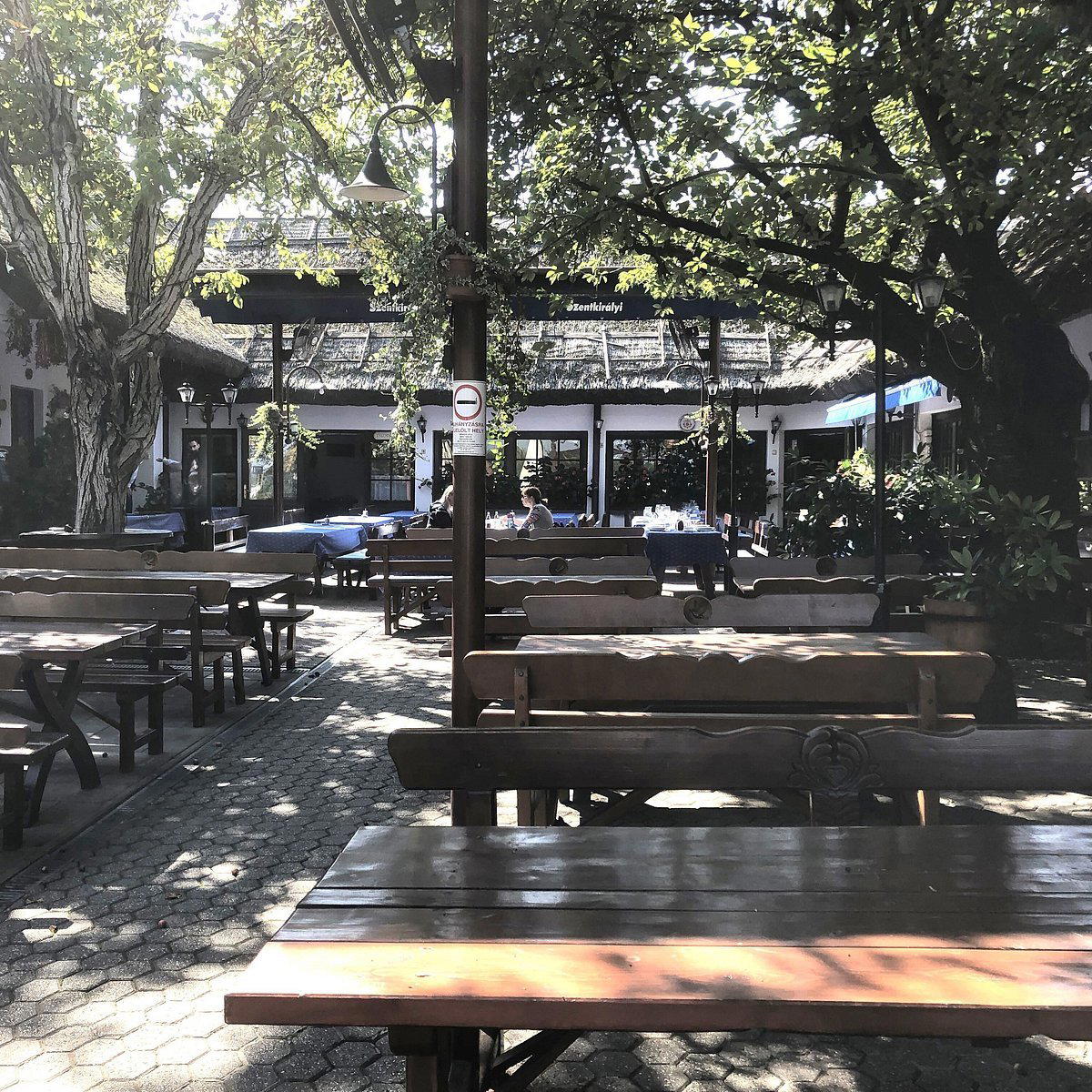
Where the Puszta Meets the Plate
The approach to Tanyacsárda sets the tone before you reach the door. The address, Bene 625, a tanya road outside Lajosmizse, signals that this is not a town-centre restaurant with a curated street presence. It sits in the agricultural fringe of Bács-Kiskun county, the kind of location where a csárda (Hungary's roadside inn tradition, predating tourism by several centuries) was always supposed to be: accessible to travellers and farmers alike, without pretence about its role. That positioning is itself the editorial point. In a country where urban dining increasingly aligns with European fine-dining conventions, the countryside csárda format preserves something that Budapest's modern bistros have largely moved past.
The Great Plain, the Alföld, produces much of Hungary's agricultural output: wheat, paprika, pork, goose, and game. Restaurants in this region do not need to source at a distance. The ingredient logic is geographic by default, shaped by what has always grown here. That proximity between land and kitchen defines the cooking tradition that Tanyacsárda belongs to, regardless of what appears on any given day's menu. For context, compare this to where Budapest's upper tier sits: Stand in Budapest operates at the modern Hungarian fine-dining register, translating these same regional ingredients into a structured tasting format. The csárda tradition does the opposite, it keeps the format loose and the sourcing close.
The Ingredient Logic of the Alföld
Hungarian farmstead cooking is built around a small number of ingredients used with considerable depth: mangalica pork fat for rendering and flavour base, sweet and hot paprika from Kalocsa and Szeged, fresh-water fish from the region's lakes and rivers, and poultry from local smallholdings. These are not exotic ingredients reframed for contemporary palates; they are the actual daily materials of this part of the country. A csárda that draws on its immediate geography is not making a philosophical statement, it is doing what this format has done for generations.
That localism matters in 2024 in a way it did not need to forty years ago. Ingredient traceability has become a concern across the Hungarian restaurant sector, with urban restaurants increasingly specifying origin on menus. In the countryside, origin is often assumed rather than labelled, the mangalica comes from a farm the family has dealt with for years, the paprika from a cooperative a few kilometres away. That assumption of provenance, unverified in formal terms but embedded in the supply chain, is part of what makes the csárda tradition resistant to the kind of centralized sourcing pressures that affect urban kitchens. For a comparison of how a rural Hungarian kitchen can formalise this sourcing approach without losing its character, Pajta in Őriszentpéter offers a useful parallel from western Hungary.
Across the country, venues operating in rural settings with strong local-sourcing frameworks include Kővirág in Köveskál, which draws on the Balaton Uplands agricultural zone, and Almalomb in Hosszúhetény, working from the Mecsek foothills. Each operates in a distinct agricultural pocket, and each reflects its geography in the food rather than in a marketing position. Tanyacsárda belongs to that same structural category, rooted in the Alföld rather than the hills or the lake country.
The Csárda Format and Its Place in Hungarian Dining
It is worth placing the csárda within Hungarian food culture precisely because the format is often misread by international visitors as simply a tourist-facing folk restaurant. The historical csárda served wayfarers on the long flat roads of the Plain, it was a working institution, not a performance of rurality. What distinguishes the better examples today is whether the kitchen still answers to that functional logic: feeding people well, from nearby, without ceremony. The format sits at the opposite end of the Hungarian dining spectrum from venues like Platán Gourmet in Tata or Apicius Étterem és Kávéház in Herend, which operate in the gourmet register with formal wine programs and prix-fixe structures. Neither end of that spectrum is categorically superior; they answer different questions.
Regional csárdas in the Bács-Kiskun area occupy a middle tier in the Hungarian restaurant economy: prices sit below Budapest's mid-market restaurants, portions are calibrated for appetite rather than aesthetic presentation, and the wine list tends toward local Kunság whites and Villány reds rather than international selections. For a regional wine comparison, Halasi Pince Panzió in Villány shows how a dedicated local wine operation works in southern Hungary. The pairing logic at a csárda is less deliberate but often just as sound, built on decades of informal matching between kitchen and cellar.
Lajosmizse itself sits roughly 60 kilometres southeast of Budapest, accessible by road from the capital in under an hour. That proximity makes the area a logical half-day or day-trip anchor for visitors based in Budapest who want to move outside the city's dining circuit. It is also accessible from Kecskemét, the county seat, which has its own developing restaurant scene. For visitors travelling further into southern Hungary, the route connects logically to Szeged, where Classic Grill Serbian Restaurant Underground represents the cross-border culinary influences of that border region.
What to Expect from the Experience
Arriving at a tanya-road address in Hungary means accepting a degree of informality that urban restaurants have trained visitors out of expecting. The setting is agricultural, the pace is unhurried, and the transaction between kitchen and table is direct. That directness is not a deficit, it is the format's core value proposition. Families travelling with children find csárdas substantially more accommodating than formal restaurants, where portion flexibility and noise tolerance are rarely issues. Groups and extended family gatherings are the dominant social format at these establishments across the Alföld.
Booking practices at rural Hungarian csárdas vary, but weekend visits during summer and autumn harvest season, roughly May through October, benefit from advance contact, as local and regional demand can be higher than the address suggests. Midweek visits in quieter months tend to require less planning. The seasonal rhythm of the Hungarian countryside shapes demand in ways that urban restaurants do not experience: summer brings day-trippers from Budapest, autumn brings hunting season clientele, and winter is the quietest period across the board.
Additional context on Hungarian regional dining can be drawn from venues like BoriMami in Gyöngyös and Forst-Ház Étterem és Kávézó in Eger, both of which operate in the northern Hungarian tradition with similarly strong regional sourcing logic. Further afield, Aranysárkány Vendéglő in Szentendre and Fiume Étterem in Békéscsaba offer useful comparison points across the Hungarian provincial dining spectrum.
Visit Details
Tanyacsárda is located at Bene 625 on the tanya roads outside Lajosmizse, approximately 60 kilometres from central Budapest via the M5 motorway. The location is rural and best reached by private vehicle. As with most csárdas in the region, visiting during daylight hours on weekends in the warmer months gives the fullest picture of how the establishment operates at capacity.
Side-by-Side Snapshot
Comparable venues nearby, for context on price, style, and recognition.
| Venue | Cuisine | Price | Notes |
|---|---|---|---|
| TanyacsárdaThis venue — the venue you are viewing | Traditional Hungarian | $$ | Not listed |
| Retek Bisztro | Traditional Hungarian Bistro | $$ | Varhegy |
| Fortuna | Contemporary Hungarian Bistro | $$ | Varhegy |
| Horizont | Modern Brunch Cafe | $$ | Terézváros |
| Kéhli Vendéglő | Traditional Hungarian | $$ | Obuda |
| Gléda Vendéglö | Modern Hungarian | $$ | Obuda |
Continue exploring
More in Lajosmizse
Restaurants in Lajosmizse
Browse all →
Wineries in Lajosmizse
Browse all →
At a Glance
- Rustic
- Cozy
- Classic
- Family
- Group Dining
- Casual Hangout
- Live Music
- Terrace
- Historic Building
Current opening hours
- Monday
- Closed
- Tuesday
- 11 AM–9 PM
- Wednesday
- 11 AM–9 PM
- Thursday
- 11 AM–9 PM
- Friday
- 11 AM–9 PM
- Saturday
- 11 AM–9 PM
- Sunday
- 11 AM–9 PM
Hours can change for holidays and private events. Last verified .
Rustic countryside farmhouse atmosphere with traditional decor, cozy seating, outdoor terrace, and lively evenings featuring gipsy band music.