Taisho Ken Fuchinobe ten

Tabelog 100 #41
Our verdict
Taisho Ken Fuchinobe ten belongs to Sagamihara’s practical ramen culture: low spend, no-reservation dining, and a room built for regular use rather than ceremony. Its Tabelog Ramen KANAGAWA “Tabelog 100” selections in 2024 and 2025 place it in a recognized Kanagawa ramen tier, while the Fuchinobe setting keeps the experience grounded in a neighborhood rhythm.

Pearl is the En Primeur Club membership app, where members save venues, book tables and use the concierge.
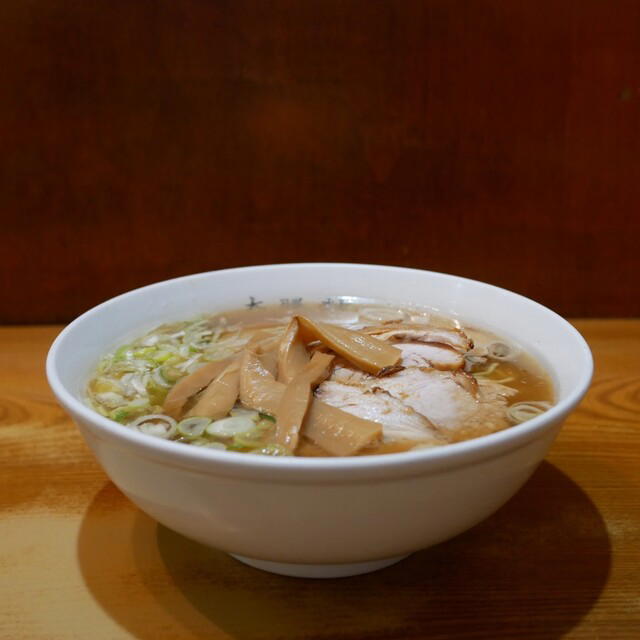
The menu
What to order
- Ramen
- Tsukemen (dipping noodles)
- Chashu ramen
Sagamihara’s ramen rooms do not announce themselves with luxury cues. The read is more local and functional: modest shopfronts, quick turnover, everyday diners, and a meal price that keeps ramen in its proper role as accessible food. In that setting, Taisho Ken Fuchinobe ten sits within a Sagamihara dining culture where sourcing is judged less by theatrical provenance than by what ends up in the bowl: noodle texture, broth structure, seasoning balance, and whether the kitchen can repeat the same equation across service.
Sagamihara is often treated as a through-city between Tokyo, Yokohama, and the Tanzawa side of Kanagawa, but its ramen culture has its own logic. The city rewards shops that are useful, not ornamental. A practical local format changes the feel of a ramen stop: this is not only a lone-diner counter proposition, but a room that can work for everyday visits without turning the meal into an event. That matters in a suburban ramen market, where consistency, price, and access carry as much weight as restaurant mythology.
Kanagawa ramen, judged by repeatability rather than spectacle
Ramen sourcing in Japan is often discussed through highly specific components: wheat for noodles, bones or seafood for stock, shoyu or miso tare, aromatic oils, chashu, menma, and the temperature discipline that holds the bowl together. The available public details here do not name suppliers or a signature bowl, so the better way to read the restaurant is through category signals. The shop is classified as ramen, selected in 2025 by Tabelog Hyakumeiten, and carries a Tabelog score of 3.69. Those are not decoration; in a region with deep ramen density, they indicate a shop that has cleared a local benchmark for repeatable execution.
The price band also says something about intent. At under JPY 999, the shop sits in the value-driven part of Sagamihara’s serious-eating map, alongside other local reference points such as Kaigara Ya, Nakamura Menzaburo Shoten, Curry no Mise Maboroshi, and Menya Ayumu. That distinction is useful: expectations should be calibrated toward speed, value, and a focused bowl, not toward tasting-menu narrative.
The Taisho Ken name may carry broader ramen associations for some diners, but the safer editorial read here is narrower: this Sagamihara branch should be judged on its own public signals rather than assumed recipes or inherited mythology. In suburban Kanagawa, recognizable low-priced ramen shops compete on dependable craft: the noodle has to hold, the soup has to carry, and the portioning has to feel fair for the spend.
A neighborhood room with everyday discipline and local flexibility
Room format pushes Taisho Ken Fuchinobe ten into a different category from the most rarefied dining rooms in central Tokyo. The appeal is practical rather than ceremonial, and the restaurant reads as the kind of place that can serve repeat local use as much as ramen-focused travel. In this category, comfort is less about upholstery or spectacle than about rhythm: a bowl arrives, the seasoning lands, and the meal makes sense for the price.
That suits the genre. Ramen at this price point works on arrival timing rather than elaborate advance planning. The practical move is to treat the meal as a targeted stop in Sagamihara, not a long sit-down booking. For travelers building a Sagamihara food day, that makes it easier to pair with other low-ceremony local addresses rather than forcing the whole schedule around one table.
Practical details should be checked directly before visiting, especially for hours and payment, but the larger signal is clear enough: this is a neighborhood ramen room rather than a destination-dining enclave. Sagamihara’s spread-out dining geography rewards places that are easy to understand and easy to use. Taisho Ken Fuchinobe ten fits that model through its category, price, and recognition rather than through luxury markers.
How to place it within a Sagamihara food run
Sagamihara rewards a mapped approach. Ramen, curry, bakeries, and casual specialist rooms are spread across the city rather than packed into a single entertainment district. For a focused comparison, Sagamihara editorial reference points can include CICOUTE BAKERY, Kaigara Ya, Nakamura Menzaburo Shoten, Menya Ayumu, and Curry no Mise Maboroshi. The point is not to crown a winner; it is to understand how different specialist rooms express value, style, and neighborhood demand across the city.
For broader planning, Our full Sagamihara restaurants guide gives the strongest context for eating across the city, while Our full Sagamihara hotels guide, Our full Sagamihara bars guide, Our full Sagamihara wineries guide, and Our full Sagamihara experiences guide help place the meal inside a wider Kanagawa itinerary. Travelers continuing beyond the city can use the same casual-specialist lens generically: compare how everyday rooms in other Japanese cities and abroad rely on clarity, value, and repeat customers rather than luxury signals.
The editorial case for Taisho Ken Fuchinobe ten is not luxury. It is the opposite: a recognized Sagamihara ramen shop operating in a sub-JPY 999 band, with enough everyday usefulness for neighborhood dining and enough external recognition to justify a detour for ramen-focused travelers. In a region where the serious bowl is often found in plain rooms, that is exactly the category to understand.
Frequently asked questions
Is Taisho Ken Fuchinobe ten good for families?
It is best understood as a casual ramen stop in Sagamihara, with pricing in the JPY 999-and-under range. Check current practical details directly before visiting with children.
What should I expect atmosphere-wise at Taisho Ken Fuchinobe ten?
Expect a practical ramen room rather than a polished dining room. The Tabelog Hyakumeiten 2025 recognition gives it local weight, but the format stays casual.
Is Taisho Ken Fuchinobe ten more mid-range or high-end?
Pricing at Taisho Ken Fuchinobe ten is listed as - JPY 999 - JPY 999.
What is Taisho Ken Fuchinobe ten known for?
Taisho Ken Fuchinobe ten is known as a ramen venue in Sagamihara with a 2025 Tabelog Hyakumeiten listing and a Tabelog score of 3.69.
How It Stacks Up
Comparable venues by cuisine and price in the same metro.
| Venue | Cuisine | Price | Awards | Notes |
|---|---|---|---|---|
| Taisho Ken Fuchinobe tenThis venue (the venue you are viewing) | Classic Taishoken-style ramen | $1–10 | Tabelog 100 #41 | Not listed |
| Nikuniboshi Chuka Soba Suzuki Ramen Ten | Japanese Ramen | $1–10 | Tabelog 100 #78 | Minami Ward, Sagamihara City |
| Nakamura Menzaburo Shoten | Ramen shop | $10–20 | Tabelog 100 #83 | Chuo Ward, Sagamihara |
| Ramen Jiro Sagami oono ten | Jiro-style Ramen | $1–10 | Tabelog 100 #71 | Sagami-Ono |
| Ganso Ichijoryu Ganko Sohonke Bunten | Classic Japanese Ramen Shop | $10–20 | Tabelog 100 #77 | Midori Ward, Sagamihara |
| Kaigara Ya | Shellfish-focused ramen shop | $10–20 | Tabelog 100 #53 | Fuchinobe |
Recognition history
Dated appearances from independent guides and award organizations, with the underlying list record or original source where available.
Tabelog 100 #41 · No. 41
Tabelog · Tabelog 100 - Ramen - KANAGAWA - 2025
Continue exploring
More in Sagamihara
Restaurants in Sagamihara
All restaurants in Sagamihara →




Bars in Sagamihara
Browse all →




Hotels in Sagamihara
Browse all →




Wineries in Sagamihara
Browse all →
Details
- Lively
- Classic
- Cozy
- Solo
- Family
- Casual Hangout
- Group Dining
- After Work
- Late Night
- Standalone
- A La Carte
- Counter Dining
Current opening hours
- Monday
- 11 AM–8:30 PM
- Tuesday
- Closed
- Wednesday
- Closed
- Thursday
- 11 AM–8:30 PM
- Friday
- 11 AM–8:30 PM
- Saturday
- 11 AM–8:30 PM
- Sunday
- 11 AM–8:30 PM
Hours can change for holidays and private events. Hours as of .