Nakamura Menzaburo Shoten

Tabelog 100 #83
Our verdict
Nakamura Menzaburo Shoten puts Sagamihara’s ramen culture in a small-room format rather than a destination-dining frame. Its Tabelog 100 - Ramen - KANAGAWA - 2025 selection, 3.84 score, 18-seat layout, and counter-heavy setup point to a local shop operating with more scrutiny than its everyday price tier suggests.

Pearl is the En Primeur Club membership app, where members save venues, book tables and use the concierge.
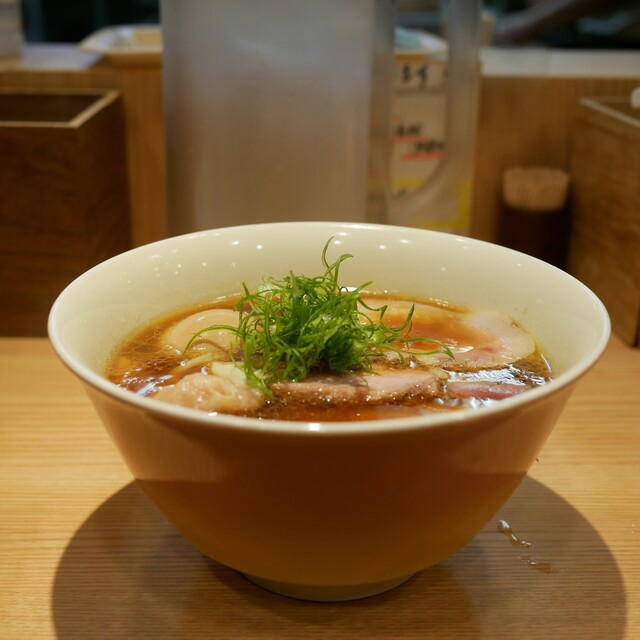
Sagamihara’s ramen rooms do not need to announce themselves with ceremony. The rhythm is closer to a practical specialist format: quick decisions, steady turnover, steam on the glass, and a meal built for concentration rather than lingering. Nakamura Menzaburo Shoten belongs to that grammar. The appeal is not architectural drama or long-form dining; it is the focused ramen format, where timing matters and the bowl is judged immediately. Noodles, broth, tare, aroma oil, and toppings have little margin for delay once the bowl leaves the kitchen.
Kanagawa ramen has long been shaped by movement between Yokohama, Kawasaki, Sagamihara, and the commuter towns that feed Tokyo. The prefecture’s ramen identity is not one style but a set of competing traditions: Yokohama’s heavy Iekei lineage, lighter chuka soba idioms, seafood-led bowls, and owner-operated shops where flour choice and soup extraction become the real point of difference. In that context, a Tabelog 100 - Ramen - KANAGAWA - 2025 selection is not decorative. It places the shop inside a prefectural conversation where ramen is judged against dozens of serious specialists, not against casual noodle stops.
Kanagawa ramen judged through broth, flour and speed
The useful way to read a Sagamihara ramen shop is through discipline rather than luxury signals. Ramen at this level is built from comparatively modest ingredients, but the difference between an average bowl and a precise one usually lies in extraction, noodle texture, tare balance, and how consistently the kitchen repeats those decisions across service. The craft is not always visible on a menu board; it shows through the structure of the bowl. Wheat character affects elasticity and surface grip. Stock work determines whether the soup carries weight without fatigue. Aromatic components decide whether the first three spoonfuls hold attention or flatten out.
That is why the price band is part of the story rather than a footnote. Sagamihara’s serious ramen scene operates in a narrow, democratic bracket, where a bowl can be scrutinised with the same intensity as a tasting menu course while remaining a weekday lunch. The comparison set nearby reinforces the point. Other Kanagawa ramen rooms speak to the richer Yokohama-derived side of the prefectural canon, while Jikaseimen Nichome Ramen signals the importance of noodle work in the local conversation. Kaigara Ya broadens that frame toward seafood-driven ramen, and other unnamed specialists point to the persistence of older, more characterful ramen lineages. Nakamura Menzaburo Shoten sits among these references as part of a city where noodle shops compete on craft rather than room design.
The shop’s public score of 3.84 on Tabelog gives that local standing a measurable edge. Tabelog ratings in Japan tend to be conservative, especially for small, high-turnover restaurants, so a score in this range has more weight than the number may suggest to travellers used to inflated review platforms. The 2025 Hyakumeiten selection adds a second signal: this is not merely a convenient bowl in Sagamihara, but a ramen address that has entered Kanagawa’s annual shortlist of notable specialists.
A focused format suits ramen better than ceremony
The service rhythm also shapes the meal. In a ramen setting, directness is practical rather than theatrical. The format reduces the distance between noodle timing and consumption, and it discourages the slow, multi-course behaviour that would work against the dish. This is why specialist ramen rooms often feel exacting without needing elaborate restaurant choreography: the bowl has to make its case quickly.
The format aligns the shop with the everyday Japanese ramen model rather than the appointment-only dining economy. The emphasis is public, efficient eating, not a room built for celebrations or prolonged conversation. Comfort matters, but the experience remains defined by the pace of a specialist noodle meal and by the simple question of whether the bowl holds its structure from first spoonful to last.
Sagamihara’s geography matters here. The city is large, residential, and less internationally legible than Yokohama or central Tokyo, so its better food addresses often serve locals first and travellers second. That gives the dining culture a useful bluntness. Restaurants have to work for repeat customers, not just for sightseeing traffic. The 2025 recognition is notable because it places Nakamura Menzaburo Shoten in Kanagawa’s award conversation, in a category where strong specialists compete for attention.
For travellers building a food day around Sagamihara, ramen should not be treated as a quick substitute for a larger meal. It is one of the city’s most legible specialist formats, and it pairs well with the area’s other low-friction dining styles. Curry no Mise Maboroshi shows how another modestly priced category can draw serious local attention without fine-dining posture. The broader city guide at Our full Sagamihara restaurants guide is the natural next stop for mapping that pattern across cuisines.
How to place it within a Sagamihara food day
The strongest case for Nakamura Menzaburo Shoten is not that it turns ramen into luxury. It does the opposite. It keeps the category in its proper register: fast, focused, ingredient-sensitive, and judged by repeatability. That makes it more useful than a showpiece meal for understanding how Sagamihara eats. The better decision is to approach it as a specialist stop within a city itinerary, then build around Sagamihara rather than forcing it into a Tokyo-style destination schedule.
Visitors comparing categories can use the wider EP Club city pages as a planning grid: Our full Sagamihara hotels guide, Our full Sagamihara bars guide, Our full Sagamihara wineries guide, and Our full Sagamihara experiences guide. For a wider Japan-and-beyond comparison of how casual formats carry serious intent, look to other unnamed dining rooms in Japan and abroad, where simple formats can still reward close attention. Nakamura Menzaburo Shoten belongs in that same practical conversation: a modestly priced ramen address whose significance comes from execution, recognition, and its place in Sagamihara’s everyday food culture.
Frequently asked questions
Is Nakamura Menzaburo Shoten suitable for children?
It can work for children who are comfortable with a focused ramen shop and a quick-service meal. The listed price range is JPY 1,000 - JPY 1,999 for both lunch and dinner.
Is Nakamura Menzaburo Shoten better for a quiet night or a lively one?
It suits a quieter, focused meal. The Sagamihara setting and specialist ramen format point to a concentrated stop rather than a lively, linger-long venue.
How much does it cost to eat at Nakamura Menzaburo Shoten?
Pricing at Nakamura Menzaburo Shoten is listed as JPY 1,000 - JPY 1,999 JPY 1,000 - JPY 1,999.
Where is Nakamura Menzaburo Shoten in Sagamihara?
Sagamihara.
Quick Comparison
Nearby venues at a similar price tier for orientation.
| Venue | Cuisine | Price | Awards | Notes |
|---|---|---|---|---|
| Nakamura Menzaburo ShotenThis venue (the venue you are viewing) | Ramen shop | $10–20 | Tabelog 100 #83 | Not listed |
| Curry no Mise Maboroshi | Japanese Curry House | $10–20 | Tabelog 100 #59 | Chuo, Sagamihara |
| Ramen Jiro Sagami oono ten | Jiro-style Ramen | $1–10 | Tabelog 100 #71 | Sagami-Ono |
| Taisho Ken Fuchinobe ten | Classic Taishoken-style ramen | $1–10 | Tabelog 100 #41 | Chuo Ward, Sagamihara (Fuchinobe) |
| Iekei Ramen Kukkura | Iekei (Yokohama-style) Ramen | $10–20 | Tabelog 100 #67 | Sagami Ono |
| Menya Ayumu | Jiro-style ramen shop | $10–20 | Tabelog 100 #4 | Fuchinobe |
Recognition history
Dated appearances from independent guides and award organizations, with the underlying list record or original source where available.
Tabelog 100 #83 · No. 83
Tabelog · Tabelog 100 - Ramen - KANAGAWA - 2025
Continue exploring
More in Sagamihara
Restaurants in Sagamihara
All restaurants in Sagamihara →



Bars in Sagamihara
Browse all →


Hotels in Sagamihara
Browse all →

Wineries in Sagamihara
Browse all →
Details
- Cozy
- Lively
- Solo
- Casual Hangout
- After Work
- Family
- Standalone
- A La Carte
- Counter Dining
Small 18-seat, non-smoking ramen shop with counter and a couple of tables, likely bright and functional with a cozy, bustling ramen-ya atmosphere focused on quick meals rather than lingering.