Table 6
Table 6 occupies a converted Capitol Hill Victorian at 609 Corona Street, where Denver's neighborhood-restaurant tradition meets a format that rewards repeat visits. The room runs warm and close, the kind of setting where the menu does the talking. It sits in the mid-tier of Denver's serious-dining circuit, alongside peers pushing the city's culinary ambitions forward.
Pearl is the En Primeur Club membership app — saves, bookings, and concierge access live there. Same editors, same standards.
- Address
- 609 Corona St, Denver, CO 80218
- Phone
- +13038318800
- Website
- table6denver.com
- Directions
- Get directions
 Saves & bookings on Pearl
A Capitol Hill Room That Earns Its Reputation by Not Trying Too Hard
Capitol Hill, Denver's densest residential neighborhood, has long supported a particular kind of restaurant: owner-operated, seasonally attentive, not interested in spectacle. The buildings are Victorian and Edwardian, the streets tree-lined, the dining culture closer to Chicago's Wicker Park than to the glassier reaches of LoDo. Table 6, at 609 Corona Street, fits that template. The address is residential in feeling, and the experience is organized around the proposition that neighborhood dining and serious cooking are not mutually exclusive categories.
In a city where the fine-dining conversation increasingly clusters around a handful of high-profile tasting-menu rooms, Capitol Hill's character operates as a counterweight. Denver's serious-dining circuit now includes operators like Brutø and Beckon at the tasting-menu end, and Alma Fonda Fina at the accessible end. Table 6 occupies the middle distance: a restaurant where the format is à la carte but the kitchen's intentions are not casual.
How the Menu Is Built
The way a restaurant structures its menu reveals more about its values than any mission statement. À la carte menus in the serious-dining register tend to fall into two camps: those organized around a chef's technical vocabulary (where the menu is essentially a list of techniques dressed as dishes), and those organized around how guests actually eat (appetizer, main, dessert, with real flexibility in between). Table 6 belongs to the second camp, which is not the easier choice. Building a compelling à la carte menu that doesn't feel like a greatest-hits compilation requires discipline about what goes on and what stays off.
That structural choice also places the restaurant in a different competitive conversation than the tasting-menu rooms. A guest at The Wolf's Tailor surrenders control of the meal's pace and sequence. A guest at the restaurant does not. The menu here is a tool the guest uses, which means the kitchen has to make every section coherent on its own terms: the opener has to stand alone, the main has to justify the absence of a multi-course progression, and the whole has to cohere without the narrative scaffolding a tasting menu provides. Done well, this is harder than it looks. The restaurants that manage it across American cities tend to hold long-term neighborhood loyalty in ways that tasting-menu rooms, however decorated, sometimes do not.
For comparative context, think about how Annette handles its menu as a structured argument for seasonal and local sourcing, or how Lazy Bear in San Francisco uses the communal-table format as a menu architecture statement. These choices are never neutral. At the restaurant, the choice to stay à la carte in a city moving toward prix-fixe at the leading end reads as a position, not a default.
Situating Table 6 in Denver's Dining Moment
Denver's restaurant scene has matured considerably over the past decade, moving from a steak-and-craft-beer image toward a more textured picture. The city now supports a cohort of serious independent operators whose ambitions are legible against national peers. Nationally, the benchmark for serious neighborhood dining in the à la carte format runs through rooms like Providence in Los Angeles and, at the highest register, Le Bernardin in New York City. Those rooms operate at a different price point and scale, but they share a structural commitment: the menu is an argument, not a catalogue.
Denver's comparable set for the restaurant is more local in character. The Capitol Hill location places it in a neighborhood where longevity is the credibility signal. In cities with deep neighborhood-dining cultures, a room that has held its position across multiple economic cycles tends to be doing something right that doesn't reduce to a single signature dish or a media moment. The sustained occupation of a particular block is its own form of evidence.
Restaurants that have built durable reputations through menu discipline rather than concept novelty include, at various scales, Blue Hill at Stone Barns in Tarrytown and Single Thread Farm in Healdsburg. Both use menu structure as a primary communication device. The comparison is one of approach: the menu as a considered document rather than a default grid.
Within Denver specifically, the city's most interesting independent operators share a tendency toward restraint in format and seriousness in sourcing. Alma Fonda Fina applies this through a Mexican culinary lens. Brutø applies it through a contemporary tasting format. The restaurant's version is quieter and more domestic in register, which in Capitol Hill reads as appropriate rather than modest.
The Capitol Hill Address
609 Corona Street is a residential block in a neighborhood that predates Denver's current growth cycle by several decades. Capitol Hill was the city's original prestige address in the late nineteenth century, and its domestic architecture remains largely intact: large Victorian houses, covered porches, mature street trees. Restaurants here tend to have lower overhead than those in RiNo or LoDo, which allows for a different pricing posture and, frequently, a longer operating runway. The neighborhood rewards walking, and Cheesman Park is nearby in warmer months.
The room at the restaurant is small. Small rooms in serious restaurants impose disciplines: the kitchen has to be consistent because there is no volume to hide behind, the service has to be attentive because every table is visible, and the noise level tends to be more conversational than performative. These are conditions that tend to favor the kind of meal where the food is the event rather than the backdrop.
- Address: 609 Corona St, Denver, CO 80218
- Neighborhood: Capitol Hill, walkable from Cheesman Park
Nearby-ish Comparables
Comparable venues nearby, for context on price, style, and recognition.
| Venue | Cuisine | Price | Notes |
|---|---|---|---|
| Table 6This venue — the venue you are viewing | American Bistro | $$$ | Not listed |
| The Ponti at Denver Art Museum | Modern Contemporary American | $$$ | Civic Center |
| Prelude + Post | Modern American Small Plates | $$$ | Central Business District |
| The Bindery | New American Fine Dining | $$$ | Highland |
| Former Saint Craft Kitchen and Taps | Contemporary Colorado American | $$$ | Central Business District |
| June Gap Market and Café | Sustainable Market Café | $$ | Belleview Station |
Continue exploring
More in Denver
Restaurants in Denver
Browse all →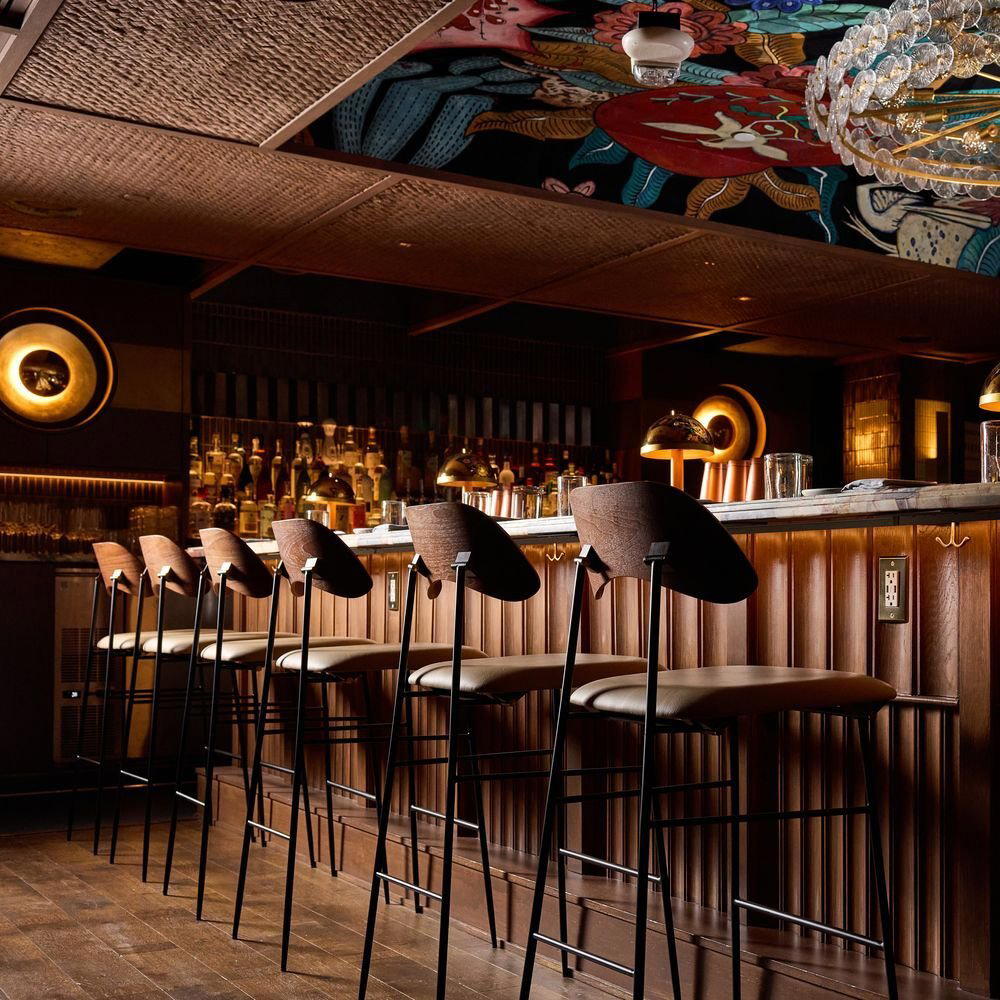
Bars in Denver
Browse all →
Hotels in Denver
Browse all →

At a Glance
- Cozy
- Classic
- Intimate
- Elegant
- Date Night
- Business Dinner
- Group Dining
- Casual Hangout
- Special Occasion
- Open Kitchen
- Standalone
- Extensive Wine List
- Sommelier Led
- Farm To Table
- Local Sourcing
Current opening hours
- Monday
- Closed
- Tuesday
- 5–9 PM
- Wednesday
- 5–9 PM
- Thursday
- 5–9 PM
- Friday
- 5–9 PM
- Saturday
- 5–9 PM
- Sunday
- Closed
Hours can change for holidays and private events. Last verified .
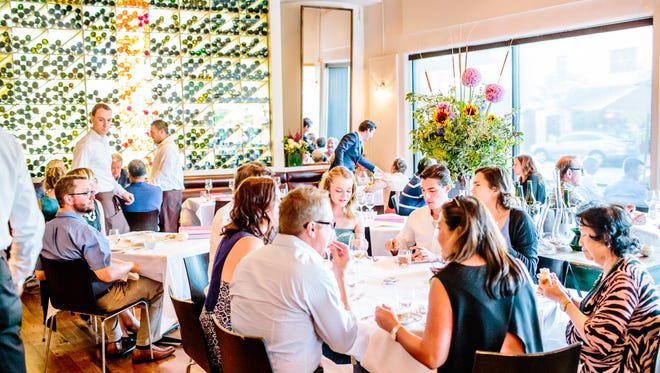
Warm and inviting with an open kitchen, intimate yet not cramped, featuring brick walls and a cozy atmosphere that feels both homey and refined without being pretentious.