Sushi Zo Downtown Los Angeles
Sushi Zo Downtown Los Angeles brings the omakase format into the heart of LA's most architecturally dense dining corridor, where Japanese technique meets the Pacific's proximity to some of the country's freshest seafood supply chains. The counter format and fixed progression position it within a city that has quietly become one of America's most competitive sushi markets outside New York.
Pearl is the En Primeur Club membership app — saves, bookings, and concierge access live there. Same editors, same standards.
- Address
- 334 Main St #1106, Los Angeles, CA 90013
- Phone
- (213) 935-8409
- Website
- sushizo.us
- Directions
- Get directions
 Saves & bookings on Pearl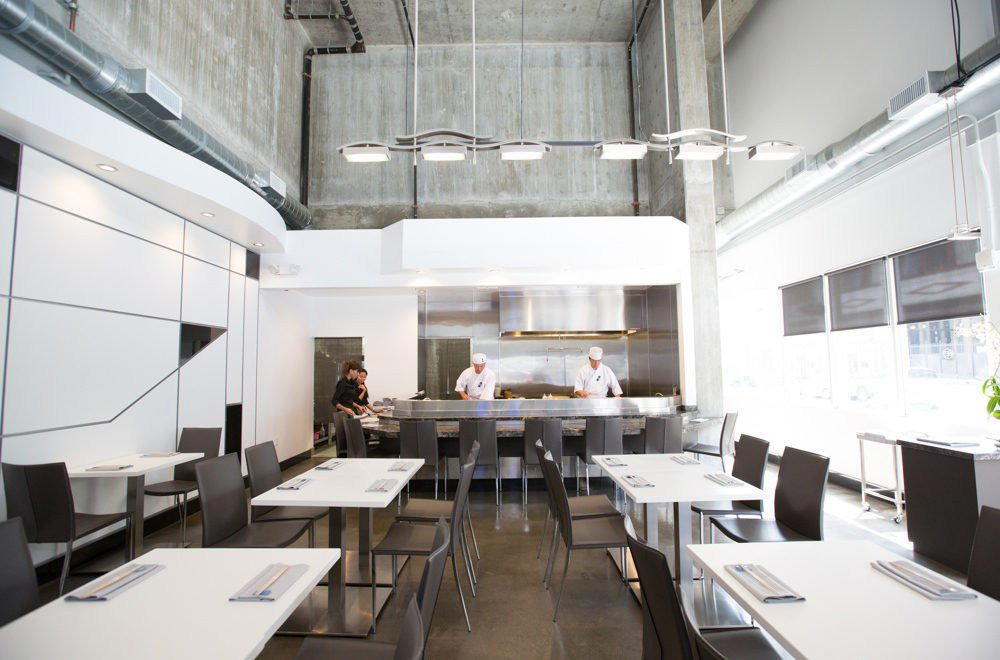
Omakase in the City That Rewrote American Sushi
Los Angeles did not arrive at its current sushi reputation by accident. The city's Japanese-American community, concentrated across neighborhoods from Little Tokyo to the South Bay, created the infrastructure for a fish culture that predates the national omakase boom by decades. By the time the tasting-counter format became a fixture of fine dining in New York and Chicago, LA already had a generation of trained sushi chefs, established supplier relationships with Pacific fisheries, and a diner base that understood the difference between nigiri pressed with care and nigiri pressed for speed. Sushi Zo Downtown Los Angeles operates inside that tradition, occupying a city where the bar for technical seriousness is set by local precedent rather than imported expectation.
Downtown LA's dining corridor has shifted considerably over the past fifteen years. Where the area once struggled to hold serious restaurants past the lunch rush, it now anchors a concentration of high-format dining that includes Hayato, which operates one of the city's most discipline-driven kaiseki programs, and sits within reach of the broader West Side scene that produced Kato and Somni.
Technique Imported, Product Local: How the Leading LA Omakase Counters Work
The editorial angle that defines premium sushi in Los Angeles is not simply about Japanese training, though training lineage matters here as much as anywhere. It is about what happens when classical Edomae method meets Southern California's access to the Pacific Rim's fish supply. The Tsukiji and Toyosu markets in Tokyo remain the gold standard for aged tuna and prized shellfish, but Los Angeles sits at the intersection of domestic Pacific hauls, Baja California sourcing, and direct import relationships that few American cities can match by geography alone.
Edomae sushi, as codified in Tokyo's high counter tradition, is built on curing, aging, and temperature discipline rather than raw freshness alone. Vinegar-cured fish, hand-pressed shari at body temperature, and the sequencing of nigiri from lighter to richer cuts are all inherited from that tradition. What distinguishes the LA iteration is the raw material available at the sourcing stage: Pacific bluefin with a different fat profile than Atlantic, local uni from the Channel Islands alongside imported Hokkaido varieties, and seasonal Californian shellfish that do not exist on a Tokyo menu. The conversation between imported method and local product is where LA omakase earns its place in the national argument about American sushi. Sushi Zo Downtown Los Angeles is a modern Japanese omakase restaurant at 334 Main St #1106, Los Angeles, with a $275 per person price point.
For a sense of how Japanese counter technique translates differently across American cities, the contrast is instructive. Le Bernardin in New York City built its reputation on French-trained seafood precision applied to Atlantic supply. Single Thread Farm in Healdsburg pulls from Northern California agriculture and channels kaiseki thinking through a hyper-local lens. The French Laundry in Napa remains the reference point for California fine dining's global technique absorption. Sushi Zo's project is narrower and more specific: take Edomae discipline and run it through the Pacific's most abundant sourcing corridor.
Where Sushi Zo Sits in the LA Fine Dining Tier
Los Angeles's upper-tier dining has consolidated around a handful of formats. The Providence model, anchored by sustained Michelin recognition and a seafood-forward contemporary American program, represents one pole of serious LA dining. Osteria Mozza holds the Italian anchor position. The Japanese end of the spectrum has grown more populated and more expensive, with omakase counters now occupying the upper price brackets alongside tasting-menu restaurants. Sushi Zo sits in that upper Japanese tier, where the format is fixed, the progression is non-negotiable, and the experience is structured around the chef's sequence rather than the diner's à la carte preference.
Compared to peers in other American cities, LA's sushi market is notable for its depth below the leading. Cities like Chicago and New York have high-profile omakase counters, but the middle tier in LA, shaped by decades of Japanese community dining culture, means that serious sushi is not confined to a single address. That competitive density raises the floor for everyone operating in the format. Counters that do not demonstrate real sourcing discipline, temperature control, and sequencing logic do not survive long at the upper price point. Addison in San Diego and Bacchanalia in Atlanta operate in cities with thinner Japanese dining traditions; LA's density functions as a built-in quality filter.
Planning Your Visit
Omakase counters in Downtown LA follow a booking logic that rewards planning over spontaneity. Reservations are essential, and the counter format means seat count is limited by design. Lazy Bear in San Francisco and Blue Hill at Stone Barns in Tarrytown operate on comparable booking discipline for their respective formats; the high-counter omakase model in LA is no different. Guests unfamiliar with the format should note that dietary accommodations at serious omakase counters are handled at booking stage, not tableside.
Seasonal timing is relevant for anyone prioritizing specific product. Pacific bluefin availability, California uni season, and the quality of local shellfish all shift across the calendar year. Late spring through early autumn generally represents the peak window for local Pacific product in Southern California, though Japanese imports maintain quality consistency year-round at counters with direct supplier relationships. The Inn at Little Washington and Emeril's in New Orleans both built reputations partly on seasonal product discipline; the same logic applies to LA's Pacific-sourced omakase counters. 8 1/2 Otto e Mezzo Bombana in Hong Kong offers a useful international reference point for how imported technique and local product sourcing can coexist at the fine dining level across different Pacific markets.
Cuisine Context
Comparable venues nearby, for context on price, style, and recognition.
| Venue | Cuisine | Price | Notes |
|---|---|---|---|
| Sushi Zo Downtown Los AngelesThis venue — the venue you are viewing | Modern Japanese Omakase | $$$$ | Not listed |
| KOGANE | High-End Omakase Sushi | $$$$ | Shorb |
| Nobu Los Angeles | Japanese-Peruvian Fusion | $$$$ | Beverly Grove |
| Koi | Japanese Sushi Fusion | $$$$ | Beverly Grove |
| Shojin | Vegan Japanese Macrobiotic | $$$ | Culver West |
| Manpuku Japanese BBQ Los Angeles | Japanese Yakiniku BBQ | $$$ | Sawtelle |
Continue exploring
More in Los Angeles
Restaurants in Los Angeles
Browse all →
Bars in Los Angeles
Browse all →
Hotels in Los Angeles
Browse all →
Wineries in Los Angeles
Browse all →
At a Glance
- Elegant
- Modern
- Intimate
- Sophisticated
- Minimalist
- Date Night
- Special Occasion
- Chefs Counter
- Sake Program
- Sustainable Seafood
Current opening hours
- Monday
- 6–9:30 PM
- Tuesday
- 6–9:30 PM
- Wednesday
- 6–9:30 PM
- Thursday
- 6–9:30 PM
- Friday
- 6–9:30 PM
- Saturday
- 6–9:30 PM
- Sunday
- Closed
Hours can change for holidays and private events. Last verified .
Sleek, modern, and upscale with bright lighting and an intimate sushi bar atmosphere.