Shojin
Our verdict
Shojin on Washington Boulevard brings the precision of Japanese shojin ryori — the temple-kitchen tradition of Buddhist vegetarian cooking — to a Los Angeles dining room shaped more by restraint than spectacle. The space reads as an extension of the cuisine itself: clean lines, minimal distraction, and a format that asks the room to do the work that flavor does on the plate. For plant-based fine dining in LA, it occupies a position with few direct peers.

Pearl is the En Primeur Club membership app — saves, bookings, and concierge access live there. Same editors, same standards.
- Address
- 12406 Washington Blvd, Los Angeles, CA 90066
- Phone
- (310) 390-0033
- Hours
- Mon 5:30–10 PMTue ClosedWed–Thu 5:30–10 PMFri–Sun 5–10 PM
- Website
- theshojin.com
- Directions
- Get directions
- Booking
- Book on the venue's website
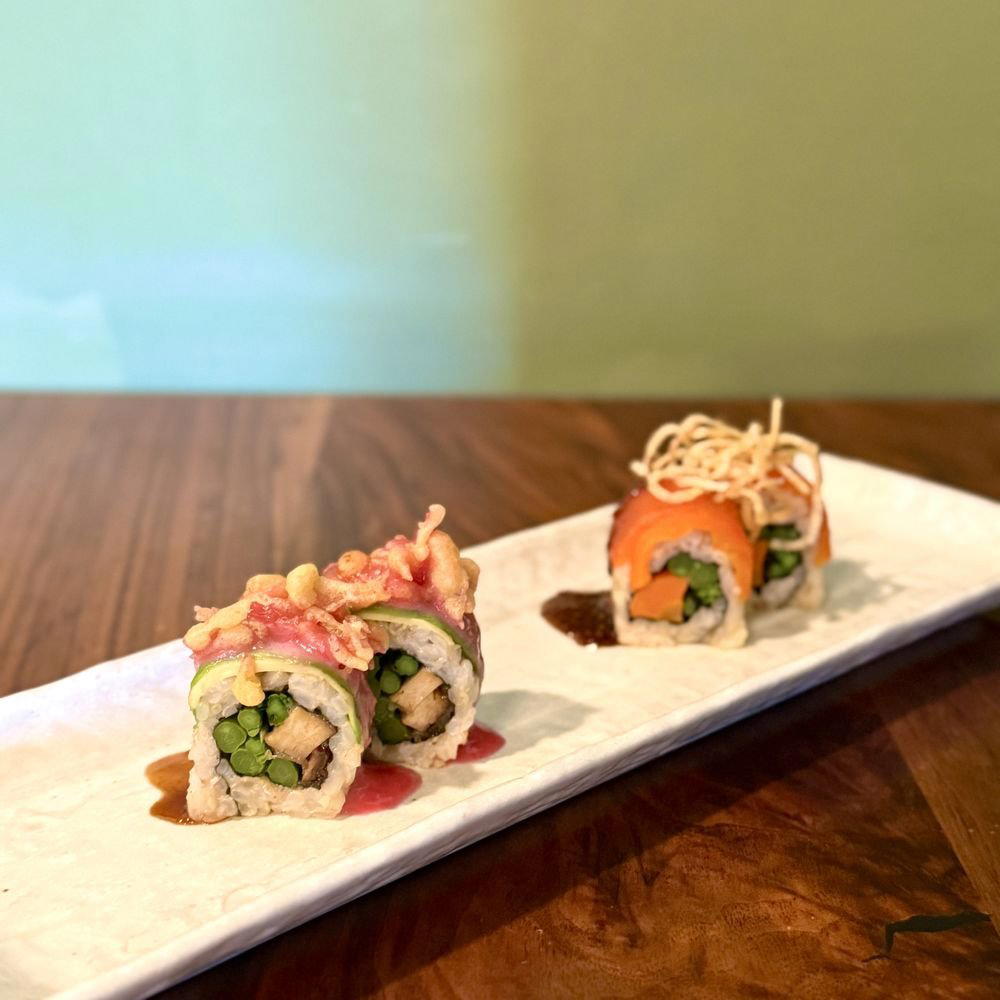
The menu
What to order
- Shojin Dynamite Roll
- Baked Crab Hand Roll
- Saturday Night Fever
The Room as Argument
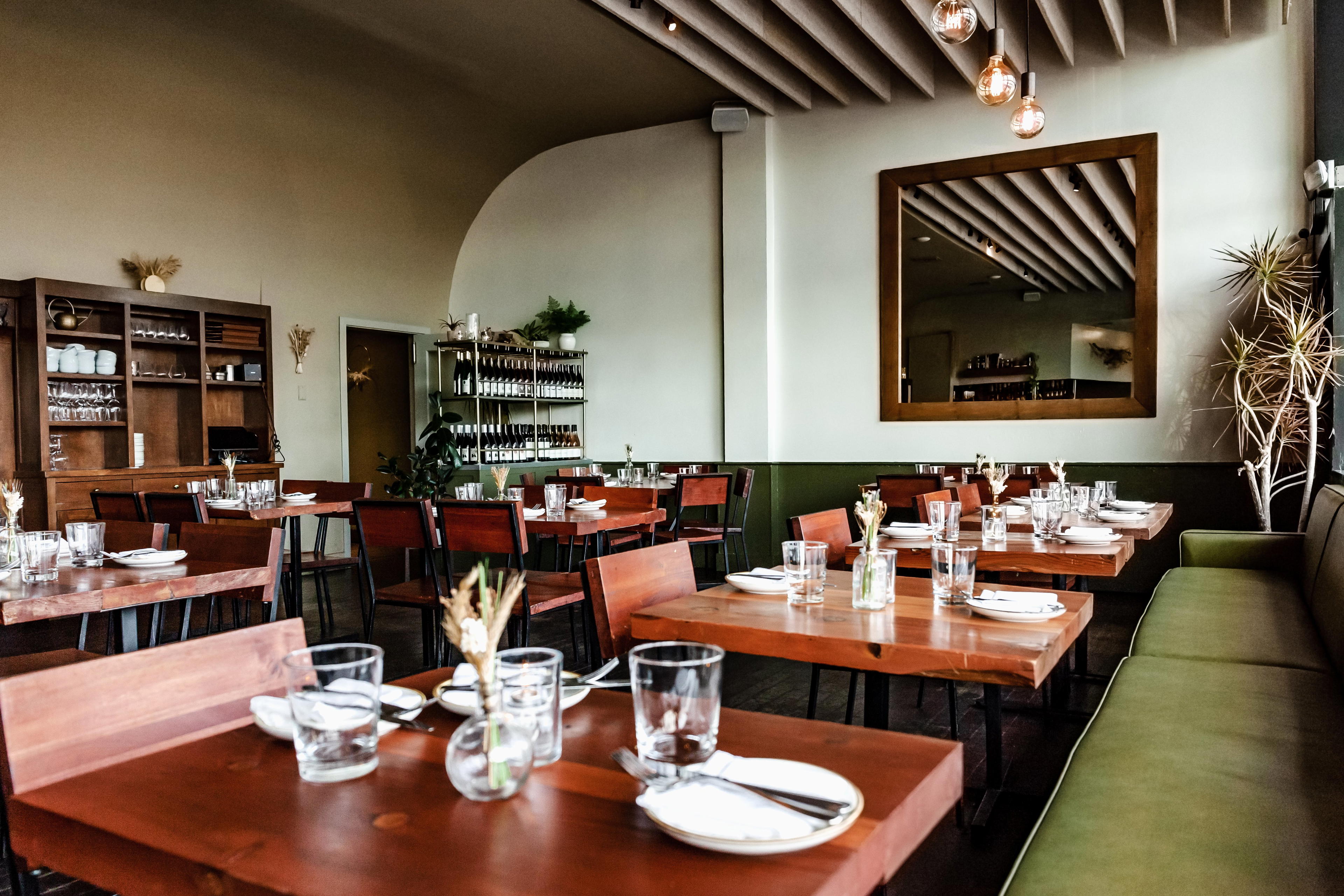
There is a category of restaurant where the dining room is not backdrop but thesis statement. Shojin, on Washington Boulevard in Mar Vista, belongs to that category. The interior reads as a deliberate visual counterpoint to the maximalist energy that defines much of Los Angeles dining — no open fire, no theatrical plating stations, no ambient noise calibrated to suggest a scene in progress. What you get instead is a considered quietness, a spatial logic that mirrors the philosophy of the cuisine it serves.
This approach is not incidental. Shojin ryori — the centuries-old Japanese Buddhist temple-kitchen tradition, was never designed as spectacle. Its roots are in monastic discipline, seasonal restraint, and the idea that cooking without meat, fish, or strong aromatics forces a deeper engagement with ingredient and technique. The physical container at Shojin reflects that premise. A room built for conversation and attention rather than performance aligns directly with a cuisine that asks the diner to slow down and look closely.
In a city where restaurant design increasingly competes with the food for primacy, where the Instagram moment is engineered into the floor plan, a dining room that refuses that logic is itself a position. Among LA's upper-tier plant-based options, Shojin's spatial register sets it apart from venues that treat vegan or vegetarian as a trend to be served with aesthetic maximalism.
A Cuisine With Deep Institutional Roots
Shojin ryori has a documented history stretching back to the spread of Zen Buddhism in Japan from the 13th century onward. The cooking tradition developed in monasteries, particularly those associated with the Rinzai and Soto schools, and codified a set of constraints: no meat, no fish, no eggs, and the avoidance of the five pungent vegetables (garlic, onion, leek, green onion, and wild garlic). What emerged from those constraints was a cuisine of considered substitution and concentrated vegetable preparation, where dashi is built from kombu rather than katsuobushi, and texture and umami are achieved through fermentation, slow cooking, and careful knife work.
That tradition traveled internationally as interest in Buddhist practice and Japanese food culture expanded through the 20th century, and a small number of restaurants in major cities now interpret it outside Japan. In the United States, the format remains rare. Los Angeles, with its deep Japanese-American community and long-standing engagement with plant-based eating, is a logical home for it, and Shojin has occupied that position in the city for a significant period.
The comparison set for shojin ryori restaurants in the US is narrow. This is not the same market as the broader vegan fine dining tier, which has expanded considerably over the past decade. Shojin ryori is a specific, historically grounded format with its own technical demands, and venues that practice it seriously, rather than borrowing its aesthetic, operate in a distinct niche.
Where It Sits in the LA Dining Picture
Los Angeles has developed one of the more nuanced fine dining ecosystems in the country, with a strong concentration of Japanese and Japanese-influenced rooms at the upper end. Hayato operates at the kaiseki tier with a deeply traditional Japanese format. Kato works in a New Taiwanese register that draws heavily on Japanese technique. Somni operates in the progressive-contemporary tier. None of them occupy the same position as Shojin, which is defined specifically by the shojin ryori tradition rather than by Japanese fine dining in general.
The broader fine dining map of the city, which includes Providence at the top of the contemporary seafood tier and Osteria Mozza anchoring Italian, is built largely around animal protein. Shojin's position within that map is genuinely distinct: a multi-course format built entirely on plant sources, anchored in a centuries-old culinary tradition, in a room calibrated to support that experience rather than distract from it.
Nationally, that kind of positioning has few direct analogues. Blue Hill at Stone Barns in Tarrytown operates with a farm-to-table philosophy that can skew heavily vegetable-forward, and venues like Alinea in Chicago and Lazy Bear in San Francisco offer progressive tasting formats with some plant-based depth, but none of them are grounded in the shojin ryori tradition specifically. Outside the US, 8½ Otto e Mezzo Bombana in Hong Kong and Le Bernardin in New York City represent the upper end of single-category fine dining that similarly draws on deep culinary lineage, the comparison points to how much weight a specific tradition can carry when a restaurant commits to it seriously.
The Design Logic of Restraint
The architectural restraint of Shojin's dining room functions as a kind of editorial decision: it removes noise so that the food can make its case on its own terms. This is a space that does not perform hospitality through visual abundance. The seating arrangements, the material palette, the light levels, each of these works in service of a quieter register, one that is consistent with the centuries-old monastic origins of the food being served.
That design discipline is harder to maintain in a city where restaurant openings are evaluated partly on their visual ambition, and where the premium dining tier has trended toward showmanship. The rooms at Addison in San Diego or The Inn at Little Washington are built to impress through scale and decoration. Single Thread Farm in Healdsburg layers its dining room with the material evidence of its farm sourcing. Shojin's approach runs in the opposite direction, which is itself a statement about what the room thinks the diner needs.
Choosing a restaurant in this register is choosing a particular kind of evening: deliberate, quieter, rooted in a tradition that prioritizes depth over display. For a certain diner, one already familiar with what kaiseki or omakase formats ask of you, this registers as a feature rather than an absence.
Planning Your Visit
Shojin is located at 12406 Washington Boulevard in Mar Vista, a neighborhood that sits between Culver City and Venice in the western corridor of Los Angeles. Mar Vista has developed a restaurant cluster that operates somewhat below the visibility of the city's more publicized dining districts, which means walk-in traffic and ambient discovery play less of a role here than advance planning. Diners who approach Shojin without prior research into the shojin ryori format may find the experience more rewarding with some context, understanding what the cuisine does and does not include shapes how you read the menu.
For the broader picture of where Shojin sits within Los Angeles dining, our full Los Angeles restaurants guide maps the city's fine dining tier by cuisine type and neighborhood, with additional context on venues like Bacchanalia and Atomix for readers tracking the national plant-forward and Korean-influenced fine dining conversation. Reservations are advisable given the format; confirm current hours and availability directly with the venue before visiting.
Quick reference: 12406 Washington Blvd, Los Angeles, CA 90066, Mar Vista. Shojin ryori format (Buddhist vegetarian). Advance reservation recommended. Confirm current hours directly with venue.
Frequently asked questions
What's the must-try dish at Shojin?
Shojin ryori menus are typically structured as multi-course sets rather than a la carte selections, so the question of a single dish is less relevant here than it would be at a conventional restaurant. The format draws on a tradition, rooted in Japanese Buddhist monastery cooking, where the arc of the meal across courses carries as much meaning as any individual plate. Diners should approach the full menu as the primary unit of experience. See also: Hayato for a comparable multi-course Japanese format in Los Angeles.
Is Shojin reservation-only?
Given the format and the neighborhood location in Mar Vista, which does not generate significant walk-in traffic the way Melrose or Beverly Hills might, advance reservations are the practical approach. In the premium plant-based dining tier across US cities, table availability without a booking is rarely reliable. Confirm current policy directly with the venue, as booking methods and availability windows can shift. Venues in a comparable price tier, such as Kato, typically require reservations weeks in advance.
What's Shojin leading at?
The restaurant's clearest strength is occupying a format that has almost no direct competition in Los Angeles: shojin ryori, the centuries-old Japanese Buddhist vegetarian cooking tradition, executed as a sit-down multi-course experience. That specificity, a cuisine with documented historical depth, practiced in a room built to support rather than overshadow it, is the distinction. Among LA's Japanese-influenced dining rooms, it operates in a category of its own.
Do they accommodate allergies at Shojin?
The shojin ryori format already excludes meat, fish, eggs, and the five pungent vegetables by tradition, which addresses a significant share of common dietary restrictions at the format level. Specific allergy or intolerance needs, particularly around soy, gluten, or tree nuts, which appear frequently in Japanese vegetarian cooking, should be raised directly with the restaurant when booking. Contact the venue ahead of your visit; in a city with LA's dietary culture, most serious restaurants at this level maintain processes for flagging requirements in advance.
Is a meal at Shojin worth the investment?
Case for it depends on what you are buying. If the measure is caloric abundance or ingredient luxury in the conventional fine dining sense, shojin ryori will read as austere, it is built on restraint by design. If the measure is depth of culinary tradition, technical discipline applied to plant sources, and a dining room experience calibrated for attention rather than entertainment, the proposition is substantive. For diners already engaged with the upper tier of Japanese food culture in LA, familiar with what Hayato or Somni ask of you, Shojin offers something genuinely different in register and tradition.
How does Shojin fit into the broader plant-based fine dining conversation in Los Angeles?
Los Angeles has developed one of the more sophisticated plant-based dining markets in the US, but most of that activity sits in the casual-to-mid-market range. At the fine dining tier, venues explicitly structured around a centuries-old vegetarian culinary tradition are rare. Shojin occupies that narrow position, not as a vegan restaurant that happens to be upscale, but as a practitioner of shojin ryori, a format with specific historical, cultural, and technical parameters that predate the modern plant-based movement by several centuries. That distinction matters when situating it relative to peers nationally, including venues like Emeril's in New Orleans or The French Laundry in Napa, where vegetable courses exist within omnivorous menus rather than as the entire culinary premise.
Booking and Cost Snapshot
Comparable venues nearby, for context on price, style, and recognition.
| Venue | Cuisine | Price | Notes |
|---|---|---|---|
| ShojinThis venue — the venue you are viewing | Vegan Japanese Macrobiotic | $50–100 | Not listed |
| Kiitsu | Authentic Japanese Sushi | $30–50 | Brentwood, Authentic Japanese Sushi |
| Sonmari | Not listed | Not listed | Wilshire Center, Modern Hand Roll and Sushi |
| iWagyu ATS BBQ | Japanese Wagyu Yakiniku | Not listed | City of Industry, Japanese Wagyu Yakiniku |
| Koi | Japanese Sushi Fusion | $50–100 | Beverly Grove, Japanese Sushi Fusion |
| KIWAMI by Katsu-ya | Modern Japanese Omakase | $50–100 | Studio City, Modern Japanese Omakase |
Continue exploring
More in Los Angeles
Restaurants in Los Angeles
Browse all →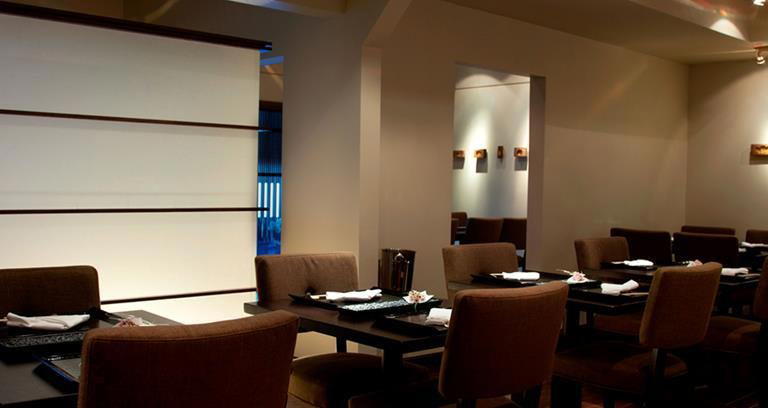
Bars in Los Angeles
Browse all →
Hotels in Los Angeles
Browse all →
Wineries in Los Angeles
Browse all →
Details
- Intimate
- Elegant
- Cozy
- Date Night
- Special Occasion
- Sake Program
- Organic
- A La Carte
- Tasting Menu
- Small Plates
- Sake
- Vegan Options
- Gluten Free Options
- Allergy Accommodating
Current opening hours
- Monday
- 5:30–10 PM
- Tuesday
- Closed
- Wednesday
- 5:30–10 PM
- Thursday
- 5:30–10 PM
- Friday
- 5–10 PM
- Saturday
- 5–10 PM
- Sunday
- 5–10 PM
Hours can change for holidays and private events. Last verified .