Chateau Marmont


2 Michelin Keys · Mr & Mrs Smith Seal of Approval
Chateau Marmont has occupied its perch above Sunset Strip since 1929, accumulating a mythology no hotel decorator can manufacture. With 63 rooms modelled on Loire Valley architecture, a Michelin 2 Keys designation in 2024, and rooms from $985 per night, it sits in a distinct tier of LA luxury where privacy and history carry more weight than amenity count.

Pearl is the En Primeur Club membership app, where members save venues, book tables and use the concierge.
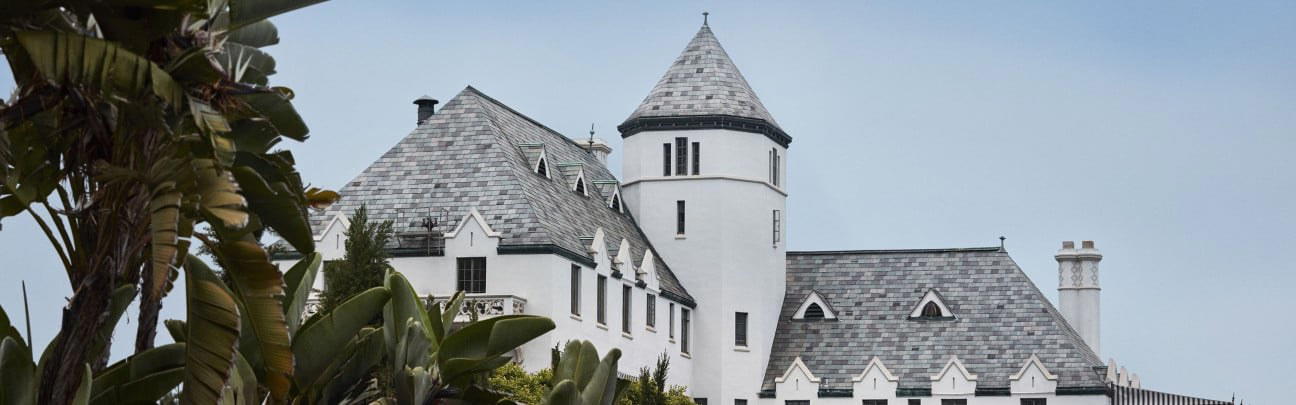
Gothic Towers Above the Strip
The approach to Chateau Marmont tells you something important about how it positions itself within Los Angeles luxury. While properties like Hotel Bel-Air and The Beverly Hills Hotel sit behind manicured hedges in residential quietude, Chateau Marmont rises directly from the friction of Sunset Strip, its Loire Valley silhouette visible above the traffic and billboards of one of LA's most relentlessly watched stretches of road. The contrast is deliberate and defining. This is a hotel that has always chosen visibility on its own terms.
The building was constructed according to the specifications of Château d'Amboise, a sixteenth-century Loire Valley royal residence, which makes it an anomaly on a boulevard better known for mid-century modernism and neon signage. Fluted columns draped in ivy, gothic vaulted ceilings in the lobby, dark wood panelling that absorbs rather than reflects the California light, the effect is less French countryside than cinematic set dressing, which is precisely why it worked so well for the industry that filled its rooms for nearly a century. The Michelin 2 Keys designation awarded in 2024 places it in a recognized tier of hospitality distinction, though its reputation long predates any guide's endorsement.
What the Rooms Actually Feel Like
Los Angeles luxury hotels have largely converged on a certain idiom: marble bathrooms, neutral palettes, curated local art, wellness programming. Chateau Marmont's 63 rooms resist that convergence entirely. The property's configuration spans a range of formats, pool-side cabanas, bungalows with a distinctly Latin warmth, Art Deco suites with the frothy ornamentation associated with 1930s Hollywood glamour, and smaller rooms with a domestic intimacy that reads more like a well-appointed apartment than a hotel. Every room differs in size, layout, and decorative register, which means the booking decision involves actual preference rather than simply selecting a floor or view tier.
This variation is not accidental. Properties like The Peninsula Beverly Hills and The Maybourne Beverly Hills compete on consistency and polish. Chateau Marmont competes on character, and character, by definition, cannot be standardized. The embroidered Frette linens are one of the few throughlines connecting the room types, a thread of material quality running through otherwise distinct environments. Rates begin at $985 per night, which places it in the upper tier of LA independent luxury alongside rather than below the polished Beverly Hills cohort.
The Atmosphere of Chosen Solitude
The sensory register inside Chateau Marmont is unusual for a hotel at its price point. There is no orchestrated arrival sequence, no scent diffused through the lobby to signal luxury. What you find instead is a gothic interior that has absorbed decades of quiet, dark wood, high ceilings that pull sound upward, a lobby that encourages lingering without performing it. Guests who want to disappear find this useful. The hotel's most durable reputation is not for spectacle but for privacy, and the physical environment enforces it. Greta Garbo, during the decades she frequented the property, reportedly stretched out on lobby sofas when parties elsewhere on the property grew too loud, which speaks to both the hotel's tolerance for eccentricity and the quality of its ambient quiet.
The pool sits below the main building, shielded enough from Sunset's noise to feel like a separate geography. The cabanas that flank it occupy a specific fantasy of old Hollywood leisure: wide enough for genuine retreat, positioned for the kind of conspicuous inconspicuousness that Los Angeles has always excelled at producing. The contrast with the more social pool environments at The Sun Rose West Hollywood or Casa del Mar is considerable.
The Restaurant and Bar Next Door
Hotel's restaurant seats approximately twelve, a format that privileges intimacy over volume. The menu draws from Bar Marmont, the adjoining bar that has functioned as a neighbourhood anchor for the creative and entertainment industries for years. The kitchen operates in an upscale gastro-pub register: not the tasting-menu formalism of destination dining, but a calibrated version of comfort food for guests who expect quality without ceremony. For a city with as dense a dining scene as Los Angeles, see our full Los Angeles restaurants guide for reference, the Chateau Marmont restaurant is less about competing with the city's serious kitchens than about providing a room where the usual LA performance pressure is absent. It is quiet in a way that few twelve-seat rooms in this city are quiet.
A History That Actually Happened Here
Mythology of Chateau Marmont is both its most discussed quality and its most misunderstood one. Hotels accumulate stories; Chateau Marmont accumulated a specific kind of story, the kind that involves real people making consequential or reckless decisions in private. The roll-call of documented guests reads as a compressed history of twentieth-century American culture: Clark Gable and Jean Harlow's affair conducted here while Harlow was on her honeymoon with another man; Howard Hughes occupying a penthouse with binoculars; William Holden famously advised by a studio executive to conduct any misbehaviour within these walls. Jim Morrison lived in a bungalow here. F. Scott Fitzgerald was in residence when he suffered a heart attack in a drugstore across the street. Robert De Niro has been a long-term presence. Garbo chose it specifically because birds sang at her window and the management asked no questions.
This history does not function as marketing material in the way hotel brands typically deploy historical association. It functions as architectural fact: the building is the same building, the bungalows the same bungalows, the lobby the same lobby. For guests drawn to places where cultural history is embedded in the fabric rather than commemorated on a plaque, that distinction carries weight. It is the difference between Aman New York's contemporary grandeur and the kind of sediment that only time deposits.
Where It Sits in the LA Hotel Picture
Los Angeles's premium hotel market has fragmented considerably since the Chateau Marmont established its position on Sunset Strip in 1929. The Beverly Hills corridor, anchored by the The Beverly Hills Hotel and joined by newer entries like L'Ermitage Beverly Hills, operates on a different model entirely: attentive service hierarchies, full-service spas, ballroom infrastructure. The Downtown LA Proper Hotel represents a third axis, connecting premium accommodation to a neighbourhood undergoing genuine transformation. Chateau Marmont does not compete with any of these directly. Its 63-room independent structure, Sunset Strip address, and cultivated atmosphere of benign neglect position it as a category of one within the city's accommodation market, a place that functions more like a private club with bedrooms than a hotel with rooms to sell.
For guests planning around geography, the Chateau is roughly 30 minutes from Los Angeles International Airport under clear traffic conditions, though that estimate should be treated as optimistic during peak commute hours. Valet parking runs $65 USD per night. The hotel does not position itself as a conference destination or a family property; it has always functioned leading for guests who want proximity to West Hollywood's creative infrastructure without the social pressure of a more performatively social hotel environment.
Broader American travel offers obvious points of contrast. Properties like Post Ranch Inn in Big Sur or Amangiri in Canyon Point achieve their version of retreat through landscape isolation. Troutbeck in Amenia and SingleThread Farm Inn in Healdsburg achieve it through agricultural remove. Chateau Marmont's version of retreat is purely architectural and social: you are in the middle of everything and simultaneously insulated from it, which is a more difficult thing to engineer, and one that the building has been doing, with varying degrees of elegance, for nearly a century.
Planning Your Stay
Chateau Marmont operates as an independent luxury property with rates beginning at $985 per night across its 63 rooms and bungalow formats. The 2024 Michelin 2 Keys designation reflects its standing in the hospitality recognition ecosystem, though demand has historically outpaced any formal award. Rooms vary significantly in layout, size, and aesthetic register, which means early booking and specific room-type selection matter more here than at properties with standardized inventory. Valet parking at $65 per night is the practical option for guests arriving by car. The hotel sits on Sunset Strip in West Hollywood, approximately 30 minutes from LAX in standard traffic.
Budget and Context
Comparable venues nearby, for context on price, style, and recognition.
| Venue | Cuisine | Price | Awards | Notes |
|---|---|---|---|---|
| Chateau MarmontThis venue (the venue you are viewing) | Not listed | $500–750 | 2 Michelin Keys · Mr & Mrs Smith Seal of Approval | Not listed |
| The Peninsula Beverly Hills | Not listed | $500–750 | 2 Michelin Keys · La Liste Top Hotels | Golden Triangle, Luxury palace hotel blending classical elegance with contemporary resort amenities; positioned as a premier destination for informed travelers seeking refined hospitality in the heart of Beverly Hills. |
| The Sun Rose West Hollywood | Crescent, luxury urban retreat | Not listed | 1 Michelin Key · La Liste Top Hotels | Not listed |
| Santa Monica Proper Hotel | Not listed | Not listed | 1 Michelin Key · Star Wine List | Santa Monica, luxury wellness retreat blending historic and modern architecture |
| Shutters on the Beach | Not listed | Not listed | 1 Michelin Key · Star Wine List | Ocean Park, Residential beachfront resort with contemporary seaside charm |
| Regent Santa Monica Beach | Not listed | Not listed | 1 Michelin Key · Star Wine List | Ocean Park, Luxury beachfront resort with indoor-outdoor living and custom furnishings. |
Recognition history
Dated appearances from independent guides and award organizations, with the underlying list record or original source where available.
Michelin 2 Keys
Michelin
Mr & Mrs Smith Seal of Approval
Mr & Mrs Smith
Full recognition history (4 entries)
Michelin 2 Keys
Michelin
Michelin 2 Keys
Michelin
Continue exploring
More in Los Angeles
Hotels in Los Angeles
All hotels in Los Angeles →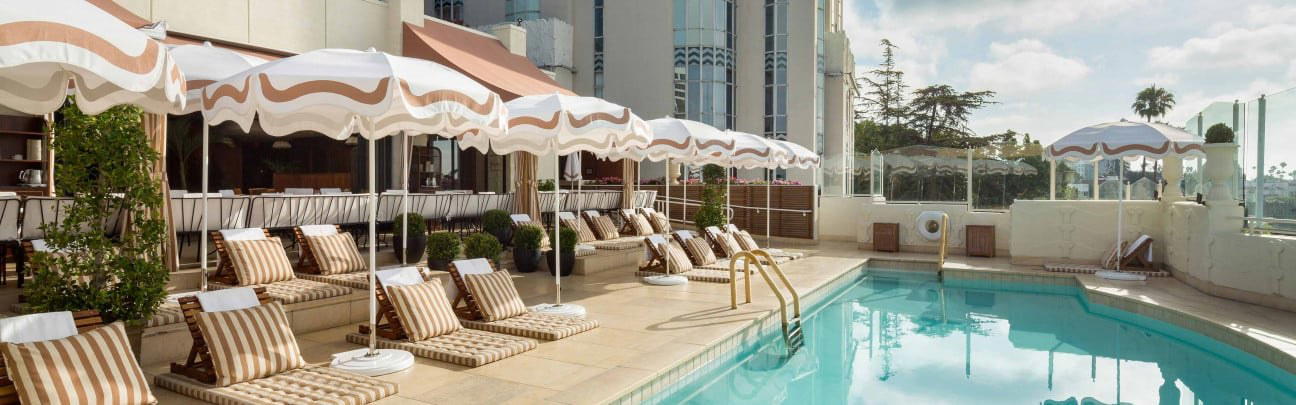
Bars in Los Angeles
All bars in Los Angeles →
Restaurants in Los Angeles
All restaurants in Los Angeles →
Wineries in Los Angeles
All wineries in Los Angeles →
Details
- Well Known
- Elegant
- Sophisticated
- Classic
- Ornate
- Romantic Getaway
- Anniversary
- Celebration
- Historic Building
- Rooftop Pool
- Garden
- Terrace
- Wi Fi
- Pool
- Spa
- Fitness Center
- Room Service
- Concierge
- Business Center
- Valet Parking
- EV Charging
- Garden
- Elevator
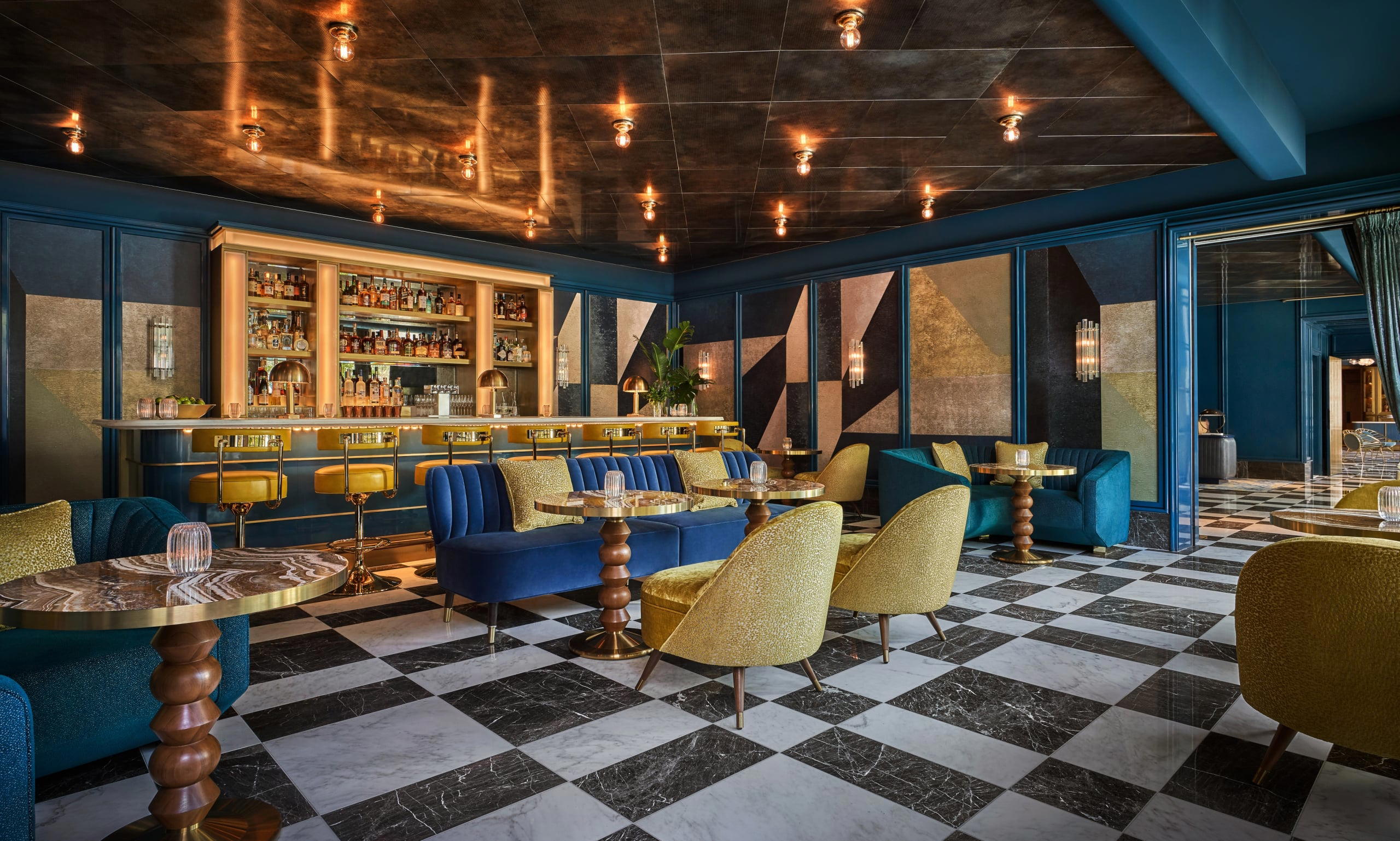
Relaxed yet elegant with old Hollywood glamour, featuring garden patios, sunlit terraces, and intimate dimly lit interiors.