Restaurant Ki







A ten-seat chef's counter in Little Tokyo, Restaurant Ki earned a Michelin star in 2025 within its first full year of operation. Chef Ki Kim, trained at Atomix and Jungsik in New York, delivers a seafood-centric tasting menu that draws on both Korean tradition and French technique. With, this is among the more closely watched fine-dining openings in Los Angeles.
Pearl is the En Primeur Club membership app — saves, bookings, and concierge access live there. Same editors, same standards.
- Address
- 111 San Pedro St, Los Angeles, CA 90012
- Phone
- (213) 786-3154
- Website
- restaurantki.com
- Directions
- Get directions
 Saves & bookings on Pearl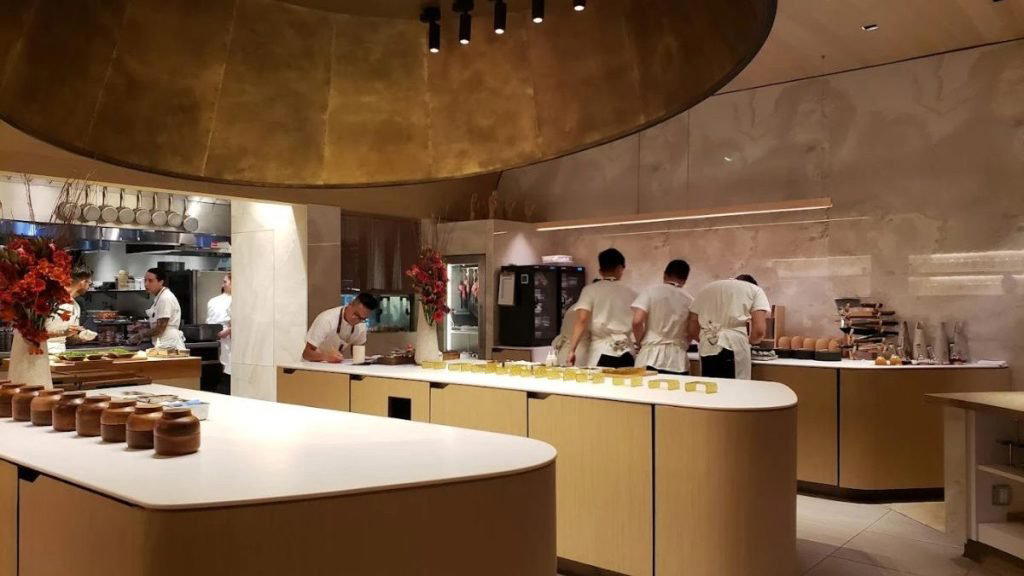
When Los Angeles Finally Got Its Korean Fine-Dining Counter
The emergence of Korean fine dining as a serious global category happened largely in New York. Jungsik opened its Manhattan location in 2011, Atomix followed in 2018, and both accumulated Michelin stars and critical attention that established a new tier above traditional Korean-American restaurant culture. Los Angeles, despite housing one of the largest Korean communities outside Seoul, was slower to develop a comparable counter format at that register. Restaurant Ki is a Michelin-starred Korean tasting-menu restaurant in Los Angeles at 111 San Pedro Street in Little Tokyo. It represents the city's most direct entry into that conversation. It earned a Michelin star in 2025, placing it in the first tier of LA's rapidly shifting fine-dining recognition table.
The timing matters. LA's Michelin universe has expanded and deepened over the past several years, with multi-course counter formats like Kato (New Taiwanese, Asian) demonstrating that there is sustained demand for small-format, chef-driven tasting menus priced at the summit of the market. Restaurant Ki arrived into that infrastructure with credentials that positioned it immediately among serious contenders rather than newcomers still building a reputation.
The Counter Format and What It Signals
Ten seats is a deliberate constraint. At that capacity, a restaurant is not operating a dining room business in any conventional sense. The economics require high per-head pricing, a fully pre-committed guest every service, and a format that justifies the commitment through precision and consistency. The ten-seat counter at Restaurant Ki places it in the same structural tier as particularly cited small-format counters in the country, from Lazy Bear in San Francisco to the intimate omakase-adjacent formats that have proliferated in major American cities over the past decade.
That structural choice also shapes the experience fundamentally. A ten-seat counter eliminates the anonymity of a larger dining room. The kitchen is present in a way it cannot be elsewhere. Pacing, presentation, and the flow of conversation between kitchen and guest all carry more weight when there are no other tables to dilute the focus. For a cuisine tradition where the sequencing of flavors across a multi-course meal is itself a form of argument about Korean cooking, that intimacy is not incidental. It is the mechanism through which the food makes its case.
Comparable small-format counters operating at this price tier in the US include Alinea in Chicago and The French Laundry in Napa, both of which have shaped industry expectations around what a counter-format tasting menu can accomplish. Restaurant Ki operates in that structural lineage, though its culinary language is distinct.
Chef Ki Kim and the New York Training Line
Korean contemporary fine dining has a recognizable lineage in the United States, and Chef Ki Kim's résumé sits squarely within it. Atomix in New York holds two Michelin stars and has appeared on multiple major global restaurant lists. Jungsik, where Kim also trained, holds two Michelin stars in New York and was instrumental in establishing the argument that Korean cuisine could sustain the formal, multi-course tasting menu format at the highest price points. Those are not incidental credentials. They represent a specific school of thought about how Korean flavors, techniques, and seasonal logic can be translated into a contemporary fine-dining structure.
The influence of that New York training line is now spreading to other American cities. Nae:um in Singapore and ANJU in Saint-Gilles represent parallel movements in other geographies, but LA now has its own iteration of this category with direct lineage to where the format was proven at scale. The Michelin star confirmed the significance of Ki's opening within the broader context of American Korean fine dining, not merely as a local addition.
Seafood, Seasonality, and the Menu Architecture
The menu at the restaurant is described as seafood-centric and rooted in seasonality, which places it in a culinary tradition that runs through particularly discussed fine-dining programs on the West Coast. Providence, Michael Cimarusti's seafood-focused fine-dining room in Los Angeles, has held two Michelin stars for years and established the case that seafood-forward menus can anchor the highest tier of American restaurant recognition. The restaurant operates in a different culinary idiom, but the shared emphasis on marine ingredients and seasonal sourcing places both in a conversation about where the leading West Coast fine dining draws its primary material.
Integration of French technique into a Korean flavor framework is a defining characteristic of the Atomix lineage. Where older Korean-American fine dining often meant either traditional Korean cuisine served in a formal setting or Korean ingredients absorbed into a broadly Western fine-dining format, the Atomix school treats the two traditions as genuinely equivalent contributors. Neither subsumes the other. That is a more demanding balance to maintain, and it is the standard against which the restaurant will be measured as its reputation develops.
LA dining scene offers useful points of comparison. Baroo, operating in a different register and price tier, has long explored Korean fermentation and flavor logic within an avant-garde framework. Somni, which returned to Los Angeles with significant critical attention, occupies the experimental end of the city's tasting menu spectrum. The restaurant sits in a different position: formally rigorous, counter-format, and with a flavor vocabulary that is specifically Korean rather than pan-Asian or fusion-inflected. It is also worth noting the broader LA fine-dining ecosystem that includes Osteria Mozza and European-influenced fine dining rooms, within which Ki's distinct Korean contemporary identity is all the more visible.
Critical Reception and What the 2025 Star Means
A Michelin star in the year of or immediately following opening is a relatively rare outcome. It signals that inspectors encountered a program that had already reached consistent execution, not a promising debut still finding its footing. For a ten-seat counter, that consistency is both easier to achieve in theory (fewer covers, tighter control) and harder in practice (no margin for off nights without significant reputational cost).
Within the LA fine-dining comparable set, that 2025 Michelin recognition places the restaurant alongside Kato and other counter-format restaurants that have established LA as a serious multi-course dining city, not merely a city of great casual and mid-market eating. The national comparison set includes Le Bernardin in New York City, which has long held the Michelin three-star standard for seafood-focused fine dining, and Single Thread Farm in Healdsburg, where seasonality and counter formality define the experience. The restaurant operates with a different cultural framework but within the same tier of formal ambition.
Planning a Visit
The restaurant is located at 111 San Pedro Street in Little Tokyo, a neighborhood that sits at the edge of Downtown Los Angeles and has developed a small cluster of serious dining destinations in recent years. At ten seats and Michelin-starred, demand is predictably high. A reservation horizon of several weeks to multiple months should be assumed, particularly for weekend services. The price is about $300 per person.
For those comparing the restaurant against comparable chef's counter programs outside LA, Emeril's in New Orleans offers a useful reference point for how regional American fine dining anchors itself to a specific culinary tradition over time.
Cuisine and Credentials
Comparable venues nearby, for context on price, style, and recognition.
| Venue | Cuisine | Price | Awards | Notes |
|---|---|---|---|---|
| Restaurant KiThis venue — the venue you are viewing | Modern Korean Tasting Menu | $$$$ | Michelin 1 Star | Not listed |
| Sushi Inaba | Premium Omakase Sushi | $$$$ | Michelin 1 Star | Koreatown |
| Sushi Kaneyoshi | Edomae Omakase | $$$$ | Michelin 1 Star | Little Tokyo |
| Citrin | Modern Californian with French Technique | $$$$ | Michelin 1 Star | Santa Monica |
| Nozawa Bar | Traditional Japanese Omakase | $$$$ | Michelin 1 Star | Golden Triangle |
| Kali | Modern California Steakhouse | $$$$ | Michelin 1 Star | Larchmont |
Recognition history
Dated appearances from independent guides and award organizations, with the underlying list record or original source where available.
James Beard Award Nominee
James Beard Award
James Beard Award Semi Finalist
James Beard Award
Michelin 1 Star
Michelin
Opinionated About Dining Top Restaurants in North America Highly Recommended
Opinionated About Dining
Eater Best New Restaurants
Eater
Esquire Best New Restaurants
Esquire
LA Times 101 Best Restaurants #9
LA Times
Michelin 1 Star
Michelin
Resy Best of the Hit List
Resy
Continue exploring
More in Los Angeles
Restaurants in Los Angeles
Browse all →
Bars in Los Angeles
Browse all →

Hotels in Los Angeles
Browse all →

Wineries in Los Angeles
Browse all →
At a Glance
- Minimalist
- Elegant
- Intimate
- Sophisticated
- Special Occasion
- Date Night
- Chefs Counter
- Open Kitchen
- Extensive Wine List
- Sake Program
Current opening hours
- Monday
- Closed
- Tuesday
- Closed
- Wednesday
- 6:30–9 PM
- Thursday
- 6:30–9 PM
- Friday
- 6:30–9 PM
- Saturday
- 6:30–9 PM
- Sunday
- 6:30–9 PM
Hours can change for holidays and private events. Last verified .
Minimalist, plain, windowless room with subdued, refined service focused on the open kitchen action.