
An eight-seat counter in Showa-ku puts Nagoya sushi into a quieter value conversation than Tokyo’s trophy counters. Sushi Yasuke pairs Tabelog Sushi EAST 100 selection in 2025 with a dinner range of JPY 10,000–14,999 and a lunch range of JPY 5,000–5,999, making the case for precision sushi without the capital-city premium.
Pearl is the En Primeur Club membership app — saves, bookings, and concierge access live there. Same editors, same standards.
- Address
- 愛知県名古屋市昭和区菊園町6-18-7
- Phone
- +81528529151
- Website
- tabelog.com
 Saves & bookings on Pearl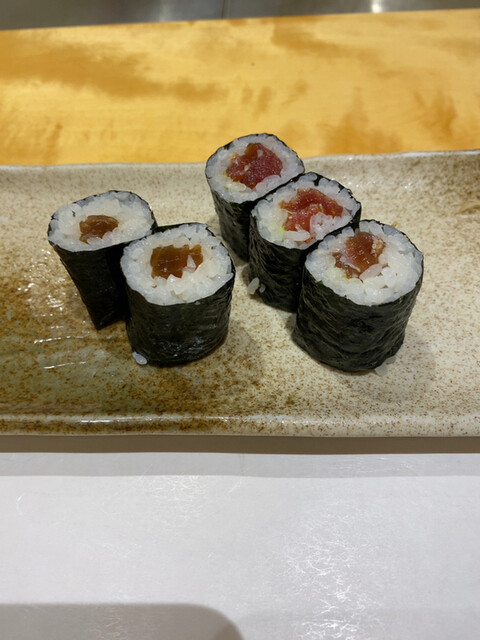
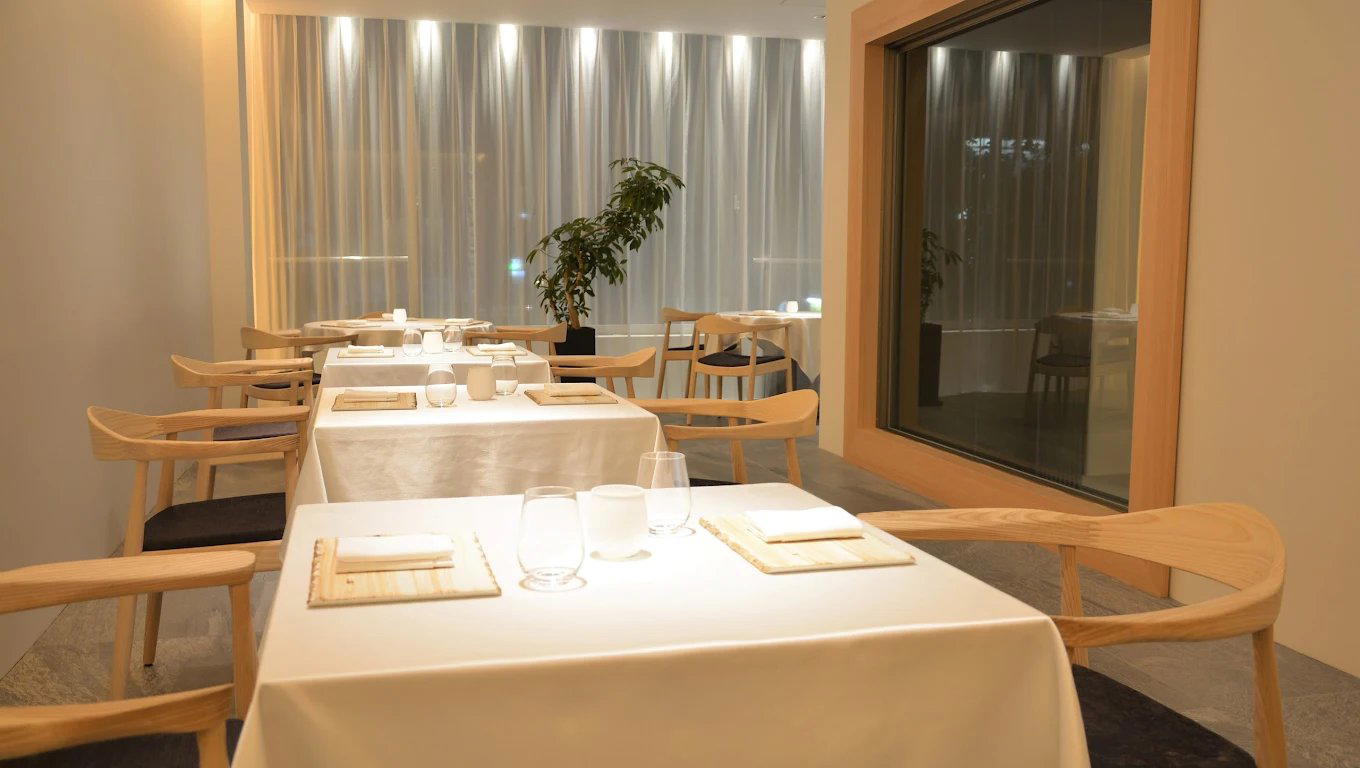
Approaching a house restaurant in Kikuzonocho changes the rhythm before the meal begins: this is not the station-front version of Nagoya dining, and it is not the hotel-counter version either. The room is built around counter seating and only eight seats, which puts the exchange in the classic sushi-counter register: compact, quiet, and dependent on timing rather than spectacle. In a city better known abroad for miso-katsu, kishimen, hitsumabushi, and tebasaki, serious sushi often works in smaller rooms, away from the obvious visitor circuits.
Sushi Yasuke belongs to that more local category. Its inclusion in Tabelog’s Sushi EAST 100 in 2025, with prior selections in 2021 and 2022, gives it a clearer public credential than many small counters in regional Japan. The value proposition is the point: dinner sits at JPY 10,000–14,999, while lunch is listed at JPY 5,000–5,999. Against Nagoya peers such as Hama Gen at JPY 30,000–39,999 and Sekine at JPY 20,000–29,999, this occupies a lower tariff while retaining the small-seat, reservation-led grammar of serious sushi.
Small-counter sushi with a regional price logic
Nagoya’s high-end dining economy does not behave exactly like Tokyo’s. The city has corporate money, a strong local dining culture, and a deep appetite for craft, but it does not price every intimate counter as if it were competing for Ginza expense accounts. That difference matters for travelers who care less about trophy collecting and more about how a city eats when it is not performing for international rankings.
Here, the format does much of the editorial work. Eight seats mean limited daily capacity, counter seating means direct pacing, and the no-photography policy keeps the meal oriented toward the room rather than the phone. Sake is the listed drink category, which aligns with a traditional sushi counter rather than a wine-led luxury format. Private rooms and private use are unavailable, so the experience is public in the old sushi sense: close, focused, and governed by the counter’s tempo.
The pricing also creates an unusually clear comparison. Patsu Curry and Ramen Suiren sit in Nagoya’s casual bracket, while counters such as Hama Gen occupy a far higher spend tier. Sushi Yasuke sits between those worlds: not an everyday meal, not a luxury-tax sushi night. For visitors already exploring the city through Our full Nagoya restaurants guide, it is useful as a calibration point for how far a mid-five-figure yen dinner budget can go outside Tokyo.
What the recognition says, and what it does not
Tabelog’s Sushi EAST 100 is not a Michelin star and should not be read as one. It is a Japanese platform’s category selection, and its usefulness lies in mapping local consensus across a cuisine where many worthwhile counters do not operate with large public relations machines. For a small Nagoya sushi restaurant, repeated selection in 2021, 2022, and 2025 signals durability rather than a single burst of attention.
That durability matters because the chef biography, official website, and public-facing narrative are not the story here. The stronger reading is structural: a small Showa-ku counter, operating since 2016, has held enough local attention to remain visible in a crowded sushi category. In Japan, where restaurant discovery often runs through domestic platforms, word-of-mouth, and regulars, that kind of recognition carries practical weight for travelers trying to separate serious local counters from generic sushi listings.
There is also a useful restraint in what the room asks of guests. The dress guidance specifically discourages scented items such as perfume and hair products, a common marker of sushi-counter etiquette where aroma can interfere with rice, fish, and sake. The restaurant is non-smoking, photography is prohibited inside, and the format does not support private-room dining. Those details define the social contract more effectively than any grand statement about craft.
Planning around the counter, not around convenience
The geography is part of the decision. Sakurayama is the nearest station, with the restaurant listed as a 15-minute walk from the station and a one-minute walk from the Ishikawabashi bus stop. That places it outside frictionless tourist dining zones, but not in a difficult pocket for anyone already moving around central Nagoya. Parking is not provided, though coin parking is available nearby, which is typical for small urban restaurants in residential districts.
Service timing requires attention. Lunch is available on weekdays and selected Sundays, with lunch reservations accepted from 12:00 to 12:30 and lunch closed in August. Dinner runs on listed service days, with Saturday dinner specifically noted. Lunch on weekdays and public holidays is reservation-only and must be arranged at least two days ahead. Payment has its own split: major credit cards are accepted, while electronic money and QR payments are not; lunch is listed as cash only. These are not decorative details. They decide whether the meal works smoothly or becomes a logistics problem.
For a broader Nagoya itinerary, this is the kind of restaurant to anchor rather than squeeze between major sights. Pairing it with nearby drinking or hotel planning is easier through Our full Nagoya bars guide and Our full Nagoya hotels guide; travelers building a wider regional food route can also compare it with Our full Nagoya experiences guide and Our full Nagoya wineries guide. Within the restaurant map, cross-check other Nagoya entries such as 1022, 451, Aaron, Alan., and All Day Dining Montmartre to understand how varied the city’s table culture has become.
The final call is simple: choose this counter for focused sushi value in Nagoya, not for a lavish room or a public chef mythology. The spend is controlled by serious-sushi standards, the capacity is tight, and the rules around scent, photography, and payment reward diners who prepare properly. For readers comparing Japanese dining beyond Aichi, useful contrasts include -Grilled beef Sukiyaki- KAMAKURA TANUKIAN 鎌倉 たぬき庵 in Kamakura. 鮪と炭火焼き うお炭 秋葉原店 in Tokyo.cafe in Osaka.know in Kumamoto, (Shoku) Vietnam in Kawasaki, [Curry Senmon Ten] Maruyama Kyoju. in Sapporo, Jōdo Saké Bar in Los Angeles, and Onigiri Time in Pasadena.
A Credentials Check
Comparable venues for orientation by cuisine and category.
| Venue | Cuisine | Price | Notes |
|---|---|---|---|
| Sushi YasukeThis venue — the venue you are viewing | Traditional Edomae Sushi Omakase | $$$ | Not listed |
| Mikan Kotohogi | Seasonal Japanese Kaiseki | $$$ | Higashi |
| Yadorigi | Casual Edomae Sushi Counter | $$$ | Kita |
| Cutlet Matsumura | Modern Tonkatsu | $$$ | Nakamura |
| Yakiniku Mitsuboshi | Traditional Yakiniku (Japanese BBQ) | $$$ | Naka |
| Teppan Ryori Rakuda Nagoya ten | Seasonal Teppanyaki | $$$ | Higashi |
Recognition history
Dated appearances from independent guides and award organizations, with the underlying list record or original source where available.
Tabelog 100 #82 · No. 82
Tabelog · Tabelog 100 - Sushi - EAST - 2025
Continue exploring
More in Nagoya
Restaurants in Nagoya
Browse all →

At a Glance
- Intimate
- Quiet
- Classic
- Solo
- Date Night
- Special Occasion
- Business Dinner
- Chefs Counter
- Standalone
- Design Destination
- Sake Program
An intimate, reservation-oriented counter with only eight seats in a converted house, non-smoking and quiet, creating a focused, classic sushi experience where guests are asked to avoid perfumes and photography for a calm, refined atmosphere.