Our verdict
A dedicated fugu specialist in Ginza's 5-chome, Fugu Fukuji has earned consecutive Opinionated About Dining recognition since 2023, reaching #212 in Japan for 2024. Chef Takeshi Yasuge leads a focused operation open six evenings a week, positioning the restaurant firmly within Tokyo's small tier of serious pufferfish houses rated by specialist critics.

Pearl is the En Primeur Club membership app, where members save venues, book tables and use the concierge.
Ginza's Specialist Tier: The Fugu Counter as Its Own Category
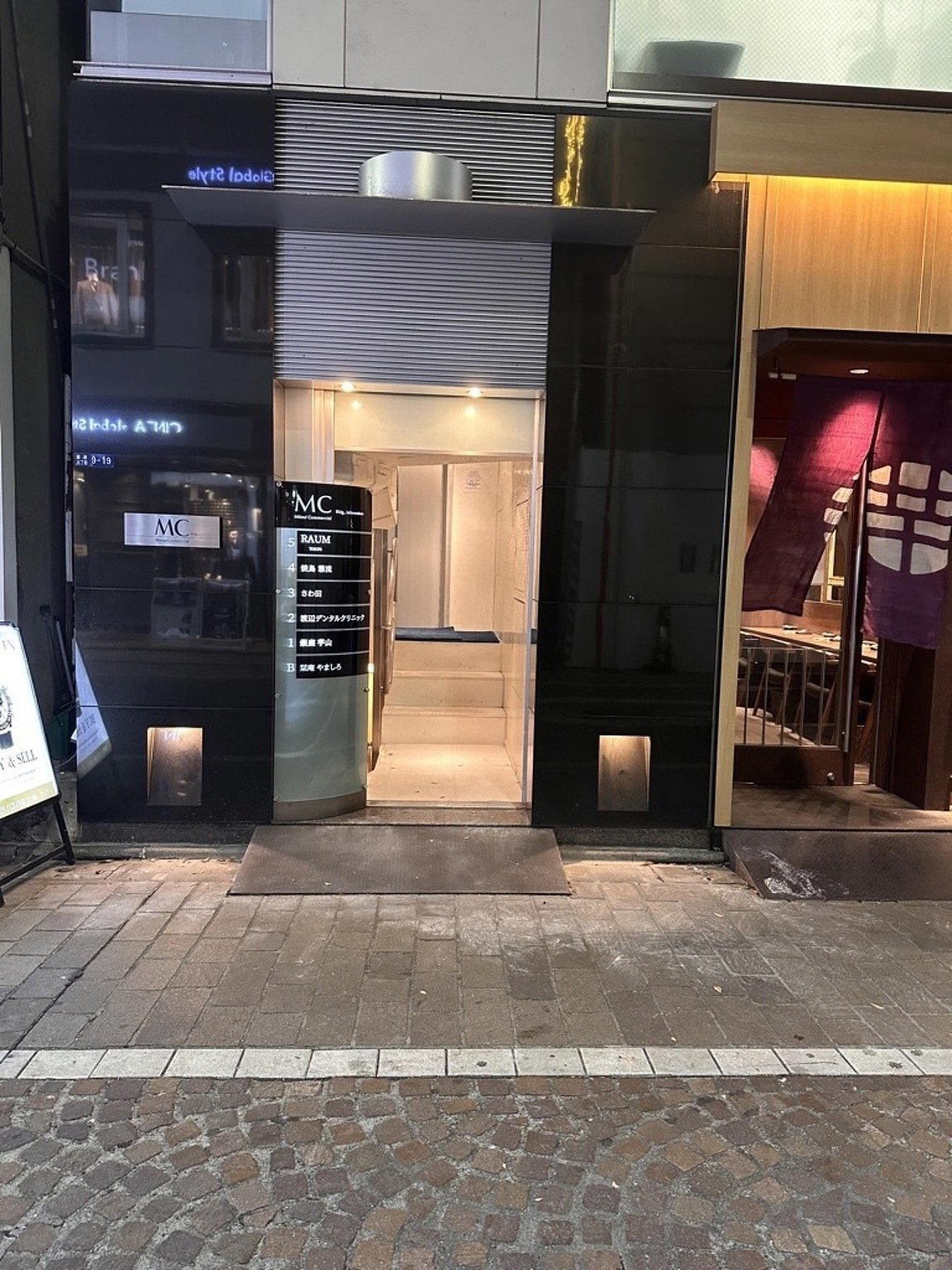
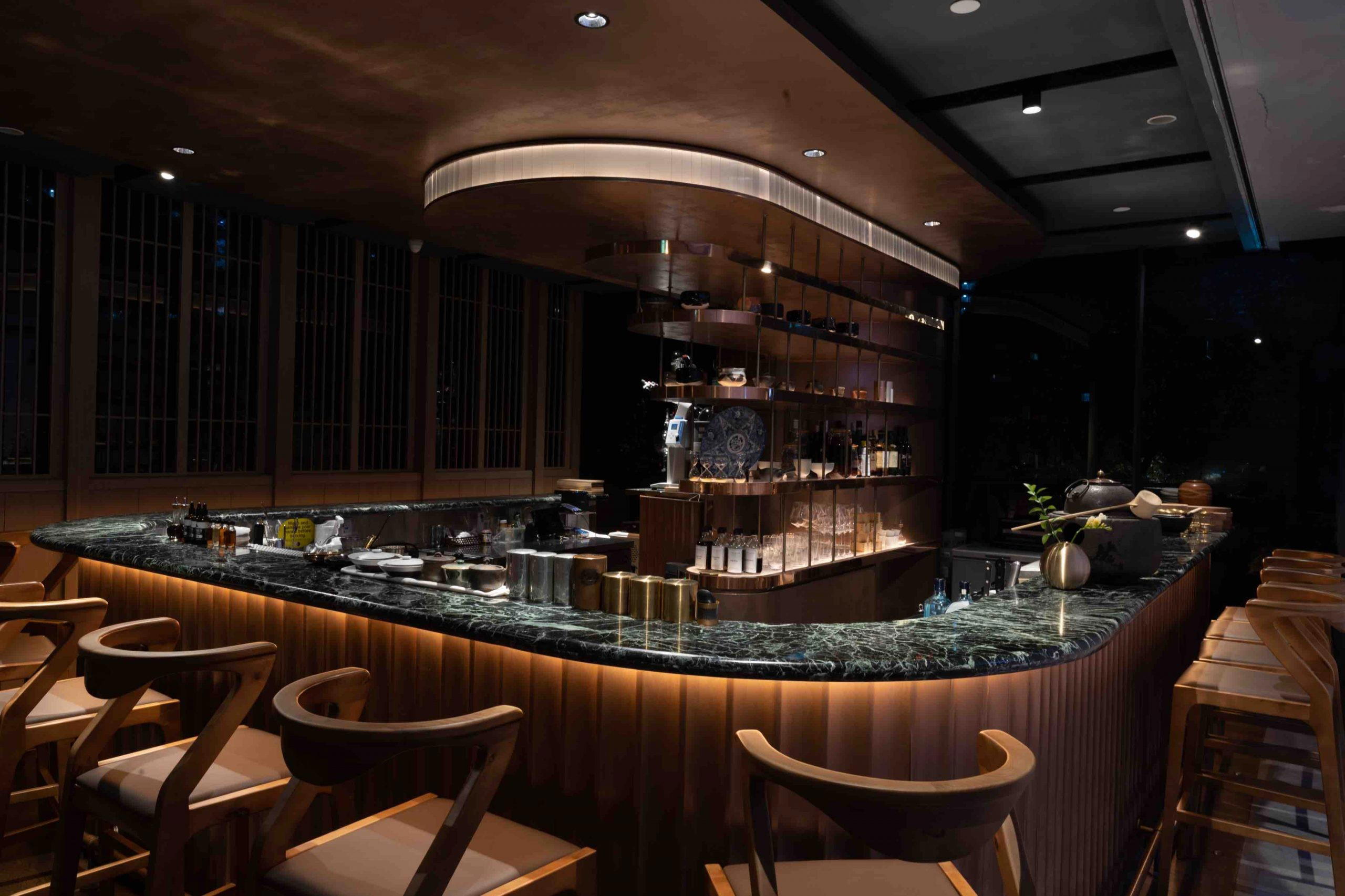
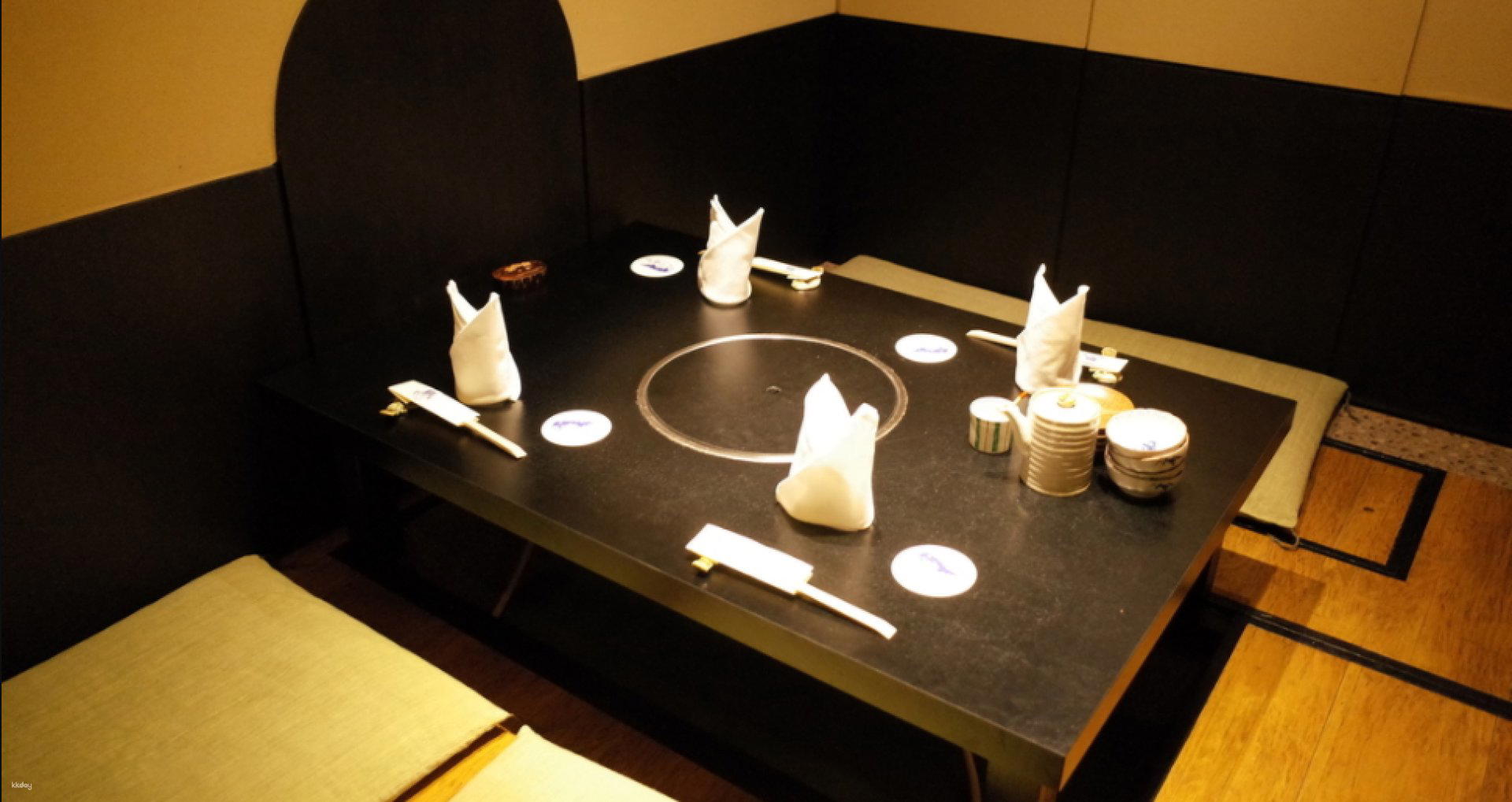
Third-floor addresses in Ginza's 5-chome corridor tend to signal intent. The building does not announce itself to passing traffic; the elevator ride up is the first indication that what follows will be quiet and deliberate. Fugu restaurants in Tokyo occupy a distinct niche within the city's broader fine-dining structure: they are not omakase sushi counters, not kaiseki rooms, and not French-inflected tasting menus. They are subject-matter specialists, and the best of them organise an entire evening around a single ingredient, asking every member of the team to know it at a depth that generalist kitchens cannot match.
That collective depth, kitchen, front-of-house, and the tacit knowledge required to prepare a legally regulated ingredient, is what separates a serious fugu house from a restaurant that merely features the fish. At Fugu Fukuji, under chef Takeshi Yasuge, the discipline is the format. Yasuge's role is inseparable from the service structure around him: in fugu dining, the licensed preparation of torafugu (tiger pufferfish) is a formal credential, and the front-of-house team's ability to communicate each preparation with precision is not optional courtesy but professional necessity. The collaboration between kitchen and floor here is structural, not decorative.
Where Fugu Fukuji Sits in the Tokyo Specialist Scene
Tokyo's fugu specialists occupy a smaller, more tightly defined peer group than the city's sushi or kaiseki restaurants. The ingredient's legal preparation requirements, fugu may only be served by licensed handlers in Japan, create a natural filter, and the restaurants that have built reputations around the fish tend to be judged by specialist critics rather than general-audience guides.
Fugu Fukuji sits in a cohort beneath that summit but within measurable distance of it, and the trajectory matters. Opinionated About Dining, the specialist critic network that evaluates restaurants across Japan with particular rigour for non-Michelin-covered categories, placed the restaurant in its Highly Recommended tier in 2023, then ranked it #212 among all restaurants in Japan in 2024, and moved it to #218 in 2025. That slight numerical shift does not indicate a quality decline; the OAD Japan list is competitive at scale, and consistent top-250 placement across three consecutive years signals that the kitchen is not coasting.
For context, Ginza's most-decorated restaurants, including three-Michelin-starred counters like Harutaka in the sushi category, operate at price points and booking windows that reflect trophy-dining demand. Fugu Fukuji competes differently: its claim is category authority over a single, technically demanding ingredient rather than the cross-category prestige of a Michelin three-star room. That is a narrower pitch, but for a diner specifically seeking the most considered fugu experience in central Tokyo, the distinction is the point.
The Team Dynamic: Kitchen Licence, Floor Knowledge, Service Architecture
The editorial angle on any serious fugu restaurant has to address the team dimension, because the ingredient demands it. In Japan, the preparation of fugu requires a prefecture-issued licence obtained after years of training and a formal examination. The kitchen at Fugu Fukuji is built around that credential. But a licensed kitchen alone does not explain why a restaurant earns OAD recognition: the floor team's understanding of what is being served, in what sequence, and how to communicate the distinctions between preparations is equally consequential.
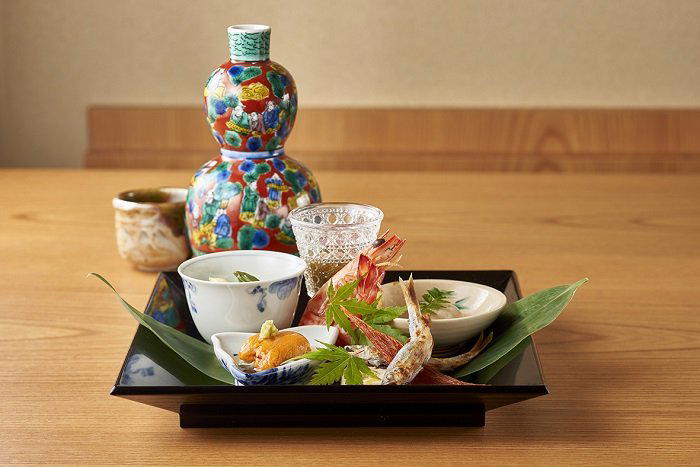
Fugu dining typically involves multiple forms of the fish across a single meal: tessa (paper-thin sashimi, often arranged in chrysanthemum patterns on lacquerware), karaage (deep-fried portions), nabe (hot pot), and zosui (rice porridge finished in the nabe broth) represent the classical arc. Each stage requires front-of-house timing and explanation that is different from what a sushi counter or kaiseki kitchen demands. The sommelier or drinks-pairing role in a fugu house is also specific: the traditional pairing is hirezake, sake warmed with a grilled fugu fin, and the degree to which a restaurant presents that pairing with knowledge versus reflexive habit is a reasonable proxy for the overall service standard.
What distinguishes a well-functioning team at this type of restaurant is the absence of a gap between kitchen precision and dining-room fluency. The fish is the subject; everyone in the building should be able to teach it.
Ginza at Night: The Neighbourhood Logic
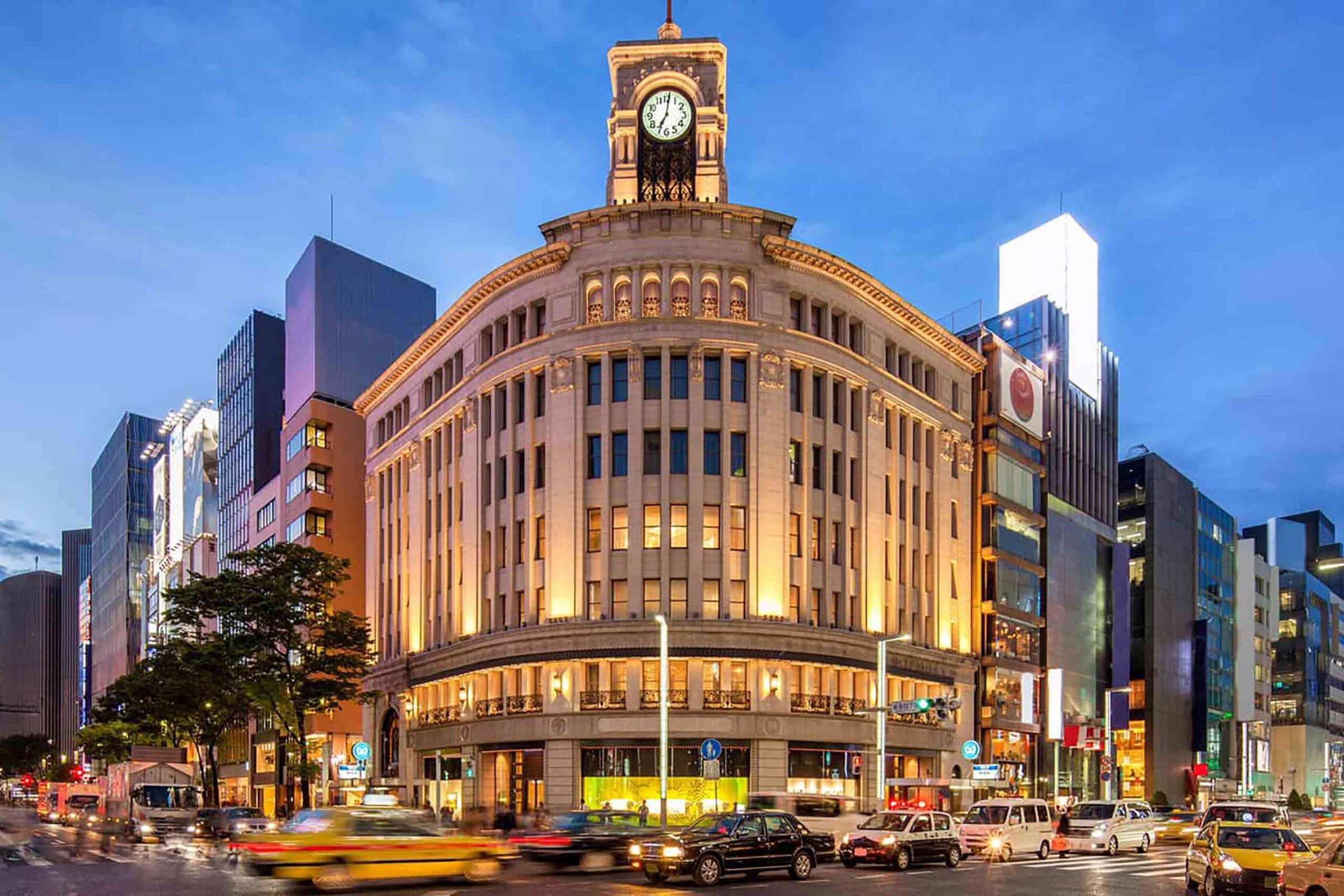
Ginza's evening dining culture has a particular character that makes it a natural home for specialist restaurants. The area draws both corporate entertainment clientele and food-focused visitors who have pre-researched their choices carefully. It is not a neighbourhood of accidental walk-ins at the leading end: the third-floor addresses, the unmarked facades, and the predominantly counter or small-room formats all assume a guest who arrived with a reservation and a reason.
Fugu Fukuji operates within those conventions. The evening-only hours (5 to 11 pm daily, closed no day of the week based on current scheduling) fit the Ginza corporate-and-specialist-dining rhythm, and the Chuo City address places it within easy reach of the broader Ginza restaurant cluster. For visitors organising a multi-night Tokyo programme, the specialist fugu dinner occupies a different position in the sequence than a kaiseki evening at a place like RyuGin or a French tasting menu at L'Effervescence: it is the most ingredient-specific of the available formats, and it rewards guests who arrive knowing what fugu is and why the preparation discipline matters.
Planning Your Visit
Address: 5 Chome-11-13 Koda Building 3F, Ginza, Chuo City, Tokyo 104-0061. Hours: Monday through Sunday, 5 pm to 11 pm. Reservations: Awards: Opinionated About Dining Leading Restaurants in Japan, ranked #218 (2025) and #212 (2024); Highly Recommended (2023). Price range: Dress: Not formally stated; Ginza specialist restaurants at this level generally expect neat, considered dress.
Further Reading Across Japan and Beyond
If Fugu Fukuji is part of a broader Japan itinerary, EP Club covers specialist dining across the country: HAJIME in Osaka, Gion Sasaki in Kyoto, akordu in Nara, Goh in Fukuoka, 1000 in Yokohama, and 6 in Okinawa. For the full Tokyo picture, see our full Tokyo restaurants guide, our full Tokyo hotels guide, our full Tokyo bars guide, our full Tokyo wineries guide, and our full Tokyo experiences guide. For international comparison with high-precision seafood tasting formats, Le Bernardin in New York City and Atomix in New York City represent a different tradition operating at a similar level of ingredient focus.
Frequently asked questions
Is Fugu Fukuji chef-led?
The chef associated with Fugu Fukuji is Takeshi Yasuge.
What cuisine category does Fugu Fukuji fall under?
What should I eat at Fugu Fukuji?
The meal is built around torafugu, tiger pufferfish, following a classical Japanese progression. Tessa, paper-thin fugu sashimi arranged in a chrysanthemum pattern, typically opens the sequence, followed by fugu-zosui, a rice porridge that closes the meal using the cooking broth. Chef Takeshi Yasuge leads the kitchen, and the licence required to prepare fugu at this level means every element of the menu reflects that specialisation rather than a broader Japanese repertoire. OAD has ranked Fugu Fukuji among Japan's top 218 restaurants in 2025, placing it firmly within the serious end of Tokyo's tightly defined fugu specialist tier.
What days is Fugu Fukuji closed?
Hours at Fugu Fukuji: Hours: Monday 5–11 pm Tuesday 5–11 pm Wednesday 5–11 pm Thursday 5–11 pm Friday 5–11 pm Saturday 5–11 pm Sunday 5–11 pm.
Where is Fugu Fukuji in Tokyo?
Fugu Fukuji is located at Japan, 〒104-0061 Tokyo, Chuo City, Ginza, 5 Chome−11−13 幸田ビル 3F, Tokyo.
Is Fugu Fukuji Michelin-listed?
Fugu Fukuji has received recognition including: Opinionated About Dining Top Restaurants in Japan Ranked #218 (2025); Opinionated About Dining Top Restaurants in Japan Ranked #212 (2024); Opinionated About Dining Top Restaurants in Japan Highly Recommended (2023).
Price and Positioning
| Venue | Cuisine | Price | Awards | Notes |
|---|---|---|---|---|
| Fugu FukujiThis venue (the venue you are viewing) | Fugu (Pufferfish) Fine Dining | $300–500 | Not listed | Not listed |
| Harutaka | Edo-Style Omakase Sushi | $200–300 | 3 Michelin Stars · World's 50 Best #76 | Sushi |
| RyuGin | Modern Kaiseki | $500+ | 3 Michelin Stars · World's 50 Best #41 | Kaiseki, Japanese |
| L'Effervescence | Modern French with Japanese Influences | $200–300 | 3 Michelin Stars · World's 50 Best #69 | French |
| HOMMAGE | Modern French with Japanese Influences | $150–200 | 2 Michelin Stars · World's 50 Best #78 | Innovtive French, French |
| MAZ | Innovative Peruvian-Japanese Fusion | $150–200 | 2 Michelin Stars · World's 50 Best #28 | Innovative |
Recognition history
Dated appearances from independent guides and award organizations, with the underlying list record or original source where available.
Opinionated About Dining Top Restaurants in Japan Recommended
Opinionated About Dining
Full recognition history (4 entries)
Opinionated About Dining Top Restaurants in Japan Ranked #218
Opinionated About Dining
Opinionated About Dining Top Restaurants in Japan Ranked #212
Opinionated About Dining
Opinionated About Dining Top Restaurants in Japan Highly Recommended
Opinionated About Dining