Tabelog Bronze
Our verdict
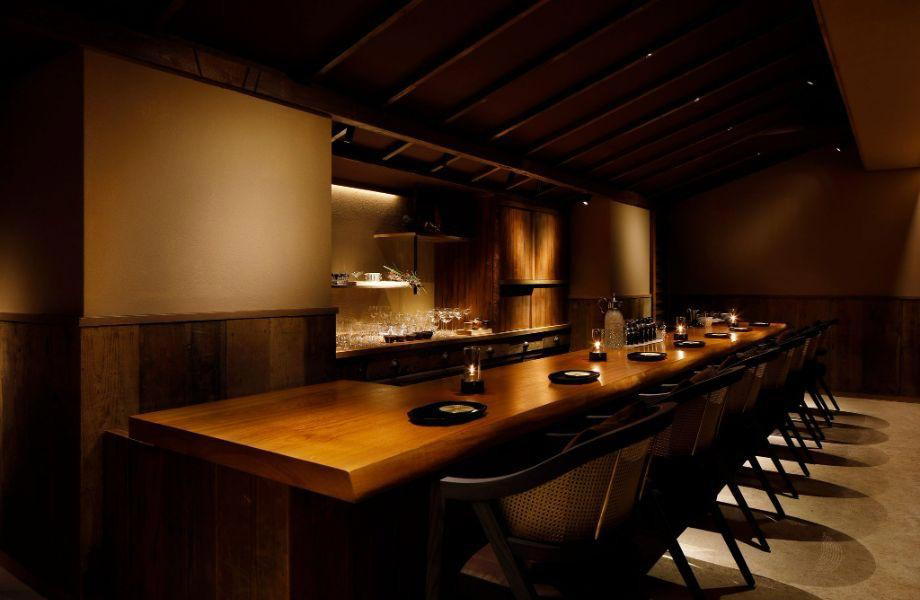
A lunch-only Japanese counter in Tsukiji's Chuo City, Rokkan holds a Tabelog Bronze Award (2025, score 3.77) and ranks among Japan's top restaurants on Opinionated About Dining, climbing from #461 in 2025 to #411 in 2024. Operating under chef Ren Ishino, it draws from one of Tokyo's most ingredient-dense neighbourhoods, offering a tightly focused midday service that rewards early planning.

Pearl is the En Primeur Club membership app, where members save venues, book tables and use the concierge.
Tsukiji's Culinary Infrastructure and What It Enables
Tsukiji's identity as a provisioning district long predates its tourist footprint. Even after the wholesale fish market relocated to Toyosu in 2018, the outer market and surrounding streets in Chuo City retained the supplier relationships, ingredient networks, and professional kitchen culture that made the area function. Restaurants in this pocket of Tokyo operate with a proximity advantage: the morning sourcing runs are short, the seasonal switches are fast, and the ingredient provenance is traceable in ways that matter to kitchens where the menu turns on what arrived that day.
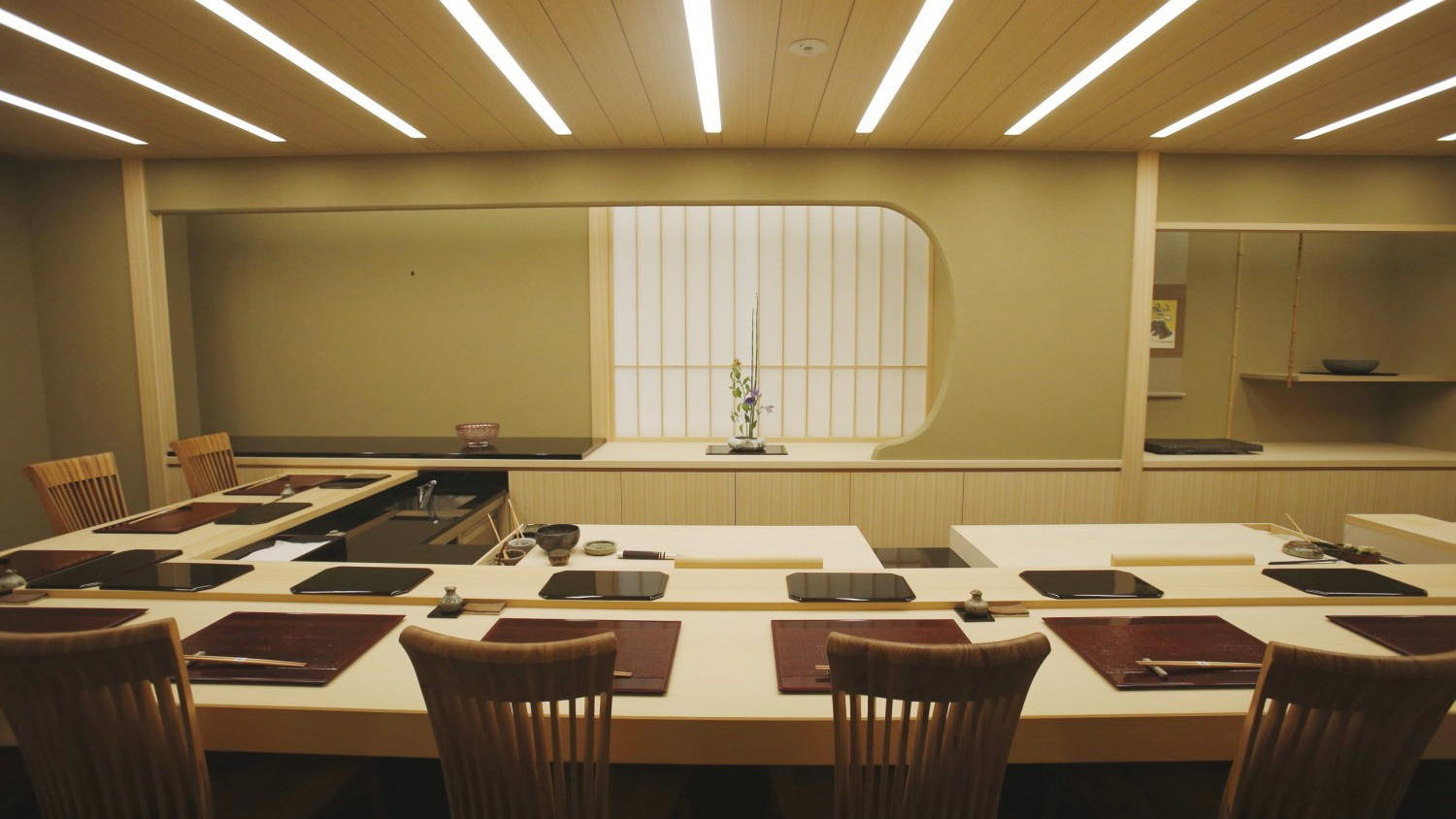
That operational context is not incidental to understanding Rokkan. A lunch-only counter format in a district wired for morning ingredient logistics is a structural choice as much as an aesthetic one. The format compresses the service window, a single sitting, Monday through Saturday, running from noon to 1:30 pm, and focuses the kitchen's output into a narrow, high-attention window where quality can be sustained without attrition across multiple evening services.
Where Rokkan Sits in the Recognition Hierarchy
The Japanese restaurant recognition ecosystem has several meaningful layers, and Rokkan occupies a documented position in more than one. Its Tabelog Bronze Award for 2025, with a score of 3.77, places it in a tier where consistent execution across a broad range of visits is the entry requirement, Tabelog's scoring is built on accumulated reviewer data, making a 3.77 a composite signal rather than a single critic's verdict. The Bronze threshold generally starts around 3.5, meaning a 3.77 sits in the upper portion of that band.
The Opinionated About Dining (OAD) ranking adds a different signal. OAD draws responses from a global set of serious diners and professionals, weighting the aggregate toward people who eat across multiple countries and contexts. Rokkan ranked #461 in Japan on the 2025 list and #411 in 2024. The movement between years rewards attention: a drop in absolute ranking does not necessarily signal a decline in quality, the OAD list expands and shifts as more restaurants enter the voting pool, but sustained presence inside the top 500 across consecutive years reflects a kitchen that keeps performing under scrutiny. For reference, the restaurants that cluster in this range of the OAD Japan list are typically places with clear culinary identity, a defined format, and repeat visitor loyalty rather than novelty-driven foot traffic. Myojaku, Azabu Kadowaki, and Kagurazaka Ishikawa all operate in the broader peer band of recognized Japanese fine dining in Tokyo, each with their own format logic and neighbourhood anchoring.
The Sustainability Argument Embedded in the Lunch-Only Model
Japanese cuisine's relationship with ingredient ethics has historically expressed itself through seasonal discipline rather than the vocabulary of contemporary sustainability discourse. The principle of shun, eating ingredients at their peak seasonal moment, functions as a form of waste reduction by default: a kitchen that tracks seasonal cycles closely avoids the supply-chain distortions of sourcing out-of-season produce at scale. In practice, this means menus rotate with the calendar rather than against it, and ingredient purchasing aligns with availability rather than forcing supply to match a fixed menu.
Rokkan's Tsukiji address reinforces this logic. Short supply chains reduce both transport emissions and the cold-storage time that degrades ingredient quality. A kitchen drawing on nearby Tsukiji networks can purchase closer to service, which reduces over-ordering and the waste that comes from managing excess inventory across multiple services. The single lunch sitting compounds this: one service per day, with a fixed window, creates a more predictable demand signal than a double-service restaurant attempting to fill covers twice daily under variable foot traffic. Over-preparation is a primary driver of kitchen waste, and the format constrains it structurally.
This is not a restaurant that markets itself through sustainability language, the broader Japanese culinary tradition rarely does. But the alignment between format, location, and sourcing practice reflects the same logic that more explicitly sustainability-framed restaurants in other markets articulate through programs and press releases. The discipline is structural rather than rhetorical.
Lunch in Tokyo at This Tier: What the Format Signals
Tokyo's premium lunch market has grown in strategic importance as diners seek access to serious kitchens without the commitment and cost of a full evening omakase. A number of high-recognition restaurants now offer lunch formats that are shorter in duration and sometimes lower in price than their dinner equivalents, while drawing on the same kitchen and ingredients. The compression of the lunch window does not mean a reduction in quality; it often means a more focused expression of the kitchen's core approach.
Rokkan's noon-to-1:30-pm service fits this pattern. The 90-minute window is tighter than a typical kaiseki or omakase dinner, which can run two to three hours or more, but it reflects a considered format rather than a rushed one. For visitors to Tokyo working through a tight itinerary, or for local professionals in Chuo City who use the lunch hour purposefully, the format offers a meaningful quality-to-time ratio. Compare this with something like Ginza Fukuju or Jingumae Higuchi, where evening formats dominate and the commitment is measured in hours rather than a single focused midday hour.
Chef Ren Ishino and the Kitchen's Role in Tsukiji's Professional Ecosystem
Chef Ren Ishino leads the kitchen at Rokkan. What the recognition record confirms is consistent performance across multiple independent evaluation systems, which is the practical measure of a kitchen functioning at a high level across time rather than in a single reviewed moment. The OAD ranking in particular, built on aggregate data from repeat diners, is difficult to sustain without genuine and consistent quality in the kitchen.
Planning Your Visit
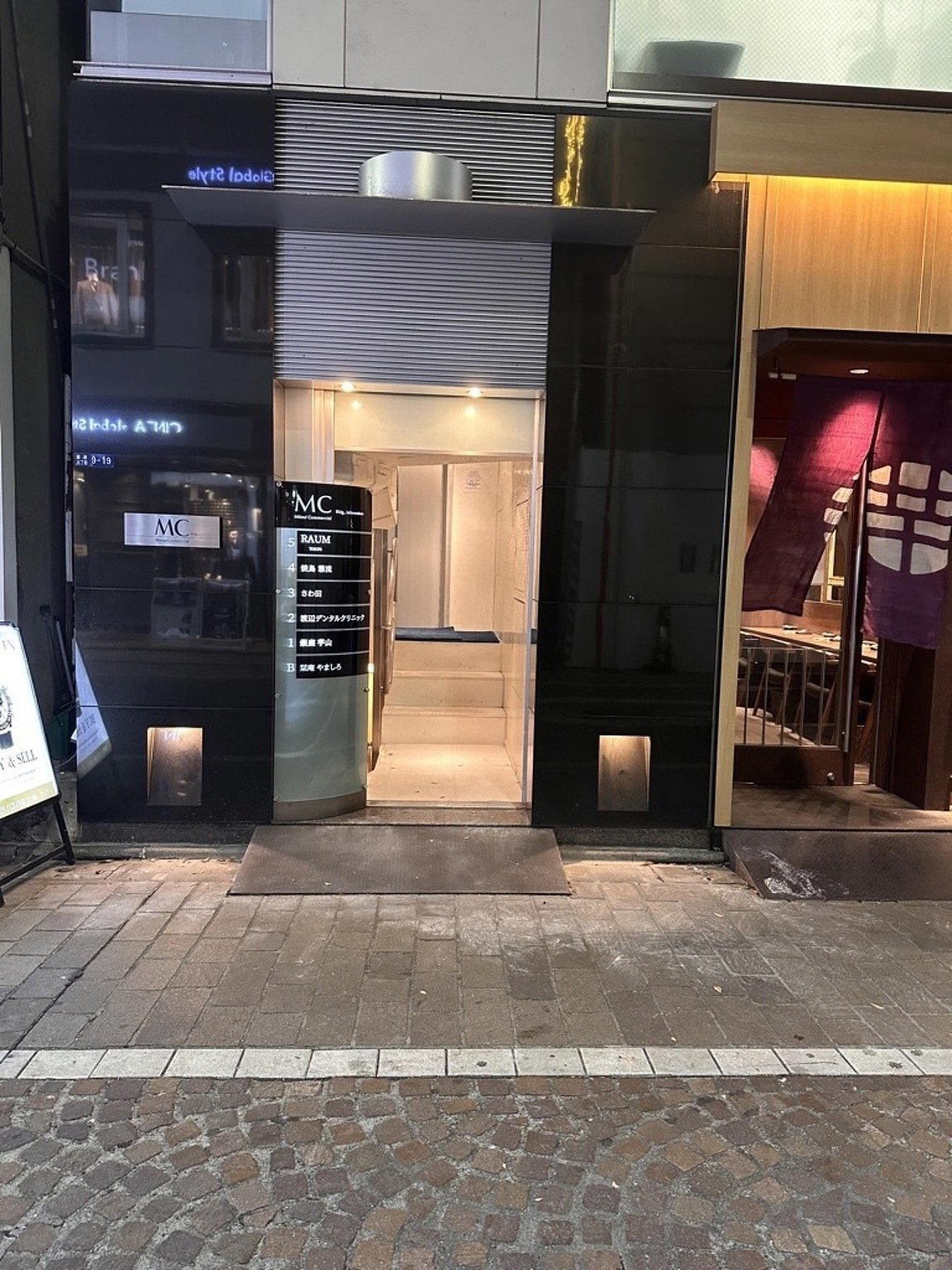
Rokkan is located at 6 Chome-6-6 Tsukiji, Chuo City, Tokyo 104-0045. The Tsukiji Station (Tokyo Metro Hibiya Line) and Tsukijishijo Station (Toei Oedo Line) both serve the area, placing the restaurant within walking distance of central Tokyo's major interchange points. Service runs Monday through Sunday, noon to 1:30 pm only. No dinner service is offered.
Given the single-sitting lunch format, the total cover count per day is fixed and competition for seats is real. Planning several weeks ahead is advisable, particularly if your Tokyo dates are fixed.
| Restaurant | Format | Service Window | Recognition | District |
|---|---|---|---|---|
| Rokkan | Lunch counter, Japanese | Mon–Sun 12–1:30 pm only | OAD Top 500 Japan; Tabelog Bronze 3.77 | Tsukiji, Chuo City |
| Harutaka | Sushi omakase | Evening seatings (typical) | Premium Tokyo sushi tier | Ginza |
| RyuGin | Kaiseki | Dinner-focused | Michelin-recognized, premium tier | Roppongi |
| Kagurazaka Ishikawa | Kaiseki | Lunch and dinner | Michelin-recognized | Kagurazaka |
For a fuller picture of where Rokkan sits within Tokyo's dining ecosystem, see our full Tokyo restaurants guide. If you are building a broader Japan itinerary, comparable recognition-tier restaurants in other cities include HAJIME in Osaka, Gion Sasaki in Kyoto, akordu in Nara, Goh in Fukuoka, 1000 in Yokohama, and 6 in Okinawa. For classical kaiseki references in Kyoto and Osaka, Isshisoden Nakamura in Kyoto and Kashiwaya Osaka Senriyama are useful anchors for understanding what the best of that tradition looks like. For hotels, bars, wineries, and experiences in the city, see our Tokyo hotels guide, our Tokyo bars guide, our Tokyo wineries guide, and our Tokyo experiences guide.
What Regulars Order at Rokkan
This question connects directly to the cuisine type, chef, and recognition record. What the recognition structure implies is a kitchen built around Japanese cuisine executed with enough consistency to accumulate Tabelog Bronze status (score 3.77) and sustained OAD Japan placement across two consecutive annual cycles. At this tier of Japanese restaurant, the format is almost always set rather than à la carte, the kitchen decides the sequence, and regulars return for the execution of that sequence across seasons rather than for a fixed favourite dish. The seasonal discipline built into Japanese cuisine at this level means the menu shifts with the year, and the regulars' relationship is with the chef's current leading judgment rather than a preserved dish. If you have specific dietary requirements or preferences, contact the restaurant directly in advance; that is standard practice for Japanese counter dining at any recognized tier.
Frequently asked questions
Which chef is Rokkan associated with?
The chef associated with Rokkan is Ren Ishino.
Where is Rokkan in Tokyo?
Rokkan is located at 6 Chome-6-6 Tsukiji, Chuo City, Tokyo 104-0045, Japan, Tokyo.
What do regulars order at Rokkan?
Venues operating at this tier (Tabelog Bronze, OAD Top 500 in Japan) typically build the meal around the kitchen's call, with seasonal Japanese produce guiding what appears on the counter. Arriving with a preference for letting chef Ren Ishino set the direction is consistent with how this format functions in Tsukiji's professional dining circuit.
How would you describe the cuisine at Rokkan?
What days is Rokkan closed?
Hours at Rokkan: Hours: Monday 12–1:30 pm Tuesday 12–1:30 pm Wednesday 12–1:30 pm Thursday 12–1:30 pm Friday 12–1:30 pm Saturday 12–1:30 pm Sunday 12–1:30 pm.
Does Rokkan have a Michelin star or similar recognition?
Rokkan has received recognition including: Opinionated About Dining Top Restaurants in Japan Ranked #461 (2025); Tabelog Bronze Award 2025 Score: 3.77 Cuisine: Japanese Cuisine / Tokyo Address: Chuo City, Tokyo Tabelog:; Opinionated About Dining Top Restaurants in Japan Ranked #411 ….
Peers Worth Knowing
| Venue | Cuisine | Price | Awards | Notes |
|---|---|---|---|---|
| RokkanThis venue (the venue you are viewing) | Traditional Japanese Kappo with Soft-Shelled Turtle | $300–500 | Tabelog Bronze | Not listed |
| Harutaka | Edo-Style Omakase Sushi | $200–300 | 3 Michelin Stars · World's 50 Best #76 | Sushi |
| RyuGin | Modern Kaiseki | $500+ | 3 Michelin Stars · World's 50 Best #41 | Kaiseki, Japanese |
| L'Effervescence | Modern French with Japanese Influences | $200–300 | 3 Michelin Stars · World's 50 Best #69 | French |
| HOMMAGE | Modern French with Japanese Influences | $150–200 | 2 Michelin Stars · World's 50 Best #78 | Innovtive French, French |
| MAZ | Innovative Peruvian-Japanese Fusion | $150–200 | 2 Michelin Stars · World's 50 Best #28 | Innovative |
Recognition history
Dated appearances from independent guides and award organizations, with the underlying list record or original source where available.
Opinionated About Dining Top Restaurants in Japan Recommended
Opinionated About Dining
Tabelog Bronze
Tabelog
Full recognition history (5 entries)
Opinionated About Dining Top Restaurants in Japan Ranked #461
Opinionated About Dining
Tabelog 100 #13 · No. 13
Tabelog · Tabelog 100 - Japanese cuisine - TOKYO - 2025
Opinionated About Dining Top Restaurants in Japan Ranked #411
Opinionated About Dining