Sushi Saki sits at Plaça de Pau Vila in Barcelona's Ciutat Vella, placing Japanese counter dining within a city whose fine-dining identity is rooted in Catalan creativity. Barcelona's appetite for serious Japanese cuisine has grown alongside its broader experimental restaurant culture, making this address a reference point for those tracking the city's expanding Asian dining tier.
Pearl is the En Primeur Club membership app — saves, bookings, and concierge access live there. Same editors, same standards.
- Address
- Plaça de Pau Vila, 1, Ciutat Vella, 08039 Barcelona, Spain
- Phone
- +34932151463
- Website
- sushisakibcn.com
- Directions
- Get directions
 Saves & bookings on Pearl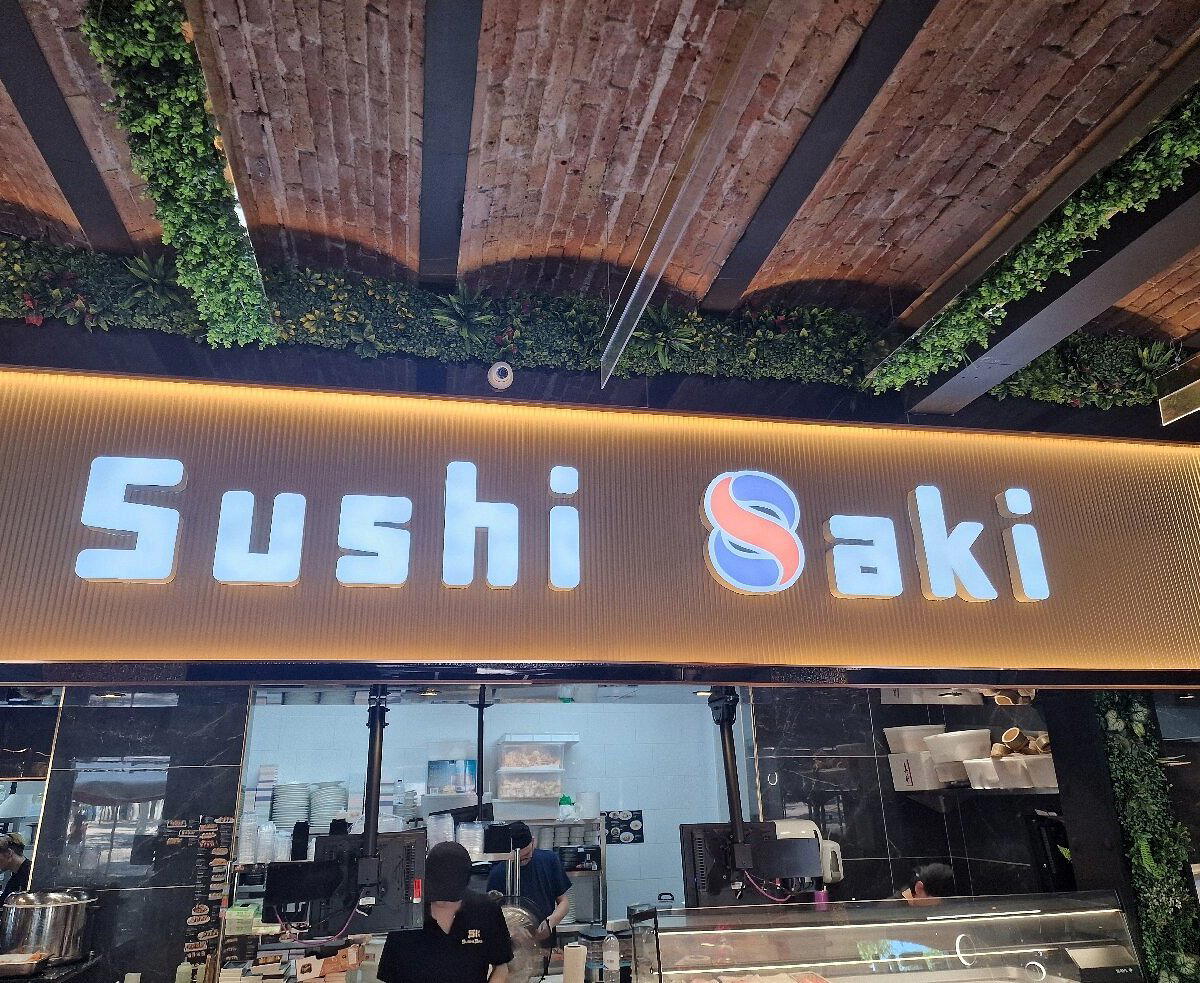
Japanese Counter Culture in a Catalan City
Sushi Saki is a Japanese sushi buffet in Barcelona's Ciutat Vella, with a casual dress code, recommended reservations, and an average price of about $28 per person. Barcelona's fine-dining conversation has long centred on Catalan creativity: the avant-garde traditions that produced venues like Disfrutar (Progressive, Creative) and Enigma (Creative), the product-led rigour visible at Cocina Hermanos Torres (Creative), and the technical precision anchoring Lasarte (Progressive Spanish, Creative) and ABaC (Creative). Within that context, serious Japanese dining occupies a distinct but increasingly confident niche. Cities with deep creative restaurant cultures tend to develop demanding audiences for Japanese counter formats, and Barcelona follows that pattern. The concentration of technically sophisticated diners, combined with strong tourism from markets where sushi literacy is high, has created conditions for Japanese restaurants to operate at a register that would have been unusual here a generation ago.
Sushi Saki occupies a telling address: Plaça de Pau Vila in Ciutat Vella, the historic quarter that sits at the boundary between the Born neighbourhood and the waterfront. It is territory that mixes genuine local life with international foot traffic, and that positioning matters for understanding how Japanese dining embeds itself in a European city. Unlike Tokyo, where the geography of omakase is mapped against station lines and neighbourhood prestige hierarchies built over decades, Barcelona's Japanese dining scene is still forming its spatial logic. Addresses near the water and the Born cluster differently from those in the Eixample, and the Plaça de Pau Vila location places Sushi Saki in a zone associated with destination dining rather than neighbourhood regulars.
What Japanese Dining Means in Spain
Spain's relationship with Japanese cuisine is instructive. The country's leading creative kitchens, from El Celler de Can Roca in Girona to Mugaritz in Errenteria, have absorbed Japanese technique and philosophy over decades, integrating fermentation, precision cutting, and ingredient restraint into what is now understood as modern Spanish cooking. That cross-pollination runs in multiple directions: Spanish chefs have trained in Japan, and Japanese chefs have found in Spain a market willing to take raw-fish counter formats seriously. The result is a dining public that often approaches sushi with more contextual awareness than equivalents in cities where Japanese restaurants remain more purely ethnic or more purely novelty.
This matters because it shapes what a restaurant like Sushi Saki is asked to deliver. A Barcelona diner who has eaten at Aponiente in El Puerto de Santa María or Quique Dacosta in Dénia brings a calibrated expectation of ingredient sourcing and technical execution. The competitive pressure is not just from other sushi venues but from a broader ecosystem of restaurants where the bar for what constitutes careful cooking is genuinely high. Across Spain, the concentration of serious kitchens, visible also in Arzak in San Sebastián, Azurmendi in Larrabetzu, Martin Berasategui in Lasarte-Oria, and Ricard Camarena in València, creates a national dining culture with high baseline standards. Japanese restaurants operating in this environment cannot rely on novelty alone.
The Sushi Counter as Format
The sushi counter format carries specific cultural weight that is worth understanding before visiting any serious Japanese restaurant in Europe. In Japan, the omakase counter, typically eight to twelve seats arranged around a chef's workspace, represents a particular contract between kitchen and guest: the chef sequences the meal, the guest submits to that sequence, and the interaction between them is part of the experience. When that format travels to European cities, it often gets adapted, sometimes toward larger room layouts, sometimes toward more hybrid menu structures that blend à la carte flexibility with tasting sequences. The tension between maintaining format integrity and accommodating local dining habits is one of the defining challenges for Japanese restaurants operating outside Japan.
Barcelona's dining culture tends toward late sittings, shared formats, and extended table time, all of which sit at some angle to the disciplined brevity of a traditional Japanese counter. How individual venues resolve that friction tells you something about their priorities and their audience. Restaurants that maintain tighter format discipline tend to signal higher ambition and attract a different guest profile than those that soften the format for accessibility. That dynamic is visible across European cities, from London's omakase tier to the Japanese restaurants that have appeared in Paris and Copenhagen, and Barcelona is navigating the same question.
Placing Sushi Saki in Barcelona's Broader Scene
For a traveller already familiar with Barcelona's major creative kitchens, the restaurant represents a different kind of evening. Where Enigma or Disfrutar offer elaborate multi-course experiences rooted in Catalan and Spanish product, a sushi-focused restaurant asks guests to engage with a different set of references: the logic of rice seasoning, the sequencing of fish by fat content and texture, the compressed ceremony of a nigiri service. Those are not lesser pleasures, but they are distinct ones, and a well-rounded Barcelona itinerary often benefits from including both registers.
The Ciutat Vella location also places the restaurant within reasonable reach of the waterfront and the Born, making it a plausible option before or after exploring the neighbourhood's wine bars and cocktail venues. Barcelona's eating culture rewards multi-stop evenings, and a Japanese counter sits naturally in a sequence that might begin elsewhere and continue after. For international visitors comparing notes against Japanese dining they have experienced in New York, where venues like Le Bernardin and Atomix anchor the upper tier of precision dining, or against the broader creative traditions examined in our full Barcelona restaurants guide, the restaurant offers a point of reference within a city still developing its Japanese dining identity.
Spain's creative kitchen tradition, from DiverXO in Madrid to Atrio in Cáceres, demonstrates that the country's appetite for technically demanding food extends well beyond its own culinary canon. Japanese dining in Barcelona inherits that appetite.
Planning Your Visit
Address: Plaça de Pau Vila, 1, Ciutat Vella, 08039 Barcelona. Reservations are recommended. Timing: The restaurant is open daily from 12:30 PM to 11:30 PM.
A Minimal comparable set
Comparable venues nearby, for context on price, style, and recognition.
| Venue | Cuisine | Price | Notes |
|---|---|---|---|
| Sushi SakiThis venue — the venue you are viewing | Not listed | $ | Not listed |
| Can Kenji | Not listed | $$ | la Dreta de l'Eixample, Japanese Izakaya with Mediterranean Fusion |
| Grasshopper Ramen Bar | Not listed | $$ | Sant Pere, Santa Caterina i la Ribera, Traditional Japanese Ramen |
| Sandwich Club Barcelona | Not listed | $ | la Dreta de l'Eixample, American Street Food with Spanish & Catalan Influences |
| Shokunin | les Corts, Modern Japanese Omakase | $$$ | Not listed |
| Madame | el Raval, Modern Japanese Ramen | $$ | Not listed |
Continue exploring
More in Barcelona
Restaurants in Barcelona
Browse all →
Bars in Barcelona
Browse all →
Hotels in Barcelona
Browse all →

At a Glance
- Lively
- Energetic
- Casual Hangout
- Group Dining
Current opening hours
- Monday
- 12:30–11:30 PM
- Tuesday
- 12:30–11:30 PM
- Wednesday
- 12:30–11:30 PM
- Thursday
- 12:30–11:30 PM
- Friday
- 12:30–11:30 PM
- Saturday
- 12:30–11:30 PM
- Sunday
- 12:30–11:30 PM
Hours can change for holidays and private events. Last verified .
Bright lights, hard chairs, and a lively atmosphere with generic house music, iPad beeping, and the ambient sound of diners eating; decorated with a clearance-style decorative tree.