Sushi Ginza
Sushi Ginza sits on First Avenue in Midtown East, positioning itself within New York's competitive omakase tier alongside counters like Masa and Sushi Nakazawa. The address places it at the quieter, residential edge of the Midtown corridor, where the city's Japanese-trained counter tradition has taken root alongside marquee fine dining destinations from Le Bernardin to Per Se.
Pearl is the En Primeur Club membership app — saves, bookings, and concierge access live there. Same editors, same standards.
- Address
- 1065 1st Ave, New York, NY 10022
- Phone
- +12122022553
- Website
- sushiginzany.com
- Directions
- Get directions
 Saves & bookings on Pearl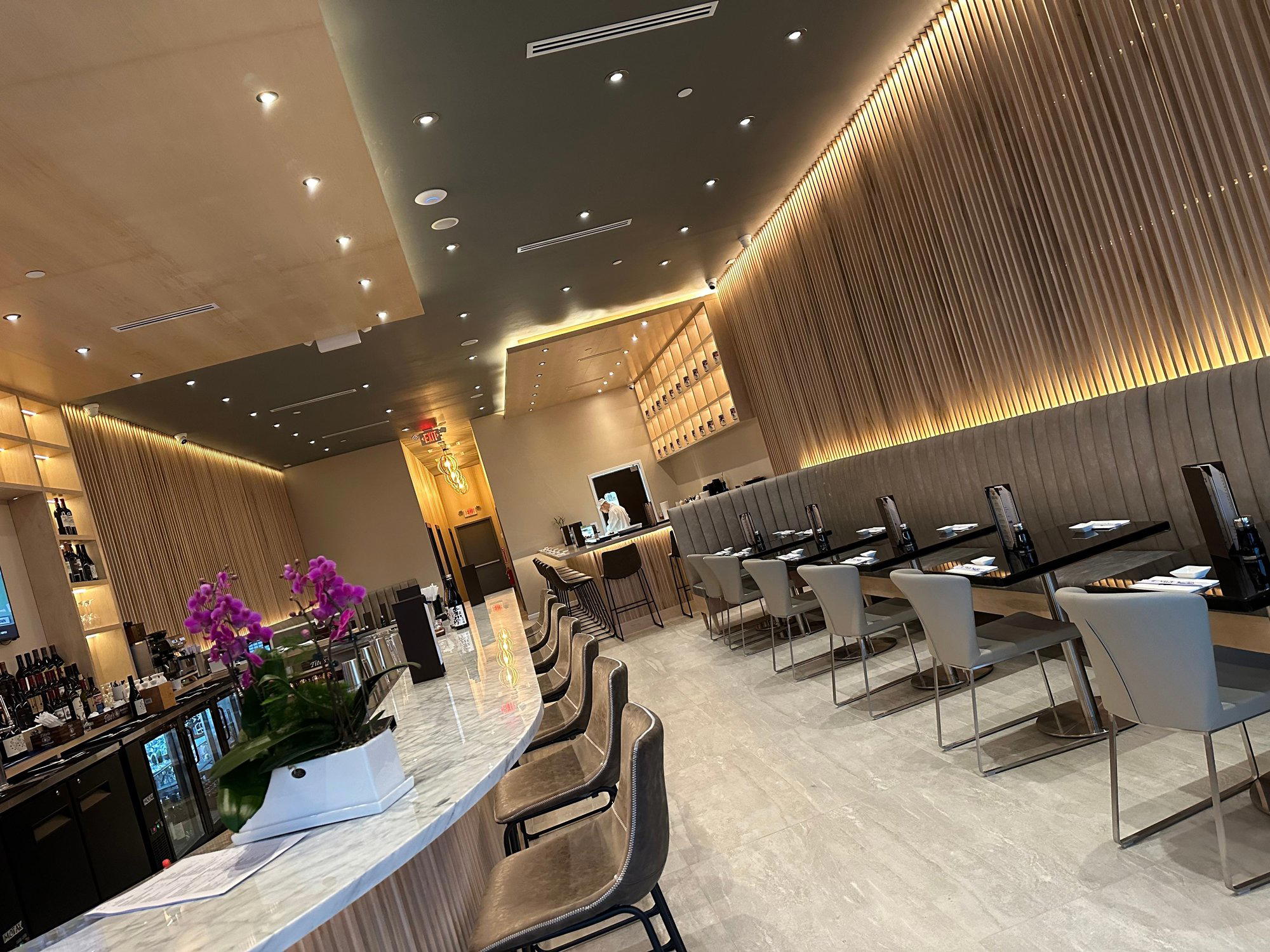
New York's Omakase Tier and Where Sushi Ginza Sits
New York's premium sushi counter scene has consolidated into a recognizable hierarchy over the past fifteen years. At one end sits Masa, which has held three Michelin stars and commands among the highest per-person price points of any restaurant in the United States. Below that, a second tier of serious omakase counters operates at the $200–$400 pre-tax range, typically with seat counts in the low teens and booking windows measured in weeks rather than days. Sushi Ginza is a Japanese sushi restaurant in Midtown East, New York, at 1065 1st Ave. It is priced around $60 per person.
That address is worth noting for context. First Avenue in the low-to-mid 60s is not the Midtown that most visitors picture. It sits a reasonable distance from the Theater District or the Rockefeller Center corridor, and its dining scene reflects a more neighborhood-scaled ambition than the flagships clustered around West 50th. Counters in this zone tend to draw a regular local clientele alongside destination diners, a dynamic that often favors consistency over spectacle. For the editorial comparable set that includes Atomix, Jungsik New York, and Le Bernardin, geography functions as a signal: downtown-adjacent or Midtown-West addresses carry different cachet than Midtown East, and serious diners navigating multiple reservations in a single trip account for this.
The Sustainability Turn in Premium Omakase
Across the American fine dining tier, sourcing ethics have moved from footnote to framework. What was once a marketing addendum at farm-to-table casual spots has migrated upward to the prix-fixe and omakase counter format, where the argument runs as follows: if you are asking guests to spend $300 or more per person on a chef-directed sequence, the provenance and environmental cost of every piece of fish is a legitimate variable in that value exchange.
This shift shows up most clearly in how serious sushi counters now communicate about bluefin. The standard omakase reliance on imported hon maguro, often from Oma or Tsugaru Strait sources, sits in tension with concerns about Atlantic bluefin stock management and the carbon footprint of air freight from Japan. Some counters have responded by incorporating domestic alternatives: Pacific bluefin from regulated California aquaculture, farmed yellowtail from Hawaii-based operations, and West Coast salmon from fisheries with Marine Stewardship Council certification. Others have begun structuring seasonal menus more explicitly around what is available domestically rather than what can be flown in overnight.
Comparable movements are visible at ambitious restaurants operating outside the sushi format. Blue Hill at Stone Barns in Tarrytown has built its entire editorial identity around the sourcing-first argument, using its on-site farm as a supply chain model. Single Thread Farm in Healdsburg applies a similar farm-to-counter logic within a Japanese-influenced omakase format, treating ingredient origin as a primary course narrative rather than a background credential. These are not direct comparators to an East Midtown sushi counter, but they mark the directional pressure across the fine dining tier: sourcing transparency is increasingly a baseline expectation, not a differentiator.
For sushi specifically, the ethics of sourcing are inseparable from questions of waste.
Omakase in Midtown East: Practical Context
The Midtown East corridor gives access to a specific kind of dining concentration. Within a short walk of the First Avenue address, the density of Japanese restaurants ranges from casual ramen shops to full kaiseki operations. That breadth matters because it shapes what guests expect when they sit down at a counter: New York diners in this neighborhood have usually eaten enough Japanese food to calibrate against, which raises the bar for anything presenting at the higher price tier.
| Venue | Format | Price Tier | Location | Booking Lead Time (approx.) |
|---|---|---|---|---|
| Sushi Ginza | Omakase counter | $$$$ | Midtown East, Manhattan | Not confirmed |
| Masa | Omakase counter | $$$$ | Columbus Circle, Manhattan | Weeks to months |
| Le Bernardin | Prix-fixe, à la carte | $$$$ | Midtown West, Manhattan | 2 to 4 weeks |
| Atomix | Tasting menu counter | $$$$ | Flatiron, Manhattan | Weeks ahead |
| Per Se | Prix-fixe | $$$$ | Columbus Circle, Manhattan | 2 to 6 weeks |
Placing This Address in a Wider National Conversation
The premium American tasting menu and omakase category has developed strong regional poles beyond New York. Alinea in Chicago and The French Laundry in Napa set the terms for what a multi-course, high-commitment dinner can charge and promise. On the sourcing-ethics front, Providence in Los Angeles has built a sustained reputation for sustainable seafood within a fine dining format, earning recognition from Seafood Watch alongside its Michelin stars. Addison in San Diego and Lazy Bear in San Francisco represent the California end of the same movement toward seasonally grounded, sourcing-conscious tasting menus.
What this national context establishes is a baseline: any serious counter at the $$$$ price point in 2024 is implicitly in dialogue with these operators, even if it does not share their format or geography. The expectation that premium prices are accompanied by a coherent story about where ingredients come from is now embedded in how sophisticated diners evaluate a meal, whether they are sitting at a Napa counter or a Midtown East one.
Planning Your Visit
The restaurant is located at 1065 First Avenue, New York, NY 10022, in Midtown East. Pricing is about $60 per person, hours run Mon: 12–10 PM; Tue: 12–10 PM; Wed: 12–10 PM; Thu: 12–10:30 PM; Fri: 12–11 PM; Sat: 3–10:30 PM; Sun: 3–10 PM, reservations are recommended, and the dress code is smart casual. As with most serious omakase counters in Manhattan, advance planning is advisable rather than assuming walk-in availability.
Budget and Context
Comparable venues nearby, for context on price, style, and recognition.
| Venue | Cuisine | Price | Notes |
|---|---|---|---|
| Sushi GinzaThis venue — the venue you are viewing | Not listed | $$$ | Not listed |
| Sushi Lab | Not listed | $$$ | Midtown-Times Square, Modern Japanese Omakase |
| Fushimi Williamsburg | Williamsburg, Modern Japanese Fusion | $$$ | Not listed |
| Kizuna | Not listed | $$$ | Upper East Side-Lenox Hill-Roosevelt Island, Japanese Omakase |
| KEI | Not listed | $$$ | Chelsea-Hudson Yards, Modern Japanese Izakaya & Ramen |
| Hasaki | Not listed | $$$ | East Village, Edomae-Style Sushi & Sashimi |
Continue exploring
More in New York City
Restaurants in New York City
Browse all →
Bars in New York City
Browse all →
Hotels in New York City
Browse all →




At a Glance
- Elegant
- Modern
- Sophisticated
- Date Night
- Business Dinner
- Sake Program
- Sustainable Seafood
Current opening hours
- Monday
- 12–10 PM
- Tuesday
- 12–10 PM
- Wednesday
- 12–10 PM
- Thursday
- 12–10:30 PM
- Friday
- 12–11 PM
- Saturday
- 3–10:30 PM
- Sunday
- 3–10 PM
Hours can change for holidays and private events. Last verified .
Comfortable seating with stylish decor and a great bar atmosphere.