Sushi by Bou


Michelin Plate
Our verdict
Sushi by Bou has built a recognisable position in New York's mid-tier omakase market by making the format accessible without stripping it of rigour. Ranked by Opinionated About Dining in both 2024 and 2025, the Midtown spot at 32 East 32nd Street sits in a tier where counter discipline and consistent execution matter more than spectacle or ceremony.

Pearl is the En Primeur Club membership app, where members save venues, book tables and use the concierge.
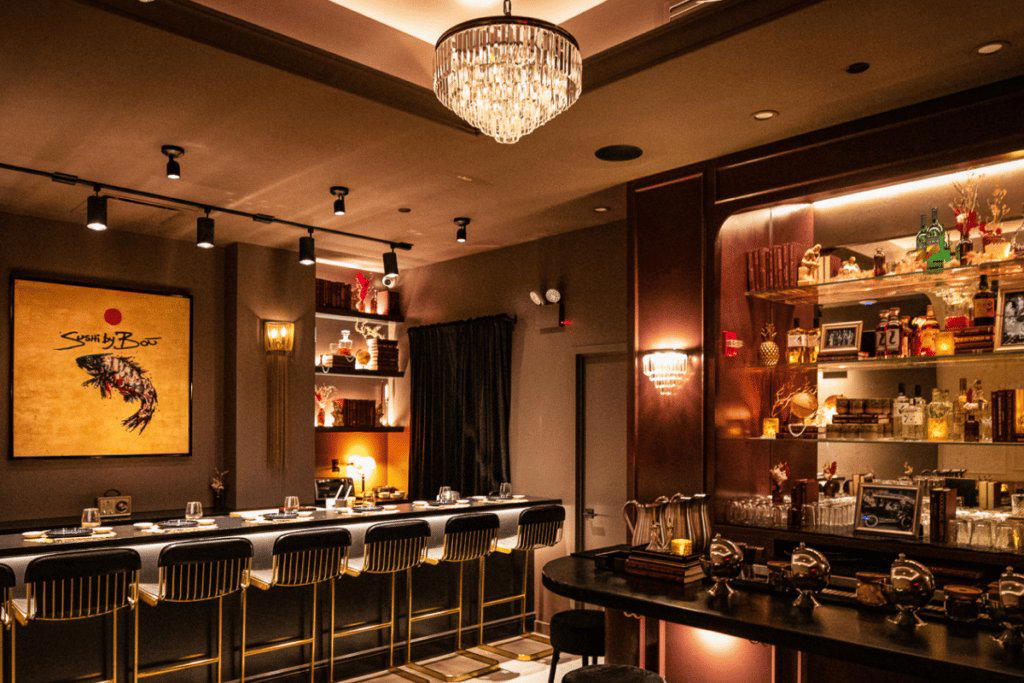
Omakase in Midtown: What the Format Is and Where Sushi by Bou Fits
New York's omakase market has split into two broadly defined tiers over the past decade. At the upper end, counters affiliated with Japanese lineages, and priced accordingly, occupy a bracket where a solo meal can approach or exceed $500 before drinks. Masa, which remains one of the most expensive sushi experiences in the country, sets that ceiling. Below it, a second tier has grown considerably, populated by counters that apply the structural logic of omakase, chef-directed sequencing, intimate seating, direct interaction across the counter, at price points that bring the format to a wider audience without abandoning its discipline.
Sushi by Bou, at 32 East 32nd Street in Midtown Manhattan, operates in that second tier. Founded by David Bouhadana, the concept entered the market when accessible omakase was still finding its footing in New York, and it has since expanded to multiple locations. The Midtown address places it on Koreatown's northern fringe, a block that houses several Japanese restaurants and has become a reference point for mid-range counter dining in the neighbourhood. Opinionated About Dining, which applies one of the more data-intensive scoring methodologies among American restaurant rankings, listed Sushi by Bou as Recommended in 2023, ranked it at #419 in North America in 2024, and moved it to #530 in 2025, a consistent presence across three consecutive cycles.
The Counter Experience and How the Team Shapes It
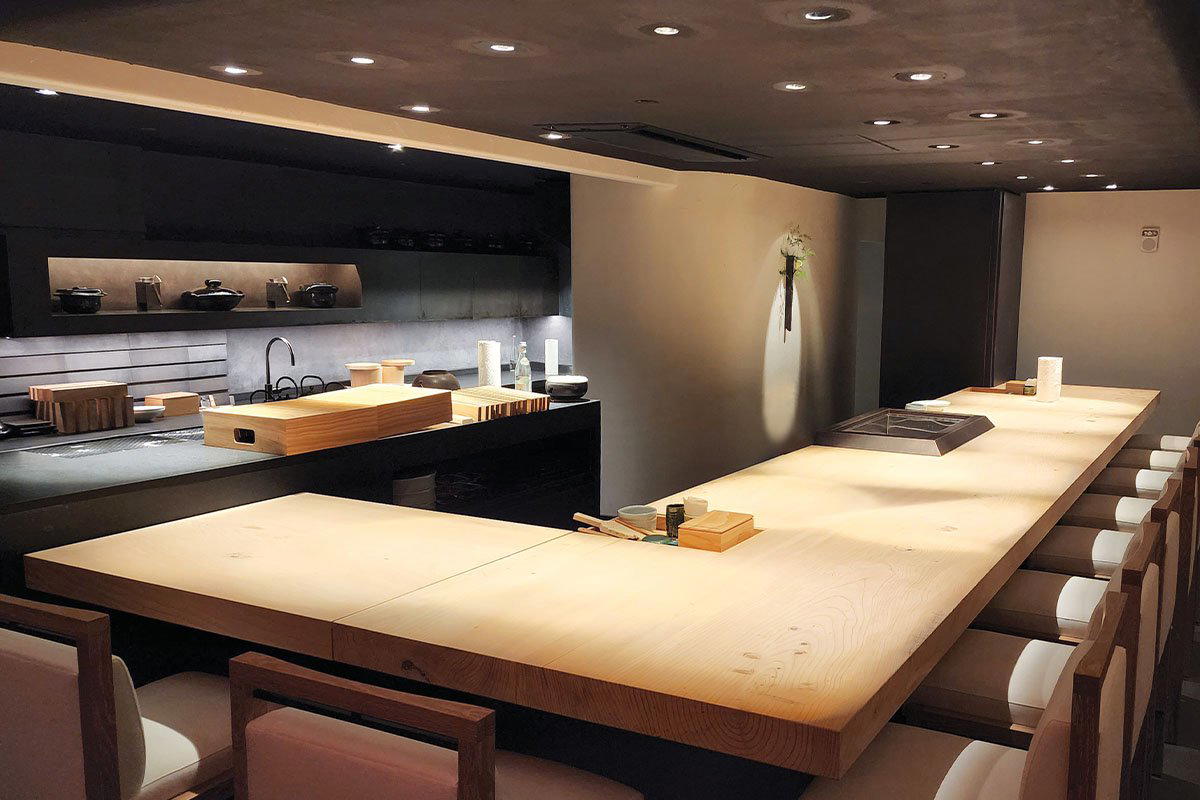
The format that defines the accessible omakase tier is also the format most dependent on the people running it. Unlike a carte blanche restaurant where kitchen and floor operate in relative independence, an omakase counter compresses every interaction, cooking, plating, explanation, pacing, into a single shared space. The team dynamic is, in effect, the dining experience itself.
At Sushi by Bou, that dynamic is built around Bouhadana's role as the organising presence. The counter format keeps the chef visible and communicative throughout the meal, which places high demands on how information travels between the kitchen side and the guest side of the counter. In a room where timing, restraint, and rhythm determine quality as much as ingredient selection does, the front-of-house function is not decorative, it is load-bearing. Counters at this tier that work well tend to have clear internal communication between whoever is sequencing the service and whoever is preparing the fish, so that pacing stays even and guests receive each course at the right temperature and attention level. The counters that underperform typically show the fault lines in that collaboration: courses arriving too quickly, explanations that feel scripted rather than responsive, or a front-of-house that can answer questions about reservations but not about the fish in front of the guest.
The accessible omakase format also places specific pressure on sourcing relationships, which in turn depend on consistent purchasing patterns from a reliable team. Counters in this tier typically work with Tsukiji-lineage suppliers or domestic fish specialists, and the continuity of those relationships correlates directly with the quality of what arrives at the counter. When the team turns over frequently, sourcing relationships weaken. When it holds, the fish programme compounds in quality. This is a structural truth about counter sushi that applies across price tiers, from the twelve-seat neighbourhood rooms on the Upper East Side to the references at the very best of the New York sushi hierarchy, counters like Joji and Shion 69 Leonard Street, both of which maintain team stability as a visible operating principle.
New York's sushi scene is layered enough that peer comparisons need to be precise. At the leading, venues with Michelin stars or deep Japanese apprenticeship credentials, including Sushi Sho and the aforementioned Joji, compete on an entirely different basis than Sushi by Bou. At the neighbourhood counter level, the Upper East Side has produced some of the more interesting mid-tier omakase rooms in the city, where twelve-seat counters with well-priced multi-course menus have gathered followings without significant marketing. Blue Ribbon Sushi represents a different model entirely: larger, later, and built around a broader menu rather than a sequenced counter format.
Sushi by Bou's position in the Opinionated About Dining rankings, top 420 in 2024, top 530 in 2025 across all of North America, places it above the bulk of casual Japanese restaurants while keeping it well below the Michelin-registered upper tier. That positioning is, arguably, where the most interesting work in New York omakase currently happens. The accessible tier has attracted chefs who trained at serious houses, including those who worked at Masa and Sushi Nakazawa, and brought that technical grounding into lower price-point formats. The result is a cohort of counters where the craft-to-cost ratio rewards the guest willing to book outside the obvious names.
For comparative reference in other American cities, the format dynamics visible in New York's accessible omakase tier echo what has happened at tasting counter restaurants more broadly: Lazy Bear in San Francisco and Alinea in Chicago both demonstrate how fixed-format, counter-adjacent experiences build followings through consistency and team discipline rather than size or spectacle. The ambition is different in sushi, but the structural logic is similar. Internationally, the reference points shift: Harutaka in Tokyo and Sushi Shikon in Hong Kong operate the format at its most technically demanding, which gives useful context for how much range exists within the omakase category.
What the Midtown Location Means Practically
East 32nd Street is a useful address for a mid-range omakase counter. The Koreatown adjacency means the block draws foot traffic from diners already comfortable with the neighbourhood's concentration of Japanese and Korean restaurants. The 6 train stops at 33rd Street, the B, D, F, and M lines serve 34th Street-Herald Square three blocks west, and Penn Station is walkable, which makes the location accessible from most parts of Manhattan and directly from New Jersey and Long Island. That convenience is part of the counter's commercial logic: an omakase room that is hard to reach loses the spontaneous dinner slot and relies entirely on forward-planning guests.
Guests planning a broader New York dining visit will find the EP Club guides useful across categories: our full New York City restaurants guide covers the full range of formats and price tiers, and the New York City hotels guide, bars guide, wineries guide, and experiences guide round out the picture. For those making longer US dining trips, the comparable premium tasting experiences at The French Laundry in Napa, Single Thread Farm in Healdsburg, Providence in Los Angeles, and Emeril's in New Orleans offer useful benchmarks for how the fixed-format counter experience varies across American cities and cuisines.
Planning Your Visit
Address: 32 East 32nd Street, New York, NY 10016. Recognition: Opinionated About Dining Leading Restaurants in North America, ranked #419 (2024) and #530 (2025); Recommended (2023). Reservations: Getting there: 33rd Street station (6 train) is one block north; 34th Street-Herald Square (B, D, F, M) is approximately three blocks west.
Frequently asked questions
What kind of cuisine does Sushi by Bou serve?
Which chef is Sushi by Bou associated with?
The chef associated with Sushi by Bou is David Bouhadana.
What's the signature dish at Sushi by Bou?
Sushi by Bou runs a chef-driven omakase format, so the menu shifts rather than anchoring on a single fixed dish. The counter's identity is in the sequence itself: a progression of nigiri and small courses shaped by what the kitchen is working with. Opinionated About Dining ranked the restaurant among its Top Restaurants in North America in both 2023 and 2024, suggesting the format lands consistently rather than relying on one standout plate.
What's Sushi by Bou's location?
Sushi by Bou is located at 32 E 32nd St, New York, NY 10016, New York City.
What distinctions does Sushi by Bou have?
Sushi by Bou has received recognition including: Opinionated About Dining Top Restaurants in North America Ranked #530 (2025); Chef/owner Nikki Zheng polished her skills at some of New York's top sushi restaurants, including Masa and Sushi Nakazawa, before striking out on her own with Sus….
A Quick Peer Check
A compact comparison to help you place this venue among nearby peers.
| Venue | Cuisine | Price | Awards | Notes |
|---|---|---|---|---|
| Sushi by BouThis venue (the venue you are viewing) | Edomae-Style Omakase | $50–100 | Michelin Plate | Not listed |
| Le Bernardin | French Seafood Fine Dining | $300–500 | 3 Michelin Stars · World's 50 Best #13 | French, Seafood |
| Atomix | Modern Korean Tasting Menu | $300–500 | 2 Michelin Stars · World's 50 Best #7 | Modern Korean, Korean |
| Masa | Seasonal Hokkaido Tempura Omakase | $150–200 | Tabelog 100 #34 | Sushi, Japanese |
| Per Se | French Fine Dining Tasting Menu | $300–500 | 3 Michelin Stars · World's 50 Best #40 | French, Contemporary |
| Eleven Madison Park | Contemporary Plant-Based Fine Dining | $300–500 | 3 Michelin Stars · World's 50 Best #4 | French, Vegan |
Recognition history
Dated appearances from independent guides and award organizations, with the underlying list record or original source where available.
Michelin Plate
Michelin
Opinionated About Dining Top Restaurants in North America Ranked #530
Opinionated About Dining
Full recognition history (4 entries)
Opinionated About Dining Top Restaurants in North America Ranked #419
Opinionated About Dining
Opinionated About Dining Top Restaurants in North America Recommended
Opinionated About Dining