Sushi Asauumi

Sushi Asauumi puts Kitakyushu sushi into a small-counter register: six seats, a fish-led program, and recognition on Tabelog’s Sushi WEST 100 selection for 2025 and 2022. The appeal is the ritual as much as the meal, with quiet service, sake and shochu in the orbit, and a price tier that places it above everyday Kokura dining.
Pearl is the En Primeur Club membership app — saves, bookings, and concierge access live there. Same editors, same standards.
- Address
- 福岡県北九州市小倉北区魚町3-2-4 1F
- Phone
- +818085693908
- Website
- tabelog.com
 Saves & bookings on Pearl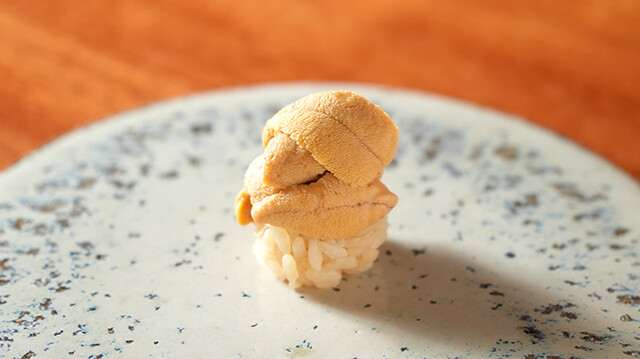
Uomachi’s restaurant streets can feel direct and practical, but the serious sushi counter asks for a different rhythm. The room narrows the meal to gestures: the pause before each piece, the low conversation, the attention paid to temperature, sequence, and pace. Sushi Asauumi sits in that six-seat counter tradition, where the format itself is part of the argument. In Kitakyushu, a city better known to many travellers for transport links, industrial history, and hearty local eating, this kind of small sushi room reframes the city’s dining map around restraint rather than volume.
The signal is not just intimacy. Tabelog selected Sushi Asauumi for its Sushi WEST 100 list in 2025 and also in 2022, placing it among western Japan sushi rooms that have earned sustained attention from a demanding domestic audience. That matters in a city where the premium dining conversation is less internationally broadcast than in Tokyo, Osaka, or Fukuoka City. Recognition here functions as a filter: it points travellers toward a counter where the ritual of sushi, rather than the theatre of luxury, carries the evening.
A six-seat counter built around sushi etiquette, not spectacle
High-end sushi in Japan is often misunderstood as a parade of rare fish. The better reading is that it is a set of manners. Arrival on time matters because the counter moves as one small room. Perfume is discouraged because aroma interferes with the meal. Conversation stays low because attention is part of the service structure. Smoking is prohibited during the meal, and phone calls are not part of the room’s code. These details are not decorative rules; they protect the counter’s tempo.
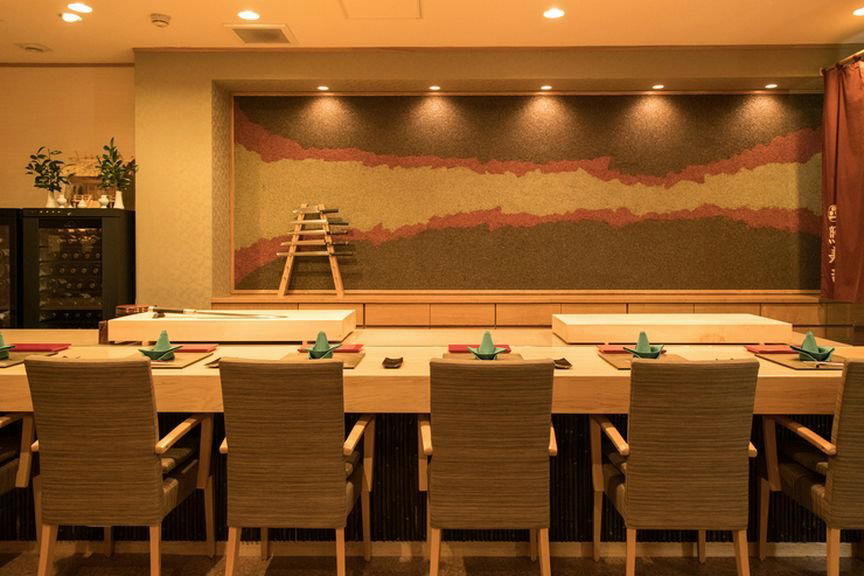
At Sushi Asauumi, the small seat count makes those customs more visible. Six counter seats reduce the buffer between guest and craft, so lapses in timing or noise carry further than they would in a larger dining room. This is why the restaurant suits solo diners and small parties who understand the pace of a sushi counter. It is also why children are accepted only when they can take a meal equivalent to an adult. The point is not formality for its own sake, but the preservation of a shared rhythm.
The food emphasis is explicitly fish-led, with sake, shochu, and a particular focus on nihonshu in the drinks orbit. Wine can be brought in with a corkage fee, which is useful for travellers who plan meals around bottles, but the natural grammar of the room points toward Japanese drinks. That choice aligns the counter with a regional sushi idiom rather than a global luxury template. The experience reads as concentrated, quiet, and highly local.
Where Kitakyushu's everyday appetite meets its premium counters
Kitakyushu dining is not a single lane. Kokura has everyday institutions, noodle shops, sweets counters, unagi rooms, and serious small restaurants sitting within a short urban circuit. For a broader read on the city, start with Our full Kitakyushu restaurants guide, then map the contrast through places such as Gyoran Tei Honten, Hountei, Hyo Kashiya KOMARU, Imanami Udon, and Inaka An Kokura honten. That spread matters because the restaurant is not trying to represent the whole city. It occupies the narrower, higher-ritual end of Kokura dining.
Against local peers, the distinction is format and price tier. Inaka An Kokura honten, for example, sits in a lower spend bracket and speaks to a different kind of meal. Yakitori Asahina, in the comparison set, occupies a premium charcoal-and-skewer lane rather than sushi. Tsubasa and 寿司つばさ keep the local sushi conversation from being a one-room story. The useful point for travellers is that Kitakyushu has enough range to support both casual eating and compact destination counters; the restaurant belongs to the latter group.
That makes the restaurant a sharper choice for travellers who already understand Japanese counter dining. It is less suited to a sprawling social dinner, and better aligned with a focused meal where the room’s quiet rules are part of the value. The price band also places it well above a casual Kokura night out, so the decision should be intentional: choose it for sushi as a ritual, not simply for a meal between trains.
How to frame a Kokura dining trip around the counter
The strongest way to use the restaurant is as the anchor of a compact Kokura itinerary. The counter is near the city’s central dining flow, making it easy to pair with a day built around Kokura rather than treating the restaurant as an isolated detour. Travellers staying overnight should cross-check accommodation through Our full Kitakyushu hotels guide; those extending the evening can read the city through Our full Kitakyushu bars guide. For broader planning, Our full Kitakyushu experiences guide and Our full Kitakyushu wineries guide help separate a single dinner from a fuller city stay.
Readers comparing Japanese dining across cities should avoid flattening everything into a single national checklist. A sushi counter in Kokura does different work from a sukiyaki meal in Kamakura, a tuna-and-charcoal izakaya in Tokyo, or a café stop in Osaka. For that wider lens, see -Grilled beef Sukiyaki- KAMAKURA TANUKIAN 鎌倉 たぬき庵 in Kamakura. 鮪と炭火焼き うお炭 秋葉原店 in Tokyo.cafe in Osaka.know in Kumamoto, (Shoku) Vietnam in Kawasaki, and [Curry Senmon Ten] Maruyama Kyoju. in Sapporo. Even overseas Japanese formats, including Jōdo Saké Bar in Los Angeles and Onigiri Time in Pasadena, show how much context changes the meaning of familiar categories.
The critical case for the restaurant is therefore precise: it gives Kitakyushu a serious, small-scale sushi address with documented Tabelog recognition and a room governed by the etiquette of the counter. Go for the discipline of the format, the fish-centred focus, and the chance to read Kokura through a quieter register than its everyday restaurant streets.
What It’s Closest To
Side-by-side context: comparable cuisine and price.
| Venue | Cuisine | Price | Notes |
|---|---|---|---|
| Sushi AsauumiThis venue — the venue you are viewing | Traditional Edomae-Style Sushi Omakase | $$$$ | Not listed |
| Tenzushi (天寿し 京町店) | Kyushu-mae Omakase Sushi | $$$$ | Kokura Kita-ku |
| 御料理 まつ山 | Kaiseki Japanese | $$$$ | Kurosaki |
| TOBIUME | Modern Kaiseki | $$$$ | Yahatanishi-ku |
| 天寿し 京町店 | Kyushu-Mae Omakase Sushi | $$$$ | Kokura |
| Yakitori Asahina | Modern Yakitori Omakase | $$$ | Kokura Kita |
Recognition history
Dated appearances from independent guides and award organizations, with the underlying list record or original source where available.
Tabelog 100 #53 · No. 53
Tabelog · Tabelog 100 - Sushi - WEST - 2025
Continue exploring
More in Kitakyushu
Restaurants in Kitakyushu
Browse all →
Bars in Kitakyushu
Browse all →
At a Glance
- Intimate
- Elegant
- Cozy
- Sophisticated
- Special Occasion
- Date Night
- Business Dinner
- Solo
- Family
- Chefs Counter
- Standalone
- Design Destination
- Sake Program
- Corkage Allowed
- Byob
- Local Sourcing
- Sustainable Seafood
A refined, tranquil counter-only space where guests watch the chef’s meticulous craftsmanship up close; the atmosphere is calm and focused, with expectations for low conversation, no phone calls, and no strong perfumes, creating a contemplative, special-occasion feel.