Gyoran Tei Honten

Tabelog 100 #23
Our verdict
Gyoran Tei Honten is a Kokurakita ramen house with repeated Tabelog Ramen WEST 100 selections, including 2025, 2024, 2023, 2018 and 2017. Its appeal is less about ceremony than Kitakyushu’s working-city ramen culture: counter seats, tatami space, family use, solo bowls, and a format built for repeat local eating rather than destination theatrics.

Pearl is the En Primeur Club membership app, where members save venues, book tables and use the concierge.
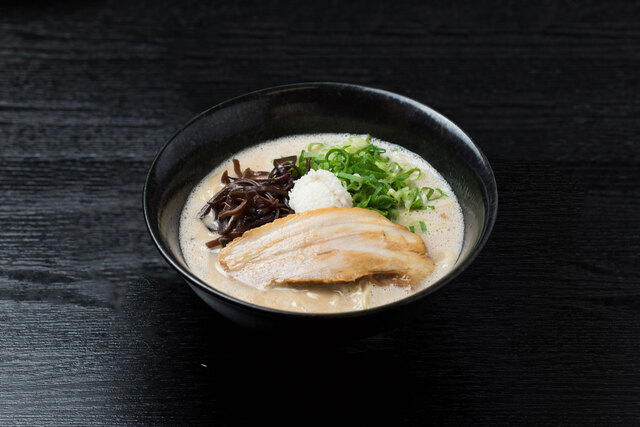
The menu
What to order
- Jukkou Ramen (100% tonkotsu)
- Doro Ramen
- Nihachi Ramen
- Thick-cut chashu pork
The approach to a serious ramen shop in Kitakyushu is rarely theatrical. The signal is usually domestic scale, steam, steady turnover and the quiet confidence of a room built around one bowl rather than a long menu performance. In Kitakyushu, that grammar matters. Kitakyushu is a city where everyday dining can carry as much meaning as destination dining, with food culture shaped by regular meals, family errands and rail-linked eating rather than only by the polished rituals that dominate larger tourist circuits. Gyoran Tei Honten belongs to that practical register: a ramen venue with everyday momentum, where the bowl matters more than a special-occasion production.
That is the useful lens for reading its reputation. A Tabelog Ramen selection in 2025 places the shop inside Japan’s competitive ramen conversation. The Tabelog score of 3.68 is meaningful in Japan’s review culture, where ramen shops often accumulate exacting local scrutiny and small differences in rating carry more weight than they would on broader travel platforms. This is not fine dining repackaged as noodles. It is a low-price, high-frequency ramen format that has earned recognition within a category where repetition, consistency and local loyalty matter.
Kitakyushu ramen culture rewards discipline over theatre
Kitakyushu’s ramen culture reads differently from the simplified versions visitors often carry into northern Kyushu. The local rhythm is practical: stations, shopping streets, compact dining rooms and a customer base that judges ramen as a regular meal. In that setting, reputation is built by repeat visits rather than spectacle.
Gyoran Tei Honten’s format fits that ecology. The room is not engineered around exclusivity; it reads as an everyday ramen shop rather than a luxury dining room. That says a great deal about the local role of ramen. The format can serve different kinds of diners in the same conversation. In a city where many worthwhile meals happen outside hotel dining rooms, that accessibility is part of the cultural value, not a concession.
The recognition also sits in contrast to Kitakyushu’s broader dining range. The city has recognised venues such as Nikaku and 江戸前鮨 二鶴, casual rooms, specialist addresses and old-school everyday dining. Price spread is wide: Spice & Dining KĀLA operates in a different bracket, while Zubora Tei and Tsudaya Shokudo sit closer to everyday spending. Ramen’s place in that matrix is specific. It offers culinary seriousness without the financial or temporal commitment of a tasting menu, and that is why award attention in this category can feel more democratic than luxury restaurant rankings.
A main-store address with repeat recognition, not luxury signals
The main-store identity matters in Japanese ramen because the original or flagship address often carries the strongest connection to a shop’s style, local following and operational habits. Gyoran Tei Honten is not presented here through chef biography or celebrity authorship; the public story is carried by the bowl, the room and its category recognition. That distinction is important. Ramen culture has many famous personalities, but the better way to read a place like this is through durability: can it remain relevant to local diners while also being visible to national ramen-watchers?
Here, the evidence points to a shop operating in the serious everyday tier. The listed average spend sits in the low ramen range, with dinner and lunch both shown at up to JPY 999. That changes how visitors should think about the meal: this is not the frictionless international-hotel version of Japanese dining. It is a Kitakyushu ramen stop with award traction.
For travellers, the decision is about itinerary fit. If the day is built around Kitakyushu sightseeing or a train connection through the city, ramen here makes sense as a local counterpoint to other casual dining. For a broader Kitakyushu food plan, compare it with other long-running local dining rooms, or fold it into a casual route with unnamed noodle shops, sweets counters and everyday restaurants. The point is not to rank genres against one another. It is to see how Kitakyushu eats across noodles, sweets and everyday restaurants without forcing every meal into the same premium template.
How to place it in a Kitakyushu trip
Ramen is often the meal that reveals whether a city is being eaten on its own terms. In Kitakyushu, the stronger plan is not to chase only high-ticket counters, but to balance category benchmarks with local staples. Gyoran Tei Honten gives that plan a ramen anchor: recognised by Tabelog’s ramen list, modest in format, and practical for an everyday meal. It is the sort of address that explains why Japanese food travel cannot be measured only by Michelin-style ceremony.
Visitors building a fuller route should treat ramen as one part of the city rather than the whole story. Use Our full Kitakyushu restaurants guide for dining context, then map the rest of the trip through Our full Kitakyushu hotels guide, Our full Kitakyushu bars guide, Our full Kitakyushu wineries guide and Our full Kitakyushu experiences guide. For wider Japan and Japanese-influenced dining references, EP Club also tracks a broad range of unnamed casual rooms, specialist counters and neighbourhood addresses. Read together, they show the range that sits behind a simple bowl: regional habit, price discipline, room format and the steady judgment of regular customers.
Frequently asked questions
Where is Gyoran Tei Honten in Kitakyushu?
Kitakyushu.
What does dinner at Gyoran Tei Honten typically cost?
Pricing at Gyoran Tei Honten is listed as - JPY 999 - JPY 999.
When is Gyoran Tei Honten open?
Specific opening hours are not provided here; check directly with Gyoran Tei Honten before visiting.
What is Gyoran Tei Honten known for?
Gyoran Tei Honten is known as a ramen venue in Kitakyushu with Tabelog recognition in 2025 and a listed score of 3.68.
Cost and Credentials
Nearby venues at a similar price tier for orientation.
| Venue | Cuisine | Price | Awards | Notes |
|---|---|---|---|---|
| Gyoran Tei HontenThis venue (the venue you are viewing) | Traditional Kitakyushu Tonkotsu Ramen | $10–20 | Tabelog 100 #23 | Not listed |
| Hyo Kashiya KOMARU | Artisanal Japanese Ice Cream & Cafe | $1–10 | Tabelog 100 #38 | Kurosaki, Artisanal Japanese Ice Cream & Cafe |
| Imanami Udon | Japanese Udon Noodles | $1–10 | Tabelog 100 #41 | Kokuraminami-ku, Japanese Udon Noodles |
| Izumi | Japanese Dumplings (Gyoza) | Not listed | Tabelog 100 #75 | Kurosaki Ekimae, Japanese Dumplings (Gyoza) |
| Hountei | Hakata-style one-bite gyoza & Chinese snacks | $10–20 | Tabelog 100 #74 | Kokura Kita Ward, Hakata-style one-bite gyoza & Chinese snacks |
| Tamago Monogatari Egg Story | Omurice-focused Japanese yoshoku | $10–20 | Tabelog 100 #26 | / Kokurakita Ward, Omurice-focused Japanese yoshoku |
Recognition history
Dated appearances from independent guides and award organizations, with the underlying list record or original source where available.
Tabelog 100 #23 · No. 23
Tabelog · Tabelog 100 - Ramen - WEST - 2025
Continue exploring
More in Kitakyushu
Restaurants in Kitakyushu
All restaurants in Kitakyushu →

Bars in Kitakyushu
Browse all →
Details
- Classic
- Lively
- Well Known
- Solo
- Family
- Group Dining
- Casual Hangout
- After Work
- Late Night
- Standalone
- Beer Program
- Local Sourcing
- A La Carte
- Counter Dining
- Beer
Current opening hours
- Monday
- 11 AM–8 PM
- Tuesday
- 11 AM–8 PM
- Wednesday
- 11 AM–8 PM
- Thursday
- 11 AM–8 PM
- Friday
- 11 AM–8 PM
- Saturday
- 11 AM–8 PM
- Sunday
- 11 AM–8 PM
Hours can change for holidays and private events. Hours as of .
Casual, no-frills ramen house with counter, tables and tatami seating; bright and bustling with a classic neighborhood feel rather than design-driven decor.