Imanami Udon

Tabelog 100 #41
Our verdict
Imanami Udon puts Kitakyushu’s everyday noodle culture into a compact, low-cost format with unusual credibility: selection for Tabelog 100 Udon WEST 2024 and a Tabelog score of 3.64. The draw is not luxury, but regional udon discipline, counter seating, family-usable simplicity, and a price bracket under JPY 999.

Pearl is the En Primeur Club membership app, where members save venues, book tables and use the concierge.
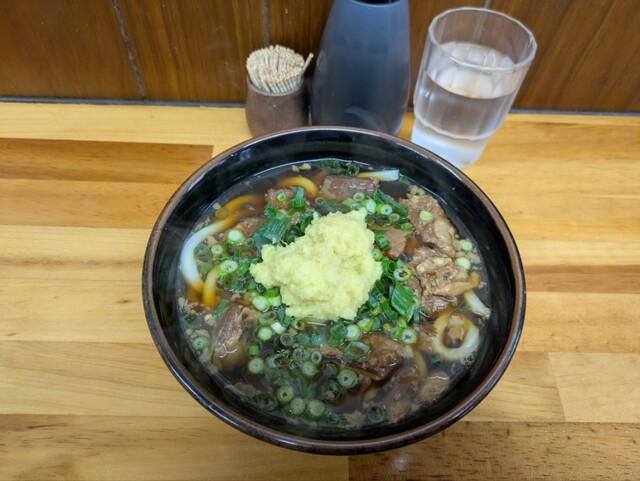
Approach Imanami Udon and the appeal is not ceremony. The setting reads as a practical local stop, a clue to the udon culture Kitakyushu protects: everyday, compact in spirit, and built around repeat use rather than occasion dining. Imanami Udon belongs to that category, where seriousness is measured not by long menu description but by confidence to serve wheat noodles close to daily life.
Fukuoka’s noodle identity is often reduced to ramen, but udon remains central to the prefecture’s everyday eating. The local style is frequently understood through accessibility and routine; food for workers, families, students, solo diners, and travelling obsessives. In Kitakyushu, the strongest casual counters often trade in repetition rather than spectacle. The city’s lower-cost end can reveal as much as its more formal dining rooms or higher-budget meals.
Kitakyushu udon, judged by restraint rather than theatre
Udon rewards places that understand basics without turning the meal into a lecture. Noodle texture, broth character, portion logic, and daily rhythm matter more than garnish. In the under-JPY 999 bracket, the ingredient question is sharper: with little room for decorative expense, value must come from fundamentals and turnover. That is why a low-price udon shop selected for Tabelog 100 Udon WEST 2024 deserves attention beyond cheap-eats framing.
The Tabelog 100 Udon WEST list is a useful signal because it separates specialist noodle shops from general Japanese dining. Imanami Udon’s 2024 selection places it in a western Japan udon conversation, not just among Kitakyushu restaurants. Its Tabelog score of 3.64 also sits in a range that, in Japan’s review culture, often indicates consistent local approval rather than tourist-driven inflation. A score cannot explain a bowl, but it can identify a shop whose reputation has survived repeat-diner scrutiny.
That distinction matters when comparing Kitakyushu’s dining tiers. A city itinerary might move from the ramen gravity of Gyoran Tei Honten to other local dining rooms, or from casual sweets to eel, sushi, curry, and other Japanese formats found across the city. Udon sits differently: less about sequencing a special meal, more about what the city eats when price, time, and repetition matter.
A casual format changes how the noodles are read
The format does editorial work even when the details are simple. Attention stays close to the bowl. Casual dining suits udon because wheat noodles and hot broth lose purpose if treated too slowly; they are not built for elaborate pacing. The broader local usefulness of a place like this is part of the appeal: it can serve regulars, visitors, solo diners, and quick-meal seekers without the stiffness of a formal dining room.
The planning logic is similarly straightforward. Many serious casual specialists in Japan run on arrival rhythm rather than heavy advance planning, and that kind of informality can be part of the value: narrow focus, quick turnover, democratic access. Timing still matters. A low-price udon stop works best as a practical daytime anchor or as one element in a wider Kitakyushu food crawl rather than as a drawn-out occasion meal.
The Kitakyushu location places the meal within the city’s everyday dining map rather than only in a tourist frame. That is practical, not romantic. Some parts of the city may offer denser access, while more local corners ask for more intent. The appeal is that Imanami Udon reads as daily infrastructure rather than destination theatre: a place whose value is understood through the bowl, the price point, and the repeatable comfort of udon.
Where it belongs in a Kitakyushu eating plan
Read Imanami Udon as a focused casual meal, not a budget compromise. In a city ranging from inexpensive ramen counters to other dining rooms such as Spice & Dining KĀLA, this shop occupies the lane where ingredient handling must justify itself immediately. There is no luxury buffer. If noodles, broth, or service rhythm fail, the format has nowhere to hide.
That makes it a counterpoint to more travelled Japanese dining categories. Edomae sushi, beef, and kappo often frame sourcing through scarcity and provenance. Udon frames it through staple ingredients and repetition. The wheat noodle is democratic, but execution is not automatic. Shops with specialist recognition show control in basics: noodle feel, cooking precision, broth balance, and disciplined accessible pricing. Imanami Udon’s western Japan udon-list recognition matters because the region has deep competition in those fundamentals.
For planning, use it as the casual anchor in a Kitakyushu itinerary, not a substitute for the city’s other food traditions. Our full Kitakyushu restaurants guide maps the wider dining field, while our full Kitakyushu hotels guide, our full Kitakyushu bars guide, our full Kitakyushu wineries guide, and our full Kitakyushu experiences guide place the meal inside a fuller city schedule. Travellers comparing Japanese casual formats beyond Fukuoka can think more broadly about everyday food shaped by place: noodle shops, curry counters, rice specialists, bars, cafés, and other low-ceremony rooms where local habits matter more than polish.
The editorial case is simple: an udon shop with specialist recognition, low pricing, and a format built for quick local use. Those details make it more instructive than many polished meals. In Kitakyushu, a bowl of udon can explain the city’s dining character with unusual economy.
Frequently asked questions
Can I bring kids to Imanami Udon?
Imanami Udon is a casual udon shop in Kitakyushu. For child policies, seating, and the latest practical details, check the venue's official channels before visiting.
How would you describe the vibe at Imanami Udon?
It reads as a practical udon shop rather than a polished dining room. The mood is casual, local, and focused on the bowl.
What does dinner at Imanami Udon typically cost?
Pricing at Imanami Udon is listed as - JPY 999.
What time does Imanami Udon open and close?
Current opening hours are not provided here. Check Imanami Udon's official channels or current listings before visiting.
Where is Imanami Udon in Kitakyushu?
Kitakyushu.
What is Imanami Udon known for?
Imanami Udon was selected for Tabelog Udon (Wheat noodles) WEST "Tabelog 100" 2024. It is also known for its very low price range, listed at under JPY 999, and for its role as a casual udon stop in Kitakyushu.
Snapshot
Comparable venues by cuisine and price in the same metro.
| Venue | Cuisine | Price | Awards | Notes |
|---|---|---|---|---|
| Imanami UdonThis venue (the venue you are viewing) | Japanese Udon Noodles | $1–10 | Tabelog 100 #41 | Not listed |
| Zubora Tei | Traditional Okonomiyaki & Teppan-yaki | $20–30 | Tabelog 100 #62 | Kokurakita Ward |
| teppan sakaba hitojiman | Teppan izakaya with okonomiyaki & monjayaki | $30–50 | Tabelog 100 #74 | Kokuraminami-ku |
| Hyo Kashiya KOMARU | Artisanal Japanese Ice Cream & Cafe | $1–10 | Tabelog 100 #38 | Kurosaki |
| Shiroya Bakery Kokura ten | Japanese Bakery | $1–10 | Tabelog 100 #15 | Kokurakita-ku |
| Kurosaki Inakaan Hibiya | Japanese Unagi (Eel) | Not listed | Tabelog 100 #68 | Kurosaki |
Recognition history
Dated appearances from independent guides and award organizations, with the underlying list record or original source where available.
Tabelog 100 #41 · No. 41
Tabelog · Tabelog 100 - Udon - WEST - 2024
Continue exploring
More in Kitakyushu
Restaurants in Kitakyushu
All restaurants in Kitakyushu →
Bars in Kitakyushu
Browse all →

Details
- Cozy
- Classic
- Family
- Solo
- Casual Hangout
- Standalone
- A La Carte
- Counter Dining
Current opening hours
- Monday
- 8:30 AM–3 PM
- Tuesday
- 8:30 AM–3 PM
- Wednesday
- Closed
- Thursday
- 8:30 AM–3 PM
- Friday
- 8:30 AM–3 PM
- Saturday
- 8:30 AM–3 PM
- Sunday
- 8:30 AM–3 PM
Hours can change for holidays and private events. Hours as of .
Casual, homey, and unpretentious, with a hideout-like standalone house restaurant feel that fits a bustling local udon spot.