Sun Yuen Hing Kee
A long-running Sheung Wan institution on Queen's Road Central, Sun Yuen Hing Kee represents the kind of neighbourhood eating that defines Hong Kong's older commercial districts. The format is rooted in Cantonese tradition, with a pace and ritual shaped by decades of local custom rather than contemporary dining trends.
Pearl is the En Primeur Club membership app — saves, bookings, and concierge access live there. Same editors, same standards.
- Address
- G/F, 327 Queen's Road Central, Sheung Wan, Hong Kong
- Phone
- +85225412207
- Directions
- Get directions
 Saves & bookings on Pearl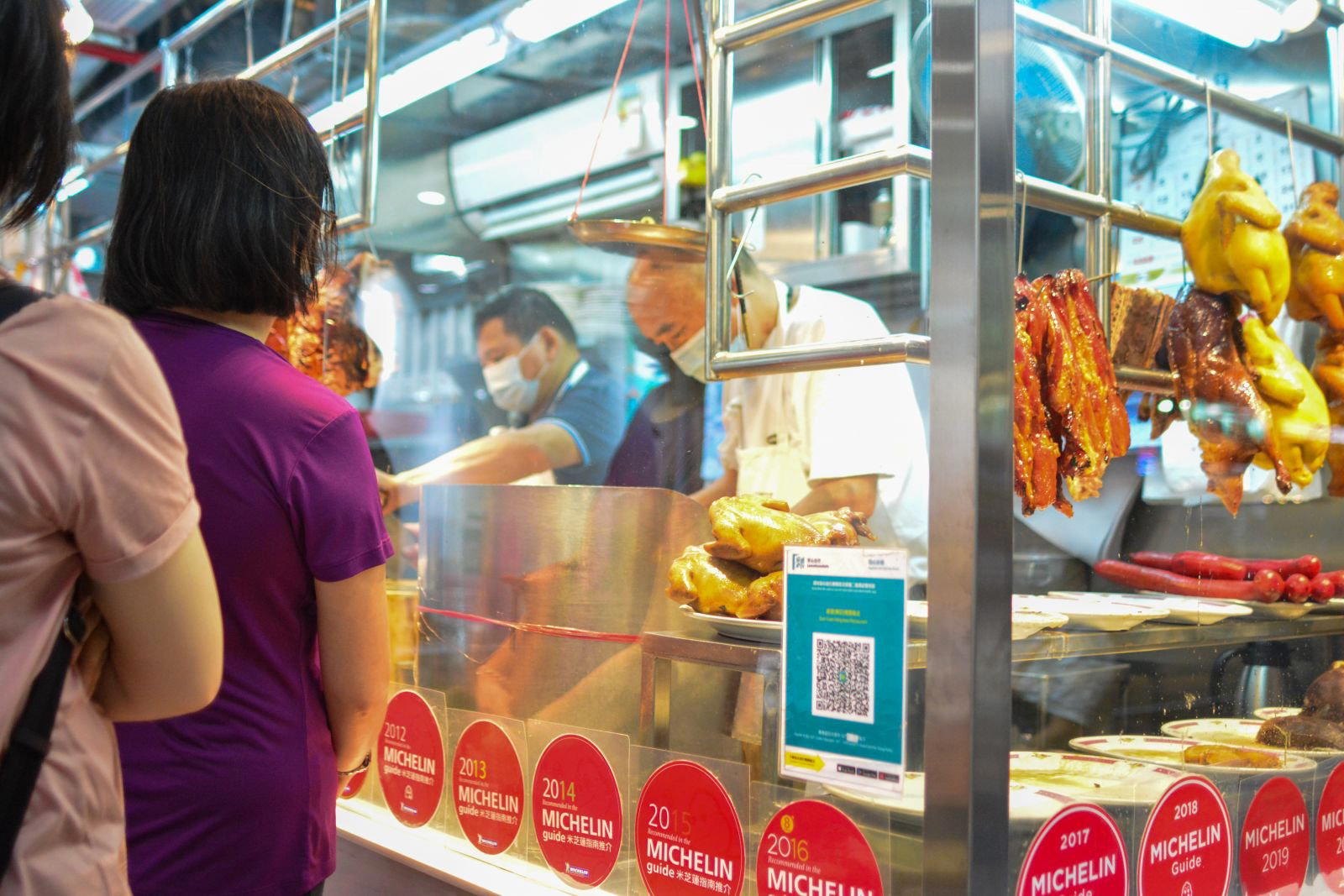
Queen's Road and the Rhythm of Old Sheung Wan
There is a particular quality to eating along the western stretch of Queen's Road Central that has little to do with design or destination dining. The blocks running through Sheung Wan toward Kennedy Town carry a commercial density that pre-dates the city's current restaurant culture by several generations: dried goods merchants, herbal medicine shops, and paper offering suppliers have occupied these addresses since well before the neighbourhood became legible to international food media. Sun Yuen Hing Kee, at G/F, 327 Queen's Road Central, sits inside that longer timeline. The physical approach, pavement-level, ground-floor, without the architectural signalling of newer venues, is itself an editorial statement about the kind of eating that happens here.
Sheung Wan occupies a specific position in Hong Kong's dining geography. It is neither the finance-district concentration of Lan Kwai Fong nor the polished residential restaurant strip of Sai Ying Pun further west. The neighbourhood's character skews older, more transactional, and more rooted in the daily eating habits of working residents than in the hospitality infrastructure built for visitors. That context matters when assessing venues like this one. The comparisons that apply are not with, say, 8½ Otto e Mezzo BOMBANA or Aaharn, both of which operate within an entirely different price tier and format logic. The relevant comparable set is the network of long-established Cantonese eating houses that have served the area's residents across decades, many of which have now closed as rents shifted and demographics changed.
The Cantonese Eating-House Ritual
The dining customs associated with this category of Hong Kong restaurant are worth understanding before you arrive. Cantonese community eating houses of this generation typically operate around a rhythm that has more in common with European lunch culture than with contemporary tasting-menu pacing: tables turn, the room is loud, orders are placed quickly, and the expectation is that food arrives as it is ready rather than in formally sequenced courses. This is not an oversight in service, it is the correct form for this type of eating. Dishes intended for sharing arrive without announcement; rice is the anchor around which everything else is arranged; the meal concludes when the food is finished, not when a server decides to present a dessert course.
For visitors more accustomed to the highly choreographed formats at venues like AMMO or the structured service rhythms found at international fine-dining addresses such as Le Bernardin in New York City, this informality can initially read as chaos. It is not. The logic is simply different: efficiency and generosity operate simultaneously, and the absence of ceremony is the ceremony. Understanding this before sitting down changes the experience considerably.
Sheung Wan as a Wider Eating Context
Queen's Road Central and its surrounding blocks form part of a broader dining picture that spans several distinct neighbourhood types. The Central and Western district as a whole contains a wide spectrum, from the Korean-influenced programming at Bayi to the hotel-integrated international format of cafe TOO. Within that range, the older Cantonese eating houses of Sheung Wan represent the category with the longest history and, in many ways, the direct line to what Hong Kong's restaurant culture looked like before international capital and media attention reshaped its upper tier.
The concentration of such venues along the western end of Queen's Road is not accidental. The area's historical role as a hub for trade and for the older residential working population created a demand for practical, high-volume Cantonese cooking that persisted long after other parts of the city shifted their dining priorities. Venues in this mould also appear in other Hong Kong districts: the Lei Garden in Sha Tin represents one evolution of the Cantonese format toward a more formally managed experience, while specialists such as King Of Soybeans in Wong Tai Sin demonstrate how neighbourhood-specific food cultures persist even as the city's restaurant economy diversifies. Our full Central And Western restaurants guide maps this range in detail.
For a longer historical comparison with how Hong Kong's waterfront food culture has shifted, the trajectory of the Former Jumbo Floating Restaurant in Aberdeen is instructive: what was once a working harbour eating tradition became spectacle, then ultimately became unviable. The Sheung Wan eating houses that have survived have done so by remaining embedded in local daily life rather than pivoting toward tourism.
Planning a Visit
Ground-floor Cantonese eating houses in Sheung Wan operate on schedules calibrated to local working patterns: lunch service tends to be the primary meal, with dinner secondary and often shorter in duration. Arriving at peak lunch hours means joining a queue; arriving early or after the rush means a quieter room and faster service. Neither experience is wrong, but they are different. Venues at this address level rarely take reservations for smaller parties, which places the practical onus on timing rather than advance planning. For context on how booking patterns differ across the district's restaurant spectrum, the gap between walk-in Cantonese houses and the advance-booking requirements at venues such as Atomix in New York City illustrates how the same city's dining infrastructure can simultaneously host entirely different logistical cultures.
Sheung Wan station places the Queen's Road Central strip within easy walking distance. The neighbourhood is navigable on foot from Central's main business core, and the westward walk along Queen's Road itself gives a useful cross-section of the district's commercial character before you arrive. For those exploring wider afield in Hong Kong, Coconut Soup in Yau Tsim Mong and Hoi Tin Garden in Tuen Mun represent other neighbourhood-rooted formats worth considering alongside the Central and Western district's own range.
- Suckling pig
- Roast pork
- Roast duck
- Roasted rice
- Homemade sausages
- Preserved meats
Cost and Credentials
Comparable venues nearby, for context on price, style, and recognition.
| Venue | Cuisine | Price | Notes |
|---|---|---|---|
| Sun Yuen Hing KeeThis venue — the venue you are viewing | Not listed | $ | Not listed |
| Kwan Kee Claypot Rice | Sai Ying Pun, Cantonese Claypot Rice | $ | Not listed |
| Chilli Fagara | Central, Authentic Sichuan Ma-La-Tang | $$ | Not listed |
| Sheung Hei | Kennedy Town, Cantonese Claypot Rice | $$ | Not listed |
| Ying Kee Noodle | Not listed | $ | Sai Ying Pun, Traditional Cantonese Noodle Soup |
| Fiata Pizza | Central, Authentic Neapolitan Pizza | $$ | Not listed |
Continue exploring
More in Central And Western
Restaurants in Central And Western
Browse all →
Bars in Central And Western
Browse all →
At a Glance
- Classic
- Rustic
- Casual Hangout
- Group Dining
- Family
- Standalone
- Historic Building
- Local Sourcing
Current opening hours
- Monday
- 8 AM–7:45 PM
- Tuesday
- 8 AM–7:45 PM
- Wednesday
- 8 AM–7:45 PM
- Thursday
- 8 AM–7:45 PM
- Friday
- 8 AM–7:45 PM
- Saturday
- 8 AM–7:45 PM
- Sunday
- 8 AM–7:45 PM
Hours can change for holidays and private events. Last verified .
Traditionally styled, simple but well-maintained interior with nostalgic decor; modest, humble setting reflecting decades of culinary heritage.