
Tabelog 100 #78
Our verdict
A compact Ohatsu Tenjin chicken specialist with counter seating, nabe, yakitori, sake, shochu, and wine in the mix. Its 2025 Tabelog 100 selection for chicken cuisine places it in Osaka’s serious poultry conversation rather than the casual skewer-and-beer tier, with sourcing and format doing much of the editorial work.

Pearl is the En Primeur Club membership app, where members save venues, book tables and use the concierge.
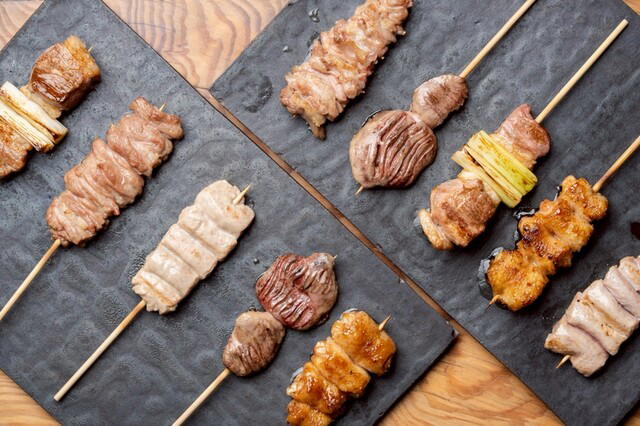
The menu
What to order
- Omi duck course
- Kamo Jin hot pot course
- Omi duck tasting course
The approach to Osaka dining changes the register from large commercial rooms to smaller counters, later meals, and restaurants built around a narrow craft. Some nearby dining may lean broad and convenient, but specialist rooms ask guests to pay closer attention to what is in front of them. Here, chicken is not a secondary category to beef, sushi, or ramen. It is the central argument.
Osaka has always been fluent in casual eating, but its sharper poultry counters ask a different question: how much range can one ingredient carry? At sumibi yaki tori kamo jin Ohatsu tenjin ten, the answer runs through chicken dishes, nabe, and yakitori rather than a broad izakaya spread. That narrower frame matters. In a city where dinner can easily become a parade of snacks, a poultry-led room forces attention back onto cuts, heat, broth, and pacing.
Chicken as the main event, not the supporting act
Japan’s yakitori tradition is built on thrift, anatomy, and fire: different parts of the bird handled as distinct ingredients rather than folded into a single idea of “chicken.” Osaka’s version often sits between counter craft and neighbourhood sociability, less formal than some high-ticket omakase counters but often more disciplined than a general drinking room. The presence of nabe alongside skewers widens the format without losing the poultry focus, giving the meal a second register: grill work for immediacy, hot pot for shared pacing.
The restaurant’s selection for Tabelog Hyakumeiten in 2025 gives it a clear external marker inside that category. Tabelog’s Hyakumeiten lists are not luxury rankings in the Michelin sense; they are more useful as category maps, especially for genres that rarely travel well in English-language restaurant coverage. For visitors, that distinction is helpful. This is not a white-tablecloth signal. It is a clue that the kitchen belongs in a citywide conversation about chicken cookery.
Sourcing is the quiet test of this kind of restaurant. Poultry-focused cooking has less room for camouflage than a broad izakaya menu: poor texture, careless butchery, or indistinct broth show quickly. A chicken-led menu also changes the rhythm of dinner. The listed categories span chicken dishes, nabe, and yakitori, which puts the meal closer to a focused poultry dinner than a quick, miscellaneous snack stop.
Where it sits in Osaka's price-and-format spectrum
Osaka can be misleading for food travelers because convenience and quality overlap unevenly. Dining in the city ranges from transit-friendly snacks to serious specialist rooms, and smaller restaurants can offer a different intimacy from the commercial polish of larger dining zones. This restaurant’s listed dinner budget of JPY 4,000 - JPY 4,999 places it in an accessible specialist tier rather than a luxury occasion tier.
Within the local comparison set, it occupies a useful lane for diners weighing different kinds of Osaka meals. Stand Tiger Lily, Kita Sambor, Osaka Mentetsu, Yakiniku fujimoto Umeda ohatsu tenjin ten, and Osaka Teppanyaki Kobe Beef TATARA may all appear in the same wider planning conversation, but sumibi yaki tori kamo jin Ohatsu tenjin ten is clearest when read on its own terms. A poultry counter in this band is useful precisely because it does not need to chase the ceremonial language of beef or sushi. It suits a diner who wants craft, a focused category, and a price point that keeps the meal grounded.
The 2025 recognition also matters in context. Osaka’s dining scene is not short on established names, but specialist rooms continue to compete for attention, especially in categories that serve locals after work as much as visitors. A Tabelog score of 3.61 and a Hyakumeiten selection give the restaurant a sharper signal than price alone would provide.
How to read the experience before choosing it
This is a better fit for diners who want a focused chicken dinner than for anyone trying to sample every Osaka cliché in one night. The format rewards appetite for poultry in several expressions: grilled skewers, hot pot, and related chicken dishes. It also rewards a willingness to let a narrower category shape the pace, rather than expecting the broad range of a general-purpose drinking room.
The practical read is simple: come for a poultry-led meal in Osaka, not for a catch-all survey of the city. That makes it easier to position the restaurant as an evening choice for diners who want chicken dishes, nabe, and yakitori at a clearly defined spend.
For wider Osaka planning, it pairs naturally with a broader look at Our full Osaka restaurants guide, especially if the trip also includes other casual Osaka staples, bakery stops, coffee, Italian dining, or pizza. City context also improves with broader Osaka hotel, bar, wine, and experience planning, but this restaurant is best understood through the narrower lens of poultry cookery.
Readers comparing Japanese dining categories beyond Osaka can use the same lens across other dining rooms in Japan and abroad: narrower concepts usually reveal more about sourcing, format, and intent than longer menus do. In that sense, sumibi yaki tori kamo jin Ohatsu tenjin ten is less about checking off a generic Osaka dinner and more about seeing how far a focused chicken category can carry a meal.
Frequently asked questions
What's the price range at sumibi yaki tori kamo jin Ohatsu tenjin ten?
Pricing at sumibi yaki tori kamo jin Ohatsu tenjin ten is listed as JPY 4,000 - JPY 4,999.
How do I find sumibi yaki tori kamo jin Ohatsu tenjin ten?
sumibi yaki tori kamo jin Ohatsu tenjin ten is located in Osaka.
How far ahead should I plan for sumibi yaki tori kamo jin Ohatsu tenjin ten?
Plan ahead if you want a specific day or a dinner seat in Osaka, especially for a restaurant with 2025 Tabelog Hyakumeiten recognition and a focused chicken-led format. The listed dinner budget is JPY 4,000 - JPY 4,999.
What is sumibi yaki tori kamo jin Ohatsu tenjin ten known for?
sumibi yaki tori kamo jin Ohatsu tenjin ten is known for chicken dishes, nabe, and yakitori in Osaka, and for its 2025 Tabelog Hyakumeiten recognition.
Fast Comparison
Comparable venues side-by-side for orientation.
| Venue | Cuisine | Price | Awards | Notes |
|---|---|---|---|---|
| sumibi yaki tori kamo jin Ohatsu tenjin tenThis venue (the venue you are viewing) | Japanese Yakitori & Duck Hot Pot | $30–50 | Tabelog 100 #78 | Not listed |
| カドヤ食堂 本店 | Japanese Ramen | $10–20 | Tabelog 100 #24 | Nishi-Ku / Nishi-Nagahori |
| Fukutaro (福太郎) | Osaka Okonomiyaki & Negiyaki | $10–20 | Tabelog 100 #90 | Sennichimae |
| Ramen Chonmage Osaka Tenroku | Japanese Ramen | $10–20 | Not listed | Tenjinbashi |
| Niku Ryori PINE | Meat-focused Japanese standing bar | $20–30 | Tabelog 100 #63 | Kita |
| yacipoci | Modern Japanese standing bar (izakaya-style) | $20–30 | Tabelog 100 #31 | Chūō |
Recognition history
Dated appearances from independent guides and award organizations, with the underlying list record or original source where available.
Tabelog 100 #78 · No. 78
Tabelog · Tabelog 100 - Chicken cuisine - 2025
Continue exploring
More in Osaka
Restaurants in Osaka
All restaurants in Osaka →



Bars in Osaka
All bars in Osaka →



Hotels in Osaka
All hotels in Osaka →




Wineries in Osaka
Browse all →
sumibi yaki tori kamo jin Ohatsu tenjin ten
The wine
- Sommelier-led
- Sake program
- Beer program
Details
- Cozy
- Quiet
- Sophisticated
- Elegant
- Casual Hangout
- Group Dining
- Business Dinner
- Special Occasion
- After Work
- Standalone
- Chefs Counter
- Sake Program
- Sommelier Led
- Beer Program
- Local Sourcing
- A La Carte
- Set Menu
- Counter Dining
- Wine
- Sake
- Beer
- Pescatarian Friendly
An understated, tucked-away restaurant with a calm, elegant second-floor atmosphere and a more relaxed third floor that can accommodate smoking.