
Suki Tei Honten places Nagano’s Shinshu beef culture inside the formal, shared-table language of sukiyaki and shabu-shabu. Its Tabelog 100 Hot Pot 2024 selection gives it a clear credential in a category where regional beef, private-room dining, and family occasions matter as much as culinary technique.
Pearl is the En Primeur Club membership app — saves, bookings, and concierge access live there. Same editors, same standards.
- Address
- 長野県長野市南長野妻科112-1
- Phone
- +81262341123
- Website
- sukitei.com
 Saves & bookings on Pearl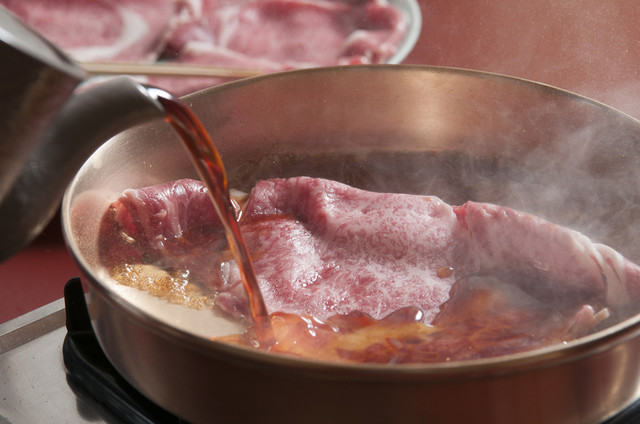
Approach the meal as Nagano rather than Tokyo. The setting is a house-style restaurant near the prefectural office, with tatami rooms, sunken seating, and a scale that suits family gatherings as much as business dinners. That matters for sukiyaki: the dish is not built around chef-counter theatre, but around heat, beef, timing, and the social rhythm of a table managing its own pot.
Nagano’s dining identity often gets reduced to soba, mountain vegetables, and ryokan cooking, but beef has its own regional argument here. Shinshu beef, including cattle raised with apples, gives the local hot-pot tradition a point of difference from the Kansai and Kanto sukiyaki houses that dominate national conversation. Suki Tei Honten sits in that lane: a Nagano specialist using sukiyaki, shabu-shabu, and steak as formats for regional beef rather than as generic wagyu service.
Shinshu beef gives Nagano sukiyaki a regional voice
Sukiyaki is often discussed as a national comfort dish, but its serious restaurant version is highly regional. Kanto-style service leans toward a warishita base, Kansai-style cooking starts with searing and seasoning at the pan, and local houses often adapt the structure around available beef and the habits of group dining. In Nagano, the point is less metropolitan polish than agricultural identity: mountain prefecture, cold winters, sake culture, and beef positioned for long, slow meals.
The Tabelog 100 Hot Pot 2024 selection places Suki Tei Honten inside a national conversation about sukiyaki and shabu-shabu rather than only a local Nagano one. That credential is useful because hot pot is a category where excellence can be hard to read from the outside. The room may look traditional, the format may be familiar, and the menu may seem simple; the difference sits in sourcing, broth or seasoning balance, pacing, and how comfortably the restaurant handles groups without turning the meal into banquet-line service.
The comparison inside Nagano is instructive. Sushi, French, soba, and mountain cuisine each speak to a different version of the prefecture: すし崇 and French restaurant "la rencontre" represent more formal urban dining, while Yamanomi and soba-focused rooms read closer to landscape and season. Among the provided, Soba Shunsai Kosuge occupies a lower dinner bracket, while Hei Gorou Honten sits in a casual price tier. Hot pot at Suki Tei Honten belongs to a more occasion-driven category, where the cost reflects beef-centered dining and private-room suitability rather than tasting-menu choreography.
The room is built for shared pots, not counter performance
Format is unusually flexible for a serious regional specialist: 120 seats across table seating, raised-platform areas, a large hall, and private rooms. That scale changes the meaning of the meal. In an eight-seat counter restaurant, intimacy is the product; here, comfort and control are the product. Private rooms for small groups, a banquet hall for larger parties, non-smoking interiors, free Wi-Fi, wheelchair access, and an English multilingual menu all point to a house designed for mixed generations and visitors who want Japanese hot pot without decoding every convention at the table.
That accessibility should not be mistaken for blandness. Sukiyaki and shabu-shabu reward restaurants that understand restraint. Too much sweetness in the sauce makes the beef anonymous; too much ceremony turns a social dish stiff. The better reading of this address is as a practical Nagano institution for travellers who want beef in a form locals can use for celebrations, family meals, and formal group dinners. The presence of sake, shochu, and wine also frames the meal correctly: this is not a quick bowl-and-go stop, but a table built around pacing.
There are small conduct rules worth respecting. Socks are requested when visiting, a detail that signals tatami-room etiquette rather than fashion. Private rooms carry a service charge, and advance reservations are encouraged for course meals or group use. Those points are not obstacles; they are part of how old-school Japanese dining rooms keep service predictable when the table itself is part of the cooking.
Where it fits in a Nagano itinerary
For a visitor building a Nagano food itinerary, this is the beef-and-hot-pot anchor rather than the experimental dinner. Pair it with lighter, more seasonal meals elsewhere in the city and prefecture. EP Club’s Nagano restaurant coverage includes Aoitou, Bleston Court Yukawatan, ca’enne, Chamonix, and Chinese Sai Muen (Chinese, Sichuan, Dim sum & Yum cha), which together show how broad the prefecture’s dining spectrum is beyond hot pot.
Travellers extending the theme can compare sukiyaki and beef formats across Japan through -Grilled beef Sukiyaki- KAMAKURA TANUKIAN 鎌倉 たぬき庵 in Kamakura, then widen the map with. 鮪と炭火焼き うお炭 秋葉原店 in Tokyo.cafe in Osaka.know in Kumamoto, (Shoku) Vietnam in Kawasaki, and [Curry Senmon Ten] Maruyama Kyoju. in Sapporo. For drinks-led planning outside Japan, Jōdo Saké Bar in Los Angeles and Onigiri Time in Pasadena offer useful cross-cultural reference points for Japanese ingredients and casual formats abroad.
The verdict is simple: choose this meal when Nagano’s regional beef culture is the point of the evening. It is better suited to a seated, shared occasion than to a solo diner chasing novelty, and its Tabelog 100 Hot Pot 2024 recognition gives the booking a credible national marker. For broader planning, use Our full Nagano restaurants guide alongside Our full Nagano hotels guide, Our full Nagano bars guide, Our full Nagano wineries guide, and Our full Nagano experiences guide.
A Pricing-First Comparison
Comparable venues by cuisine and price in the same metro.
| Venue | Cuisine | Price | Notes |
|---|---|---|---|
| Suki Tei HontenThis venue — the venue you are viewing | Not listed | $$$ | Not listed |
| 蕎麦処 そばの実 | Togakushi, Togakushi Handmade Soba | $$ | Not listed |
| Unagi Honda | Not listed | $$$ | Iiyama, Traditional Japanese Unagi (Eel) Kabayaki |
| Uzura Ya | Not listed | $$ | Togakushi, Traditional Togakushi soba restaurant |
| Kikuzushi | Iizuna, Edomae Sushi | $$$ | Not listed |
| すし築地日本海 長野駅前店 | Not listed | $$ | Nagano Station (Zenkokuji-guchi), Authentic Edomae Sushi & Izakaya |
Recognition history
Dated appearances from independent guides and award organizations, with the underlying list record or original source where available.
Tabelog 100 #14 · No. 14
Tabelog · Tabelog 100 - Hot Pot - 2024
Continue exploring
More in Nagano
Restaurants in Nagano
Browse all →
Hotels in Nagano
Browse all →
Wineries in Nagano
Browse all →
At a Glance
- Classic
- Cozy
- Romantic
- Date Night
- Business Dinner
- Group Dining
- Family
- Special Occasion
- Private Dining
- Standalone
- Sake Program
- Local Sourcing
Traditional Japanese tatami-style setting with a calm, classic atmosphere and attentive, formal-feeling service suited to lingering over hot pot courses.