On Landstraßer Hauptstraße in Vienna's Third District, Stellas 3 positions itself within a city where Austrian produce and international technique increasingly converge. Vienna's dining scene has shifted toward kitchens that treat local ingredients as the starting point rather than the finishing touch, and Stellas 3 occupies that contested middle ground between neighbourhood familiarity and serious culinary intent.
Pearl is the En Primeur Club membership app — saves, bookings, and concierge access live there. Same editors, same standards.
- Address
- Landstraßer Hauptstraße 44, 1030 Wien, Austria
- Phone
- +434317106773
- Website
- stellas.at
- Directions
- Get directions
 Saves & bookings on Pearl
Vienna's Third District and the Ingredients Question
Stellas 3 is a restaurant in Vienna's Third District, serving Modern European Fusion with Grill. The argument that has shaped serious Austrian cooking over the past two decades is not about technique, it is about sourcing. Vienna's most discussed kitchens, from Steirereck im Stadtpark at the summit of the local hierarchy to more recent arrivals in the outer Bezirke, have staked their identities on how well they can root global methods in genuinely local raw material. The question is not whether a kitchen uses French or Japanese technique, most ambitious Vienna restaurants do, but whether the produce underneath that technique tells an Austrian story. Stellas 3, at Landstraßer Hauptstraße 44 in the Third District, sits inside that debate.
The Third District (Landstraße) occupies a particular position in Vienna's dining geography. It runs east from the Ringstraße toward the Danube Canal, and while it lacks the density of restaurant-watchers that congregates around the First or the Naschmarkt corridor, it has a residential seriousness that supports committed neighbourhood cooking. Venues here tend to survive on repeat custom rather than tourist volume, which concentrates the pressure on consistency and local relevance in ways that inner-city restaurants can sometimes avoid.
Where Local Produce Meets Imported Method
Intersection of indigenous Austrian products and internationally trained technique is the defining tension in contemporary Vienna dining. At the leading end, Konstantin Filippou draws on Greek heritage and modern European idiom to reframe Austrian and Adriatic ingredients, while Mraz & Sohn applies creative precision to explicitly Austrian produce with a lightness of touch that reads as Nordic in its restraint. Amador brings Spanish creative lineage to bear on the same market sources. What these kitchens share is a willingness to treat Austria's seasonal supply, the Waldviertel root vegetables, the alpine dairy, the Wachau stone fruits, as material worthy of the same technical investment that Paris or Copenhagen might apply to their own larders.
That approach has filtered down from the Michelin-tier restaurants into the broader mid-market, and the Third District is exactly where that filtering tends to show up first. Neighbourhoods at a remove from the tourist circuit often adopt the vocabulary of serious cooking earlier than the inner-city dining rooms that depend on recognisable formats to maintain footfall. For context on how this plays out across Austria's wider fine dining circuit, the progression from urban kitchens in Vienna through to alpine and rural houses, Döllerer in Golling an der Salzach, Obauer in Werfen, Landhaus Bacher in Mautern an der Donau, shows how consistently the local-ingredients-global-technique framework has become the operating assumption of ambitious Austrian cooking at every scale.
The Doubek Comparison and the Neighbourhood Context
Within Vienna itself, the restaurants that move through the local-global balance most effectively at the neighbourhood level tend to share certain structural features: compact menus that rotate with seasonal availability, a wine list weighted toward Austrian producers, and a format that does not require the full apparatus of a formal tasting-menu experience to deliver on its premise. Doubek represents one version of this in Vienna's dining fabric. Stellas 3, on Landstraßer Hauptstraße, occupies a similar address logic, a main artery through a residential district, accessible enough for regular custom, removed enough from the tourist circuit to develop a kitchen identity on its own terms.
The international frame of reference matters here too. Kitchens that have absorbed technique from further afield, the precision of Japanese knife work and temperature discipline that has spread through European restaurants since the 1990s, or the fermentation and preservation logic that moved from Scandinavia into Central European cooking in the 2010s, tend to apply those methods most interestingly when the produce is local and the chef's relationship to it is lived rather than theoretical. You can see this dynamic working at its most refined at venues like Ikarus in Salzburg, which rotates international guest chefs through an Austrian kitchen context, or at Kräuterreich by Vitus Winkler in Sankt Veit im Pongau, where alpine herb knowledge is treated with the same seriousness as classical French sauce work. The same logic, scaled differently, applies to ambitious neighbourhood restaurants in Vienna's outer districts.
The Broader Austrian Dining Frame
For readers mapping Vienna against Austria's wider fine dining circuit, it is worth noting that the city's restaurant scene operates in a different register from the alpine or rural houses. Venues like Griggeler Stuba in Lech, Gourmetrestaurant Tannenhof in Sankt Anton am Arlberg, Schwarzer Adler in Hall in Tirol, Restaurant 141 by Joachim Jaud in Mieming, and Ois in Neufelden each operate in proximity to their primary ingredients in ways that urban restaurants cannot replicate. The urban kitchen's version of local sourcing is necessarily mediated, by market schedules, by distribution networks, by the physical distance from field or alpine pasture to city kitchen. That mediation is part of what makes urban Austrian cooking an interesting problem: the technique is borrowed, the produce is sourced rather than grown, and the identity has to be constructed through choices rather than given by geography.
The global comparison is instructive. At Le Bernardin in New York City, classical French technique applied to the Atlantic's daily catch produces a defined identity through the consistency of that method-ingredient pairing. At Atomix in New York City, Korean culinary logic reframes American ingredients through the precision of a tasting-menu format. In both cases, the credibility of the kitchen rests on how well the technique serves the ingredient rather than overrides it. Vienna's leading neighbourhood restaurants are working through the same logic at a smaller scale and with less fanfare, which is part of what makes the Third District worth paying attention to.
At a Glance
Comparable venues nearby, for context on price, style, and recognition.
| Venue | Cuisine | Price | Notes |
|---|---|---|---|
| Stellas 3This venue — the venue you are viewing | Not listed | $$$ | Not listed |
| Ziizuu | Inner City, Japanese Fusion | $$$ | Not listed |
| Lox & Truffles | Stephansdom, Kosher Dairy Fusion Deli | $$ | Not listed |
| Kenks | Not listed | $$ | Breitensee, Modern Fusion Burgers & Brunch |
| ZentRuhm | Inner City, International Fusion Tapas | $$ | Not listed |
| Cafe Heuer | Not listed | $$$ | Wieden, Modern Austrian Fusion with Small Plates |
Continue exploring
More in Vienna
Restaurants in Vienna
Browse all →
Bars in Vienna
Browse all →
Hotels in Vienna
Browse all →
At a Glance
- Lively
- Trendy
- Intimate
- Date Night
- Casual Hangout
- Terrace
- Open Kitchen
- Craft Cocktails
Current opening hours
- Monday
- 5 PM–1 AM
- Tuesday
- 12–2 PM, 5 PM–1 AM
- Wednesday
- 12–2 PM, 5 PM–1 AM
- Thursday
- 12–2 PM, 5 PM–1 AM
- Friday
- 12–2 PM, 5 PM–1 AM
- Saturday
- 5 PM–1 AM
- Sunday
- Closed
Hours can change for holidays and private events. Last verified .
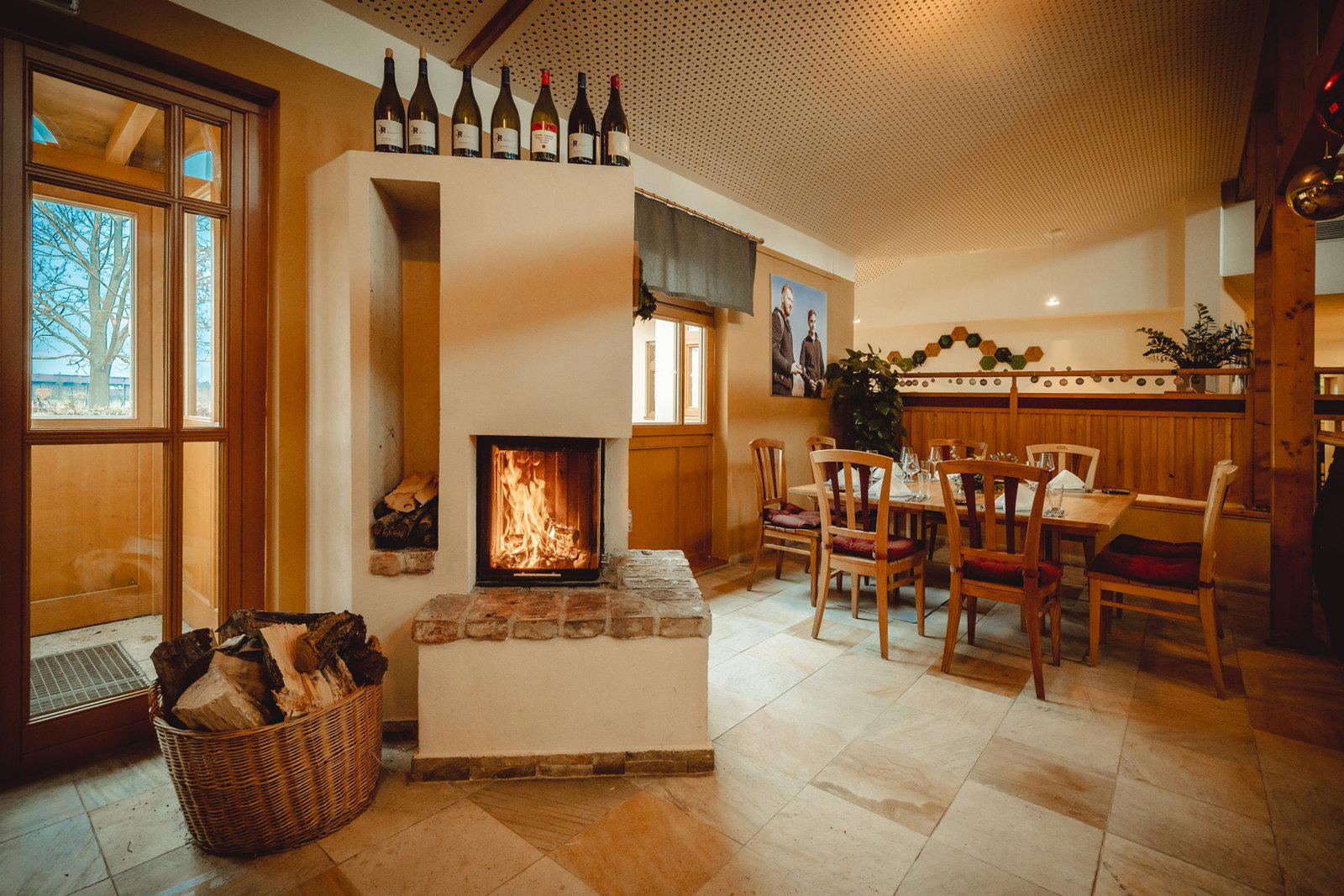
Inviting atmosphere with an intimate feel, charming patio seating, and attentive service highlighted in guest reviews.