Our verdict
Sri Trat brings the cooking traditions of Thailand's eastern Trat province to a Sukhumvit side street, earning consecutive top-ten finishes on Opinionated About Dining's Casual Asia list in 2023 and 2024 before settling at #16 in 2025. The kitchen focuses on seafood-forward, herb-driven dishes rooted in coastal eastern Thai technique, a regional style largely absent from Bangkok's fine-dining circuit. Open daily from 11am to 10pm on Sukhumvit Soi 33.

Pearl is the En Primeur Club membership app, where members save venues, book tables and use the concierge.
The menu
What to order
- Stir-fried lump crab meat with garlic chili and fish sauce
- Deep-fried whole Asian sea bass with sweet fish sauce
- Red Curry with White Turmeric and Barracuda Fish
Eastern Thai Cooking on a Sukhumvit Side Street
Bangkok's Thai restaurant scene has long been organised around a rough hierarchy: the tasting-menu format at one end, the streetside vendor at the other, with a broad, underexplored middle ground where regional cooking happens in proper sit-down rooms. Sri Trat occupies that middle tier with unusual consistency, drawing its identity entirely from Trat province, a coastal area on Thailand's eastern seaboard that borders Cambodia and sits far enough from the Bangkok food conversation to have been systematically underrepresented in the city's restaurants. On Sukhumvit Soi 33, a lane that runs between serviced apartments and neighbourhood coffee shops, that regional focus gives the restaurant a very specific competitive position: it is not competing with Nahm or Saneh Jaan at the formal end of the Thai dining spectrum, nor is it a casual pad-see-ew lunch counter. It is something else: a regional-specialist room that has held OAD Casual Asia rankings across three consecutive years.
Rice as the Structural Principle of Eastern Thai Cooking
To understand what Sri Trat is doing, it helps to think through the role rice plays in the regional tradition it draws from. Across Thailand, rice is not a side component. It is the meal's architecture. In the central plains, jasmine rice, hom mali, frames dishes built around coconut-rich curries and clear, aromatic broths. In the north, sticky rice arrives in small woven baskets and is used as an edible utensil, pinched and pressed around vegetables, grilled meats, and intensely fermented dips. Trat province sits at a different register. The eastern seaboard's cooking has more in common with coastal Cambodian and Cham traditions than it does with the central Thai canon taught in most Bangkok kitchens. Herb usage is more aggressive, fermented shrimp pastes carry a deeper saline character, and the seafood-forward dishes are calibrated to be eaten with plain steamed jasmine rice in a way that uses the rice's neutrality as an active counterpoint rather than a passive filler.
That framework matters when reading a menu at Sri Trat. The rice question is not incidental to what arrives on the table; it is the organisational logic behind how the dishes are seasoned and portioned. Dishes that read as very salty, very sour, or very funky are not calibrated for solo eating, they are calibrated for dilution across a shared table, with rice doing the moderating work that the chef anticipates from the first plate forward. This is the cooking grammar of the eastern provinces, and it is one that Bangkok diners accustomed to tasting-menu formats or solo-plate dining occasionally find disorienting on a first visit.
The Room and the Approach
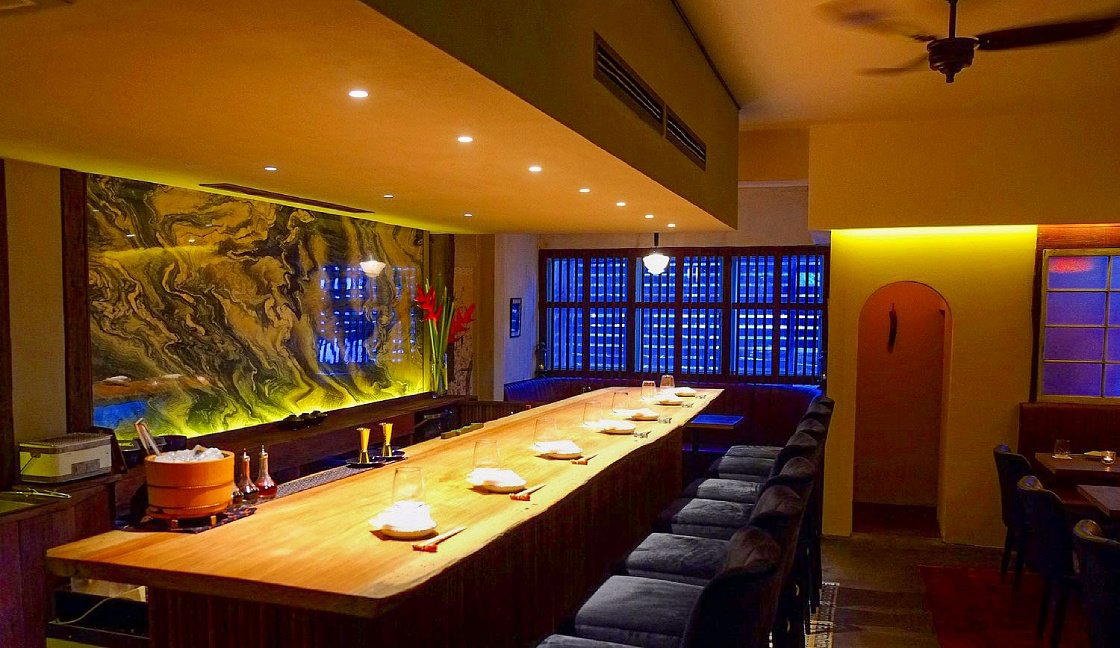
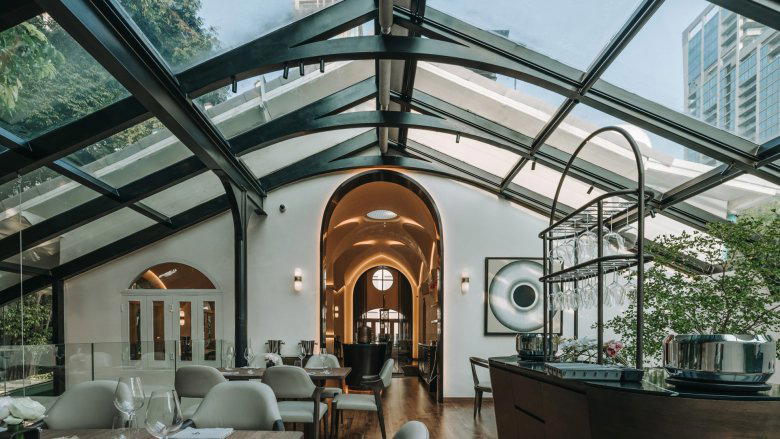
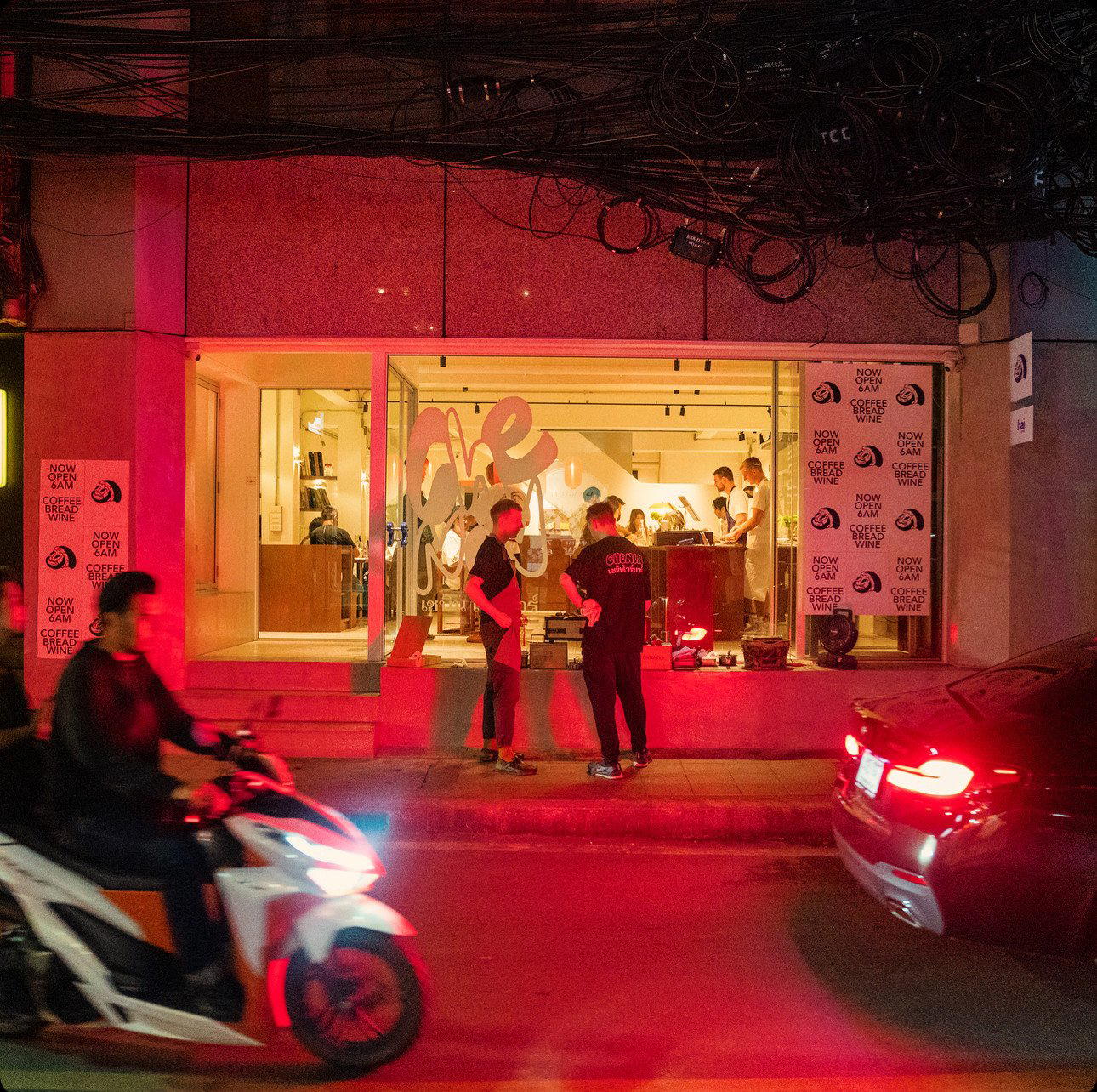
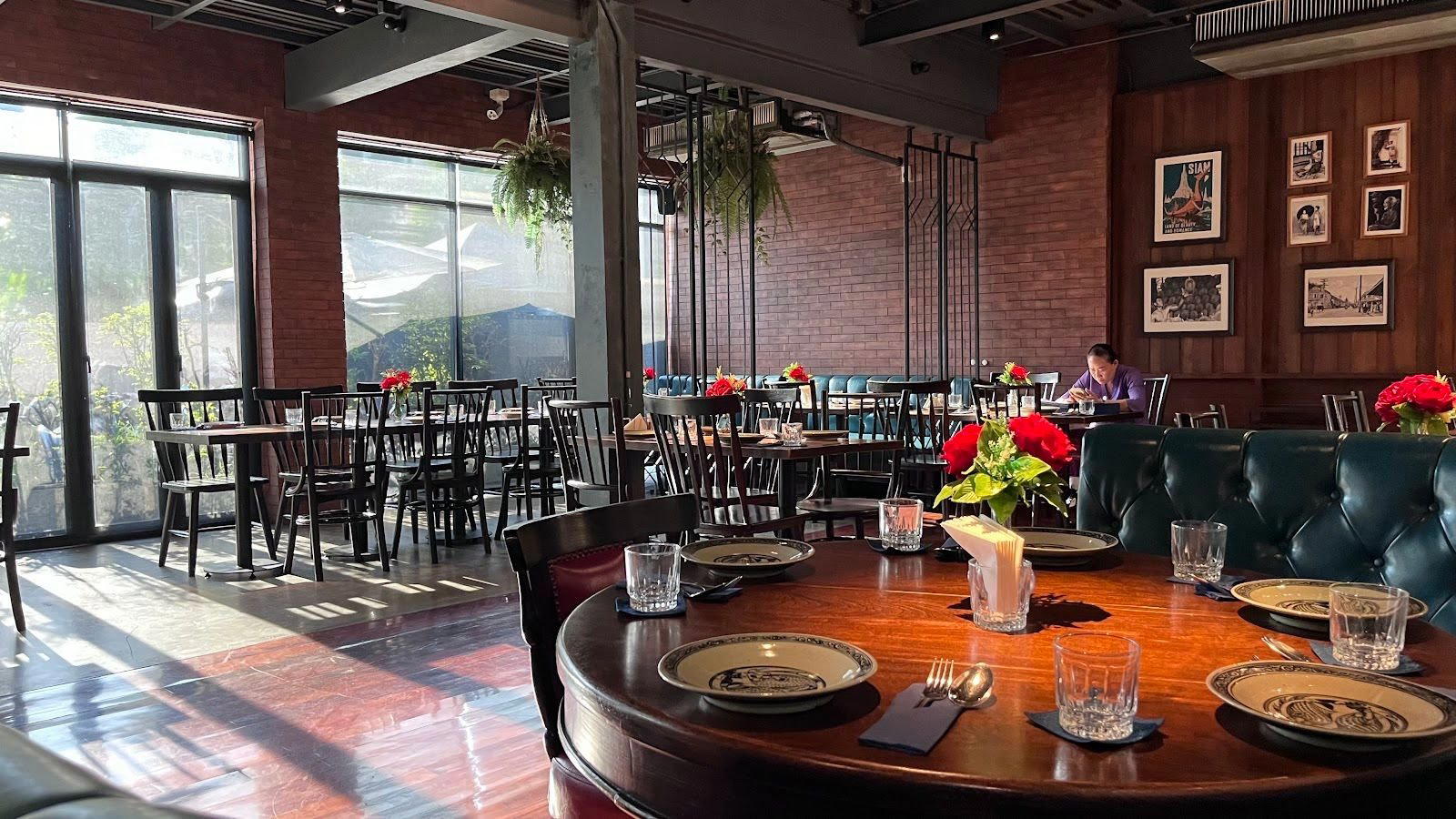
Sukhumvit Soi 33 is residential enough that arriving on foot from the BTS system involves a few minutes of walking through a neighbourhood that feels genuinely local rather than curated for visitors. The soi sits between Phrom Phong and Asok stations, making it reachable from either end of that stretch without a significant detour. The restaurant's presence on this particular lane rather than in a mall food hall or hotel podium is itself a signal about its positioning: it operates as a neighbourhood room that happens to draw an audience from much further afield.
Chef Wongwich Sripinyoo leads the kitchen, and the training context that matters here is not a formal fine-dining lineage but a deep grounding in Trat's domestic cooking traditions, the kind of regional specificity that sits closer to the heritage-preservation impulse found at places like Samrub Samrub Thai and Aksorn than to the modernist transformation approach of Bangkok's ฿฿฿฿ tier. That ฿฿฿฿ tier includes a different competitive set entirely: Chim by Siam Wisdom works in a more formal register, while venues like Sorn, Baan Tepa, and Sühring occupy a price bracket that makes Sri Trat's casual format a genuinely different proposition for the same culturally curious Bangkok diner.
What the OAD Rankings Indicate
Opinionated About Dining's Casual Asia list is surveyed primarily by a community of experienced food travellers and critics who eat across the region regularly. A ranking of #8 in both 2023 and 2024 on that list places Sri Trat inside a small cohort of casual Asian restaurants judged by that peer group to be worth significant detour. Sliding to #16 in 2025 is a relative movement within a consistently high-performing band rather than a departure from the list, and it does not alter the fundamental assessment: this is a restaurant that has sustained critical attention for three consecutive years across a very competitive field.
For context on what OAD Casual Asia rankings mean in practice: the list sits alongside the formal OAD fine-dining rankings and is not organised by price tier but by the quality of the experience relative to format. That combination, sustained critic-facing ranking alongside a high-volume popular rating, is less common than either signal in isolation and suggests the restaurant is performing consistently across different types of visitors.
Planning Your Visit
Sri Trat is open seven days a week, 11am to 10pm, with no day off, a practical advantage for visitors with fixed itineraries. The lunch service is worth noting as a strategic option: regional Thai specialists of this calibre in Bangkok often operate on leaner midday covers, which can mean shorter waits and more attentive service during the first half of the day.
| Venue | Format | Price Tier | Regional Focus | OAD Recognition |
|---|---|---|---|---|
| Sri Trat | Casual, à la carte | Mid-range | Eastern Thailand (Trat) | Casual Asia #16 (2025) |
| Sorn | Tasting menu | ฿฿฿฿ | Southern Thailand | OAD Top 100 Asia |
| Baan Tepa | Tasting menu | ฿฿฿฿ | Thai contemporary | OAD recognition |
| Samrub Samrub Thai | Casual, à la carte | Mid-range | Central Thai heritage | OAD listed |
For broader Bangkok planning, our full Bangkok restaurants guide maps the city's dining by neighbourhood and format. Our Bangkok hotels guide, bars guide, wineries guide, and experiences guide cover the rest of what the city offers at the premium end.
Elsewhere in Thailand, the regional cooking diversity is worth tracking through a different set of rooms. AKKEE in Pak Kret and Aeeen in Chiang Mai represent the northern register. PRU in Phuket and The Spa in Lamai Beach cover the south. Angeum in Phra Nakhon Si Ayutthaya and Agave in Ubon Ratchathani reach into the central plains and northeast. For Thai cooking carried outside the country, Boo Raan in Knokke and Kin Khao in San Francisco offer useful comparison points on how regional Thai traditions translate abroad.
Frequently asked questions
Where is Sri Trat Restaurant and Bar in Bangkok?
Sri Trat Restaurant and Bar is located at 90 Sukhumvit 33 Alley, Khlong Tan Nuea, Watthana, Bangkok 10110, Thailand, Bangkok.
Who runs the kitchen at Sri Trat Restaurant and Bar?
The chef associated with Sri Trat Restaurant and Bar is Wongwich Sripinyoo.
What's the signature dish at Sri Trat Restaurant and Bar?
Sri Trat specialises in the regional cooking of Thailand's Trat province, where dishes are structured around fragrant rice and assertively seasoned preparations that differ from central Thai norms. The kitchen under chef Wongwich Sripinyoo has earned three consecutive appearances on Opinionated About Dining's Casual Asia list, peaking at #8 in both 2023 and 2024, which points to consistent execution across the menu rather than a single showpiece dish. For the most current dish information, visiting on any day between 11am and 10pm at 90 Sukhumvit Soi 33 gives the full picture.
What kind of cuisine does Sri Trat Restaurant and Bar serve?
Comparable Options
A quick peer reference to anchor this venue in its category.
| Venue | Cuisine | Price | Awards | Notes |
|---|---|---|---|---|
| Sri Trat Restaurant and BarThis venue (the venue you are viewing) | Eastern Thai Seafood from Trat | $20–30 | Not listed | Not listed |
| Sorn | Fine Southern Thai | $200–300 | 3 Michelin Stars · World's 50 Best #12 | Southern Thai, ฿฿฿฿ |
| Côte by Mauro Colagreco | Riviera Mediterranean Fine Dining | $200–300 | 2 Michelin Stars · World's 50 Best #91 | Mediterranean, Modern Cuisine, ฿฿฿฿ |
| Baan Tepa | Creative Thai Fine Dining | $150–200 | 2 Michelin Stars · World's 50 Best #53 | Thai contemporary, ฿฿฿฿ |
| Gaa | Modern Indian Fine Dining with Thai Influences | $150–200 | 2 Michelin Stars · World's 50 Best #95 | Modern Indian, Indian, ฿฿฿฿ |
| Sühring | Modern German Fine Dining | $200–300 | 3 Michelin Stars · World's 50 Best #18 | German, ฿฿฿฿ |
Recognition history
Dated appearances from independent guides and award organizations, with the underlying list record or original source where available.
Opinionated About Dining Casual in Asia Ranked #20
Opinionated About Dining
Full recognition history (4 entries)
Opinionated About Dining Casual in Asia Ranked #16
Opinionated About Dining
Opinionated About Dining Casual in Asia Ranked #8
Opinionated About Dining
Opinionated About Dining Casual in Asia Ranked #8
Opinionated About Dining