

1 Michelin Star
Our verdict
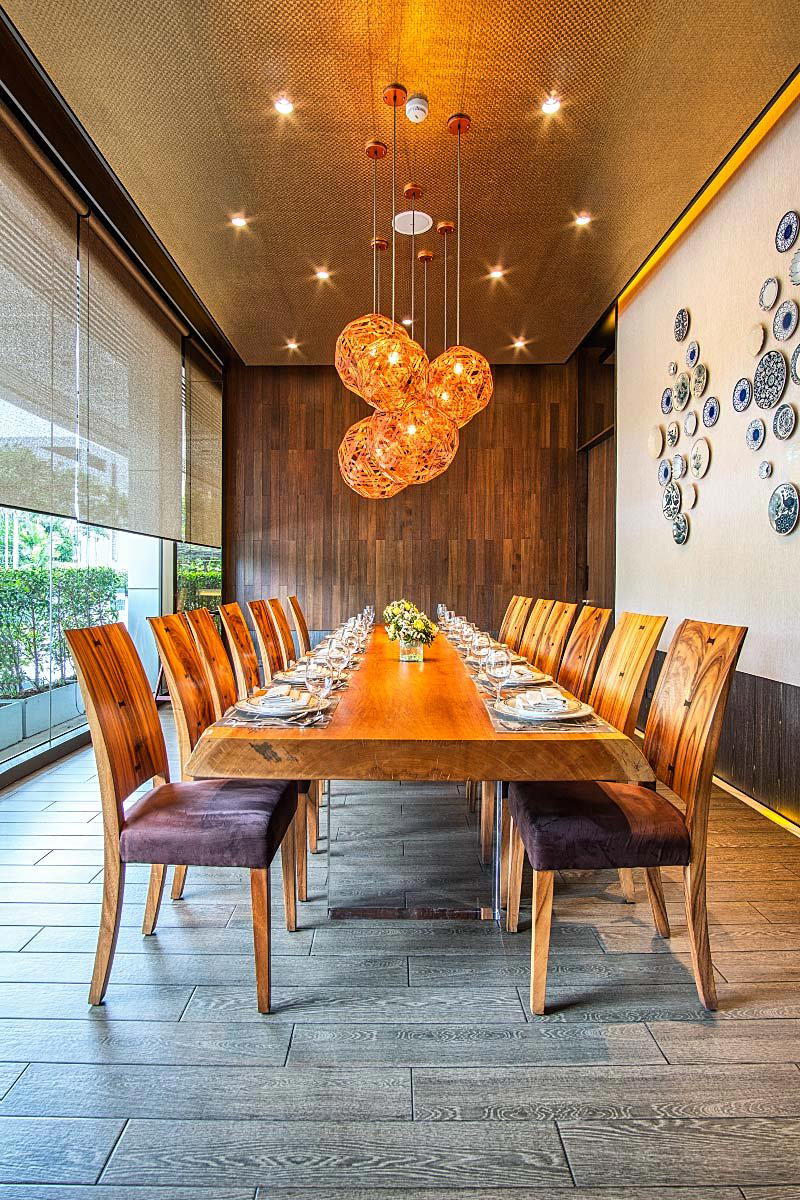
A Michelin-starred address on Witthayu Road, Saneh Jaan serves refined Thai classics drawn from royal and regional archives in a softly lit, art-hung dining room built for occasion dinners and serious lunches alike. Chef Pilaipon 'Toy' Kamnag grounds the menu in heritage recipes while placing it squarely in Bangkok's upper tier of fine Thai dining. Ranked #377 in Asia by Opinionated About Dining in 2024, it earns its place through discipline and specificity rather than novelty.

Pearl is the En Primeur Club membership app, where members save venues, book tables and use the concierge.
The menu
What to order
- Massaman curry
- Crispy rice
- Vintage royal dishes
A Dining Room Built for Precision, Not Performance
The approach to Saneh Jaan on Witthayu Road sets an expectation. The building sits in Lumphini, one of Bangkok's more composed quarters, away from the tourist-oriented riverfront and the louder corridors of Sukhumvit. Inside, the room is softly lit and hung with Thai art, its atmosphere calibrated for conversation rather than spectacle. This is not a dining room that announces itself; it earns attention through accumulated detail.
That restraint is a deliberate positioning. Bangkok's fine Thai dining tier has expanded considerably over the past decade, with a cluster of serious restaurants now competing on heritage credentials, sourcing specificity, and technical execution. Saneh Jaan holds a Michelin star (2024) and appeared in Opinionated About Dining's Leading Restaurants in Asia ranking at #377 in 2024 and #428 in 2025, a trajectory that places it in steady, acknowledged company alongside addresses like Nahm, Aksorn, and Samrub Samrub Thai. At the ฿฿฿ price tier, it sits below the ฿฿฿฿ bracket occupied by contemporaries like Sorn and Baan Tepa, making it an accessible entry point into Bangkok's archive-led Thai dining scene without sacrificing the seriousness of intent.
The Archive as Menu: Royal Recipes and Coastal Technique
What distinguishes the upper register of Thai fine dining from its mid-market counterparts is the sourcing of recipes. Generic Thai menus recycle familiar combinations. Archive-led menus draw from documented royal and regional traditions, treating heritage texts and lineage cooks as primary sources. Saneh Jaan operates firmly in the latter category, with a menu that references recipes favoured by the Thai royal family alongside regional dishes that have otherwise largely disappeared from commercial kitchens.
Nowhere is this more apparent than in the kitchen's handling of seafood. The coastal and riverine traditions of Thai cooking have historically produced some of the country's most technically demanding preparations, and Saneh Jaan's menu reflects that. Crispy rice vermicelli with river prawn is one of the dishes most consistently cited in coverage of the restaurant: the sweet-sour balance, the textural contrast between the fried noodle and the prawn, and the precision required to maintain crispness through service place it in a category of dishes that reward technical rigour. Similarly, catfish stir-fried with chilli, salted egg yolk, and kaffir lime demonstrates how coastal Thai cooking transforms what might appear to be humble ingredients into layered preparations through technique and seasoning calibration.
The approach connects to a broader tradition in southern and central Thai cuisine where marine and freshwater proteins are treated with the same seriousness applied to land-based proteins in European kitchens. Massaman curry made with slow-cooked Kamphaeng Saen beef offers a counterpoint: a long-cooked, spice-heavy preparation drawn from central Thai royal cooking that balances the lighter, more acidic seafood preparations on the menu. The combination gives the menu range without incoherence.
For those tracking where serious Thai seafood cooking is happening across the country, the contrast is instructive. PRU in Phuket approaches coastal ingredients through a modern lens, while AKKEE in Pak Kret works different regional registers. Saneh Jaan's focus on archival recipe fidelity places it in a distinct position: the cooking here is not an interpretation of tradition but an attempt to recover and maintain it.
Beginning at the Bar
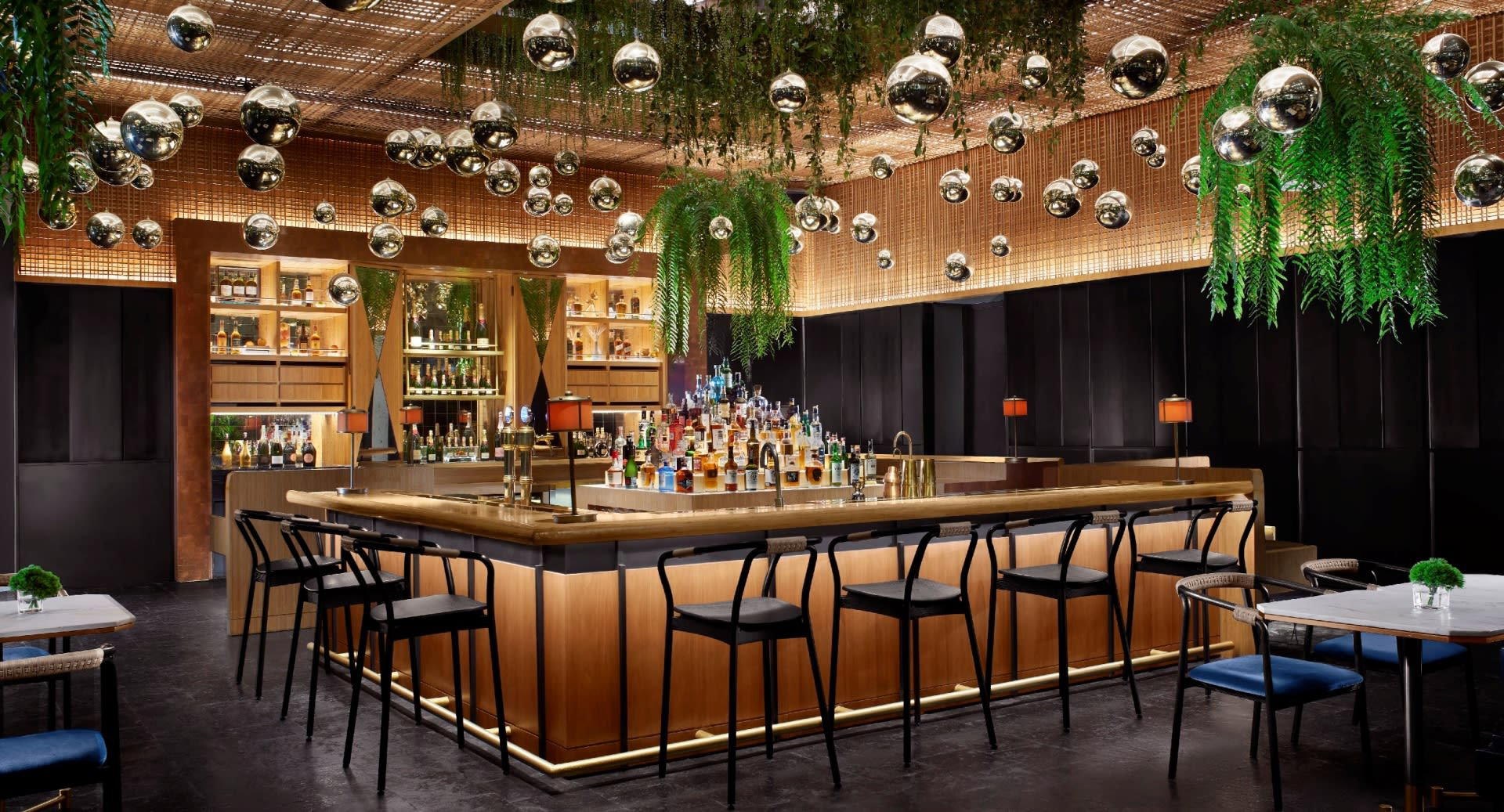
The meal at Saneh Jaan is structured to begin in the bar, where signature cocktails draw on Thai liqueurs and herbs. This is not incidental. In Bangkok's serious dining rooms, the bar has increasingly become an extension of the kitchen's sourcing logic, with house spirits and botanical programmes that reflect the same geographic specificity as the menu. Starting with a Thai herb-led cocktail before moving to the dining room is consistent with how the kitchen thinks about flavour progression: the bar sets the register before the food develops it.
This approach also distinguishes the evening format from a direct restaurant visit. The cocktail programme functions as a first course in mood and flavour orientation, which makes the full dinner-service arc more coherent. Lunch operates on a more compressed format, running from 11:30 AM to 2 PM daily, with dinner from 6 PM to 10 PM seven days a week.
Chef Pilaipon 'Toy' Kamnag and the Heritage Kitchen
In Bangkok's fine Thai dining tier, the role of the head chef is typically defined by archival depth rather than creative departure. Chef Pilaipon 'Toy' Kamnag operates within that tradition. The credentials that matter here are not innovation signals but fidelity ones: whether the kitchen can execute royal-era recipes at a standard that justifies the category. The Michelin star and consecutive OAD rankings confirm that external assessors have found the execution to meet that standard.
Chim by Siam Wisdom and Baan represent adjacent approaches within Bangkok's Thai fine dining field. Each kitchen makes different decisions about how far to move from source material and how much contemporary technique to apply. Saneh Jaan's position in the archive-loyal segment is clear from the menu language and from the OAD recognition, which has included it in the Asia ranking across three consecutive years (Recommended 2023, #377 in 2024, #428 in 2025).
For a broader map of where Thai cooking is being taken seriously across the country, Aeeen in Chiang Mai and Angeum in Phra Nakhon Si Ayutthaya represent the regional picture, while Agave in Ubon Ratchathani tracks different culinary currents in the northeast. Thai cooking is also finding international audiences, as reflected in addresses like Boo Raan in Knokke and Kin Khao in San Francisco.
Planning Your Visit
Saneh Jaan is at 130 Witthayu Road, Lumphini, in the Pathum Wan district. The Lumphini location puts it in proximity to Bangkok's business and diplomatic quarter, which explains the room's suitability for business dinners and formal occasions. It is not a neighbourhood dining room; it functions as a destination restaurant within a specific tier of Bangkok's dining culture.
| Detail | Saneh Jaan | Sorn | Baan Tepa |
|---|---|---|---|
| Price tier | ฿฿฿ | ฿฿฿฿ | ฿฿฿฿ |
| Cuisine focus | Royal/heritage Thai | Southern Thai | Thai contemporary |
| Michelin recognition | 1 Star (2024) | 2 Stars | 1 Star |
| OAD Asia ranking | #377 (2024) | Top 50 | Ranked |
| N/A | N/A | ||
| Hours | Daily lunch and dinner | Dinner only | Dinner only |
| Setting | Art-hung dining room | Heritage shophouse | Garden villa |
For planning the broader Bangkok visit, see our full Bangkok restaurants guide, our full Bangkok hotels guide, our full Bangkok bars guide, our full Bangkok experiences guide, and our full Bangkok wineries guide.
Frequently asked questions
What does dinner at Saneh Jaan typically cost?
Pricing at Saneh Jaan is listed as ฿฿฿.
Where do I go for Saneh Jaan?
Saneh Jaan is located at 130 Witthayu Rd, Lumphini, Pathum Wan, Bangkok 10330, Thailand, Bangkok.
Cuisine and Recognition
| Venue | Cuisine | Price | Awards | Notes |
|---|---|---|---|---|
| Saneh JaanThis venue (the venue you are viewing) | Thai Fine Dining | Not listed | 1 Michelin Star | Not listed |
| Sorn | Fine Southern Thai | $200–300 | 3 Michelin Stars · World's 50 Best #12 | Southern Thai, ฿฿฿฿ |
| Côte by Mauro Colagreco | Riviera Mediterranean Fine Dining | $200–300 | 2 Michelin Stars · World's 50 Best #91 | Mediterranean, Modern Cuisine, ฿฿฿฿ |
| Baan Tepa | Creative Thai Fine Dining | $150–200 | 2 Michelin Stars · World's 50 Best #53 | Thai contemporary, ฿฿฿฿ |
| Gaa | Modern Indian Fine Dining with Thai Influences | $150–200 | 2 Michelin Stars · World's 50 Best #95 | Modern Indian, Indian, ฿฿฿฿ |
| Sühring | Modern German Fine Dining | $200–300 | 3 Michelin Stars · World's 50 Best #18 | German, ฿฿฿฿ |
Recognition history
Dated appearances from independent guides and award organizations, with the underlying list record or original source where available.
Michelin 1 Star
Michelin
Opinionated About Dining Top Restaurants in Asia Recommended
Opinionated About Dining
Full recognition history (7 entries)
Michelin 1 Star
Michelin
Opinionated About Dining Top Restaurants in Asia Ranked #428
Opinionated About Dining
Michelin 1 Star
Michelin
Opinionated About Dining Top Restaurants in Asia Ranked #377
Opinionated About Dining
Opinionated About Dining Top Restaurants in Asia Recommended
Opinionated About Dining
Continue exploring
More in Bangkok
Restaurants in Bangkok
All restaurants in Bangkok →
Bars in Bangkok
All bars in Bangkok →
Details
- Elegant
- Sophisticated
- Classic
- Intimate
- Date Night
- Business Dinner
- Celebration
- Special Occasion
- Historic Building
- Standalone
- Local Sourcing
- A La Carte
- Set Menu
- Tea
- Cocktails
- Vegetarian Friendly
Current opening hours
- Monday
- 11:30 AM–2 PM, 6–10 PM
- Tuesday
- 11:30 AM–2 PM, 6–10 PM
- Wednesday
- 11:30 AM–2 PM, 6–10 PM
- Thursday
- 11:30 AM–2 PM, 6–10 PM
- Friday
- 11:30 AM–2 PM, 6–10 PM
- Saturday
- 11:30 AM–2 PM, 6–10 PM
- Sunday
- 11:30 AM–2 PM, 6–10 PM
Hours can change for holidays and private events. Hours as of .
Calm, elegant, and private, with warm low lighting, spaced-out tables, and a discreet fine-dining feel behind heavy wooden doors.