Spring Street Pizza
Spring Street Pizza occupies a railway arch in Southwark, one of London's most active clusters for independent operators working outside the city's formal dining circuit. The address, Arch 32 on Southwark Street, places it within walking distance of Borough Market, where the neighbourhood's appetite for produce-led, ingredient-focused cooking has shaped expectations for a decade. For pizza in London, that context matters.
Pearl is the En Primeur Club membership app — saves, bookings, and concierge access live there. Same editors, same standards.
- Address
- Arch 32, Southwark Quarter, Southwark St, London SE1 1TE, United Kingdom
- Website
- springstpizza.com
- Directions
- Get directions
 Saves & bookings on Pearl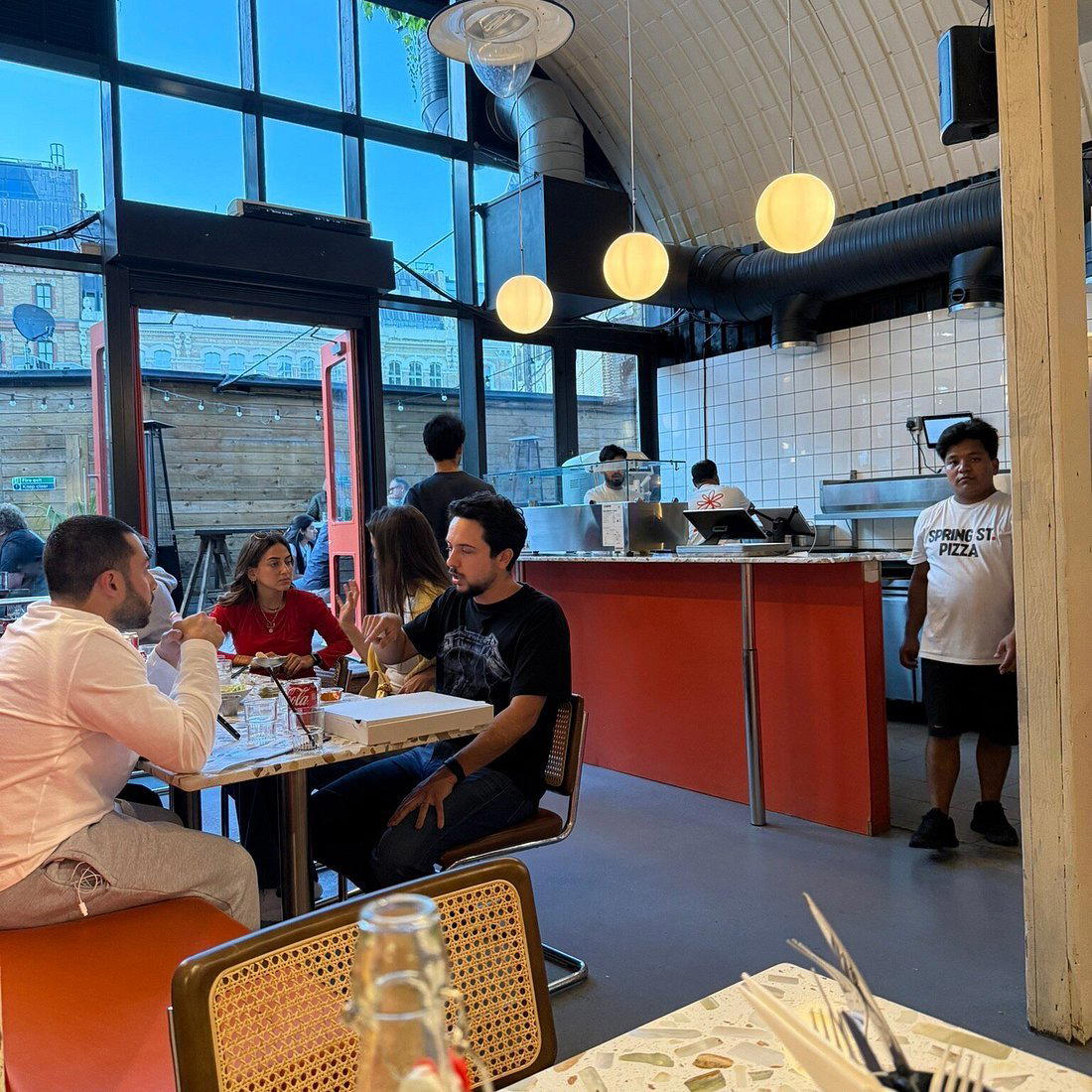
Pizza in London: What the Southwark Setting Tells You
The railway arches of Southwark have a particular logic. Since independent operators began colonising the spaces beneath the Thameslink and Jubilee viaducts in the early 2010s, the area around Southwark Street and Borough Market has become among the more concentrated stretches of serious, category-specific food in the city. These are not restaurants hedging toward broad appeal, they tend to be operators with a point of view about one thing. Arch 32 on Southwark Street SE1, the address where Spring Street Pizza operates, fits that pattern exactly. Spring Street Pizza is a New York-Style Pizza restaurant in London, located at Arch 32, Southwark Quarter, Southwark St, with a casual dress code and walk-in-friendly service.
The proximity to Borough Market is not incidental. That market has, over three decades, built one of London's clearest arguments that ingredient provenance is worth paying attention to, and the restaurants and food businesses that cluster around it tend to absorb that expectation. A pizza operation in this postcode faces a more literate audience than it would in most other parts of the city, one that has opinions about flour, tomatoes, and char.
The Cultural Weight of Pizza as a Serious Category
Pizza has spent years being taken seriously in London in a way it wasn't before the mid-2010s. The shift had several drivers: the arrival of operators trained in Naples or with demonstrable lineage to Neapolitan technique; a broader turn toward wood-fired cooking across the restaurant world; and a critical reappraisal of what constitutes craft in a category long dominated by chains and delivery economics. By the early 2020s, London had developed a coherent tier of pizza operators working at a level that could hold comparison with serious Neapolitan addresses, not identically, but seriously.
That context matters for understanding what Spring Street Pizza is doing in Southwark. Arch spaces across this part of London have become a preferred format for exactly this kind of single-focus operator: lower overheads than a traditional restaurant, a spatial aesthetic that suits informal eating without being careless about it, and a customer base that arrives with higher baseline expectations than the format might once have implied. The industrial setting, exposed brick, steel, the ambient sound of trains overhead, has become a recognisable London idiom for food that prioritises substance over room design.
What Southwark Tells You About the Competition
London's dining scene divides, at the leading end, into a tier of Michelin-decorated addresses that carry significant price tags and booking lead times. Restaurants like CORE by Clare Smyth, Restaurant Gordon Ramsay, Sketch, The Lecture Room and Library, The Ledbury, and Dinner by Heston Blumenthal define one end of the spectrum: formal, multi-course, occasion-driven. The restaurant operates at the opposite pole, accessible format, informal setting, a cuisine that has always belonged to everyday life rather than ceremony. That distinction is not a limitation; it is the point.
For readers planning broader UK trips, the country's most decorated dining outside London includes Waterside Inn in Bray, Le Manoir aux Quat'Saisons in Oxford, L'Enclume in Cartmel, Moor Hall in Aughton, Gidleigh Park in Chagford, Hand and Flowers in Marlow, hide and fox in Saltwood, Midsummer House in Cambridge, Opheem in Birmingham, and Restaurant Andrew Fairlie in Auchterarder. Internationally, the precision-over-ceremony argument finds different expression at Le Bernardin in New York City and the counter-format discipline of Atomix in New York City. These comparisons are not equivalents, they map the wider category of operators where the food itself carries the argument.
The Arch as Format
Railway arch venues in London carry a specific set of trade-offs that experienced visitors learn to read. Acoustics are rarely engineered for quiet conversation; the spaces run warm when busy; natural light is minimal. In return, they tend to offer a directness of experience that more decorated rooms can struggle to match, the food is not competing with the interior for attention, and the absence of ceremony tends to sharpen focus on what arrives at the table. For a pizza operation, this trade is straightforwardly good.
Southwark Quarter, the development cluster that includes Arch 32, sits close to Southwark Station (Jubilee line) and within comfortable walking distance of London Bridge (Jubilee and Northern lines, plus National Rail). The neighbourhood is active through lunch and into the evening, driven by the proximity of Borough Market and the Tate Modern a short walk west along the river. Visitors coming from central London will find the journey direct; those combining the restaurant with a Borough Market morning or a Tate Modern afternoon will find the geography direct.
What the Southwark Pizza Moment Looks Like in Practice
The expectation that has built around serious London pizza in the past decade is specific: dough with genuine fermentation character, tomato sauce where the quality of the base ingredient is self-evident, cheese applied with proportion rather than excess, and cooking in a wood-fired or gas-fired oven that produces a crust with both char and chew. These are not mysterious standards, but they are demanding ones. The operations that meet them in London now occupy a recognisable position in the city's food culture, taken seriously by the same audiences who track openings at the fine-dining level, but valued for their accessibility rather than in spite of it.
Planning Your Visit
The restaurant is located at Arch 32, Southwark Quarter, Southwark Street, London SE1 1TE. Southwark Station (Jubilee line) provides direct access. The SE1 postcode covers a dense cluster of food and cultural destinations, making the restaurant a natural component of a longer Southwark afternoon or evening rather than a standalone destination, though the address is specific enough to warrant a dedicated visit from across the city for those tracking London's serious pizza operators.
Reputation First
Comparable venues nearby, for context on price, style, and recognition.
| Venue | Cuisine | Price | Notes |
|---|---|---|---|
| Spring Street PizzaThis venue — the venue you are viewing | New York-Style Pizza | $$ | Not listed |
| Taberna Etrusca | Classic Italian Trattoria | $$ | Cheapside |
| Antica Pizzeria Da Michele | Authentic Neapolitan Pizza | $$ | Soho |
| Vasco and Piero Pavilion | Traditional Umbrian Italian | $$ | Soho |
| The Lucky Pig | Italian Pizza & Cocktails | $$ | Fitzrovia |
| L'Antica Pizzeria da Michele | Authentic Neapolitan Pizza | $$ | Lisson Grove |

At a Glance
- Lively
- Casual
- Trendy
- Casual Hangout
- Group Dining
- Open Kitchen
- Craft Cocktails
Current opening hours
- Monday
- Closed
- Tuesday
- 5–10 PM
- Wednesday
- 12–10 PM
- Thursday
- 12–10 PM
- Friday
- 12–10 PM
- Saturday
- 12–10 PM
- Sunday
- 12–9 PM
Hours can change for holidays and private events. Last verified .
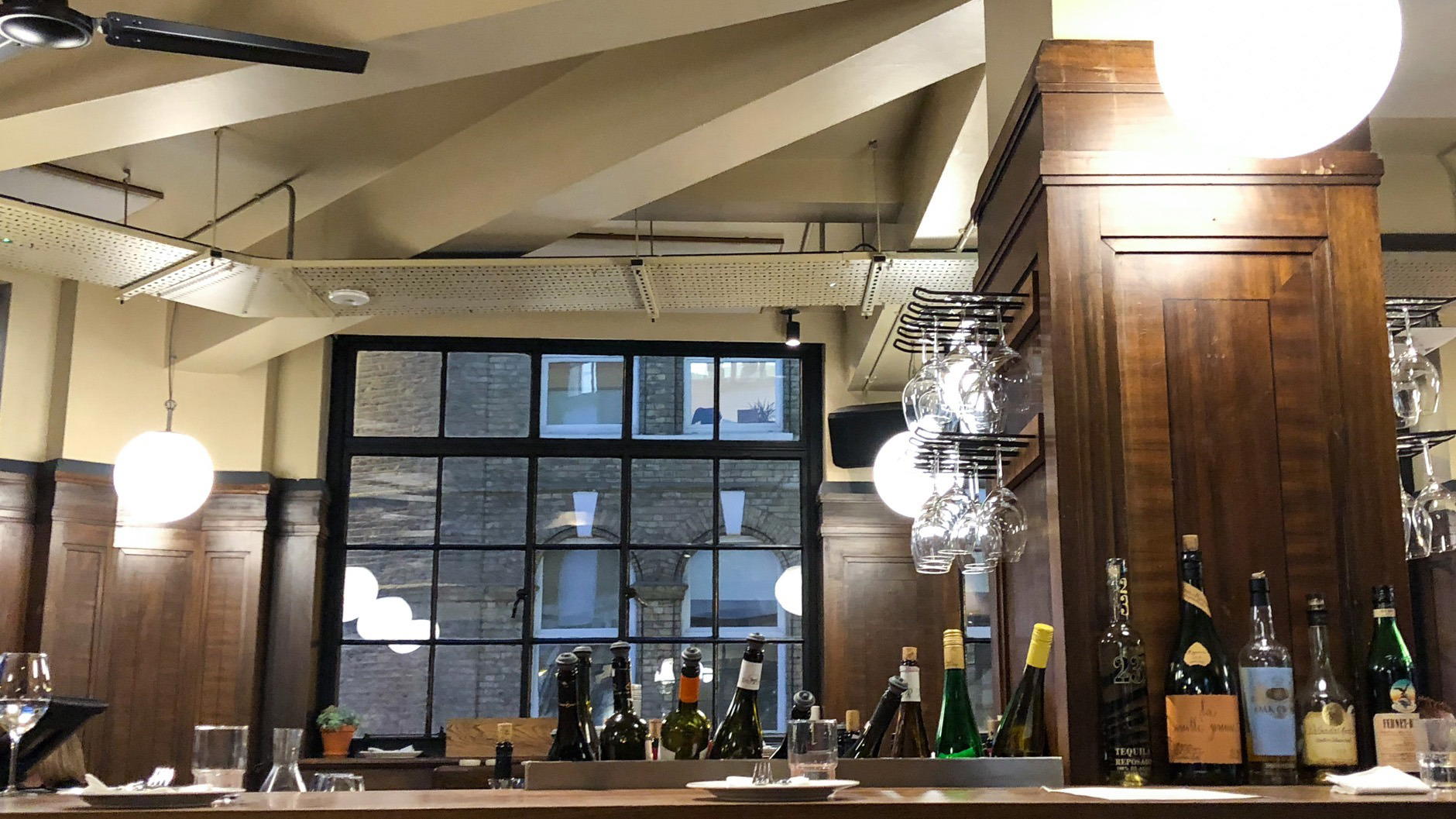
Laid-back and energetic atmosphere in a compact 19-seat space beneath arches, well-suited for casual dining and fun nights out.