Spices 1822
Our verdict
Spices 1822 occupies a specific address in Mülheim an der Ruhr's dining scene, a mid-sized Ruhr Valley city where serious cooking has historically lived in the shadow of Düsseldorf and Essen. The name alone signals an orientation toward spice-led cuisine, placing it in a category where ingredient provenance and sourcing discipline tend to define the kitchen's ambition. For the Ruhr region, that specificity is worth noting.

Pearl is the En Primeur Club membership app — saves, bookings, and concierge access live there. Same editors, same standards.
- Address
- Duisburger Str. 51, 45479 Mülheim an der Ruhr, Germany
- Phone
- +4920862935337
- Hours
- Mon–Tue ClosedWed–Thu 6 PM–12 AMFri–Sat 6 PM–1 AMSun 6 PM–12 AM
- Website
- spices1822.eatbu.com
- Directions
- Get directions
The menu
What to order
- Beef Tartare with smoked mayonnaise
- Burrata with soy yolk
- Aubergine Miso
Where the Ruhr Valley Finds Its Spice
Mülheim an der Ruhr sits in the geographical centre of the Ruhr metropolitan area, a conurbation of roughly five million people that has spent two decades repositioning itself from industrial heritage toward cultural and culinary relevance. The city's dining scene operates in the long shadow of Düsseldorf, forty kilometres to the south, where restaurants like Vendôme in Bergisch Gladbach and a cluster of Michelin-recognised addresses have set the regional benchmark for modern European cooking. Against that context, a restaurant whose name foregrounds spices — suggesting an ingredient-led philosophy with non-German culinary roots — represents a deliberate positioning, not an accident of branding.
Duisburger Strasse 51 is a working street address in western Mülheim, the kind of location that requires intent rather than happenstance to discover. That geography matters when considering the dining proposition: restaurants that operate outside city-centre tourist circuits in post-industrial German cities tend to build their audiences through reputation rather than footfall, which places a particular pressure on the kitchen to deliver consistency. For the broader Mulheim An Der Ruhr restaurant scene, Spices 1822 represents the category of address locals know before visitors do.
Ingredient Sourcing as Editorial Statement
Across Germany's serious restaurant tier, the conversation around sourcing has moved well beyond organic certification and farm-to-table rhetoric. At addresses like Aqua in Wolfsburg or ES:SENZ in Grassau, sourcing decisions are architectural: they determine menu structure, seasonal rhythm, and ultimately the claim a kitchen can make about its own identity. A restaurant named around spices enters that conversation with a specific implied commitment. Spices are among the most globally traded and provenance-sensitive ingredients in any kitchen. Where they come from, how recently they were sourced, and whether they arrive whole or pre-processed are questions that separate kitchens operating at different levels of seriousness.
Germany's spice-forward cooking tradition draws on multiple lineages. The country's colonial-era trade history, its long Turkish and southern European diaspora communities, and more recent migration patterns from South and Southeast Asia have all deposited culinary influence in cities precisely like those of the Ruhr Valley. Mülheim, Duisburg, and Essen have some of the highest concentrations of international communities in the country, which means the audience for spice-forward cooking exists here in a way it simply does not in smaller, more homogeneous German cities. A restaurant that leans into that demographic reality rather than defaulting to generic contemporary European cooking is making a calculated and arguably correct reading of its market.
Reading the Name: 1822 as Anchor
The numerical suffix in the restaurant's name is likely a founding or address reference, a common convention in European hospitality naming that signals continuity or historical grounding. Whether it denotes a year of establishment or a street-number allusion, the effect is the same: it positions the restaurant as something with roots rather than a trend-chasing newcomer. In a region where industrial identity has been replaced by a more complex civic self-image, that kind of temporal anchoring carries specific weight. Compare this to how Schwarzwaldstube in Baiersbronn or Waldhotel Sonnora in Dreis use their physical or historical context as part of their identity proposition, the logic is similar even when the cuisine and setting differ entirely.
The Ruhr Region in Germany's Fine Dining Geography
Germany's Michelin-starred geography clusters heavily in Baden-Württemberg, Bavaria, and the Rhine corridor. The Ruhr, despite its population density, has historically underperformed on formal recognition relative to its size. That gap has been narrowing, partly because the region's industrial transformation has produced a new middle-class dining audience with disposable income and international reference points, and partly because a younger generation of cooks has started treating the Ruhr as a serious destination rather than a career waypoint. Addresses across the country, from JAN in Munich to Restaurant Haerlin in Hamburg, demonstrate the range of ambition now present in German fine dining; the Ruhr is working toward its own version of that range.
In that context, a spice-focused restaurant in Mülheim is competing not against Victor's Fine Dining by Christian Bau in Perl but against the full range of casual and mid-market alternatives in a city where the dining habit is still developing. That is both a more achievable competitive position and a more demanding one in terms of value proposition, the kitchen needs to give a local audience a reason to choose it over familiar, lower-stakes options.
Placing Spices 1822 in the Wider Creative Tier
Germany's more experimental and ingredient-obsessed end of dining has produced addresses like CODA Dessert Dining in Berlin, which reframes an entire meal category around conceptual discipline, or ATAMA by Martin Stopp in Sankt Ingbert, which applies Japanese-influenced precision to a regional German context. Internationally, addresses like Le Bernardin in New York City and Atomix in New York City show what happens when ingredient sourcing becomes the full organising principle of a kitchen's identity. Spices 1822 operates in a different tier and a different city, but the underlying question its name raises is the same: can a kitchen's sourcing decisions become the story, rather than just the backstory?
For diners approaching Mülheim from the wider region, or travelling specifically through the Ruhr corridor, the address at Duisburger Strasse 51 functions as an argument that serious, ingredient-attentive cooking does not require a postcode in Düsseldorf or Frankfurt. Restaurants like Bagatelle in Trier, Schanz in Piesport, or ammolite in Rust have each demonstrated that regional addresses outside the major metropolitan benchmarks can build credible reputations when the kitchen has something specific to say. AUGUST in Augsburg and AURA in Wirsberg make the same case from Bavaria. The pattern holds across Germany: the gap between a recognised address and an undiscovered one is often not kitchen quality but marketing proximity to established dining circuits.
Planning a Visit
Spices 1822 is located at Duisburger Str. 51 in Mülheim an der Ruhr, accessible from the city centre and within the broader Ruhr transport network that connects Mülheim to Essen, Duisburg, and Düsseldorf. Given the restaurant's position in a non-tourist-circuit neighbourhood, confirming opening days in advance is advisable, particularly for visitors travelling specifically to dine there rather than passing through the city.
Frequently asked questions
Is Spices 1822 good for families?
Spices 1822 is located on Duisburger Str. in Mülheim an der Ruhr, a city with a broad dining culture rather than a strictly formal fine dining tradition. The address itself sits in an accessible part of the Ruhr conurbation, which works in favour of practical visits.
How would you describe the vibe at Spices 1822?
The name references spice-forward cooking in a city that has been quietly repositioning its cultural identity over two decades, which suggests a kitchen with a point of view rather than a neutral bistro format. Mülheim an der Ruhr sits at the centre of a five-million-person metropolitan area, so the audience is broad and the register is likely confident without being stiff.
What kind of cuisine does Spices 1822 focus on, and how does it fit into the Ruhr dining scene?
Spices 1822 takes its name from a concept built around spice-led cooking, positioning it as a counterpoint to the classical European formulas that dominate Germany's more decorated restaurant addresses in Baden-Württemberg and Bavaria. The Ruhr region, despite housing one of Europe's largest urban concentrations, remains underrepresented in Germany's Michelin geography, which gives kitchens like Spices 1822 at Duisburger Str. 51 more room to define their own creative register.
What's the must-try dish at Spices 1822?
No specific menu items are documented in available editorial records for Spices 1822, and the cuisine type has not been publicly confirmed. What the name signals is a kitchen built around spice as a structural element rather than a garnish, which in the current German dining conversation places it in line with kitchens prioritising sourcing and technique over classical French frameworks. Contact the restaurant at Duisburger Str. 51, Mülheim an der Ruhr for current menu details.
What part of town is Spices 1822 in?
Spices 1822 is located at Duisburger Str. 51, 45479 Mülheim an der Ruhr, Germany, Mulheim An Der Ruhr.
Do they take walk-ins at Spices 1822?
Given its address on Duisburger Str. 51 in Mülheim an der Ruhr, the restaurant operates in a city with genuine local foot traffic, which sometimes supports walk-in availability at off-peak hours. Reaching out directly before visiting is the safest approach, particularly for evenings or weekends.
How It Stacks Up
Comparable venues nearby, for context on price, style, and recognition.
| Venue | Cuisine | Price | Awards | Notes |
|---|---|---|---|---|
| Spices 1822This venue — the venue you are viewing | Modern Fusion Cuisine | Not listed | Not listed | Not listed |
| FIVE | Modern Fusion Fine Dining | Not listed | Star Wine List | Mitte |
| The Paradise Now | International Fusion | Not listed | Not listed | Hafen |
| LADEN EIN | Rotating Pop-up Street Food Fusion | Not listed | Not listed | Neustadt/Nord |
| MIZU | Asian Fusion | $50–100 | Not listed | Lahn |
| Reef and Beef Düsseldorf | Steakhouse & Seafood | Not listed | Not listed | Pempelfort |
Continue exploring
More in Mulheim An Der Ruhr
Restaurants in Mulheim An Der Ruhr
Browse all →
Bars in Mulheim An Der Ruhr
Browse all →
Hotels in Mulheim An Der Ruhr
Browse all →
Wineries in Mulheim An Der Ruhr
Browse all →
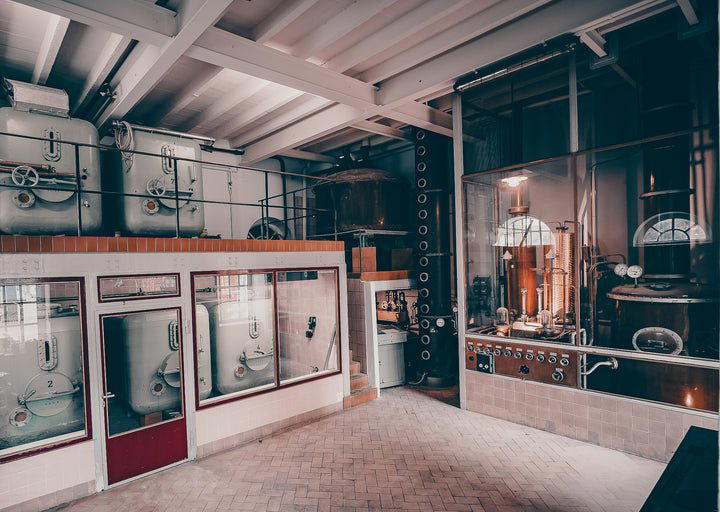
Spices 1822
The wine
- Wine program
- Curated wine list
- Craft cocktails
Details
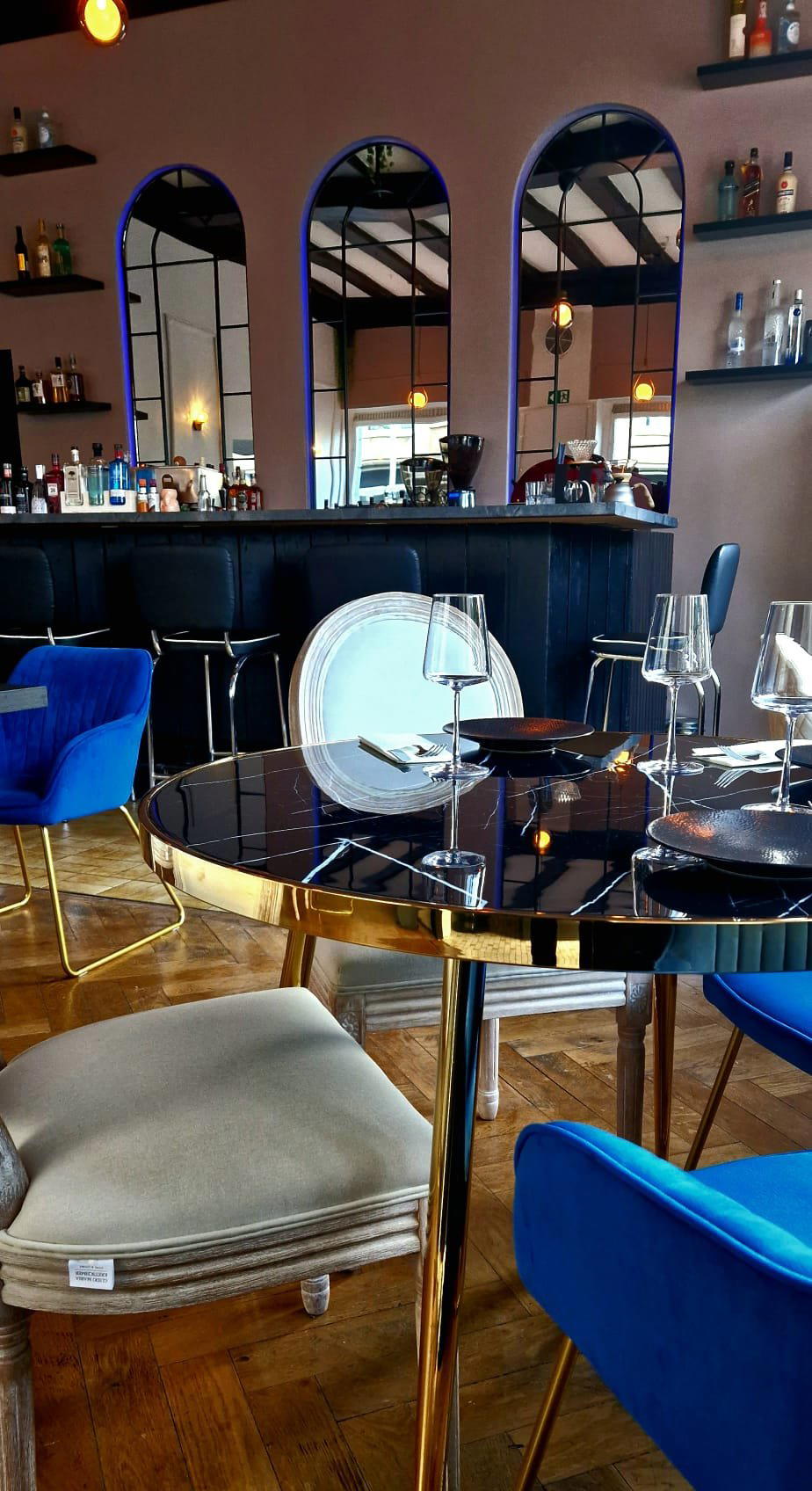
- Cozy
- Elegant
- Date Night
- Business Dinner
- Private Event
- Open Kitchen
- Craft Cocktails
- A La Carte
- Cocktails
- Wine
- Vegetarian Friendly
Current opening hours
- Monday
- Closed
- Tuesday
- Closed
- Wednesday
- 6 PM–12 AM
- Thursday
- 6 PM–12 AM
- Friday
- 6 PM–1 AM
- Saturday
- 6 PM–1 AM
- Sunday
- 6 PM–12 AM
Hours can change for holidays and private events. Last verified .
Charming atmosphere with flippige jazz music from the 60s, 70s, and 80s playing in the background.