25hours Hotel Das Tour

Michelin Selected
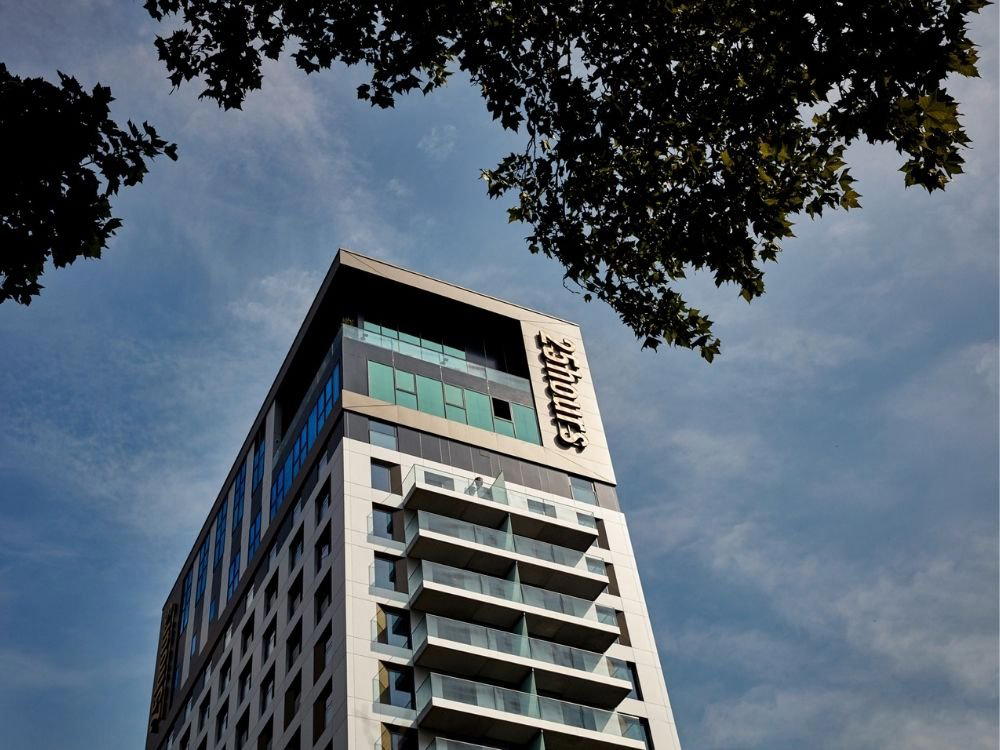
25hours Hotel Das Tour occupies a distinct position in Düsseldorf's mid-market boutique sector, translating the chain's accessible, inclusion-first ethos into a property shaped by the city's Franco-German dual identity. Rooms split between industrial German and warmer Mediterranean aesthetics, while the Paris Club bar and restaurant, and a Tour de France-themed wellness floor, lean decisively toward the French side of that divide.

Pearl is the En Primeur Club membership app — saves, bookings, and concierge access live there. Same editors, same standards.
- Address
- Louis-Pasteur-Platz 1, 40211 Düsseldorf, Germany
- Phone
- +49 211 9009100
- Website
- 25hours-hotels.com
- Directions
- Get directions
Two Cities, One Address
Düsseldorf has always operated as a city with one eye on the Rhine and another on France. The proximity to the border, the concentration of Japanese and international business travellers, and the fashion-forward retail culture along the Königsallee give the city a cross-cultural restlessness that distinguishes it from Frankfurt's finance sobriety or Berlin's creative swagger. 25hours Hotel Das Tour takes that local identity and builds a physical argument around it: the property is structured as a Franco-German dialogue, with every design decision positioned somewhere along that axis.
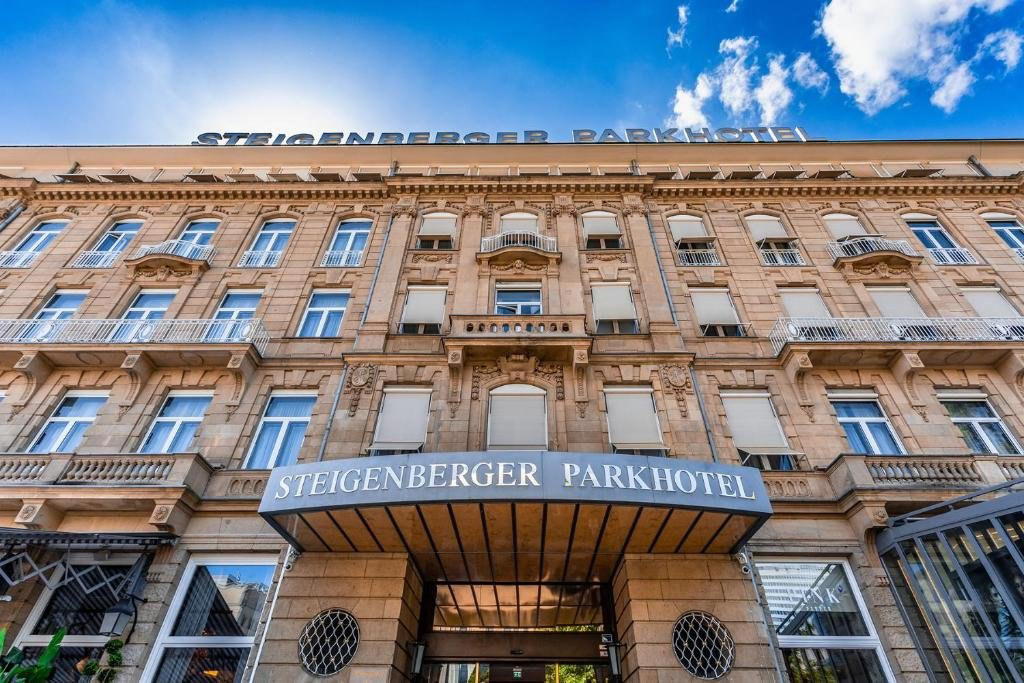
The 25hours brand occupies a specific tier in European boutique hospitality. What Breidenbacher Hof Düsseldorf represents in the traditional luxury tier and what Steigenberger Icon Parkhotel Düsseldorf occupies in the established upper-midscale bracket, 25hours answers with something more lateral: accessible without being anonymous, design-led without being precious. The group's original comparison point is deliberate. The Ace Hotels model in the United States built a template for culturally literate, socially open hospitality that felt genuinely different from corporate hotel chains. 25hours has pursued an equivalent role in German-speaking Europe, with properties in Hamburg, Vienna, Frankfurt, and Zurich, each tailored to read as local rather than franchised.
The Architecture of the Argument
The Swedish design team's brief at Das Tour was to make the Franco-German duality legible at the room level, not just in the marketing language. The result is a split-identity property: rooms are categorised as either German or French in their aesthetic approach. German-coded rooms use industrial metal surfaces, saturated colours, and a graphic precision that references the city's engineering and trade-fair identity. French-coded rooms soften those edges with a warmer, more Mediterranean palette that nudges toward the domestic interiors you might find in a well-appointed Lyon apartment rather than a Parisian hotel. Neither register tips into pastiche because the Swedish team has kept the forms spare and the furniture choices deliberate.
Across both room types, Bluetooth audio systems are standard. The more premium categories add balconies and freestanding tubs, which in a mid-city property with Düsseldorf's density represent a meaningful spatial upgrade. The hotel's design logic is most visible when you compare it against properties like Hotel Kö59 Düsseldorf or The Wellem: those properties work in a more formal or heritage-influenced register, while Das Tour treats its public spaces and guestrooms as continuous design statements rather than separate design problems.
The Paris Club and What It Chooses
In boutique hotels of this type across Europe, the bar and restaurant function as the social engine of the property rather than a service amenity. The Paris Club at Das Tour takes a clear position in the hotel's internal Franco-German debate, aligning decisively with France. The name and the concept make the editorial stance plain: this is not a venue trying to split the difference. In cities where the hotel bar has largely been abandoned to guests who couldn't be bothered to go out, a bar with a specific identity and a reason to visit from outside the property operates differently. The Paris Club is positioned as that kind of destination within the hotel's public floor.
The wider pattern here is consistent with how 25hours properties operate across their portfolio. In Hamburg, Berlin, and Frankfurt, the group's ground-floor programming has tended to draw a mixed local and hotel-guest crowd, which in turn shapes the atmosphere of the lobby and communal areas. For travellers choosing between a property like Das Tour and a more conventional hotel, that distinction matters: the public floor of Das Tour is designed to feel like a neighbourhood venue that happens to have rooms above it, rather than a hotel amenity that opens to the public as an afterthought.
Wellness as Cultural Reference
The sauna and gym at Das Tour follow a recognisably German logic: physical recovery and wellness infrastructure are expected at this price point, not optional extras. What Das Tour does with that infrastructure is characteristically lateral. The wellness floor is styled as a tribute to the Tour de France, which gives the brand its name and its overarching visual concept. It is a detail that works better in practice than it sounds in briefing: the cycling race provides a coherent visual system (jerseys, gradients, route maps, the language of peloton culture) that gives the gym and sauna a graphic identity without turning them into theme-park environments.
For context on how other German properties handle wellness at the high end, the contrast is instructive. Properties like Althoff Seehotel Überfahrt in Rottach-Egern or Das Kranzbach Hotel in Kranzbach position wellness as a primary product, with spa infrastructure at resort scale. Luisenhöhe in Horben takes an even more dedicated health-resort approach. Das Tour's wellness offer sits at a different register entirely: it is not the reason to book the hotel, but it is executed with enough design wit to feel considered rather than obligatory.
Placing Das Tour in the Düsseldorf Context
Düsseldorf's hotel market has a pronounced high-end segment, anchored by legacy luxury addresses and international brand flagships, and a mid-market that has historically been dominated by business travel infrastructure built around the Messe and the Königsallee retail corridor. The 25hours entry into that market represents a third category: design-led, socially programmed, and pitched at a traveller who reads cultural fluency as a form of value rather than luxury as a form of status.
That positioning places Das Tour in a specific competitive conversation. For the traveller weighing a Excelsior Hotel Ernst in Cologne-style heritage property against a boutique option in a neighbouring city, or comparing the 25hours format against the Sofitel Frankfurt Opera model of internationally branded design hotels, Das Tour makes a case for something more locally calibrated. The Franco-German concept is not arbitrary: it is a direct reading of what Düsseldorf is, and a bet that the guests most likely to appreciate the hotel are also the guests most likely to notice the difference.
The 25hours group's broader German portfolio provides useful reference points for first-time guests. The Hamburg and Frankfurt properties have established the brand's social-programming model in larger German cities, while Fairmont Hotel Vier Jahreszeiten in Hamburg and Hotel Traube Tonbach in Baiersbronn represent the kind of traditional hospitality that 25hours consciously positions itself against. Internationally, the peer comparison reaches toward properties like The Fifth Avenue Hotel in New York City rather than grand-hotel addresses like Hôtel de Paris Monte-Carlo or Badrutt's Palace Hotel in St. Moritz.
Planning Your Stay
25hours Hotel Das Tour is located at Louis-Pasteur-Platz 1 in Düsseldorf, placing it within reach of the city centre. The hotel's website is the primary booking channel; direct reservations tend to offer the most flexibility on room-type selection, which matters here given the German/French room split and the variation in amenities across categories. Walk-in availability depends on occupancy and season, but the hotel's position in the accessible-boutique tier means demand tracks trade-fair and fashion-week calendars closely: booking ahead around Messe event dates is advisable. Travellers arriving for leisure rather than business will find the shoulder periods between major trade events offer better rate conditions. For broader orientation on eating and drinking in the city, our full Düsseldorf restaurants guide covers the neighbourhoods and venues worth building an itinerary around.
Comparison Snapshot
Comparable venues nearby, for context on price, style, and recognition.
| Venue | Cuisine | Price | Awards | Notes |
|---|---|---|---|---|
| 25hours Hotel Das TourThis venue — the venue you are viewing | Boutique design hotel blending French and German influences | $100–200 | Michelin Selected | Not listed |
| HENRI Hotel Düsseldorf Downtown | Boutique hotel in converted 1970s office building | $1–100 | Michelin Selected | Pempelfort |
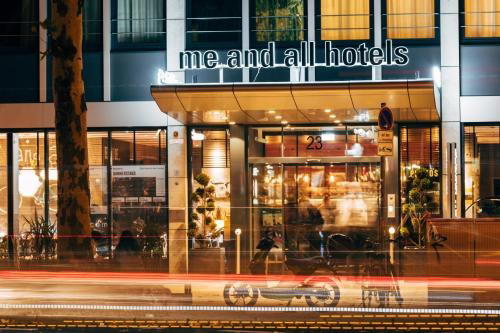
| me and all hotel düsseldorf | Japanese-inspired boutique urban hotel | $1–100 | Michelin Selected | Little Tokyo |
| me and all hotel düsseldorf-oberkassel | Boutique design hotel with bold, local-inspired urban aesthetics | $100–200 | Michelin Selected | Oberkassel |
| The Fritz Düsseldorf Königsallee | Contemporary boutique hotel blending modern elegance with warm hospitality; designed by renowned designer Vivian van Schagen with an edgy, sophisticated personality. | Not listed | Michelin Selected | Friedrichstadt |
| Hyatt Regency Dusseldorf | Contemporary high-rise landmark with silhouette architecture anchoring Media Harbour. | $200–300 | Michelin Selected | Hafen |
Recognition history
Dated appearances from independent guides and award organizations, with the underlying list record or original source where available.
Michelin Selected
Michelin
Continue exploring
More in Düsseldorf
Hotels in Düsseldorf
Browse all →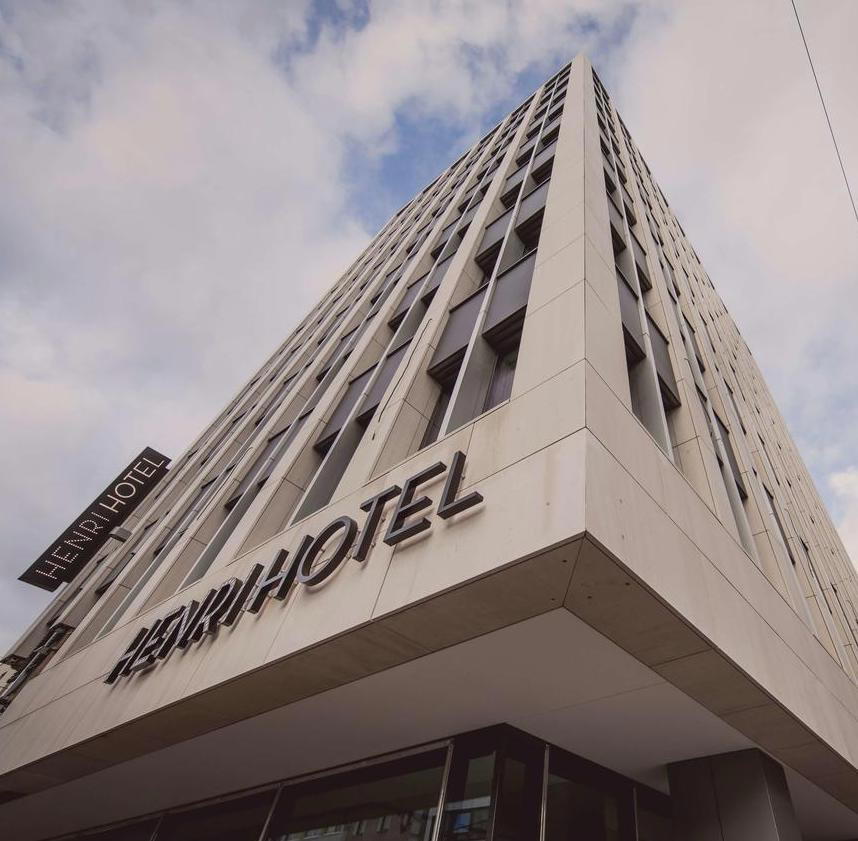
Bars in Düsseldorf
Browse all →
Restaurants in Düsseldorf
Browse all →
Wineries in Düsseldorf
Browse all →
Details
- Trendy
- Modern
- Lively
- Whimsical
- Business Trip
- Weekend Escape
- Rooftop Pool
- Panoramic View
- Terrace
- Wi Fi
- Fitness Center
- Sauna
- Room Service
- Concierge
- Bicycle Rental
- Skyline
- Wheelchair Accessible
- Elevator
Trendy and lively with cool, quirky design, stylish lighting, and lively rooftop atmosphere.