Souen
Souen, on East 6th Street in Manhattan's East Village, has served as a reference point for macrobiotic and natural-food dining in New York for decades. Its address places it within one of the city's most historically layered restaurant corridors, where ingredient philosophy has long mattered as much as technique. The kitchen draws on whole-food traditions that predate the current wellness-dining wave by a generation.
Pearl is the En Primeur Club membership app — saves, bookings, and concierge access live there. Same editors, same standards.
- Address
- 326 E 6th St, New York, NY 10003
- Phone
- +1 212 388 1155
- Website
- souen.net
- Directions
- Get directions
 Saves & bookings on Pearl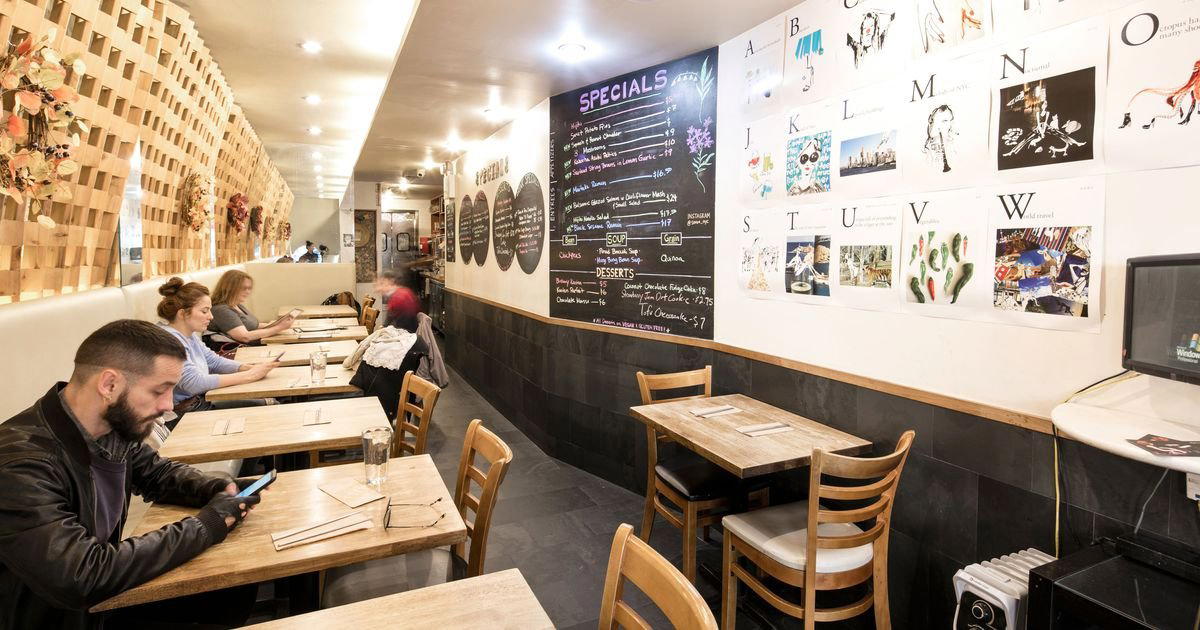
East Village, Long Before the Wellness Wave
New York's current enthusiasm for whole-grain bowls, house-fermented condiments, and plant-forward tasting menus reads as a recent development. It is not. Souen, at 326 East 6th Street in the East Village, has operated within the macrobiotic tradition long enough that much of what the city now calls progressive dining simply caught up to a framework the restaurant has practiced since its early years. In a neighbourhood that has cycled through dozens of food trends, that kind of durability is its own credential.
The East 6th Street corridor sits at the intersection of two historically distinct dining cultures: the South Asian restaurant row that made this block a reference point for decades, and the countercultural food scene that took root in the East Village during the 1970s and 1980s. Souen belongs to the latter tradition, and its longevity gives it a kind of institutional weight that newer wellness-adjacent concepts in Brooklyn or the West Village have not yet earned.
The Logic of Macrobiotic Technique Applied to Local Ingredients
Macrobiotic cooking, as a discipline, arrived in the United States largely through Japanese philosophy: whole grains as a dietary foundation, seasonal vegetables prioritised over protein, minimal processing, and an attention to the energetic properties of food that sits closer to traditional East Asian medicine than to French culinary theory. What makes the American application of that framework interesting is how it absorbed local agricultural supply. The technique is imported; the raw material, ideally, is not.
This intersection of method and provenance is where Souen operates most deliberately. The macrobiotic kitchen does not treat local ingredients as a branding exercise in the way that some contemporary farm-to-table formats do. Instead, the seasonal sourcing is structurally required by the philosophy: certain vegetables and grains carry different energetic classifications depending on how and where they are grown, which means the sourcing question is built into the cooking logic rather than added on top of it. That distinction separates the approach from what restaurants like Blue Hill at Stone Barns in Tarrytown do with local provenance at the fine-dining tier, or what Single Thread Farm in Healdsburg achieves through hyper-regional Japanese-inflected cuisine further up the price scale.
Across the country, the intersection of imported culinary technique and local ingredient sourcing has produced particularly considered restaurant programs of the past two decades. Smyth in Chicago applies fine-dining precision to Midwestern produce. Lazy Bear in San Francisco works through a communal format built on Northern California's agricultural depth. Providence in Los Angeles brings French and Japanese technique to Pacific seafood. Addison in San Diego and Frasca Food and Wine in Boulder both apply European frameworks to distinctly American contexts. Souen operates in the same conceptual space, though at a different price point and with a different philosophical origin than any of those programs.
Where Souen Sits in the New York Dining Spectrum
New York's top tier of formally recognised restaurants operates at a remove from what Souen does. The $$$$ end of Manhattan dining includes counters and tasting rooms like Masa, Le Bernardin, Per Se, Eleven Madison Park, and Atomix, where format, investment, and price signal a specific kind of occasion dining. Souen has never positioned itself in that bracket. Its competition is a different comparable set: the serious natural-food restaurants that served New York before the current crop of wellness-driven concepts arrived, and the East Village neighbourhood spots that have maintained a coherent culinary identity across decades of gentrification pressure.
That positioning makes Souen useful to a different kind of reader than those planning a Michelin-starred occasion meal. The question at Souen is not about omakase sequencing or wine pairing at altitude. It is about whether a cooking philosophy built around whole grains, fermented foods, and seasonal vegetables, developed over decades in a specific Manhattan neighbourhood, holds up as a serious dining proposition on its own terms. The answer, given the restaurant's sustained presence, is that it does.
For comparison, restaurants elsewhere in the country that have taken Japanese-influenced whole-food philosophy in more formal directions include The French Laundry in Napa, which applies Japanese precision at a French fine-dining register, and internationally, Atelier Moessmer Norbert Niederkofler in Brunico, which applies Alpine regionalism with a rigour that parallels the macrobiotic commitment to place-bound ingredients. Dal Pescatore in Runate and Emeril's in New Orleans represent different but comparable long-haul commitments to a defined regional cooking identity. The Inn at Little Washington similarly demonstrates how a deeply held cooking philosophy can sustain a restaurant across multiple decades without requiring format reinvention.
Planning a Visit
Souen's East Village address at 326 East 6th Street is accessible from multiple subway lines serving the Astor Place and Second Avenue stops. The neighbourhood is walkable and dense with other dining options, which means Souen functions well as a deliberate standalone choice rather than a default. Confirm current hours and booking arrangements directly with the restaurant before visiting. The East Village tends to be most active on weekend evenings, so a weekday visit typically involves fewer logistical complications.
Budget Reality Check
Comparable venues nearby, for context on price, style, and recognition.
| Venue | Cuisine | Price | Notes |
|---|---|---|---|
| SouenThis venue — the venue you are viewing | East Village, Macrobiotic Japanese | $$ | Not listed |
| Uminoie | East Village, Homestyle Japanese Izakaya | $$ | Not listed |
| Cocoron | Lower East Side, Handmade Soba Noodles | $$ | Not listed |
| Momokawa | Not listed | $$ | Upper East Side-Lenox Hill-Roosevelt Island, Traditional Japanese Sukiyaki & Sushi |
| IPPUDO NY | Not listed | $$ | East Village, Hakata-Style Tonkotsu Ramen |
| Zutto Nolita | Not listed | $$ | SoHo-Little Italy-Hudson Square, Japanese Ramen Sushi Bar |
Continue exploring
More in New York City
Restaurants in New York City
Browse all →

Bars in New York City
Browse all →

Hotels in New York City
Browse all →








At a Glance
- Quiet
- Minimalist
- Cozy
- Casual Hangout
- Solo
- Family
- Standalone
- Organic
- Farm To Table
- Street Scene
Current opening hours
- Monday
- 1–9:30 PM
- Tuesday
- 1–9:30 PM
- Wednesday
- 1–9:30 PM
- Thursday
- 1–9:30 PM
- Friday
- 1–9:30 PM
- Saturday
- 1–9:30 PM
- Sunday
- 1–9:30 PM
Hours can change for holidays and private events. Last verified .
Tranquil and soothing atmosphere with minimalist, Zen-chic design; subdued and relaxed like a yoga center or coffee shop; panoramic views of Prince Street and 6th Avenue from window seating.