Cocoron
Cocoron on Delancey Street has quietly held its place in the Lower East Side's Japanese dining conversation for years, drawing regulars with a focused soba menu that resists the embellishment common in Manhattan's more theatrical noodle houses. The room is compact, the format direct, and the cooking disciplined enough to warrant attention from anyone tracking where serious Japanese casual dining sits in New York.
Pearl is the En Primeur Club membership app — saves, bookings, and concierge access live there. Same editors, same standards.
- Address
- 16 Delancey St, New York, NY 10002
- Phone
- +1 212 477 1212
- Website
- cocoronandgoemon.com
- Directions
- Get directions
 Saves & bookings on Pearl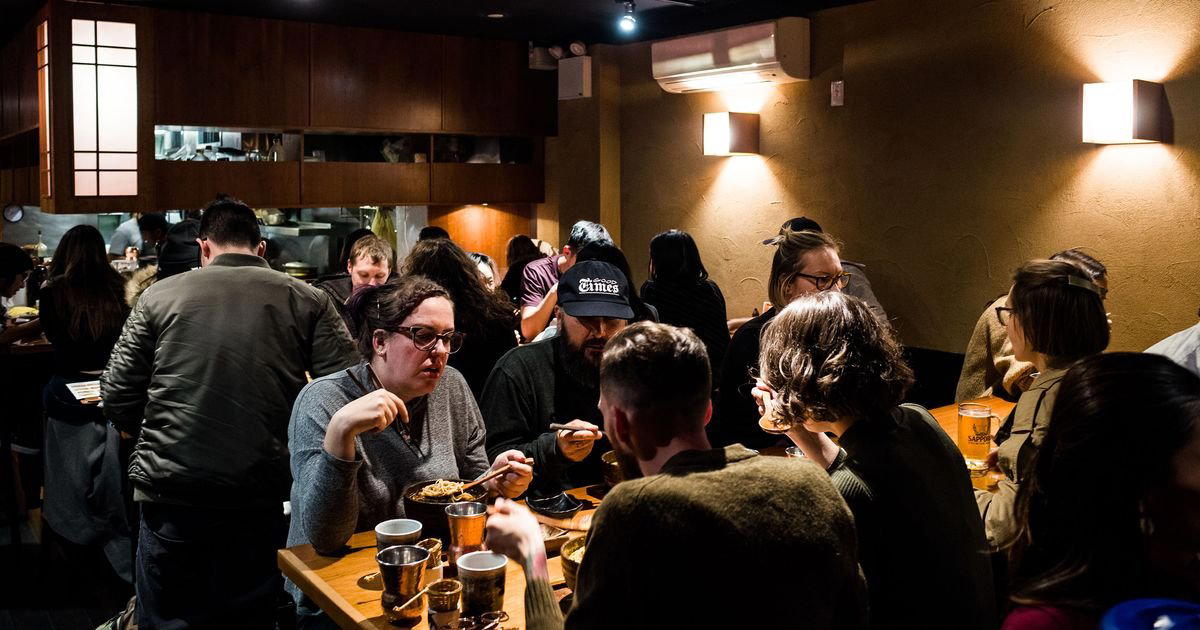
A Room That Means Business
Delancey Street, at the edge of the Lower East Side where the neighborhood grades from vintage shops into residential brick, is not where you go looking for ceremony. The dining culture here runs toward the specific and the local: spots that have survived rent pressure and shifting foot traffic by doing one thing with enough conviction that the neighborhood keeps coming back. Cocoron, at 16 Delancey St, fits that pattern precisely. The room is small and stripped of the decorative scaffolding that tends to arrive when Japanese cuisine crosses into Manhattan's more expensive zip codes. What you get instead is proximity to the kitchen, a tight menu, and the kind of atmosphere that reads less as ambiance and more as concentration.
That physical environment tells you something useful before you order. The Lower East Side has, over the past two decades, absorbed waves of dining concepts that used the neighborhood's relatively lower rents as an incubator for ideas later exported uptown or to Brooklyn. Some stayed and became fixtures. Cocoron has stayed. In a block-by-block dining scene that turns over faster than almost anywhere else in the city, longevity of that kind functions as a data point rather than a decoration.
The Soba Format in New York's Japanese Dining Tier
New York's Japanese dining scene is segmented more sharply than most international cities of comparable size. At one end, the omakase counter format, represented by places like Masa, operates at a price point that places it in direct conversation with tasting-menu houses such as Per Se, Le Bernardin, and Eleven Madison Park. At the other end, ramen shops and conveyor-belt operations serve volume and speed. The soba specialist occupies a middle register that New York has historically underserved relative to Tokyo, where neighborhood soba-ya are as common as corner cafés. Cocoron's positioning in that middle register is not accidental; it reflects a deliberate reading of where a gap existed in the city's Japanese casual dining options when the restaurant opened and where that gap still largely persists.
Handmade soba is a technically demanding format. The buckwheat content of the flour blend, the water temperature, the rolling and cutting, and the timing of service all interact in ways that punish shortcuts. New York diners familiar with the category know this, which is why the soba-specialist tier in the city has remained small even as other Japanese subcategories, from izakaya to kaiseki, have expanded. That scarcity makes each serious entrant in the category more significant than its storefront might suggest. For context, the kind of disciplined, single-category focus that defines Cocoron's approach is also visible in other American restaurant cities, where specialists at the casual end of the price spectrum have earned strong followings by narrowing their scope rather than broadening it, see the tasting-focused model at Lazy Bear in San Francisco or the ingredient-led rigor at Smyth in Chicago, both of which demonstrate that commitment to a single discipline builds more durable loyalty than range.
How the Format Has Shifted
The evolution of casual Japanese dining in New York over the past decade has not moved in a single direction. Ramen saw a wave of high-concept openings that brought chef-driven branding and refined price points to what had been a budget category. Izakaya formats split between those that leaned into the pub-adjacent original model and those that reinvented the structure as a vehicle for fine-dining technique. Soba, by contrast, has changed more slowly, with most of the evolution happening in sourcing and transparency rather than in format or presentation. Restaurants in this space that have adapted most successfully have done so by communicating more clearly about buckwheat origin, milling, and seasonal variation, bringing the ingredient literacy that wine-focused dining rooms, from Frasca Food and Wine in Boulder to Single Thread Farm in Healdsburg, have applied to their respective categories.
Cocoron's own trajectory within this shifting context has been one of staying closer to its original format than most comparably aged downtown restaurants. That is a choice with trade-offs. It means less exposure to the press cycles that accompany reinvention. It also means the restaurant's regulars know what they are returning for, and the kitchen is not distributing its attention across a menu that keeps expanding to hold diner interest. Where tasting-menu destinations like The French Laundry in Napa, Blue Hill at Stone Barns in Tarrytown, or Addison in San Diego iterate on their menus seasonally as a defining feature, the soba format's identity is built on consistency rather than surprise. Both are legitimate strategies. They serve different reader decisions.
The Lower East Side Context
The neighborhood that surrounds Cocoron has changed considerably since the restaurant established itself on Delancey. The Lower East Side was, for much of the early 2000s, a reliable address for low-cost, high-interest dining, the kind of place where a focused Japanese specialist could open without the overhead pressure that made similar projects implausible in Midtown or the West Village. That calculus has shifted as rents have risen and the neighborhood's dining mix has moved upmarket. Several of the casual Japanese spots that once anchored the area's Japanese dining character have closed or relocated. The ones that remain tend to have built a specific enough following that the economics of staying are defensible.
For anyone mapping New York's full dining geography, Cocoron sits in a different register than the city's most decorated addresses, whether that's Atomix's modern Korean tasting format or the high-end seafood discipline at Le Bernardin. That's not a limitation; it's the category. The soba specialist and the Michelin-starred tasting room are not competing for the same dining occasion. What Cocoron competes for is the New Yorker's decision about where to eat Japanese food on a Tuesday evening without booking three months ahead, and within that decision set, a focused, technically serious soba operation makes a coherent case for itself.
Planning a Visit
Cocoron is located at 16 Delancey St in the Lower East Side, easily reached by subway from most of Manhattan. The format is casual, the room small, and walk-in dining is the standard approach for a spot of this scale and price tier. Walk-ins are welcome. Arriving early in a service period is a practical way to avoid waiting, particularly on weekends when the neighborhood's foot traffic peaks. The dining occasion is compact by design: this is not a three-hour table but a focused meal structured around the soba itself, with supplementary items framing rather than competing with the main event. At Cocoron, the format is soba, the register is casual, and the expectations should be calibrated accordingly.
Awards and Standing
Comparable venues nearby, for context on price, style, and recognition.
| Venue | Cuisine | Price | Notes |
|---|---|---|---|
| CocoronThis venue — the venue you are viewing | Handmade Soba Noodles | $$ | Not listed |
| Fuji Hibachi - Times Square | Hibachi Japanese Grill | $$ | Hell's Kitchen |
| Kouzan | Traditional Japanese Sushi | $$ | Upper West Side (Central) |
| Ramen Setagaya | Traditional Japanese Ramen | $$ | East Village |
| Asuka Sushi | Japanese Sushi | $$ | Chelsea-Hudson Yards |
| Nami Nori Williamsburg | Modern Japanese Temaki Bar | $$ | Williamsburg |
Continue exploring
More in New York City
Restaurants in New York City
Browse all →
Bars in New York City
Browse all →
Hotels in New York City
Browse all →




At a Glance
- Cozy
- Trendy
- Casual Hangout
- Sake Program
Current opening hours
- Monday
- 12–3:15 PM, 5–10 PM
- Tuesday
- 12–3:15 PM, 5–10 PM
- Wednesday
- 12–3:15 PM, 5–10 PM
- Thursday
- 12–3:15 PM, 5–10 PM
- Friday
- 12–3:15 PM, 5–10 PM
- Saturday
- 12–3:15 PM, 5–10 PM
- Sunday
- 12–3:15 PM, 5–10 PM
Hours can change for holidays and private events. Last verified .
Quaint and cozy with a welcoming Japanese atmosphere in a tiny 20-seat spot.