Sofia's of Little Italy
Sofia's of Little Italy occupies a corner of Mulberry Street that has served as shorthand for New York's Italian-American dining tradition for well over a century. The address sits inside one of Manhattan's most documented food corridors, where the tension between neighbourhood authenticity and tourist expectation has shaped menus for generations. Understanding what Sofia's represents today requires understanding how Little Italy itself has changed.
Pearl is the En Primeur Club membership app — saves, bookings, and concierge access live there. Same editors, same standards.
- Address
- 143 Mulberry St, New York, NY 10013
- Phone
- +12122199799
- Website
- sofias143.com
- Directions
- Get directions
 Saves & bookings on Pearl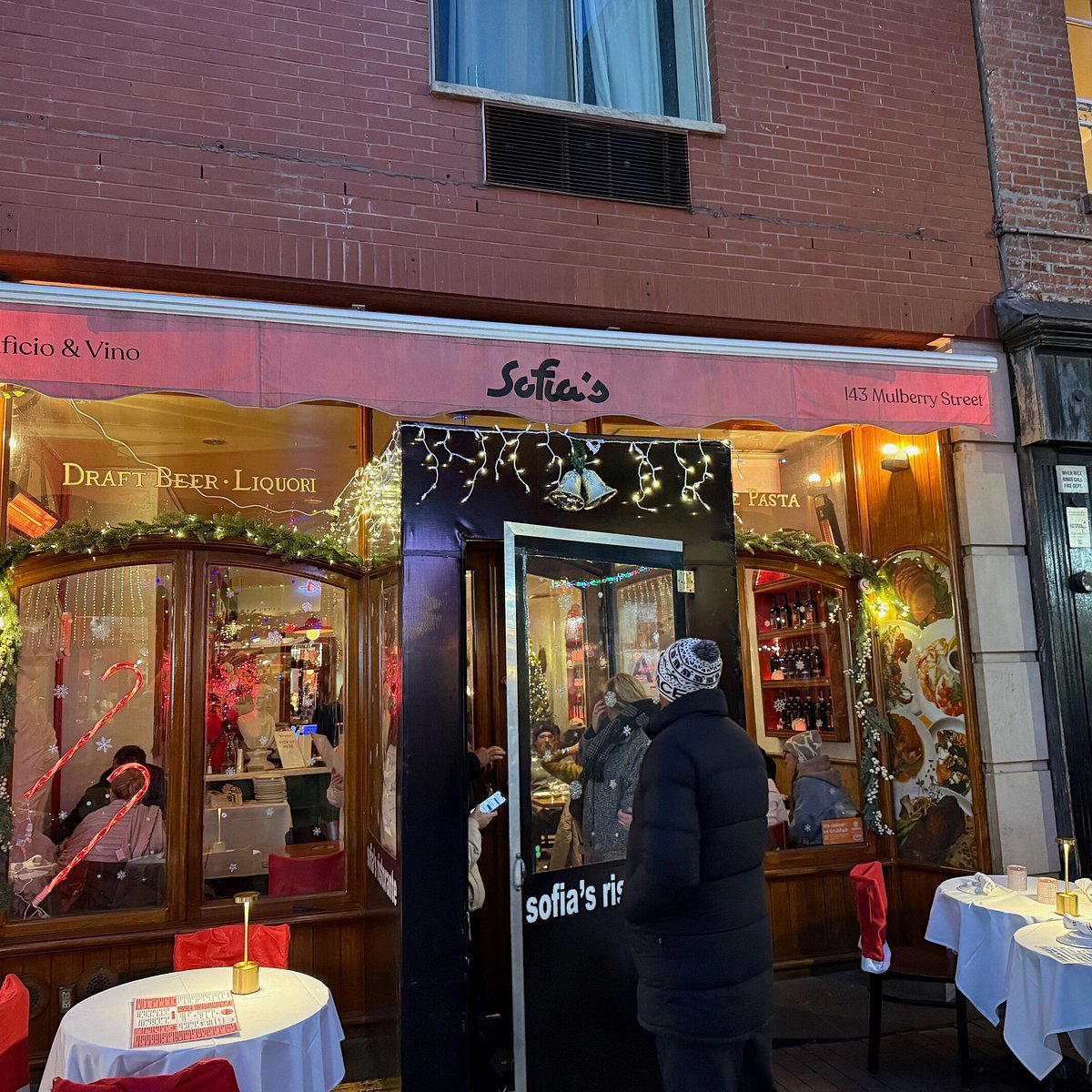
Mulberry Street and the Long Arc of Italian-American Dining
Little Italy's restaurant row on Mulberry Street is among the more debated blocks in New York food culture. At its peak in the mid-twentieth century, the neighbourhood held a dense, self-contained Italian-American community whose restaurants fed residents, not visitors. The shift came gradually: as the community dispersed northward and into the outer boroughs, the restaurants remained, recalibrating their audience toward tourists and the dining public at large. By the time that transition completed, the question facing every address on Mulberry Street was no longer whether to adapt, but how far to go and what to keep.
Sofia's of Little Italy at 143 Mulberry St sits inside that history, on a block where the physical fabric, the awnings, the sidewalk tables, the red-sauce shorthand, has remained largely constant even as the economics and the clientele shifted beneath it. That continuity is itself an editorial subject. The restaurants that have lasted on Mulberry Street are not the ones that chased fine-dining formats; they are the ones that understood what the block's particular authority rests on.
The Evolution Question: What Staying Power Looks Like Here
In most American cities, a restaurant's evolution story involves menu pivots, chef transitions, or format reinvention. On Mulberry Street, the more telling form of evolution is subtler: it plays out in how a restaurant positions itself relative to a neighbourhood that is no longer quite what it was. The broader Little Italy footprint has contracted significantly since the 1950s, with Chinatown absorbing a large portion of the surrounding blocks. What remains is a compressed but commercially active strip where Italian-American dining carries the weight of collective memory as much as culinary programme.
Restaurants that have navigated this compression successfully have generally done one of two things. Some doubled down on the tourist-facing proposition, leaning into the theatrics of the red-sauce experience as a kind of performance. Others took a quieter path, maintaining neighbourhood-facing pricing and service rhythms that signal continuity rather than spectacle. The distinction matters to the kind of diner who arrives with context rather than simply appetite.
Sofia's address on Mulberry Street places it in direct dialogue with both camps. For the visitor making a first pass through the neighbourhood, it reads as part of the strip's collective identity. For the diner who knows the block's longer story, the relevant questions are about what the kitchen has preserved and what it has updated over successive iterations of the concept.
Italian-American Dining in New York: The Competitive Frame
It is useful to place Mulberry Street's restaurant cluster in the context of where Italian-American dining sits in the broader New York hierarchy. The city's most discussed Italian restaurants in recent years have tended to be either high-concept modern Italian, drawing on northern Italian or regional tasting-menu traditions, or hyper-specific neighbourhood operations in places like Carroll Gardens, Arthur Avenue in the Bronx, or Flushing's Italian pockets. The red-sauce Italian of Manhattan's Little Italy occupies a different register entirely, one that is less about culinary advancement and more about the social function of a meal: the long table, the familiar plate, the bottle of house wine.
That register has its own integrity. Some of the city's most serious food writers have argued, convincingly, that the genre gets undervalued precisely because it resists the vocabulary of contemporary criticism. You cannot evaluate a plate of baked ziti against the criteria you'd apply to the tasting menu at Per Se or the precision counter work at Masa. The frame is different, the ambition is different, and the relevant question is execution within the tradition rather than departure from it.
At the level of formal fine dining, New York's Italian representation sits in a different tier entirely, closer to the kind of European-influenced technical cooking you find at addresses like Le Bernardin. The gap between that world and Mulberry Street is not a failing on either side; it reflects two entirely distinct functions in a city large enough to hold both without contradiction.
What the Address Signals to the Informed Visitor
Arriving at 143 Mulberry St, the informed visitor is reading a set of signals that go beyond the menu. The block itself is a physical archive of a particular chapter in New York immigrant history, documented extensively in journalism, in film, and in the city's own cultural mythology. The restaurants here have been written about, argued over, and occasionally dismissed by critics who want Italian food to be something it was never trying to be in this context.
For the traveller, the contrast is instructive. The cooking at places like Blue Hill at Stone Barns or The French Laundry operates within a completely different framework of intention and resource. What Mulberry Street offers instead is access to a dining tradition whose value is historical and communal rather than technical. Those are not lesser values; they are different ones, and the distinction is worth making clearly before you sit down.
Comparable Italian-American corridor dining exists in other American cities. Emeril's in New Orleans operates in a different culinary tradition but understands similarly how a city's food identity accrues meaning over time. The same argument applies, in different registers, to how Bacchanalia in Atlanta or Addison in San Diego have each embedded themselves in their local contexts. Longevity on a specific block, in a specific food tradition, carries its own form of authority.
A Credentials Check
Comparable venues nearby, for context on price, style, and recognition.
| Venue | Cuisine | Price | Notes |
|---|---|---|---|
| Sofia's of Little ItalyThis venue — the venue you are viewing | Italian Trattoria | $$ | Not listed |
| Paulie Gee’s | Wood-Fired Neapolitan Pizza | $$ | East Village |
| Maestro Pasta | Emilian Italian Pasta | $$ | Greenwich Village |
| Risotteria Melotti | Gluten-Free Northern Italian Risotteria | $$ | East Village |
| biricchino | Authentic Northern Italian Trattoria | $$ | Chelsea-Hudson Yards |
| Naples 45 Ristorante e Pizzeria | Neapolitan Pizza and Italian Ristorante | $$ | East Midtown-Turtle Bay |
Continue exploring
More in New York City
Restaurants in New York City
Browse all →
Bars in New York City
Browse all →
Hotels in New York City
Browse all →






At a Glance
- Trendy
- Cozy
- Classic
- Date Night
- Family
- Late Night
- Open Kitchen
Current opening hours
- Monday
- 11 AM–11 PM
- Tuesday
- 11 AM–11 PM
- Wednesday
- 11 AM–11 PM
- Thursday
- 11 AM–11 PM
- Friday
- 11 AM–11 PM
- Saturday
- 11 AM–11 PM
- Sunday
- 11 AM–11 PM
Hours can change for holidays and private events. Last verified .
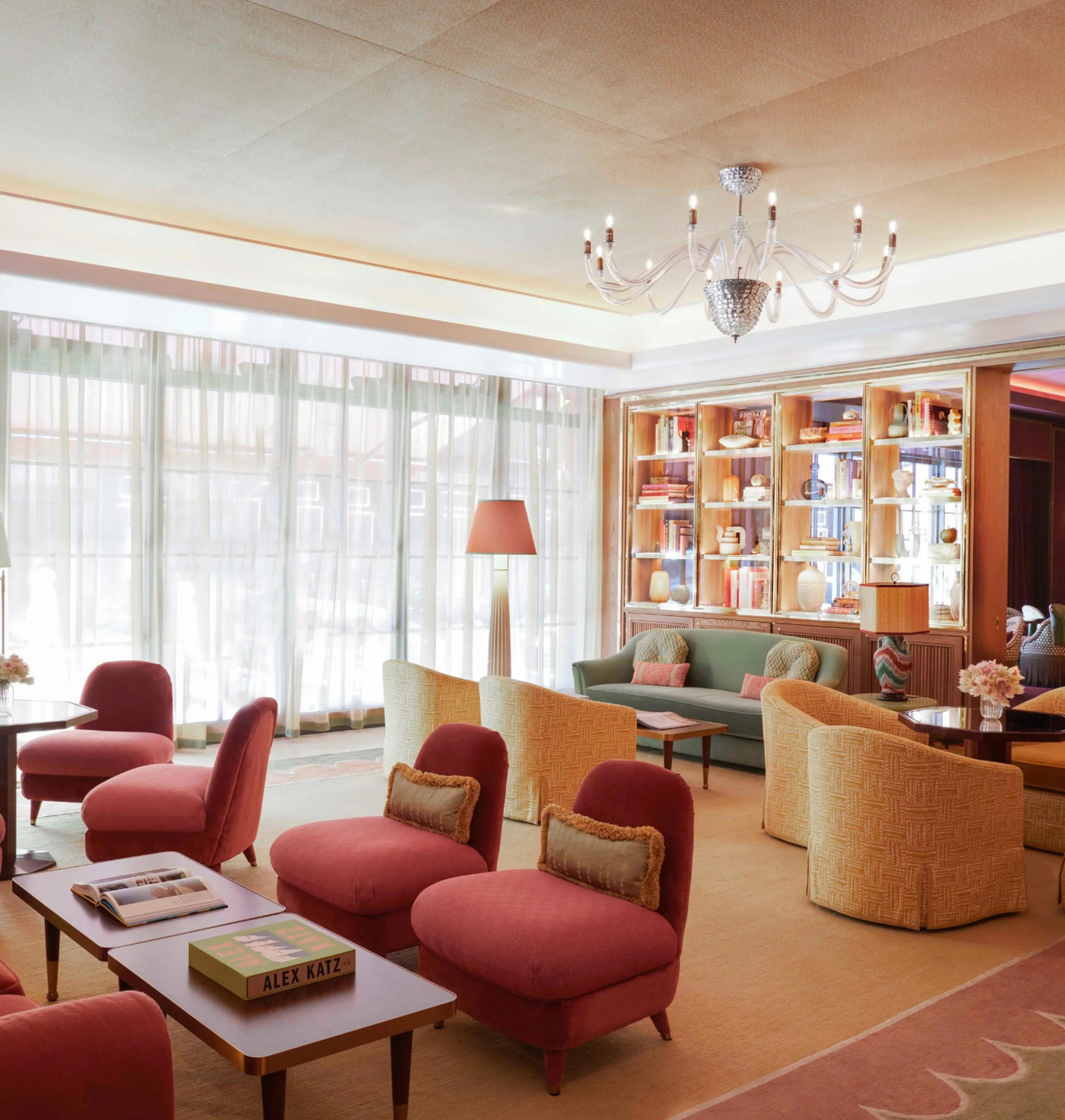
Warm and inviting with moderate noise levels, well-suited for family gatherings or romantic dinners.