Soba Shunsai Kosuge

Tabelog 100 #19
Our verdict
Soba Shunsai Kosuge is a Nagano soba address for travelers who care about buckwheat provenance, sake pairing, and small-room pacing rather than spectacle. Its 2025 Tabelog 100 Soba EAST selection places it in a serious regional conversation, while the format stays grounded: soba, tempura, izakaya-leaning dishes, and a compact room near Nagano Station.

Pearl is the En Primeur Club membership app — saves, bookings, and concierge access live there. Same editors, same standards.
- Address
- 長野県長野市北石堂町1390-1
- Phone
- +81262192376
- Website
- kosuge-soba.com
- Directions
- Get directions
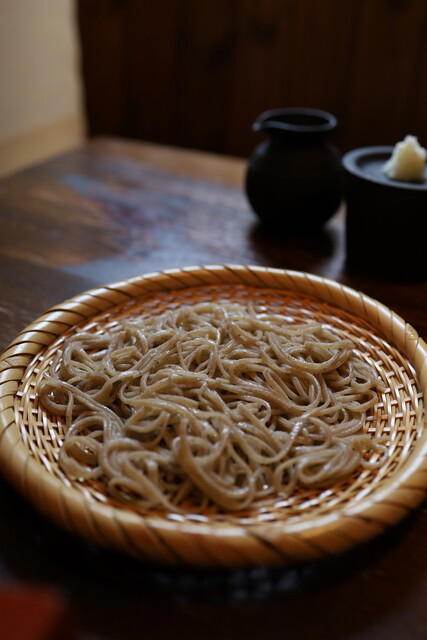
The menu
What to order
- Gogh no nihachi soba
- Mori soba
- Seiro soba with grilled duck
Approaching a serious soba room in Nagano-ken changes the brief. The prefecture is not selling noodle theatre; it works from a mountain-prefecture tradition where buckwheat has long been a staple and a bowl of soba can carry as much local identity as a more formal Japanese counter. Soba Shunsai Kosuge belongs to that quieter register: an adult-leaning room whose listed categories connect soba with tempura and izakaya-style dining.
The credential is not celebrity-chef mythology but recognition in Tabelog Hyakumeiten for 2025, with a listed Tabelog score of 3.74. That matters because soba is a narrow category: texture, aroma, grind, water, and dipping sauce leave little room for distraction. In a prefecture travelers often pass through en route to ski towns, temple routes, or mountain inns, this table rewards treating Nagano-ken as a food destination in its own right.
Soba as a sourcing argument, not a noodle afterthought
Nagano-ken’s soba culture is inseparable from place. Cool upland conditions and a history of buckwheat cultivation built the area’s reputation for soba, and better modern rooms do not treat soba as a side order. They build the meal around it. Here the public listing keeps the focus on soba, with tempura and izakaya-style cooking framing the meal rather than distracting from it. Those details are not decorative: the format lets buckwheat noodles remain the centre of gravity while supporting dishes broaden the table.
The surrounding dishes matter for the same reason. Tempura and izakaya categories place the meal in a flexible Japanese format rather than a single-bowl stop, while the overall rhythm suits diners who want more than a quick noodle break. Japanese soba restaurants often split between quick daytime noodle shops and evening rooms where soba anchors small plates and a slower close. Soba Shunsai Kosuge sits closer to a specialist soba choice, especially for guests who want the meal built around the noodle rather than around spectacle.
Compared with Hei Gorou Honten, another Nagano-ken listing, the choice is less about ranking than deciding the meal required. Hei Gorou Honten reads as a different local stop; Kosuge is the more soba-specialist option, with 2025 Hyakumeiten recognition and a format that also supports tempura and izakaya-style ordering. For regional context, Our full Nagano-ken restaurants guide better maps how soba, sweets, ryokan dining, and other restaurants fit together.
A small Nagano room built for pace and restraint
Scale shapes the experience, but the useful planning point is not a head-count promise; it is the restaurant’s specialist identity. Soba rooms work best when the guest accepts a narrower brief and lets the kitchen’s core product lead. That creates a different kind of luxury from a hotel dining room: less breadth, more focus, and a meal whose success depends on whether the soba itself has presence.
The Nagano-ken location helps travelers build it into a wider regional route, but the appeal belongs to the prefecture rather than to transit convenience. Convenient dining in Japan can be superb, but it can also drift toward speed and predictability. A soba room with 2025 Hyakumeiten recognition changes the calculus: it becomes a planned meal, not filler between trains.
Public information gives the restaurant a clear specialist profile without needing extra mythology. The verified categories are soba, tempura, and izakaya-style dining; the listed budget is Dinner: JPY 4,000 - JPY 4,999 and Lunch: JPY 1,000 - JPY 1,999. Those signals do not replace the restaurant experience, but they reinforce the point: the core product is soba, not ambience wearing a noodle costume.
How to place it within a Nagano itinerary
For a premium traveler, the strongest use case is a Nagano-ken meal when the brief is local, controlled, and ingredient-led rather than celebratory in the luxury-hotel sense. The menu categories suit diners who want soba supported by tempura and izakaya-style dishes. The editorial decision is simple: go when soba is the point, not when the table needs broad crowd-pleasing range.
Nagano-ken rewards specificity. A good trip here is rarely only restaurants; it can include mountain hotels, local bars, wineries, and cultural stops that explain why the prefecture eats differently from Tokyo or Osaka. For that wider planning layer, use Our full Nagano-ken hotels guide, Our full Nagano-ken bars guide, Our full Nagano-ken wineries guide, and Our full Nagano-ken experiences guide alongside the restaurant shortlist.
Readers building broader Japan itineraries can compare how regional specialization shifts: soba at Soba Shunsai Kosuge, other dining in Nagano-ken, and specialist rooms elsewhere in Japan that express their regions through a tighter culinary brief. The useful comparison is not name-collecting but format: some restaurants are built for breadth, others for one ingredient or tradition handled with discipline. Kosuge belongs in the latter camp.
Frequently asked questions
Is Soba Shunsai Kosuge okay with children?
For child policies or age restrictions, confirm directly with the restaurant before booking.
Is Soba Shunsai Kosuge better for a quiet night or a lively one?
It reads as a focused soba choice rather than a broad, high-energy venue. Its 2025 Tabelog Hyakumeiten recognition and 3.74 listed score support the case for a controlled, soba-led meal in Nagano-ken.
Is Soba Shunsai Kosuge more mid-range or high-end?
Pricing at Soba Shunsai Kosuge is listed as Dinner: JPY 4,000 - JPY 4,999; Lunch: JPY 1,000 - JPY 1,999.
Where exactly is Soba Shunsai Kosuge?
Nagano-ken.
Comparison Snapshot
Comparable venues by cuisine and price in the same metro.
| Venue | Cuisine | Price | Awards | Notes |
|---|---|---|---|---|
| Soba Shunsai KosugeThis venue — the venue you are viewing | Traditional handmade soba | $20–30 | Tabelog 100 #19 | Not listed |
| Hei Gorou Honten | Japanese patisserie & café | $10–20 | Tabelog 100 #60 | Zenkojishita |
| 蕎麦処 そばの実 | Togakushi Soba | $20–30 | Tabelog 100 #53 | Togakushi |
| Gyoza no Manshu (ぎょうざの満洲) | Japanese Gyoza Specialist | Not listed | Not listed | 新所沢 |
| Mirumiru Honpo Honten | Ishigaki Gelato Cafe | $10–20 | Not listed | Arakawa |
| Date Okina | Traditional Japanese soba house | $10–20 | Tabelog 100 #38 | Date |
Recognition history
Dated appearances from independent guides and award organizations, with the underlying list record or original source where available.
Tabelog 100 #19 · No. 19
Tabelog · Tabelog 100 - Soba - EAST - 2025
Continue exploring
More in Nagano-ken
Restaurants in Nagano-ken
Browse all →
Hotels in Nagano-ken
Browse all →
Wineries in Nagano-ken
Browse all →
Details
- Cozy
- Classic
- Intimate
- Solo
- Casual Hangout
- Date Night
- Standalone
- Sake Program
- Local Sourcing
- A La Carte
- Sake Program
A small, owner-operated soba shop with a calm, classic atmosphere where attention is centered on the craft of noodle-making; the setting feels intimate and quietly focused rather than lively or trendy.