Date Okina
Date Okina operates in Hokkaido's Date city, a town better known for its agricultural output and proximity to the Uchiura Bay coast than for destination dining. The restaurant draws on the ingredient density that defines this corner of Hokkaido, where dairy, seafood, and produce converge within a compact geography. For travellers passing through the Shikotsu-Tōya corridor, it represents a considered local option worth planning around.
 Request Booking on Pearl
Pearl is the En Primeur Club membership app — saves, bookings, and concierge access live there. Same editors, same standards.
Hokkaido's Quiet Southern Shore and What Grows There
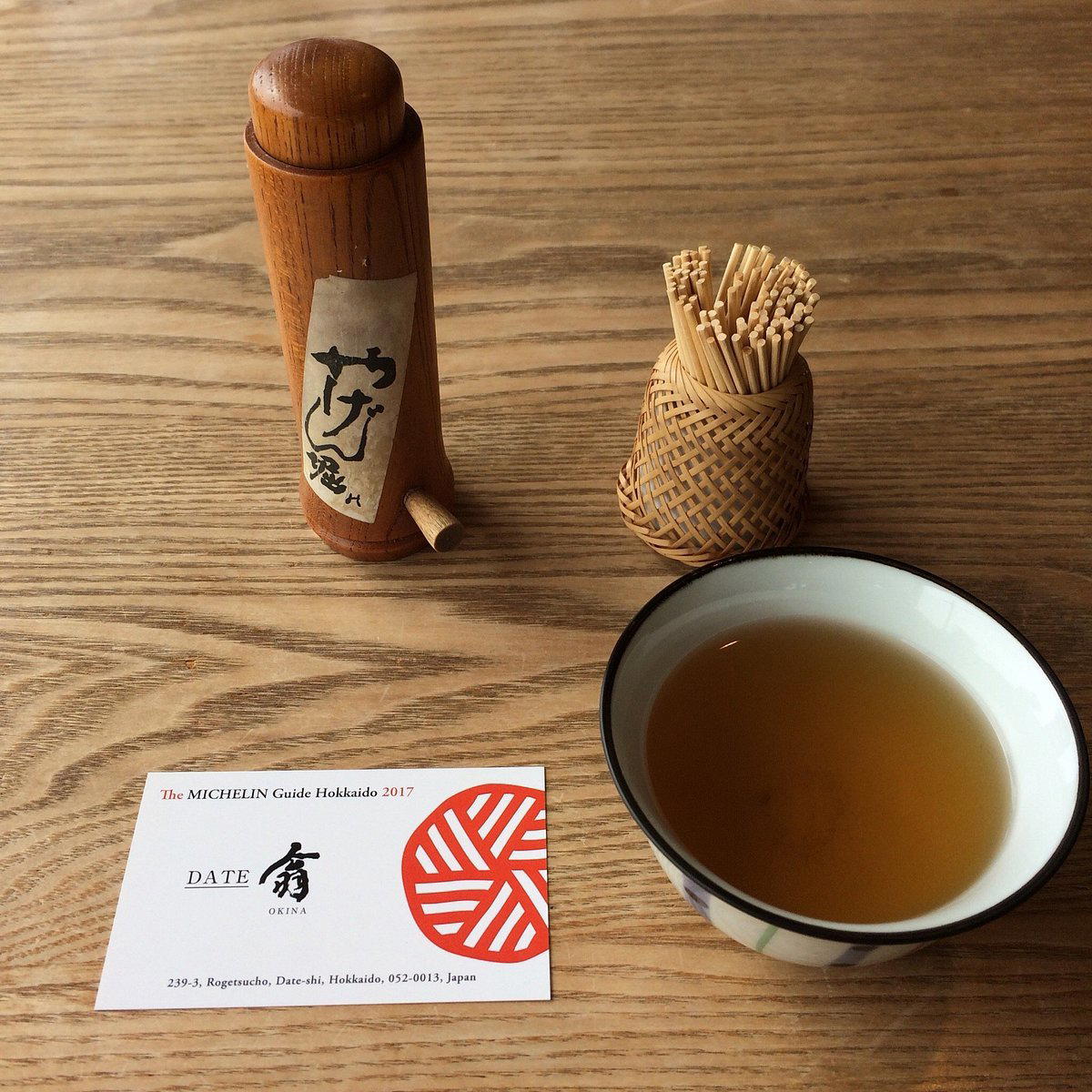
Date Okina is a Japanese Soba restaurant in Date, Hokkaido. The southern Hokkaido coast between Muroran and Toyako does not appear on most dining itineraries. Sapporo absorbs the attention, and the resort circuit around Niseko handles the overflow. Date city sits in between, a mid-sized agricultural town facing Uchiura Bay, where the surrounding land produces a disproportionate volume of what ends up on plates across the island. It is exactly the kind of place where ingredient-led cooking has a structural advantage: the supply chain is short, the producers are local, and the seasonal rhythm is legible in a way that urban kitchens have to work to reconstruct. Date Okina operates within that context, which shapes what it can offer more than any single menu decision.
Hokkaido as a whole carries a reputation built on raw material quality. The dairy from Betsukai, the sea urchin from Rishiri, the scallops from Sarufutsu, the lamb from the central plateau: these are not abstractions but specific supply geographies that determine what arrives at any serious kitchen on the island. Date's own position on the bay gives it access to coastal catch from the Uchiura fisheries alongside the produce and protein that come down from the Iburi region inland. That combination, coastal and agricultural in the same frame, is less common than it sounds, even in Hokkaido.
The Setting in Date
Date city itself is low-rise and functional, a working town rather than a tourist construct. Arriving from Sapporo by the Muroran Line takes roughly an hour and a half, and from Noboribetsu the journey is shorter still. The town's relative absence from standard travel routes is not a deficit so much as a descriptor: it means the audience for restaurants like Date Okina is largely local and regional, which tends to produce a different kind of establishment than venues built around visitor traffic. The dining here answers to a community rather than a season of tourists, and that accountability tends to show in consistency.
For travellers already moving through the Shikotsu-Tōya corridor, or routing between Sapporo and the southern cape, Date represents a plausible stop rather than a detour. Proximity to Noboribetsu onsen town and the Showa Shinzan volcanic area means the town sits within reach of Hokkaido's geothermal circuit, where visitors already spending time in the region may find the addition of a meal in Date direct to arrange. Those comparing this southern Hokkaido tier to the concentrations of recognised restaurants in Sapporo, such as 夏仁山乃in Sapporo, will find a different scale of operation and a different relationship to recognition.
Ingredient Sourcing as the Structural Frame
Across Japan's regional dining scene, the restaurants that sustain relevance outside major cities tend to do so through sourcing discipline rather than technique spectacle. The kaiseki tradition, at its most coherent, is fundamentally an argument about proximity: that food prepared close to its origin, in the season of its harvest, carries an informational clarity that processing and distance erase. This is not a romantic position but a practical one, and Hokkaido's geography makes it easier to hold than almost anywhere else in the country.
The island's ingredient calendar runs differently from Honshu. Spring comes later, autumn delivers longer, and the cold winters produce a seafood density, particularly in shellfish and cold-water fish, that defines what regional kitchens can offer between November and March. A restaurant in Date drawing on Uchiura Bay catch will have access to seasonal patterns that a kitchen sourcing through Tokyo's Toyosu market simply cannot replicate in timing or specificity. That gap is where restaurants in positions like Date Okina's find their argument. For comparison, the kaiseki and Japanese fine dining registers operating at the highest recognition tier in Japan, including Gion Sasaki in Kyoto and Harutaka in Tokyo, depend on the same underlying logic of seasonal specificity, applied at a different scale of investment and infrastructure.
Hokkaido's Regional Dining Tier
Japan's regional dining scene has developed unevenly. Certain cities outside the major metropolitan corridors have built genuine critical mass: Fukuoka's ramen and hakata cuisine tradition, Kyoto's kaiseki depth, Osaka's density across every price tier. Hokkaido's dining identity is strong in Sapporo and in specific resort contexts, but the towns along the southern coast have not accumulated the same kind of attention. That means restaurants operating in places like Date are largely evaluated on local terms rather than national ones, which produces a different set of pressures and a different relationship to formal recognition.
Michelin's Hokkaido coverage has expanded since the 2017 introduction of the Hokkaido guide, and Bib Gourmand designations have reached smaller towns, but coverage remains concentrated in Sapporo. Restaurants in Date operate below that visibility threshold, which places them in a category better assessed through local reputation and repeat custom than through external credential signals.
For travellers who have calibrated their expectations against the recognised upper tier of Japanese dining, including venues like HAJIME in Osaka, akordu in Nara, or Goh in Fukuoka, Date Okina sits in a different register: regional, community-anchored, and evaluated on different terms. That is not a demotion but a classification. Some of Japan's most precise cooking happens in exactly this tier, where the absence of spectacle allows the ingredient itself to carry the argument.
Planning Around Date Okina
Because direct booking information, hours, and pricing are not available in the record for Date Okina, the practical approach is to confirm details on arrival in Hokkaido or through local inquiry before routing a day around the restaurant. Hokkaido's southern shore is most comfortably explored by car; the train connection via the Muroran Line is functional but limits flexibility. Visitors arriving from Sapporo should allow at least two hours for transit in either direction. Those already in the Noboribetsu or Toyako area will find Date considerably closer and an easier integration into an existing itinerary. Treat any visit as one component of a broader southern Hokkaido day rather than as a standalone destination trip.
How It Stacks Up
Comparable venues nearby, for context on price, style, and recognition.
| Venue | Cuisine | Price | Awards | Notes |
|---|---|---|---|---|
| Date OkinaThis venue — the venue you are viewing | Japanese Soba | $$ | , | |
| Yakiniku Akira Hongou honten | Japanese Yakiniku (BBQ Beef) | $$ | , | Bunkyō |
| Ramen Tanron Honten | Ramen | $$ | , | Nishinomiya |
| Unagi no Mitsuru | Japanese Unagi | $$ | , | Shimofukumotochō |
| Zubora Tei | Traditional Okonomiyaki & Teppan-yaki | $$ | , | Kokurakita Ward |
| cuud Terminal 1 | Modern curry udon noodle bar | $$ | , | Ōta |
At a Glance
- Elegant
- Intimate
- Classic
- Special Occasion
- Date Night
- Local Sourcing
Traditional Japanese ambiance with refined elegance suitable for a sophisticated dining experience.[1][9][11]