
Soba Kokoro places Tokyo’s soba tradition in a modest Nezu house setting rather than a luxury dining room. Recognition in Tabelog’s Soba EAST 100 selection for 2024 and 2025, a 3.70 Tabelog score, tatami seating, and a drinks list built around sake and shochu put it in the serious neighborhood-soba tier.
Pearl is the En Primeur Club membership app — saves, bookings, and concierge access live there. Same editors, same standards.
- Address
- 2 Chome-11-10 Nezu, Bunkyo City, Tokyo 113-0031, Japan
- Phone
- +81 3-5842-1433
- Website
- instagram.com
 Saves & bookings on Pearl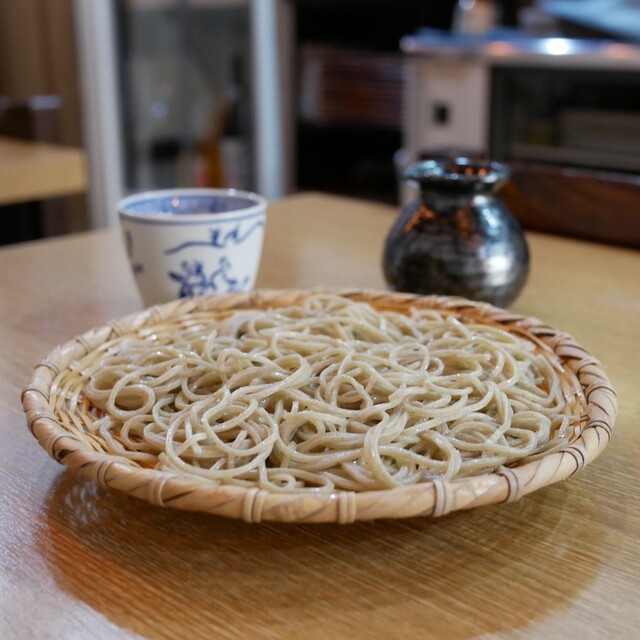
Nezu rewards slower dining. The neighborhood sits away from Tokyo’s department-store restaurant floors and hotel dining rooms, with small houses, temple routes, and old shopping streets shaping the rhythm of a meal. In that setting, soba is not a prelude to spectacle. It is a measured sequence: noodles, dipping broth or warm soup, seasonal sides when offered, and a drink program that usually favors sake or shochu over showpiece pairings. Soba Kokoro fits that grammar in a house-style room with table seating downstairs and tatami upstairs, which matters because the room sets expectations before the first order. This is Tokyo buckwheat culture in domestic scale, not counter theatre.
Nezu soba sits between everyday lunch and serious craft
Tokyo has several dining languages that international visitors learn quickly: sushi counters, tempura rooms, yakitori grills, kaiseki salons. Soba is quieter but no less exacting. The discipline depends on grain, water, cutting, timing, and broth, yet it often appears in rooms that feel closer to neighborhood life than formal gastronomy. That tension explains why a soba meal can read as casual on paper while operating with the precision expected from a specialist shop.
The local context sharpens the point. Nearby comparison venues cover a wide range: Nezu Yakitori Terusumi sits in a higher dinner bracket, Tempura Fukutarou belongs to a more expensive tempura tier, and Nezu Kamachiku works in a soba-adjacent price lane with a different format. Teuchi Soba Nezu Takajo occupies the leaner handmade-soba end of the same neighborhood conversation. Against that spread, Soba Kokoro’s recognition in Tabelog’s Soba EAST 100 list for both 2024 and 2025 places it inside a curated regional field rather than the casual noodle-shop mass. The 3.70 Tabelog score is also useful in Japan, where ratings often cluster lower than international diners expect; it signals sustained approval in a category where small differences carry weight.
What matters for the reader is not a single dish name, but the progression. Soba meals tend to move from appetite to restraint rather than from luxury ingredient to luxury ingredient. Cold noodles emphasize texture and aroma; warm preparations shift attention toward broth and comfort; sake or shochu can stretch the meal without turning it into a long tasting-menu performance. The format suits travelers who want a precise Tokyo food experience without committing to the ceremony, duration, or spend of a formal counter.
A 30-seat house format changes the meal's pace
The house-restaurant setting gives the meal a different register from the polished subterranean dining rooms found across Ginza or Roppongi. With 30 seats split between 10 table seats on the first floor and 20 tatami seats on the second, the scale is compact enough to preserve focus but not so tiny that the meal becomes a chef-facing performance. That balance is part of the appeal: soba benefits from attention, yet it also belongs to daily Tokyo eating.
The no-smoking policy, children-welcome note, and family-friendly positioning matter because they place the restaurant in a broader Japanese category that premium travelers sometimes overlook. Not every serious meal in Tokyo demands silence, formality, or a counter seat. Some of the city’s strongest food traditions are built for repeat local use, and soba is one of them. A room with tatami, sake, shochu, and buckwheat noodles offers a cultural reading of Tokyo that is harder to get from another luxury omakase reservation.
There is also a practical hierarchy to Nezu dining. Soba works well before or after a Yanaka, Ueno, or Nezu Shrine itinerary because the meal can remain focused. Yakitori nearby pushes later and longer; tempura at the higher end asks for a larger commitment; curry, cafés, and casual shops serve different purposes. For a visitor mapping a day across old Tokyo, this style of meal carries more local texture than another central-city dining room.
How to place it inside a Tokyo food itinerary
Soba Kokoro is strongest as a neighborhood anchor: a meal that gives structure to time in Bunkyo rather than a trophy reservation that dictates the whole day. The Tabelog 100 recognition supplies the trust signal; the house format supplies the reason to come to Nezu rather than stay near the hotel. It is a good fit for diners who care about craft but do not need every meal framed as a luxury event.
For broader planning, Tokyo’s range is better understood by category than by a single ranking. Seafood and grill formats can pull diners toward . 鮪と炭火焼き うお炭 秋葉原店, while late-night urban dining points a different way at 12/10 Shinjuku ten. Skewer-focused meals sit in another lane at 124. KAGURAZAKA (Yakitori), and lighter stops such as 2D Cafe or 3 Chome no Curry Ya San serve different parts of the day. Use Our full Tokyo restaurants guide to build the dining sequence, then match the rest of the trip through Our full Tokyo hotels guide, Our full Tokyo bars guide, Our full Tokyo wineries guide, and Our full Tokyo experiences guide.
Outside Tokyo, the same planning logic applies: compare format before comparing hype. Regional Japanese dining can mean sukiyaki at -Grilled beef Sukiyaki- KAMAKURA TANUKIAN 鎌倉 たぬき庵 in Kamakura, café culture at.cafe in Osaka, contemporary casual dining at.know in Kumamoto, Vietnamese cooking at (Shoku) Vietnam in Kawasaki, curry specialization at [Curry Senmon Ten] Maruyama Kyoju. in Sapporo, or Kyoto dining at [ki:] in Kyoto. In the United States, Japanese drinking and snack formats take different shapes at Jōdo Saké Bar in Los Angeles and Onigiri Time in Pasadena.
Pricing, Compared
Comparable venues at a similar level for quick context.
| Venue | Cuisine | Price | Notes |
|---|---|---|---|
| Soba KokoroThis venue — the venue you are viewing | Bunkyō, Traditional Soba Noodle Shop | $$ | Not listed |
| Shibata | Komae, Classic Tokyo Ramen | $$ | Not listed |
| Kosetsu | Not listed | $$ | Bunkyō, Traditional Japanese Soba & Kaiseki |
| Nakiryu | Not listed | $$ | Toshima, Michelin-Starred Tantanmen Ramen |
| Sakazuki | Not listed | $$ | Chūō, Standing Japanese sake bar with omakase pairing course |
| Itteki Hassenya Shinjuku honten | Shinjuku, Japanese Udon Izakaya | $$ | Not listed |
Recognition history
Dated appearances from independent guides and award organizations, with the underlying list record or original source where available.
Tabelog 100 #46 · No. 46
Tabelog · Tabelog 100 - Soba - EAST - 2025









At a Glance
- Classic
- Solo
- Casual Hangout
- Group Dining
- Standalone
- Sake Program
Current opening hours
- Monday
- 11 AM–3 PM, 5:30–9 PM
- Tuesday
- 11 AM–3 PM, 5:30–9 PM
- Wednesday
- Closed
- Thursday
- Closed
- Friday
- 11 AM–3 PM, 5:30–9 PM
- Saturday
- 11 AM–3 PM, 5:30–9 PM
- Sunday
- 11 AM–3 PM, 5:30–9 PM
Hours can change for holidays and private events. Last verified .
Guest reviews and listing photos describe a cozy house-like soba shop with simple, classic decor, a calm conversational atmosphere, and warm lighting, plus tatami seating upstairs that gives it a traditional neighborhood feel.